Munich deserves a place much higher on the European city-break list than most travelers put it. The best things to do in Munich reveal a city that is cultured without being self-important, elegant without being exhausting and exceptionally easy to explore on foot or by bicycle. Stay at the Rosewood, watch the city perform itself in Marienplatz, follow a path once used as an act of quiet resistance, pay tribute to the White Rose and spend the long summer evenings among surfers, cyclists and sunset watchers.
I spent nearly a week there in July while supervising the printing of my new photography book, Stone By Morning: A Journey Through Iceland’s Mythic Terrain. I discovered Munich in the seams of the working day: early mornings, late afternoons and luminous evenings that seemed reluctant to end. If Boston took a Bavarian sabbatical, acquired a taste for extravagant Baroque façades and decided that dinner should happen beneath trees, the result might feel something like this.
The Insider Itinerary is Dandelion Chandelier’s series of deeply informed city guides, where light, beauty, meaning and memory determine the route.
At a glance: Rosewood Munich · Marienplatz · Viscardigasse · the White Rose memorials · Siegestor · Friedensengel · the English Garden · the Eisbach wave · Hackerbrücke · Olympic Park at sunset
All photographs are by Pamela Thomas-Graham for Dandelion Chandelier.
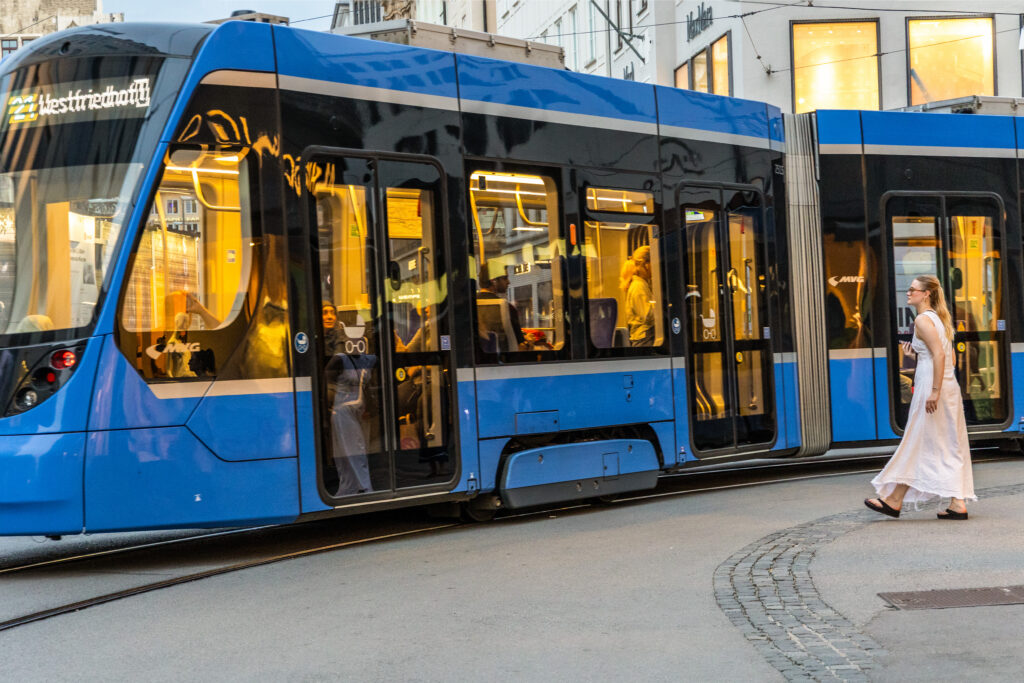
Munich moves with ease.
why Munich?
Munich does not possess the immediate mythology of Paris or Venice. Nor does it arrive with London’s insistence that every hour be optimized and every reservation secured. Its luxury is subtler: a sense of civilized ease that allows you to experience consequential history, a beautiful park, serious architecture, luxury shopping and excellent people-watching without feeling as though the city is testing your stamina.
That makes Munich ideal when you want culture and beauty, but do not want to be “on” for the entire trip. The center is compact, public transportation is efficient and a bicycle feels like a natural extension of the body here. The pace leaves enough room to notice small things: a woman matching the blue of a passing tram, a crowded bridge at sunset, the way a yellow church changes color as daylight fades.
Oktoberfest makes mid-September an obvious moment to consider a trip. But the festival is the introduction, not the whole story. The Munich worth knowing exists before, during and long after the last Biergarten closes.
the city behind the postcard
Munich is beautiful, but it is not innocent about beauty. The city holds its darkest history up as a mirror, with plaques, monuments and works of public art marking the people who resisted National Socialism and the places from which its power was administered.
Some of what appears centuries old was painstakingly restored or reconstructed after the Second World War. Munich contains surviving historic fabric, careful restoration, partial reconstruction and buildings rebuilt almost completely after the destruction. That does not make the city “fake-old.” It makes its architectural coherence a postwar choice, one that raises difficult questions about memory, identity and what a city decides to save.
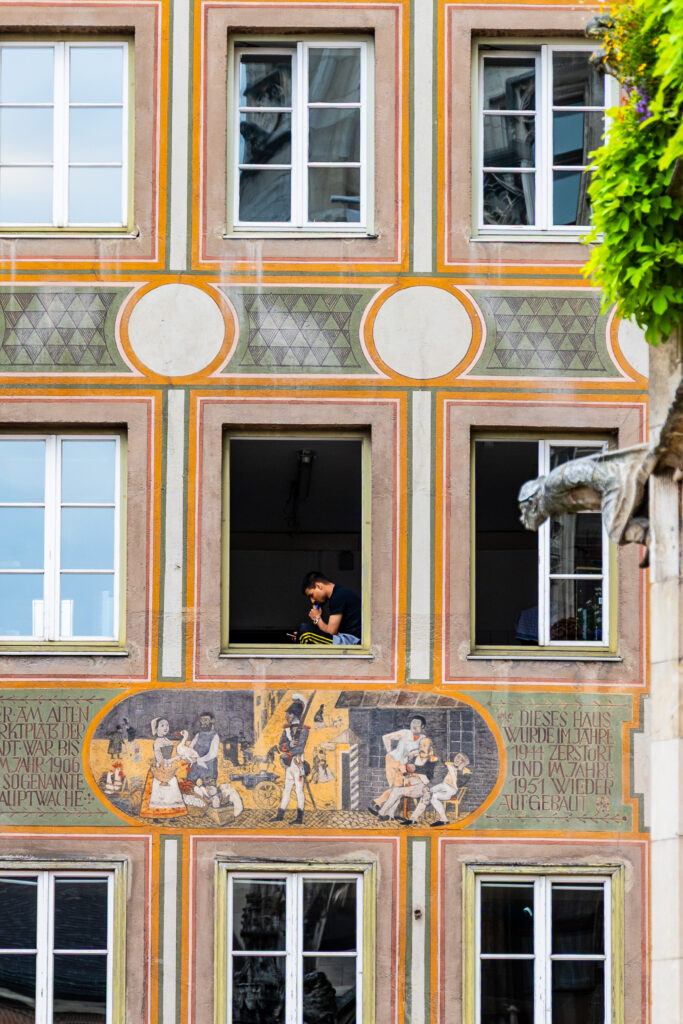
What the façade remembers.
One façade I photographed on the perimeter at Marienplatz states plainly that the building was destroyed in 1944 and rebuilt in 1951. Elsewhere, the evidence is less explicit. You can walk past an immaculate historic-looking structure without realizing how much of its present appearance belongs to the years after the war.
The Munich Documentation Center now occupies the former site of the Brown House, the Nazi Party headquarters. Nearby, the surviving former Führerbau houses the University of Music and Performing Arts Munich, while the former NSDAP Administrative Building is used by the Central Institute for Art History. Munich has not given every compromised building the same treatment, but these structures now serve music, scholarship and public memory rather than dictatorship.
the two churches that kept finding me
Two churches repeatedly entered my frame as I moved through central Munich. The first was the yellow Theatinerkirche at Odeonsplatz, an Italian Baroque confection whose ochre exterior seems to store sunlight even on a cloudy day.
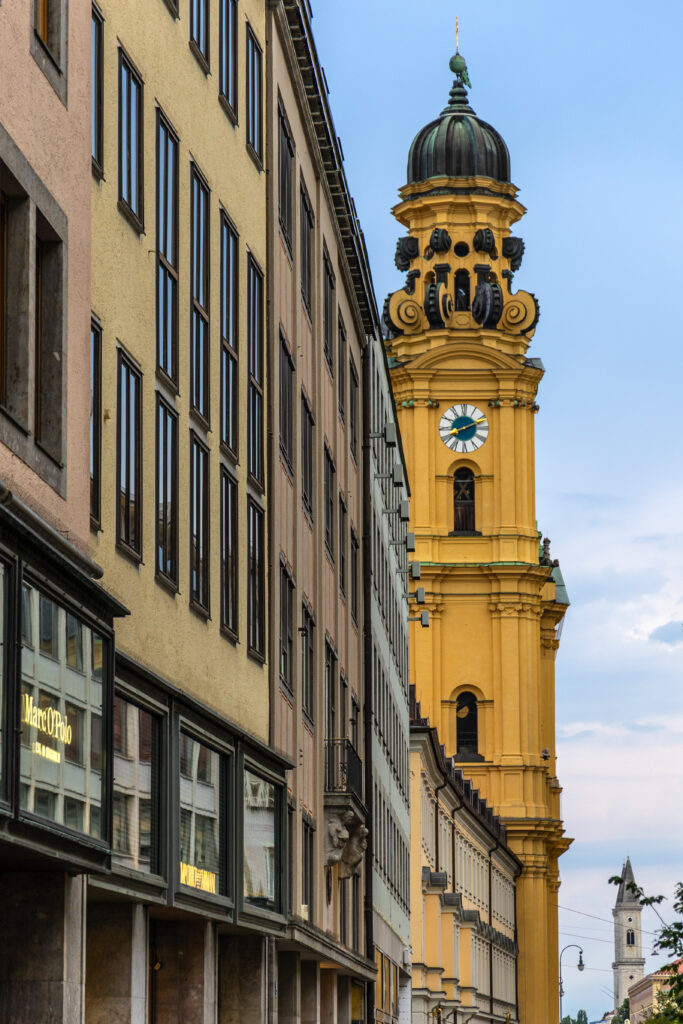
The other was the Frauenkirche, Munich’s great brick cathedral, with twin towers visible above the Old Town. Where the Theatinerkirche is theatrical, courtly and almost Mediterranean, the Frauenkirche feels weighty, northern and unmistakably Munich.
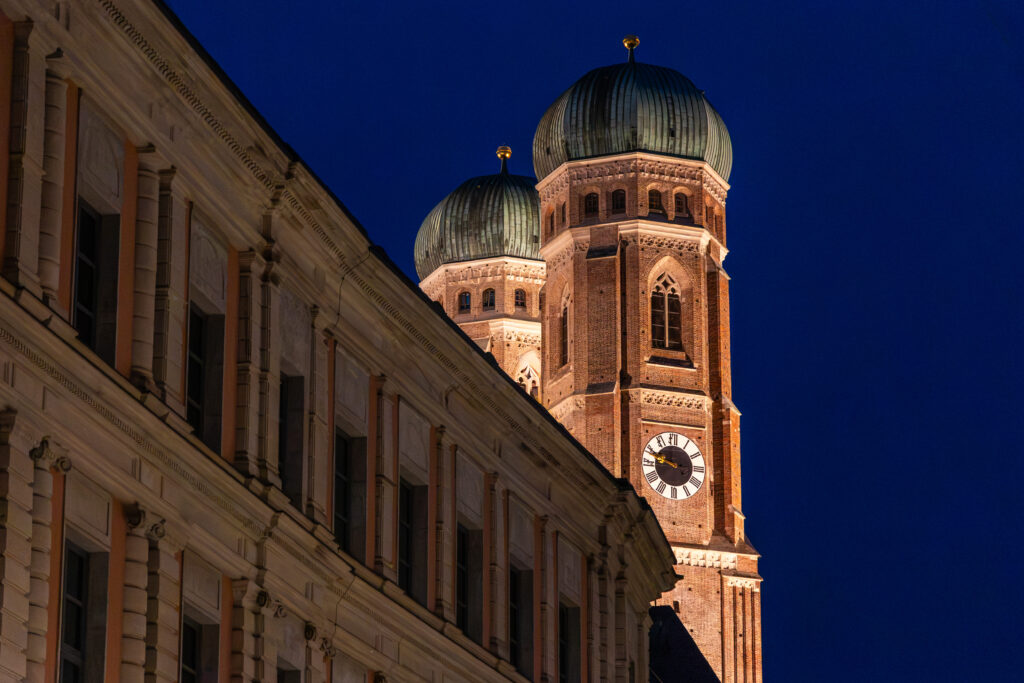
Frauenkirche at blue hour.
I photographed both repeatedly from the outside. They became companions rather than checklist items, recurring landmarks that helped me orient myself about where I was, and how the light was changing.
how long should we stay?
Three full days will let a first-time visitor experience the essential city without rushing. Four would be ideal if you want to add museums, shopping or an afternoon allowed to disappear almost entirely into the English Garden.
I was there for nearly a week, although much of that time belonged to the printer. The fact that I could see this much between press checks is part of Munich’s appeal. It rewards intervals, and does not require advanced supply chain management disguised as a vacation.
10 things not to miss in Munich
1. make Rosewood Munich your base.
I stayed at Rosewood Munich, and it will be my first choice when I return. The location is exceptionally convenient, the service is impeccable, and the hotel offers precisely the kind of grace and serenity one wants after a day of work or exploration.
This is a city where location materially changes the experience. From Rosewood, I could walk easily toward Odeonsplatz, Marienplatz, the university district and the English Garden. I could leave without a plan, follow the light and still find my way back with ease.
2. watch the city perform itself in Marienplatz.
Marienplatz has been the heart of Munich since the city’s founding in 1158, and it retains the democratic energy of an old town square. Tourists look up at the Neues Rathaus, residents cut diagonally through the crowds, children pursue pigeons and everyone watches everyone else.
Give it more than the obligatory photograph. Stand still long enough to see the square’s choreography, and then return at a different hour. Marienplatz in morning light, at midday and after dinner can feel like three different public stages.
The surrounding streets reward drifting. Their polished shop windows, cafés, bookstores and unexpected passages are part of the experience, particularly once the working day has ended and the center belongs again to the flaneurs.
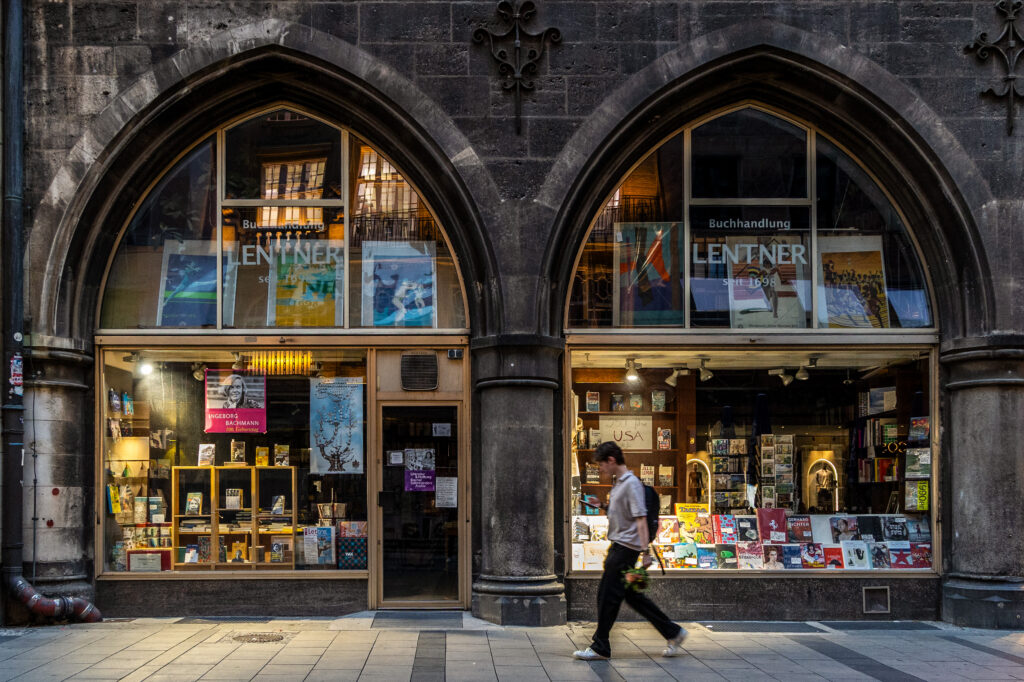
Books after dark.
3. take the detour through Viscardigasse.
The most poignant memorial I encountered is also one of the quietest. During the Nazi era, an SS guard of honour watched the Nazi memorial at the Feldherrnhalle, and passersby were required to perform the Nazi salute. Many Munich residents avoided the ritual by slipping through nearby Viscardigasse, a route that became known as the Drückebergergasserl, or Shirkers’ Alley.
A short trail of gold paving stones now marks that detour. The Feldherrnhalle and Viscardigasse history explains the setting, but the memorial does not overwhelm the street around it. You could miss it if you were hurrying.
Something about the modesty of the act moved me terribly. Sometimes resistance looks like a leaflet. Sometimes it looks like taking the long way home.
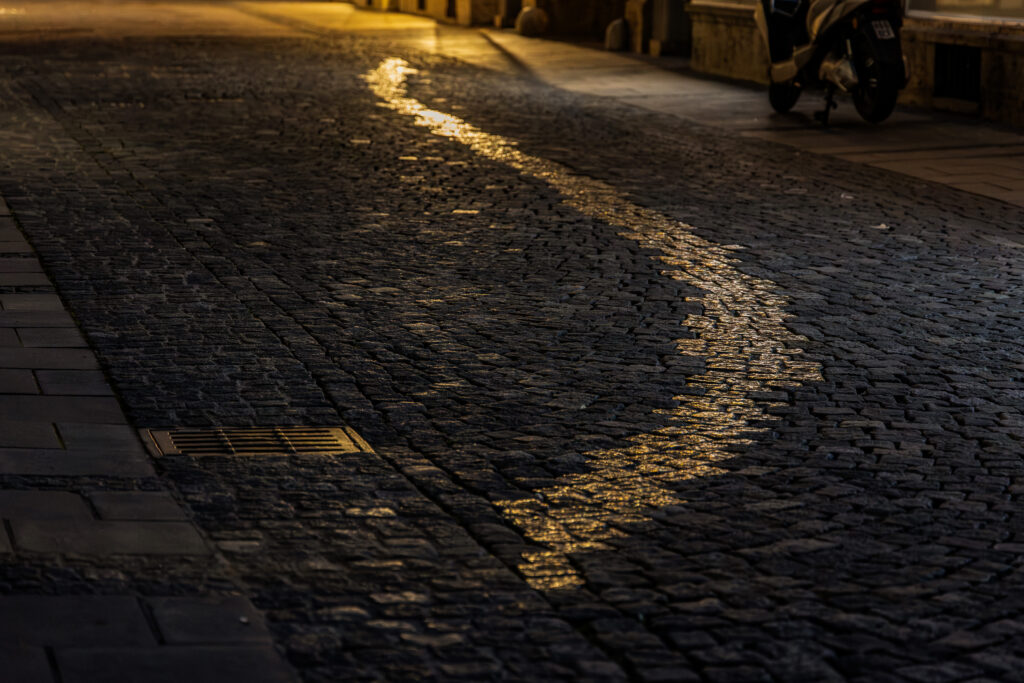
Viscardigasse’s Bronze Path of Resistance at twilight.
4. honor the White Rose.
The White Rose gives organized resistance pride of place in Munich’s intellectual life. Its core members included LMU students Sophie and Hans Scholl, Alexander Schmorell, Christoph Probst and Willi Graf, along with Professor Kurt Huber. They wrote and distributed anti-Nazi leaflets and paid for that courage with their lives.
At Ludwig Maximilian University, a ground memorial created in 1990 reproduces White Rose leaflets, portraits and Willi Graf’s farewell letter in stone. The university’s history of the White Rose supplies the chronology, while the permanent DenkStätte exhibition inside the university places the group’s resistance within the wider machinery of Nazi terror.
Another memorial stands at the northeastern corner of the Hofgarten: a dark granite cube dedicated to the resistance group. That is the memorial in my photograph, one of several places across Munich where the White Rose remains part of the city’s present tense. The White Rose Foundation provides a useful guide to these sites.
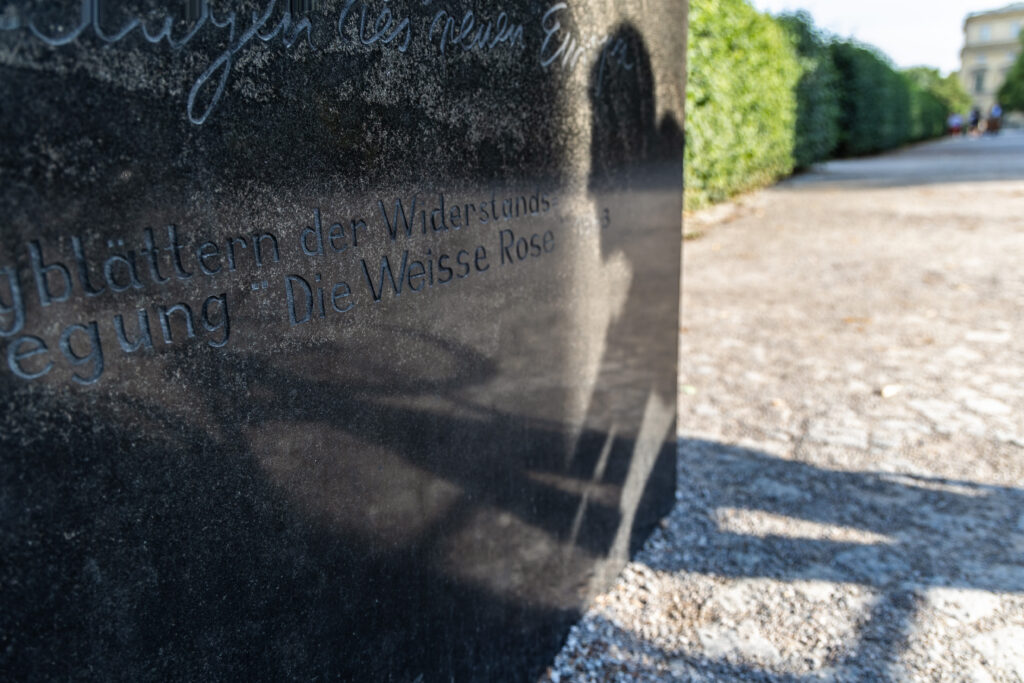
The White Rose endures.
Spend time in the university quarter after visiting the memorials. It matters that the surrounding streets remain full of young people, debate, bicycles, books and ordinary life. Remembrance here is not sealed behind glass; it shares the pavement with the present.
5. read the warning on the Siegestor.
The Siegestor is Munich’s triumphal arch, positioned where Ludwigstrasse becomes Leopoldstrasse. It may remind an American visitor of the Arc de Triomphe, although its architectural model was Rome’s Arch of Constantine.
Then you reach the inscription added after the Second World War: “Dedicated to Victory – Destroyed by War – Urging Peace.” Those seven words transform the monument from an assertion of military glory into an argument with itself.
That is Munich at its most compelling. The city preserves the form, refuses the original certainty and asks the next generation to read it differently.
6. see the Friedensengel in the evening light.
The Friedensengel, or Angel of Peace, rises above the Isar from a tall column crowned by a golden figure of Nike. The monument commemorates 25 years of peace after the Franco-Prussian War and is monumental without feeling severe.
Go in the late afternoon and stay as the light begins to warm. The terraces and long axis leading toward the monument provide Munich’s most ceremonial sunset experience. Where Viscardigasse is intimate and the Siegestor is chastened, the Friedensengel is unabashedly luminous.
7. let the English Garden alter your pace.
The English Garden is not merely a park to cross off a list. Its paths, lawns, waterways and beer gardens occupy enough of the city to alter its rhythm.
Walk without optimizing the route, or rent a bicycle and allow the park to pull you north. Watch how Munich uses its green space: energetically but without frenzy, communally but with ample room for solitude.
This was where the Boston comparison felt strongest to me. Both cities understand the civilizing power of a great urban landscape. Munich’s version is looser, more expansive and accompanied by the occasional sight of someone carrying a surfboard through a landlocked city.
8. watch the Eisbach surfers.
At the edge of the English Garden, the Eisbach forms a standing wave where experienced surfers carve rapidly across a narrow channel while spectators line the bridge above them.
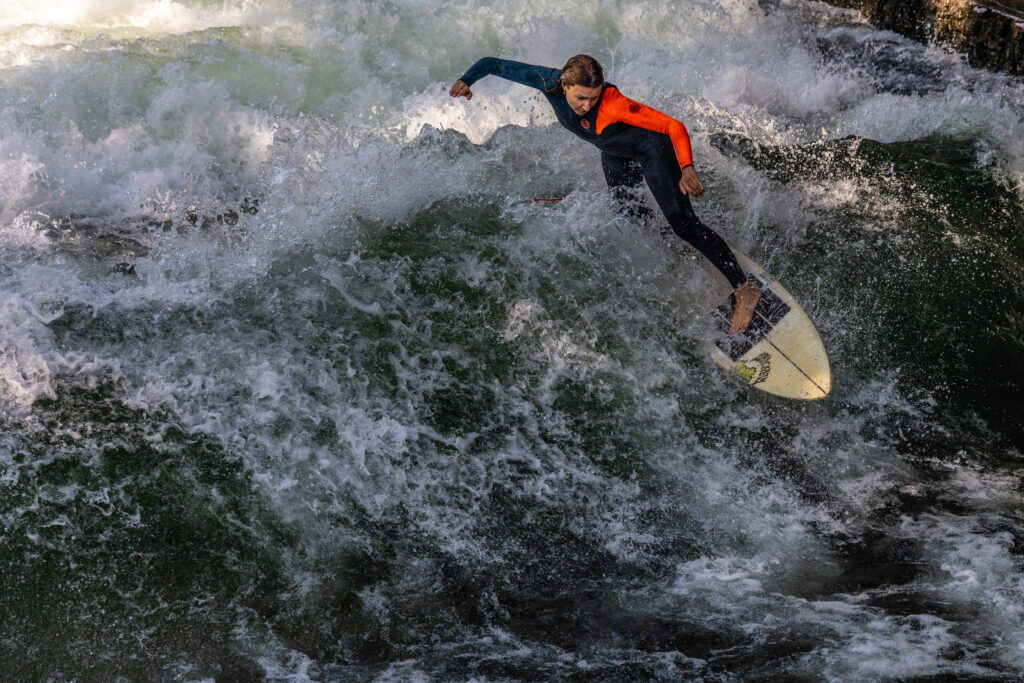
It is athletic, improbable and wonderfully theatrical. Under the current Eisbach rules, surfing is permitted between 5:30 a.m. and 10 p.m. for experienced surfers only; a companion and a self-releasing safety leash are required. Conditions and access can change, so confirm the current status before visiting. Watching from the bridge is truly thrilling.
9. join Munich at sunset on Hackerbrücke.
Hackerbrücke is a railway bridge, but on summer evenings it becomes a public balcony. People arrive with friends, drinks and no apparent need for programming, gathering above the tracks as the sky changes color.
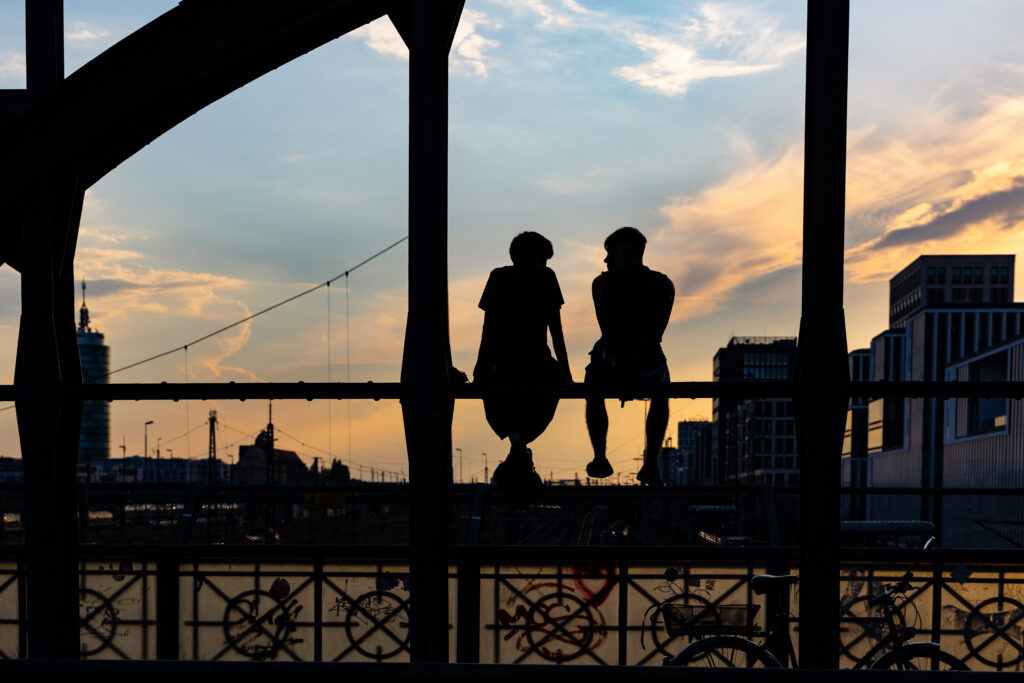
The city gathers at sunset.
Watching the sunset here is less ceremonial than at the Friedensengel, and less panoramic than at Olympiaberg. It is communal, spontaneous and unmistakably urban. Munich’s official guide includes Hackerbrücke among the city’s distinctive bridges.
10. see Olympic Park become futuristic again at dusk.
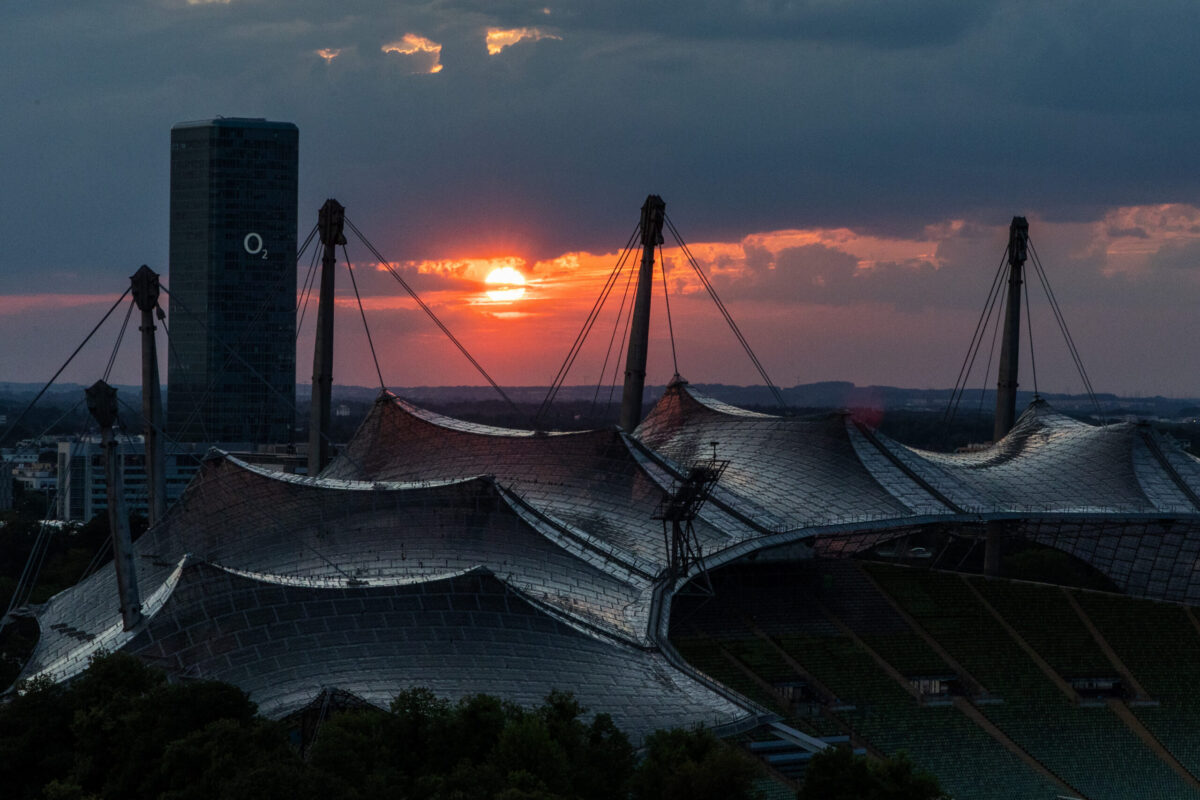
Munich’s Olympic Park was created for the 1972 Summer Games, yet its tented roofs still appear startlingly modern. The hills, water, paths and great transparent canopy form a landscape rather than a collection of isolated sporting venues.
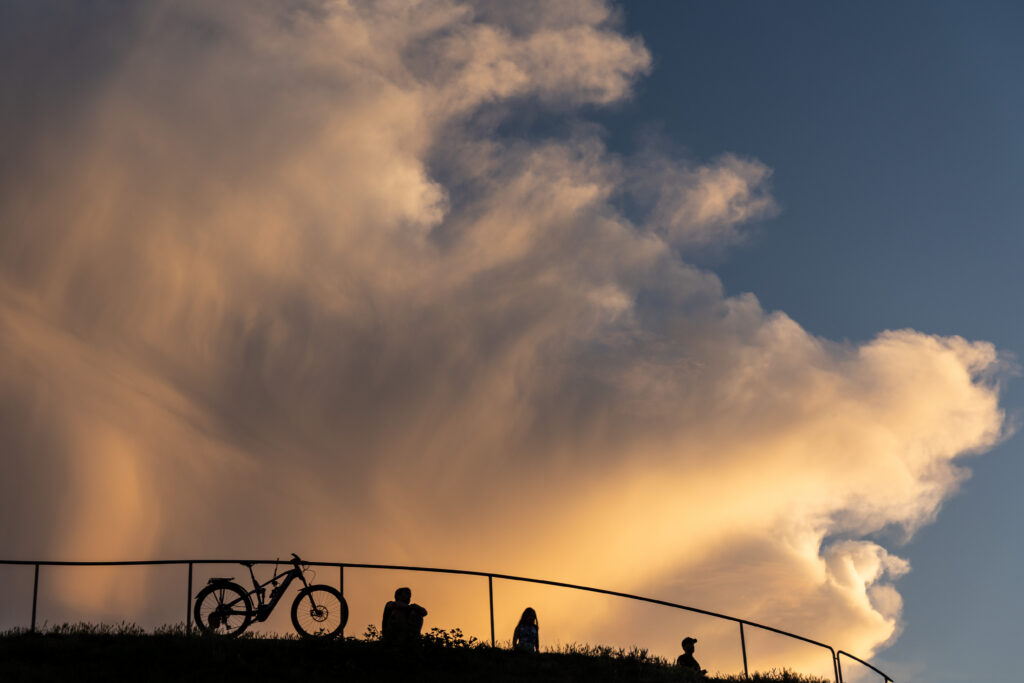
Make a plan to arrive at Olympiaberg before sunset. The hill was formed partly from rubble left by wartime bombing, another example of Munich turning the physical remains of catastrophe into civic space. From the top, the Olympic complex gathers beneath you and the Alps may even appear on a clear day.
The Olympic Stadium is currently closed for renovation. The Olympic Tower is also closed, and is expected to reopen in October 2027. But the park and Olympiaberg remain accessible. Go for the landscape, the architecture and the evening light.
Munich after dark
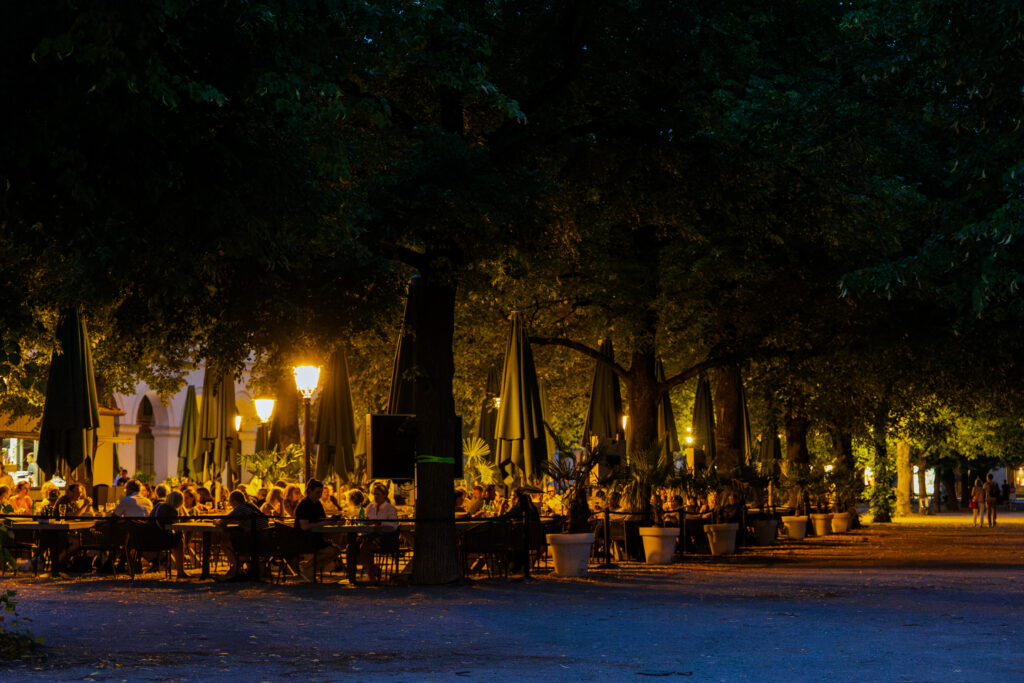
This was not a restaurant-research trip, and I am not going to manufacture a list of tables I cannot personally defend. What I can recommend is Munich’s way of spending a summer evening: long tables beneath trees, low lamplight and the agreeable sense that no one is being hurried toward the check.
The restaurants will require a return visit; the atmosphere has already made its case. Once darkness arrives, the city does not become louder so much as more intimate.
should we go during Oktoberfest?
Yes, if Oktoberfest is something you genuinely want to experience. Just do not mistake the festival grounds for the whole of Munich, or allow every day to become a variation on the same theme.
Give the city its mornings, and at least one full day beyond the festivities. Marienplatz, the university quarter, the English Garden and Olympic Park will show you a Munich with a much wider emotional and cultural range. Our Fall 2026 Guide and collection of luxury autumn escapes offer additional ideas if Munich is part of a longer seasonal trip.
what can wait?
If you have only three days, resist turning Munich into a dispatch center for day trips. Do not surrender one of those days to a distant castle simply because every conventional itinerary insists that you must.
Also resist the fantasy that you can “cover” the city by photographing Marienplatz, eating one pretzel and leaving. Munich’s appeal emerges through repetition: the same church in different light, the same square at another hour, the moment when a triumphal arch reveals an inscription that changes its meaning.
what would I do with more time?
I would visit the castles. Nymphenburg Palace is within Munich and therefore easier to incorporate, while Neuschwanstein and Linderhof require genuine excursions into Bavaria. Neuschwanstein and Linderhof can be combined on a long organized day trip, but neither should be squeezed between brunch and an evening reservation.
I didn’t have time for them because I was in Munich to oversee the printing of Stone By Morning. They’re at the top of the list for my next itinerary, but not among the firsthand recommendations I can stand behind from this trip.
who will love Munich?
Munich is for travelers who love history, culture, parks, architecture and the pleasures of a city that functions beautifully. It is particularly good for people who want a European break without the constant friction and performance anxiety that can accompany more obvious capitals.
It also works exceptionally well for a solo traveler or anyone combining work with exploration. Readers who enjoyed our Insider Itinerary for Edinburgh will recognize the appeal of a smaller city with a powerful atmosphere and more intellectual depth than its postcard identity suggests.
the city in three words
Cultured. Convivial. Clear-eyed. The first two describe Munich’s daily pleasures, while the third explains why the city’s beauty never feels entirely superficial.
what stays with you
Munich is not Paris, Venice or London, and that is precisely the point. It offers beauty without spectacle fatigue, luxury without excessive ceremony and history without pretending that its hardest chapters can be tidied away.
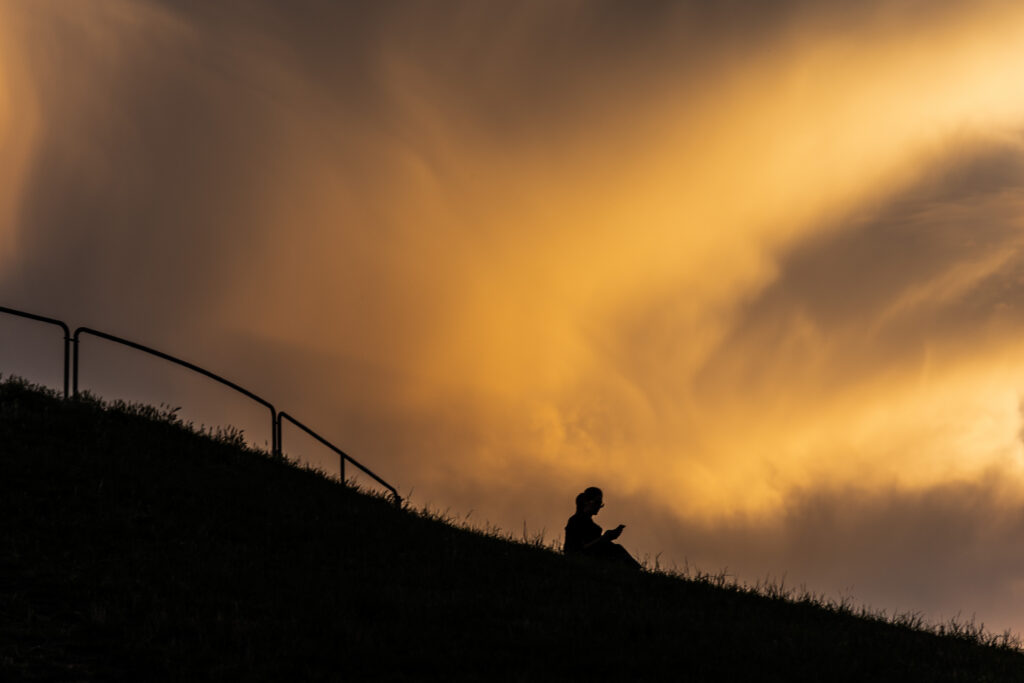
The long light turned out to be more than summer weather. It was Munich’s way of holding beauty and memory in the same frame, allowing one to illuminate the other without pretending that either tells the whole story.
I arrived to work, and found a city I would gladly revisit for pleasure. My advice remains: do not sleep on Munich. Come for Oktoberfest if that is what first catches your attention, but stay for the monuments, the difficult memories, the bicycles, the bookstores and three entirely different ways to watch the sun go down.
Explore more thoughtful ways of moving through the world in our Travel & Escape collection. The best trips do not leave you with the longest list; they leave you with a place that continues to unfold after you have returned home.
faqs:
is Munich worth visiting if you are not going to Oktoberfest?
Yes. Oktoberfest is Munich’s most famous tourism event, but the city’s architecture, parks, memorials, shopping and public life make it rewarding in any season. The festival is one version of Munich, not its complete identity.
how many days do you need in Munich?
Allow three full days for the essential city and four if you want a more leisurely pace. Add another day for each major castle excursion outside Munich.
where is the best place to stay in Munich?
Rosewood Munich is our firsthand recommendation. It combines impeccable service with a central Old Town location that makes Odeonsplatz, Marienplatz, the English Garden and many of the city’s principal sights easy to reach.
what are the best things to do in Munich on a first visit?
Begin with Marienplatz, Viscardigasse, the White Rose memorials, Siegestor and Friedensengel. Then make time for the English Garden, the Eisbach surfers, Hackerbrücke at sunset and Olympic Park.
is Munich easy to explore without a car?
Yes. Central Munich is highly walkable, and the city is also well suited to bicycles and public transportation. A car is helpful for the itinerary described here for places like Olympic Park, but the city center and parks are easily accessed on foot.
where is the gold path known as “the detour” in Munich?
The gold paving stones are in Viscardigasse near the Feldherrnhalle. They mark the route used by people who detoured around the SS-guarded Nazi memorial rather than perform the required salute.
what is the White Rose memorial in Munich?
Munich has several memorials to the White Rose resistance group. The best known include the stone ground memorial and permanent exhibition at Ludwig Maximilian University, along with the dark granite memorial at the northeastern corner of the Hofgarten.
should Neuschwanstein be included in a short Munich trip?
Not if you have only two or three days and want to understand Munich itself. Neuschwanstein is a substantial excursion and is better added when you have at least one additional full day.