


What are the best books to read in March? Here’s our take on the best novels, poetry, fiction and essay collections and other nonfiction books to read that capture the mood, the vibe and the feel of the month of March, with the arrival of spring and the concomitant promise of change and growth. These are great reads not just for this March. They’re perfect for any March.
recommended reads for the month of march
So many books, so little time! Reading can be one of life’s sweetest luxuries. But how to quickly find the next great volume to dive into? To lend a hand, every month we’ll share our Dandelion Chandelier Recommended Reads: books that we’ve personally read and loved – some brand new, and some published long ago. Selected to suit the season, we think they deserve a place on your nightstand. Or your e-reader. In your backpack. Or your carry-on bag. You get the idea.
what is the essential spirit of march?
Is March a deliberate journey from one place to another – say, from winter to spring? Or is it a random walk?

What are the books to read that best capture the mood and feel of March, making them perfect books to read this month?
When you think about it, March is a month of many moods: the somber reflection of Lent; the hopefulness of the first day of Spring; the prideful celebrations of Women’s History Month; the riotous celebrations of St. Patrick’s Day; and the competitive fever of March Madness.
March sees both the wild abandon of Spring Break. And folks setting about the practical and unlovely task of getting their spring cleaning done.
what makes for the best march reading list?
Given all of that, what should we read to get us into a March frame of mind?
After the passionate love stories of February, we’re feeling the need for a palate cleanser this month. Waves of emotion are all well and good when it comes to a reading list, but at some point one has to sober up, at least for a bit.

What are the books to read that best capture the mood and feel of March, making them perfect books to read this month?
It’s a bit of a puzzle, actually. Getting March right demands subtlety and finesse. There should be a journey – perhaps a road trip. We should experience the thrill and uncertainty of starting fresh. The hope of spring – and the cold shock of late winter snow. Sudden reversals of fortune and betrayals; revenge and reckonings. Wry laughter feels right. Heartbreak seems almost certain. But a happy ending is not out of the question.
We want it all in March – the lost and the found. The rise and the fall. The lion and the lamb.
perfect books to read in the month of march
Here are 16 books that we think pair perfectly with March. Any one of these would be great companions on your commute; or to keep you company when you’re sprawled on the lawn on one of those first fresh days of Spring. To dip into after you’ve cleared out some of the underbrush in your closet; or perhaps to read on the plane while you soar toward your spring vacation destination.
A March is a journey. Shall we begin, dear reader?
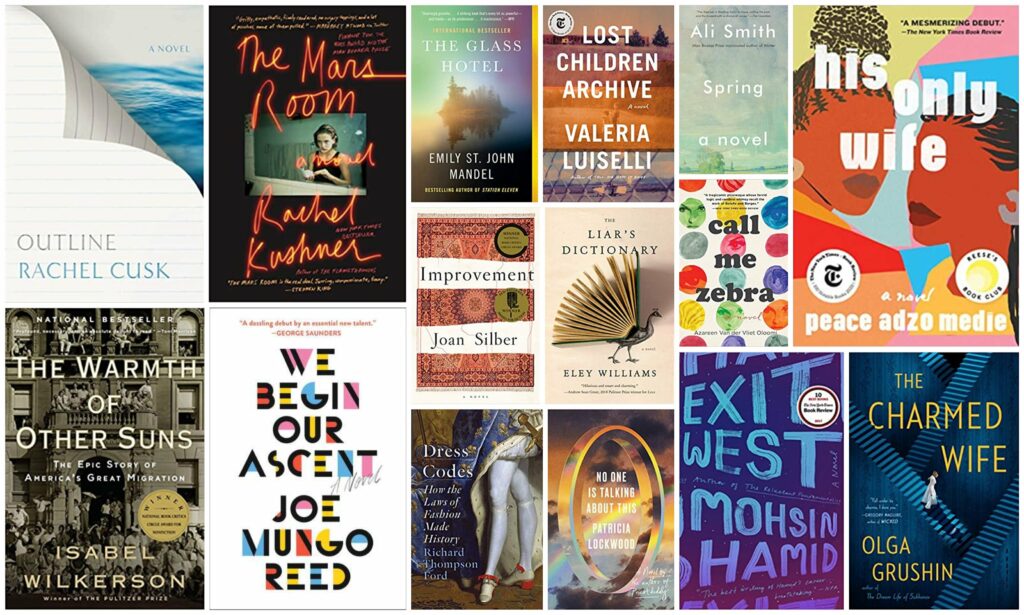
The best books to read to capture the feel of the month of March. Courtesy Photos.
1. Lost Children Archive by Valeria Luiselli.
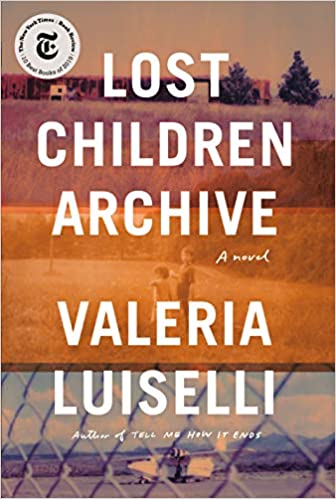
The brilliantly-crafted novel Lost Children Archive wins the prize for “most March of all.” We should note that it was also named one of the 10 Best Books of 2019 by the New York Times Book Review. Melancholy, wrenching, tender, funny, complex and urgent, this is a novel about humans on a journey. They’re traveling from New York City to Apacheria (aka northern Arizona). From home to an unknown and fearsome place. From childhood to adolescence. And from innocence to hard-earned knowledge of what the world really is.
The protagonists are an American family. But the travelers we meet include Native Americans long dead, and migrant children from Mexico whose whereabouts remain unknown. It’s an astounding and illuminating must-read for the moment we’re living in right now.
2. Spring by Ali Smith.
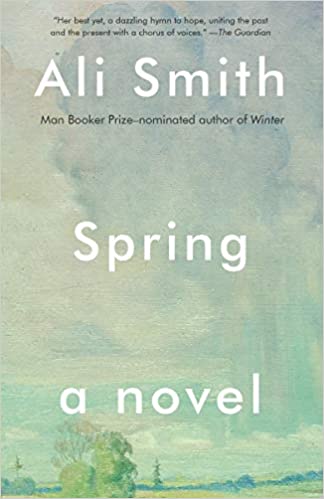
We read Spring, the third installment in the author’s Seasonal Quartet last spring in one long sitting. It’s that good. And that timely, and propulsive, and piercing. In near present-day England, a 20-something woman works despondently as a guard at a Kafkaesque immigration detention center. While there, she inadvertently becomes the protector and companion for a remarkable young girl who seems to be herself one of the highly unwelcome visitors that many seem so determined to identify and expel from the country.
In moments both bleak and blissful, these two draw us deeply into the urgent question of who belongs, whose voice matters, and what our responsibilities are – to each other, and to the world. Is Spring the season of unlikely, unseen and enduring connections? Or the moment when everything buried comes to the surface, in all its awful splendor? This is another stunning entry in a series that won’t let go of our imaginations. If you haven’t read it, drop everything and read it now.
3. Exit West by Mohsin Hamid.
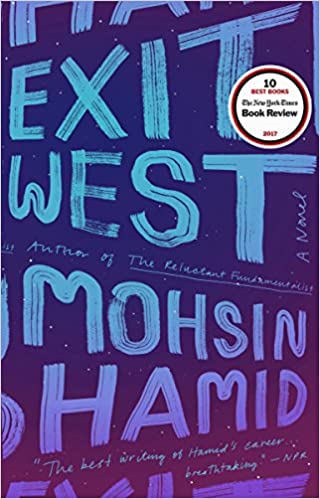
The lovely novel Exit West is both highly topical and timeless. It’s the tale of two young people – Saeed and Nadia – who are living in a city rocked by civil war. Nadia is spirited and tough – Saeed sensitive and devout. When they begin a love affair, they’re quickly forced to decide whether to stay or go. With each other, and also with their homeland. They become refugees through a metaphorical door, and their journey becomes a way to intimately understand what that really feels like.
We have always loved Hamid’s work. Short-listed for the Mann Booker Prize, this is a must-read for those seeking to understand the currents at work in the wider world, and who want to engage in thinking through what it means to be a neighbor.
4. Call Me Zebra by Azareen Van der Vliet Oloomi.
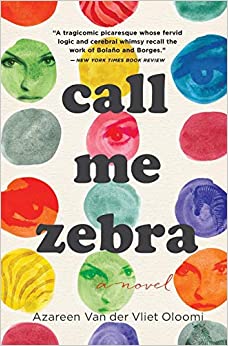
Call Me Zebra is fiction that’s un-classifiable by most traditional measures. It’s about an orphaned young woman, a family of refugees, the power of literature, and the incredible difficulties of romantic love. There’s a parrot, a trip to Barcelona, and a group of improbable roommates. Oh, and a corpse in a suitcase. Despite the crazy, this particular hero’s journey is funny, smart, sexy and memorable. In other words, its a really great read.
5. Outline by Rachel Cusk.
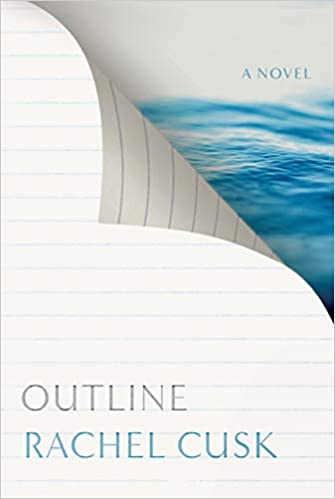
Outline is an austere, cerebral novel that’s the perfect travel companion (we devoured it on a trip to Greece). It’s the story of an unnamed narrator – a British writer who travels to Athens to teach a writing course. She has just gone through a devastating divorce, and her two sons are in London with their father. She’s deeply mourning the loss of her family life, and while we don’t get a description of her, we begin to intuit who she is as we read of ten interactions with her students, friends, fellow travelers and the denizens of Athens.
It’s a fantastic read, the winner of several notable awards and featured on many “best of” lists, including the New York Times and The New Yorker. It’s the first of three-part series of novels featuring the same protagonist. The subsequent entries are equally brilliant.
6. Improvement by Joan Silber.
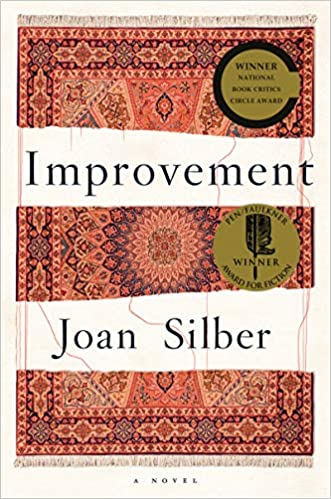
The luminous novel Improvement is a perfect read for the end of one season and the start of the next. Set in New York City, Berlin and Turkey, this is the tale of a young single mother who makes a fateful decision to protect her child, and the many consequences of that act.
Moving back and forth between time and various characters, it weaves a tapestry that – like the Turkish rugs in the story and the tattoos of its protagonist – contains layers of meaning that are a joy to discover. Smart, lovely and deeply human, this book is a marvelous achievement.
7. The Warmth of Other Suns by Isabel Wilkerson.
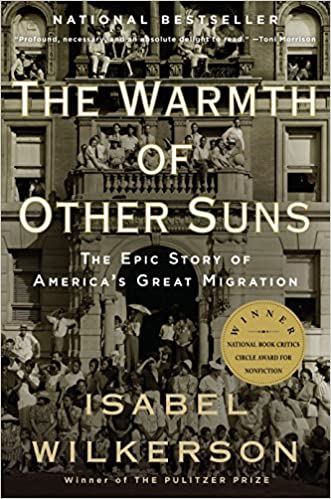
The Warmth of Other Suns: The Epic Story of America’s Great Migration is the story of
8. We Begin our Ascent by Joe Mungo Reed.
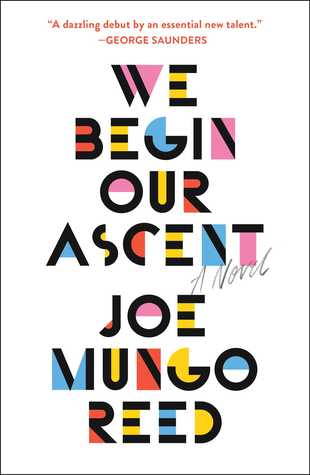
We Begin our Ascent is an exceptional debut novel set during the Tour de France that brings you deep into the minds and hearts of the competitors.
Sol is a domestique – his role is to ride in the peloton and protect the most important cyclist on his team. His wife Liz is a research scientist, struggling with her ambitions after the birth of their first child and some disappointing lab results. It’s ostensibly the story of a bike race, and doping, and its consequences. But it’s actually about far more. It’s a fitting entry for a reading list for the month of March. The story of journey, a beginning, and an end of many things, including love.
9. The Glass Hotel by Emily St. John Mandel.
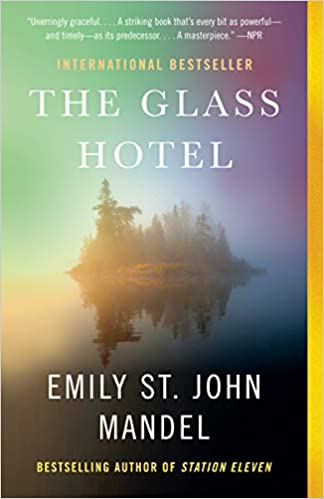
We had no intention of reading The Glass Hotel. Its author had won rave reviews for her previous novel, Station Eleven, a dystopian sci-fi epic about a troupe of actors roaming a devastated landscape post-apocalypse. Great that lots of people loved it, but that’s not really our thing.
So imagine our astonishment and delight when we began reading this luminous novel, which is about the all-too-real here and now. Moving back and forth in time from 2019 to 1999, and dwelling on events surrounding the 2008 financial crisis, this is a literary novel that has the pace of a thriller. It’s fiction crafted with such precision that you often forget its not actual fact.
In a 5-star luxury hotel made mostly of glass off the coast of Vancouver Island, a chance meeting in the wee hours of the morning between an investment advisor, a young female bartender and a middle-aged middle manager leads to a reckoning and ruin. The advisor is running a Ponzi scheme (with a ruse exactly like Bernie Madoff’s) and the manager becomes one of his victims. The bartender becomes his willfully ignorant “trophy wife.”
Surrounding them are many other voices: a bohemian painter and a member of the Saudi Royal Family. The executives who carried out the dirty deeds. The now-convicted advisor’s fellow inmates in Federal prison. And throughout, the voice of the bartender’s brother – and the piercing memory of her mother, who disappeared when she was 13 years old. A rich tapestry in which every thread is ultimately tied, this is a moody, watery tale, wonderfully immersive and right for any season. But particularly for the one we’re in right now.
10. The Mars Room by Rachael Kushner.
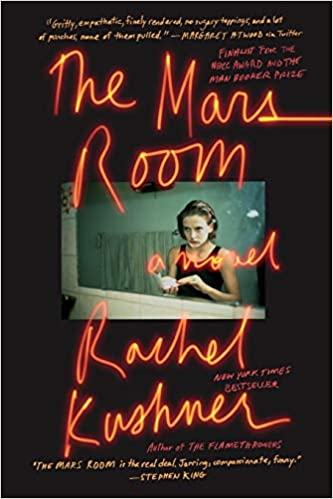
The highly-acclaimed novel The Mars Room is a multi-layered tale of incarceration. And in its dark journey, it’s a book that absolutely captures the feel of March. It’s 2003 and Romy Hall, named after a German actress, is at the start of two consecutive life sentences at Stanville Women’s Correctional Facility. The crime she’s committed is arguably a justified one – nevertheless, she’s permanently separated from her son and forced to learn the rhythms, comforts and daily battles of life in prison with no hope of release.
11. Dress Codes by Richard Thompson Ford.
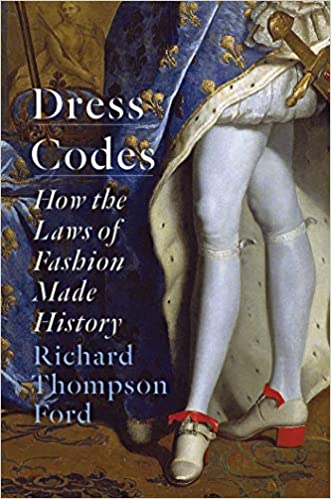
We always have time and room on our book shelves for a great read about fashion, especially as Fashion Month draws to a close. And Dress Codes more than earns its place on our must-read list. We may think of dress codes as historic relics and the purview of the military. But actually, dress codes still determine what we wear, when we wear it—and what our clothing means in normal everyday life.
In some cases, what we wear can be a crime, a serious violation of set rules and a blocker for our ambitions. And even when there are no written rules, implicit dress codes still influence our opportunities and social mobility. How does fashion still have so much power? And how do we bend that power to the forces of good?
12. His Only Wife by Peace Adzo Medie.
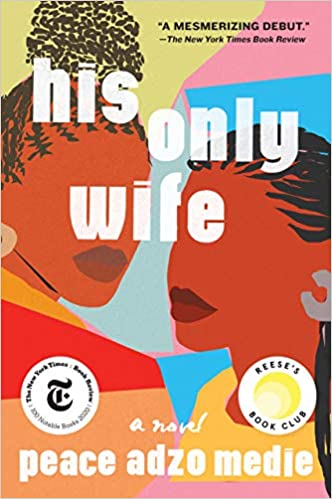
It’s hard to believe that His Only Wife is a debut novel. The author’s voice is incredibly assured, authentic and irresistible. We’re in Ghana, seeing life through the eyes of twenty-something Afi Tekple, a dutiful daughter and aspiring fashion designer living in a small village hours from Accra. Her mother, a widow, presses her into an arranged marriage with a man she knows of but has never met in order to secure her financial and social status. The groom is wealthy, handsome and well-mannered – but it turns out that he is in no way the Mr. Darcy that one might imagine (or hope).
Elikem is not present at their wedding – it’s literally a marriage by proxy. Once installed in a luxury apartment in Accra, Afi does more than what’s reasonable to be a “good wife.” But in the end, in a heartbreaking and achingly real manner, she realizes that she’s on her own in the world – a fatherless woman in a patriarchal and punitive society – and that it will never be enough for her to play the role of a rich man’s trophy wife.
13. The Liar’s Dictionary by Eley Williams.
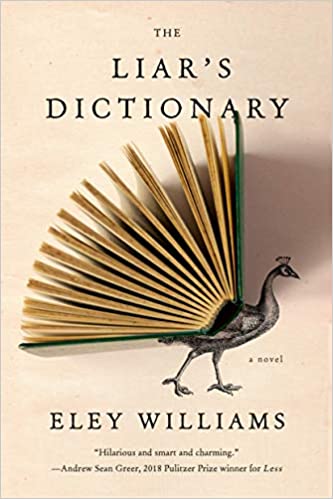 The Liar’s Dictionary is a debut novel that’s an excellent read for those looking for a book to capture the changeable and often confusing feel of March. Its the story of two charming lexicographers in London, and the great loves of their lives. Peter Winceworth is a Victorian-era scribe toiling on the original edition of the Swansby’s Encyclopaedic Dictionary. The thankless work and his vile coworkers lead him to invent and insert unauthorized fictitious entries into the dictionary, unbeknownst to his employer. They’re whimsical and lovely words that probably should exist in the English language, even though they don’t. Many of them are inspired by his unrequited love for his boss’s fiancé, a witty and sophisticated Russian émigré.
Fast forward to present-day London, where Mallory is tasked by the owner of the rights to the dictionary with finding and deleting these fictional entries before the entire work is digitized. She’s struggling with her love for her girlfriend; she’s not out at work and not sure what to do about that. These parallel stories – of romantic love, of words, of the power of fear and the nearly invisible thread that links us all through time and distance – fuse into a marvelous story of redemption and finding one’s place in the world.
BUY NOW
14. No One is Talking About This by Patricia Lockwood.
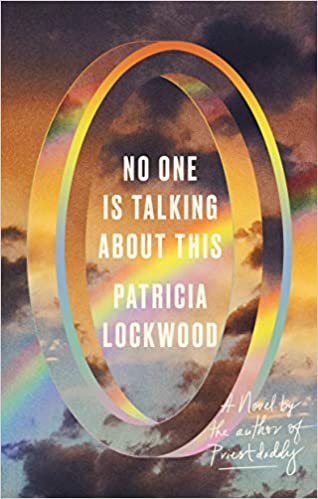
Books to read that capture the feel of the month of March are, by their nature, challenging and insistent on change and growth. No matter how painful. Which is why No One is Talking About This makes our list. It’s a sharply funny meditation on what it means to live in the real world when the Internet is such a constant and beguiling presence.
Our narrator is a social media star, touring the world and dispensing nuggets of wisdom based on her viral post about dogs. The author is a poet, and in many ways, this work reads like an extended tone poem. As we follow the protagonist around the world, we are treated to beautiful imagery and biting insights on life in “the portal.” But then reality intrudes. The second half of the novel is a sobering reminder that life is a lot more than bon mots on social media.
15. The Charmed Wife by Olga Grushin.
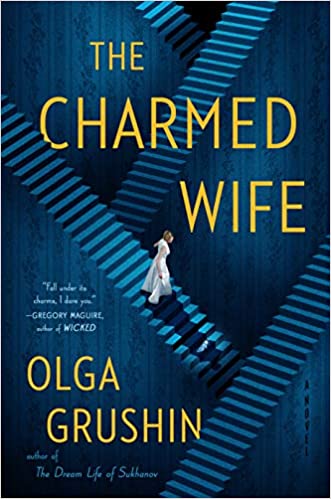
The Charmed Wife is a classic fractured fairy tale that’s a perfect entry on our list of the best books to read that capture the feel of March. Forget about the Cinderella story that you’ve heard your entire life. Here, the Prince is a narcissist and the Princess is suffering from depression and anxiety disorder. After thirteen years of marriage she’s the mother of two and she’s done with a failed romance. With the help of a Witch, she’s ready to commit regicide.
It may sound grim (or Grimm?) but actually it’s not. The prose is lush and magic sparkles in the air throughout this journey. There are laugh-out-loud moments in vignettes about what becomes of the mice that turned into carriage horses on the night of the big ball. And in the end, it’s a satisfyingly modern take on an ancient fable. In case anyone is wondering what happens when a young women decides to stand up for herself in the kingdom of men.
16. Traveling Black: A Story of Race and Resistance by Mia Bay.
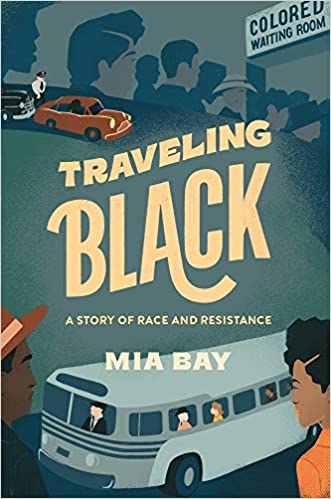
Named one of the 10 Best Books of 2021 by The New York Times, Traveling Black is a detailed account of all the ways in which unequal treatment in transportation sparked and fueled the Civil Rights Movement in America.
We are old enough to remember our parents telling us how hard it used to be to drive as a family from our home in Detroit to visit relatives in South Carolina and Georgia. As recently as the early 1960’s, Black people couldn’t reliably purchase gasoline or food. Find overnight accommodations. Or even locate a sanitary bathroom as they motored from North to South. Jim Crow laws in the southern states prohibited the races to mix in even the most basic ways, limiting the ability of African Americans to move freely. Subjecting them to petty humiliations. And in some cases, extreme violence.
Bay traces that history all way the back to the horse-and-buggy, through steamships, railroads, buses and airplanes. And makes a compelling case that transportation and the freedom it grants has long been the locus of racial discrimination in America. And also the catalyst for significant change. It’s a long journey to a truly free and democratic society and we’re not there yet. But reading this book has given us renewed purpose and energy for the road ahead.
best books to read in the month of march
That’s it. Sixteen books that capture the essential mood and feel of March. What’s on your reading list this month? And where are you on your journey, dear reader?