
The best books to read in October are haunting but not horror: literary ghost stories, witchy novels, magical realism, moonlit family sagas, novels of exile and return, and nonfiction about the archives, cities, fields and widows that refuse to stay quietly in the past. This October reading list gathers 21 novels and nonfiction books for readers who want atmosphere without gore — books that shimmer rather than scream, and leave something behind after the light is turned out.
The Reading Room is Dandelion Chandelier’s curated literary salon: monthly, seasonal and thematic reading lists chosen for beauty, intelligence, emotional resonance and the mood of the moment.
Begin with Beloved, The Turner House, Lincoln in the Bardo, The Gone Dead, Sing, Unburied, Sing and Enter Ghost for ghosts that have something important to say. Read We Ride Upon Sticks, Practical Magic, Gingerbread, Boy, Snow, Bird, The Essex Serpent and The Night Circus for when October calls for spells, folklore and theatrical pleasure. Then follow the month deeper, toward buried music, strange landscapes, difficult archives and histories that will not remain decorative.
At a glance: 21 October books • literary ghosts • witches + spells • magical realism • strange families • things that will not stay buried • haunted nonfiction • Halloween without gore
Halloween is only one part of October, but it is the month’s most theatrical flourish. For the rest of the season — where to go, what to wear, what to see in New York and how to change the atmosphere at home — The Chic, the Wicked & the Beautiful: The Luxury Halloween Guide is the front door.

A good month to disappear into a book.
why october reads differently
October is the month when familiar things acquire another register. Houses seem to remember more. Old stories become newly plausible. Family histories develop weather. Magic can be mischievous, beautiful or dangerous, and the dead are rarely present merely to frighten us.
That is the distinction behind this shelf. Horror often asks what will happen next; haunting asks what has already happened and why it is still here. The strongest books below use ghosts, folklore, magic, disappearance and the uncanny as ways of writing about memory, grief, race, family, desire, history, land and power.
There is pleasure here too. October should have witches with wit, enchanted tents, serpents in the marsh, impossible recipes, strange houses and the occasional extremely questionable field-hockey pact. The month becomes more interesting when darkness and delight are allowed to keep one another company.
ghosts that tell the truth
These are October’s central hauntings: not ghosts as decoration, but ghosts as testimony. They arrive because something has been denied language, burial, justice, recognition or love.
1. beloved by toni morrison.
Toni Morrison’s Beloved is the essential American ghost story because the ghost is not ornament. She is history, love, violence and memory returning in a form no one can domesticate. Sethe has escaped slavery, but she has not escaped what slavery did to her, her children or the house at 124. Morrison refuses any tidy division between past and present, living and dead. Read it in October not because it is spooky, but because it understands haunting as moral reality.
2. the turner house by angela flournoy.
Angela Flournoy gives us a Detroit family of thirteen siblings, a house under financial pressure and a haint that eldest son Cha-Cha has seen for years. The ghost matters, but so do inheritance, migration, housing, memory and the accumulated roles people acquire inside large families. Detroit is not backdrop; it is part of what the Turners inherit. This is an October novel about the fact that houses are archives as much as shelters.
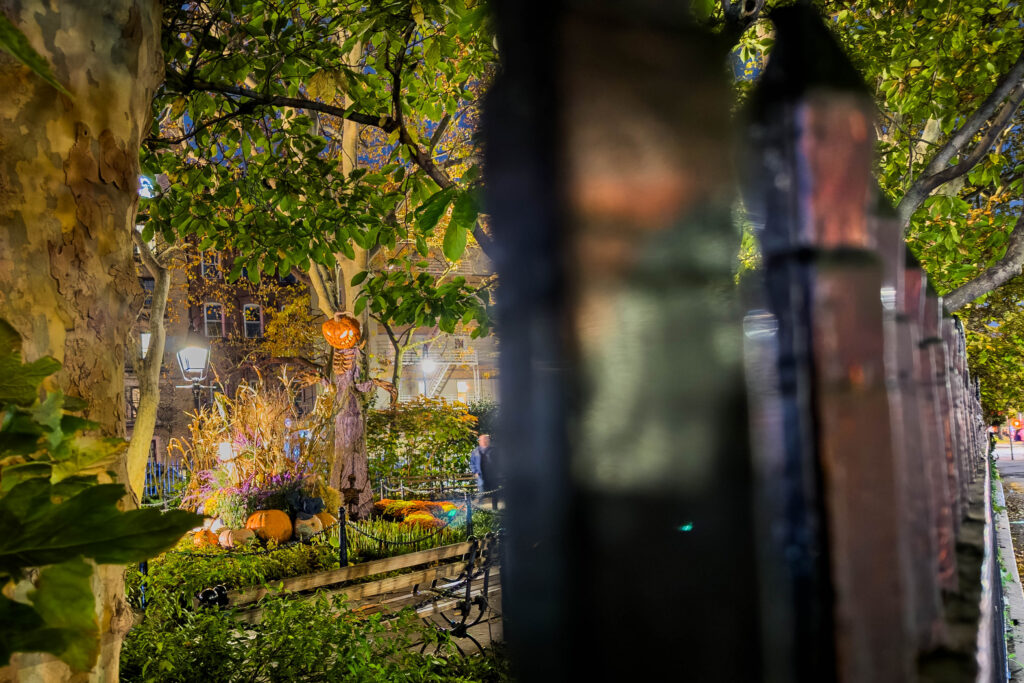
Not every ghost announces itself.
3. lincoln in the bardo by george saunders.
George Saunders turns Abraham Lincoln’s grief for his young son Willie into a chorus of the dead: comic, profane, tender and formally audacious. The spirits in the bardo cannot quite admit that they are dead, while Lincoln cannot yet imagine releasing his son. What begins as historical grief becomes a larger question about attachment: what do we refuse to let go, and what happens when love has nowhere left to go?
4. the gone dead by chanelle benz.
Billie James returns to the Mississippi Delta to claim the property where her poet father died when she was a child. What she inherits is less a house than a network of silence, suspicion and incomplete memory. Chanelle Benz gives the literary thriller the heat and texture of the Delta while asking more unsettling questions underneath: who remembers, who benefits from forgetting, and what exactly has been buried?
5. sing, unburied, sing by jesmyn ward.
Jesmyn Ward’s novel is road story, family reckoning and ghost tale at once. Jojo travels through Mississippi with his mother, sister and the histories that ride alongside them, including the afterlife of racial violence and incarceration. Ward’s ghosts are witnesses rather than devices, and the Gulf Coast feels saturated with what America insists has passed. Few contemporary novels make the boundary between living and dead feel so permeable.
6. enter ghost by isabella hammad.
An actor living in London returns to Palestine and becomes involved in a West Bank production of Hamlet. Isabella Hammad uses theater, exile, family and return to ask who is allowed to speak and when performance becomes witness. The ghost is Shakespeare’s, but also history’s: occupation, displacement, memory and the returning daughter all move through the novel like stage directions in the process of being obeyed.
witches, spells and moonlit mischief
October should not be all grief and testimony. It also needs mischief: witches, spells, impossible houses, beautiful rumors, enchanted tents, strange sweets and the thrilling suspicion that ordinary life has been leaving certain doors unlocked.
7. we ride upon sticks by quan barry.
In 1989, the Danvers Falcons field-hockey team — from a Massachusetts town tied to the Salem witch trials — decide that ordinary effort may not be sufficient. Dark powers are considered; an Emilio Estevez notebook acquires unusual importance. Quan Barry’s novel is funny, generous and subversive: part sports story, part feminist coming-of-age novel, part local-history séance. It understands the particular electricity of teenage girls deciding they would like more power.
8. practical magic by alice hoffman.
Alice Hoffman’s Owens sisters grow up among spells, whispers and eccentric aunts, but the lasting appeal of Practical Magic lies in its emotional architecture: sisterhood, inheritance, shame, desire, domestic knowledge and the difficult business of returning to the house one once needed to escape. Its magic feels inseparable from ordinary life, which is probably why the book remains such an enduring October comfort.

A little enchantment is allowed.
9. gingerbread by helen oyeyemi.
Helen Oyeyemi takes mothers, daughters, recipes, migration and fairy-tale logic and turns something as reassuring as gingerbread into an object one should perhaps examine more closely. Her enchantments are never decorative; family stories, food and memory become forms of power. Read it when the kitchen is warm, the windows have gone dark early, and an inherited recipe has begun to feel suspiciously like a spell.
10. boy, snow, bird by helen oyeyemi.
Oyeyemi uses the architecture of Snow White to write about race, beauty, passing, motherhood and American reinvention. Mirrors and fairy tales remain in the room, but the questions they reflect are social rather than fantastical. The novel tells its truths sideways, which is precisely what fairy tales have always been good at doing.
11. the essex serpent by sarah perry.
Victorian fog, widowhood, scientific curiosity, religious conviction, desire and a rumor of something ancient moving through the marsh: Sarah Perry has assembled an exceptionally civilized October novel. The serpent may be creature, fear, longing or projection; the pleasure lies in watching an entire community decide what it needs the monster to mean.
12. the night circus by erin morgenstern.
Le Cirque des Rêves arrives without warning and opens only at night, its black-and-white tents containing impossible attractions and an increasingly dangerous magical competition. Erin Morgenstern gives October spectacle with architecture: clocks, velvet darkness, sugared things, secret rules, rivalry and romance. It is not frightening. It is immersive, which can be considerably more effective.
what will not stay buried
By mid-month, the shelf becomes stranger. Music has a history. Landscapes carry myth. Taxidermy becomes family business. Someone disappears into a tree. The past is no longer content to remain atmospheric.

Some histories refuse burial.
13. the tiger’s wife by téa obreht.
Téa Obreht braids war, medicine, memory and Balkan folklore around a young doctor trying to understand her grandfather’s death. The deathless man, the tiger and the woman attached to its story move beside ordinary grief without ever becoming merely whimsical. This is myth functioning as inheritance: the story a family carries when official history cannot hold everything that happened.
14. white tears by hari kunzru.
Two young white men obsessed with old blues recordings create a fake musical discovery that turns out to have a history of its own. Hari Kunzru’s novel becomes ghost story, mystery and indictment of the exploitation of Black music in America. Its haunting travels through sound: a recording circulates, a collector wants what he cannot own, and the past returns not as mist but as reverberation.
15. swamplandia! by karen russell.
October need not wear New England wool. Karen Russell gives us a Florida Gothic of heat, brackish water, alligator wrestling, tourist fantasy and a failing family theme park called Swamplandia! After the death of their mother, the Bigtree children begin to move through a world in which grief and danger become difficult to separate. The swamp proves every bit as capable of holding darkness as the fog.
16. mostly dead things by kristen arnett.
Jessa-Lynn Morton inherits her family’s Florida taxidermy business after her father’s death while the rest of the family processes grief with varying degrees of success. Kristen Arnett makes the literal preservation of dead things a sharp, funny framework for everything people preserve emotionally: failed love, shame, desire, family roles and stories that have outlived their usefulness.
17. ways to disappear by idra novey.
A Brazilian novelist climbs into an almond tree with a cigar and suitcase, then vanishes. Her American translator goes looking for her and finds debt, family complications, literary obsession and increasingly dangerous gaps in the story. Idra Novey turns translation itself into an October threshold: what disappears between languages, countries and versions of a life?
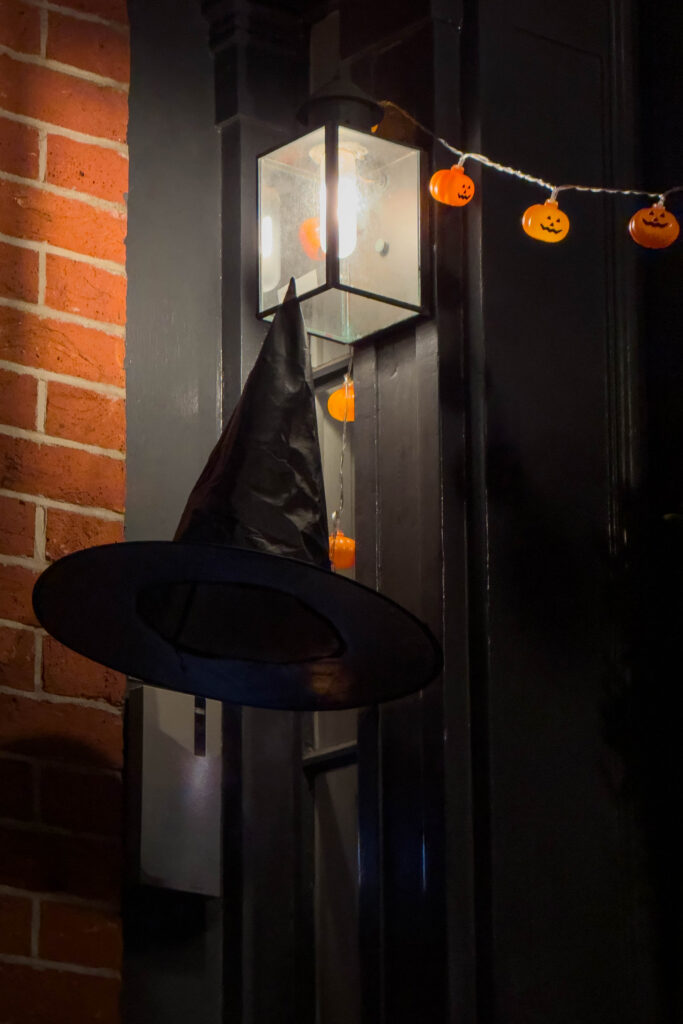
The witch has stepped out.
the archive, the city, the field and the widow
The nonfiction on this October shelf is not here for balance. It is here because haunting eventually stops being metaphor and becomes evidence. The archive. The city. The field. The widow. Four forms of memory with nowhere polite to go.
18. ordinary notes by christina sharpe.
Christina Sharpe’s fragments move among images, family memory, criticism, grief, Black life, beauty and violence. The form matters: a note can hold a photograph, wound, question or sentence without forcing them into the false neatness of linear argument. Ordinary Notes asks what attention looks like in the afterlife of slavery and anti-Black violence, while refusing to surrender beauty, care or relation.
19. stay alive: berlin, 1939–1945 by ian buruma.
Ian Buruma’s Berlin is frightening because it remains recognizably a city: apartments, cinemas, cafés, ration lines, music, compromise, rumor, courage and cowardice continuing under Nazi rule. The haunting comes from ordinary life learning to coexist with catastrophe. That moral chill is more unsettling than a ruined mansion could ever be.
20. we are each other’s harvest by natalie baszile.
Harvest season is easily reduced to an aesthetic of baskets, apples and persuasive gourds. Natalie Baszile restores the deeper story. Through essays, interviews, photographs, recipes, poetry and history, We Are Each Other’s Harvest examines Black farming, land, labor, ownership, dispossession, stewardship and legacy. It asks us to enjoy the beauty of harvest season while looking harder at what abundance has required.
21. an inconvenient widow by lois romano.
Mary Todd Lincoln belongs on this shelf not because she is a ghost, but because American history turned her into one. Lois Romano revisits a politically astute, extravagant, grieving and frequently vilified First Lady whose husband was sanctified while she became a cautionary tale. Theater, séances, hostile press, institutionalization, family betrayal and public grief give the biography an unmistakably October register, but the real subject is what happens to women whom history finds inconveniently difficult.
if you want to choose by mood
If you have one weekend, read Beloved, We Ride Upon Sticks and Ordinary Notes: testimony, mischief and attention.
For Halloween without gore, choose The Turner House, Lincoln in the Bardo, Practical Magic, The Essex Serpent or The Night Circus. For the literary ghost shelf, stay with Morrison, Flournoy, Saunders, Benz, Ward and Hammad. If you want the stranger rooms — swamps, vanished writers, old recordings and taxidermy — go to Obreht, Kunzru, Russell, Arnett and Novey.
And when fiction has done enough haunting for one month, Sharpe, Buruma, Baszile and Romano move the same question into evidence: what remains when history would prefer to call the matter closed?
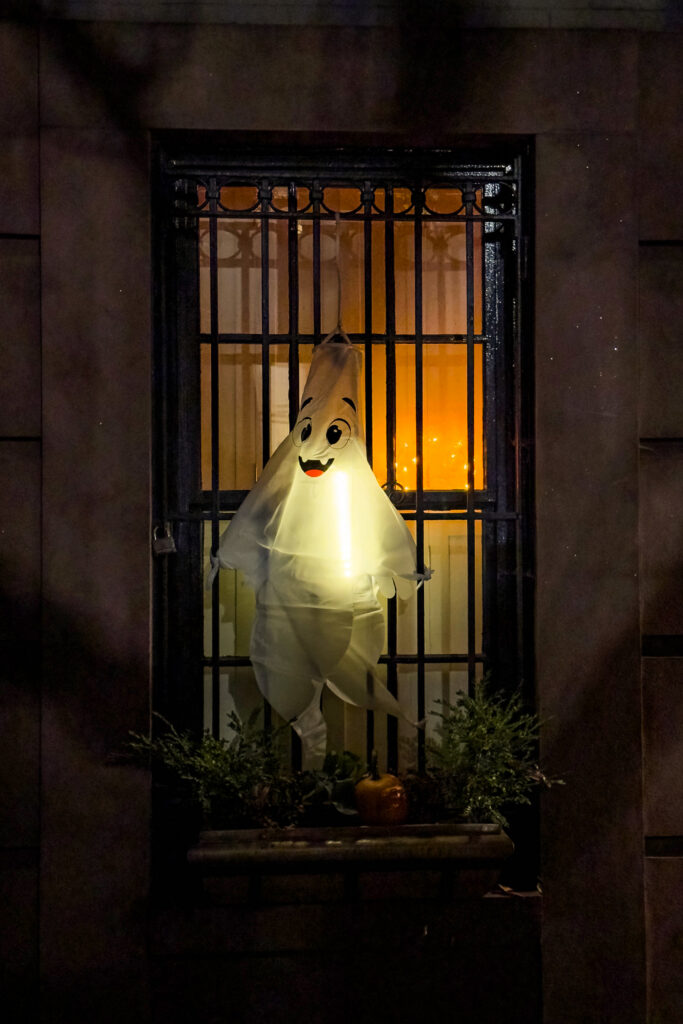
And one last ghost.
october, properly shelved
The best October books do not simply decorate the month with ghosts, fog and magic. They use the season’s darkness to look more closely at what lingers: love, violence, family, land, music, memory, grief and the stories people tell when facts alone cannot carry the whole weight.
That leaves plenty of room for pleasure. A witch can still be funny. A circus can glow after dark. A rumor about a serpent may improve an otherwise perfectly respectable marsh. October should have wit and beauty alongside its moral weather.
For the broader autumn shelf, Edit Season: The Best Books to Read in the Fall distills the best of September, October and November. And once October gives way, Return, Remembrance and Reckoning: The Best Books to Read in November turns toward family, inheritance, gratitude, homecoming and what comes after the haunting.
For Halloween itself, return to The Chic, the Wicked & the Beautiful: The Luxury Halloween Guide. New York nights, costumes, travel and the house after dark are waiting elsewhere; this is the room with the books.
faqs:
what are the best books to read in october?
The best October books include Beloved by Toni Morrison, The Turner House by Angela Flournoy, Lincoln in the Bardo by George Saunders, Sing, Unburied, Sing by Jesmyn Ward, We Ride Upon Sticks by Quan Barry, Practical Magic by Alice Hoffman, The Essex Serpent by Sarah Perry, The Night Circus by Erin Morgenstern, White Tears by Hari Kunzru and Ordinary Notes by Christina Sharpe.
what are good halloween books for readers who do not like horror?
Try We Ride Upon Sticks, Practical Magic, The Night Circus, The Essex Serpent, The Turner House, Lincoln in the Bardo and The Gone Dead. They offer ghosts, witches, magic, mystery and atmosphere without relying on gore or slasher-style fear.
what does “haunting, not horror” mean?
It means books that create unease, mystery, emotional resonance or supernatural possibility without making graphic fear the point. The best haunting books often use ghosts, magic, houses, family secrets and memory to explore what the past continues to demand from the present.
what are the best literary ghost stories for october?
Start with Beloved, The Turner House, Lincoln in the Bardo, The Gone Dead, Sing, Unburied, Sing and Enter Ghost. Each uses haunting to explore history, grief, race, family, exile or performance.
what are the best witchy books to read in october?
We Ride Upon Sticks, Practical Magic, Gingerbread and Boy, Snow, Bird bring witchcraft, spells, folklore, fairy-tale logic and female knowledge into the October shelf without becoming conventional horror.
what nonfiction belongs on an october reading list?
Ordinary Notes, Stay Alive: Berlin, 1939–1945, We Are Each Other’s Harvest and An Inconvenient Widow move October’s idea of haunting into the archive, the city, the field and public history.