


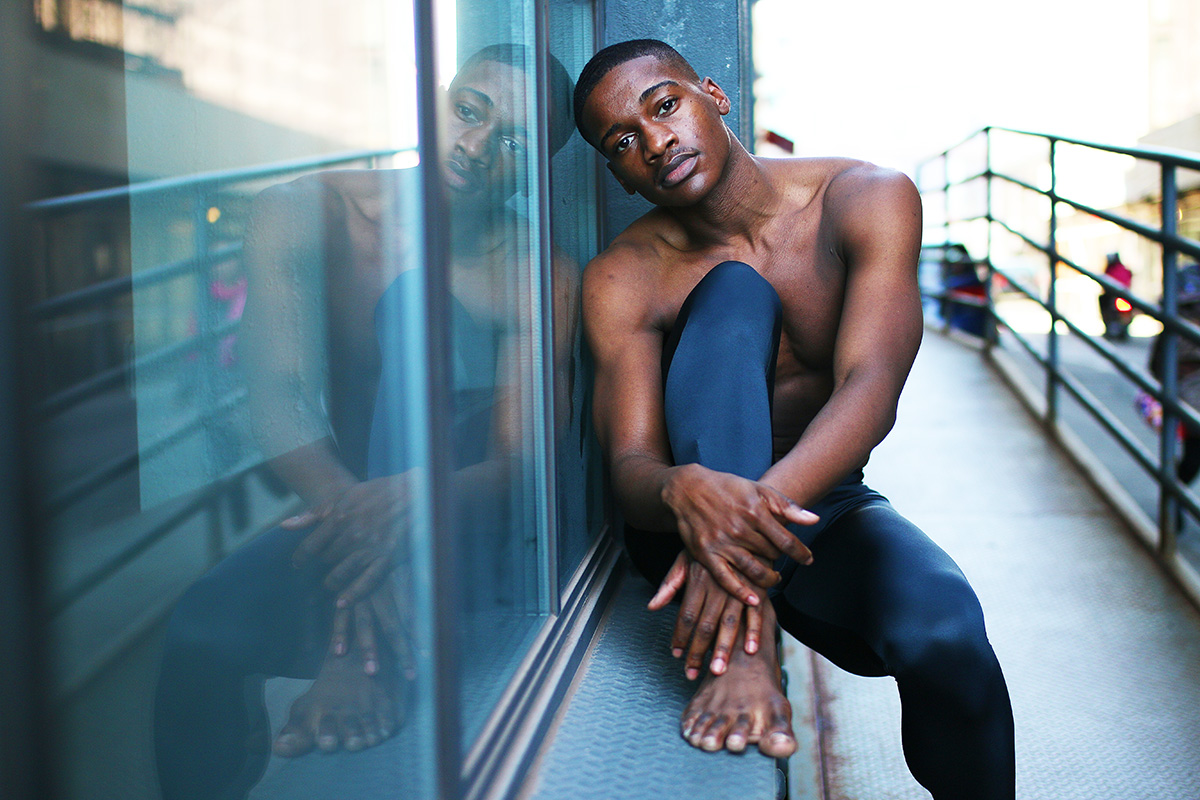
As we explore the ranks of Black achievers in the world of luxury and culture, we turn our attention to contemporary dance. Who are the top Black and African American dancers and choreographers in the contemporary dance world right now? We’re sure we didn’t capture them all, but here’s our list of the best, most famous and most influential Black and African American dancers and choreographers in the world right now..
who are the black and african american achievers in the world of dance to know right now?
In honor of Black History Month, we’ve been celebrating leaders and achievers in every corner of the world of luxury and culture. It’s time to highlight some of the most important African American and Black figures in the world of dance. Some of these dancers and choreographers are already household names, while others’ stars are still rising. All are certain to shape the future of the art form. Here are sixteen Black dancers and choreographers whose names you should know.
famous and influential black and african american achievers in the world of contemporary dance
1. Alexander Diaz
Artist Alexander Diaz began their study of dance at the Bronx Dance Academy and the Bronx Dance Theater. They went on to study at Philadelphia’s University of the Arts, and San Francisco’s Alonzo King Lines Ballet Training Program. Since then have worked with prestigious dance companies such as RITUALS, and Earl Mosley’s Diversity of Dance, where they currently serve on the junior board.
Diaz uses artistic mediums such as dance “to explore memory, re-imagine history, and create environments that facilitate awareness of self and the performance of self in relation to others.” And they are certainly someone whose career we should be watching; with their recent residency at PEPATIÁN’s Dancing Futures: Artist and Mentor Collaborative Residency in 2021, we know that there is more on the horizon.
2. Amy Hall Garner
Like many choreographers, Amy Hall Garner began her relationship to the artform as a dancer. She danced throughout her childhood in Alabama. It was not until she came to New York to attend Julliard that she first gave choreography a try. Today, choreography is her fulltime job.
Garner’s work has been commissioned by Dance Theatre of Harlem, BalletX, ABT Studio Company, Paul Taylor Dance Company, and Miami City Ballet. She has also choreographed multiple musicals, and personally coached Beyoncé.
Garner was an early recipient of Joffrey Ballet’s Winning Works award. In 2018 she was selected for Alvin Ailey’s New Directions Choreography Lab.
3. Bebe Miller
Born and raised in Brooklyn, New York, Bebe Miller left the city to studiy dance at Ohio State University. After dancing with Nina Weiner’s Troupe for several years, she founded the Bebe Miller Company in 1978. In the decades since, Miller’s pieces have been performed hundreds of times. She has had work commissioned by Boston Ballet, A.I.M by Kyle Abraham, Philadanco, Oregon Ballet Theater, and many other renowned dance groups. With dance, Miller’s goal is “to pursue her interest in finding a physical language for the human condition.”
Miller has received numerous awards throughout her career, including the New York Dance and Performance Award (or “Bessie”), a John Simon Guggenheim Memorial Fellowship, a National Endowment for the Arts’ Choreographer’s Fellowship, and many others.
4. Charlotte Nebres
Charlotte Nebres is a name to know. In 2019, Nebres was the first Black dancer to star as Marie in New York City Ballet’s annual rendition of The Nutcracker, when she was only eleven years old. Nebres’ mother is from Trinidad and her father is from the Philippines. She is a student at the School of American Ballet.
At the time of her performance, Gia Kourles covered her barrier-breaking role for the New York Times, and Nebres also turned her experience into a picture book.
5. Charmaine Warren
Charmaine Warren is not only a dancer, but also a historian, an educator, a consultant, and writer. A decorated scholar – Warren holds two BAs from Montclair State College, an MFA from City College, and a PhD in History from Howard University – Warren has danced with prestigious New York Dance companies for many years, and these days helps to shape the next generation of dancers. She has taught at the Ailey School, Hunter College, Sarah Lawrence College, and Kean University, as well as other formidable institutions.
In summer of 2020, Warren created the series Black Dance Stories, which worked to uplift Black creators in the midst of the COVID-19 pandemic.
Warren is also the founder and producer of the dance festival Dance on the Lawn, in Montclair, New Jersey.
6. Desmond Richardson & Dwight Rhoden
Desmond Richardson and Dwight Rhoden met when they were both dancing with the Alvin Ailey American Dance Theater. They formed a close friendship, and then went on to co-found Complexions Contemporary Ballet – with Richardson dancing, and Rhoden choreographing. That was in 1994.
Though the pair hadn’t necessarily set out to start an official dance company, Complexions has now been creating vital, of-the-moment dance performances for the last three decades. Complexions’ mission is to “bring unity to the world one dance at a time,” and they accomplish this through the company’s diversity and their barrier-shattering performances.
Complexions has performed across the globe, and has been recognized with major accolades for their singular contributions to the form.
7. Homer Hans Bryant
Born on the isle of St. Thomas in the Virgin Islands, Homer Hans Bryant began dancing at a very young age. Bryant found his way to Jacob’s Pillow Dance School, and then to the Dance Theater of Harlem, where he studied with its founder, Arthur Mitchell.
Bryant performed with the Dance Theater of Harlem for many years, and also debuted on Broadway (in Timbuktu! with Eartha Kitt) and in the feature film adaptation of The Wiz. He then made moves to Chicago, where he founded his own dance company and school, today known as the Chicago Multi-Cultural Dance Center.
Bryant is also the creator of Hiplet – a portmanteau of hip-hop and ballet – which was originally called Rap Ballet. Hiplet is an Afro-centric movement, designed to include dancers of all body types.
8. Hope Boykin
Originally from Durham, North Carolina, Hope Boykin attended Howard University, and then moved to New York, where she studied at The Ailey School.
She was an original member of Complexions Contemporary Ballet, and also danced for many years with Philadanco, before joining the Alvin Ailey American Dance Theater. She stayed with Alvin Ailey two decades, working as both a dancer and choreographer, and ultimately retired from the company in 2020. Boykin has been recognized for her accomplishments in the field with a New York Dance and Performance Award.
Boykin believes strongly that there are no limits, and she wants to instill that belief in other people. In a conversation with PBS last year, she spoke about how she hopes her role as an educator will help aspiring Black dancers to see that there is no limit on the success they may reach.
9. Jamel Gaines
After fifteen years working with JUBILATION! Dance Company, choreographer and educator Jamel Gaines left to found the Jamel Gaines Creative Outlet Dance Theatre of Brooklyn (JGCO) in 1994. For the past several decades, Creative Outlet has shown itself as a space for superb performance, as well as a space for young artists to learn dance at the highest level. Their work is rooted in social justice, and in human connection.
Most recently, JGCO presented REMEMBERING, an annual program in honor of Black History month, at the Brooklyn Academy of Music. This year’s performance was created in honor of the 60th Anniversary of Dr. Martin Luther King’s March on Washington, and to commemorate the 16th Street Baptist Church Bombing in Birmingham, Alabama.
Gaines has worked with many of the top artists in the world, including Whitney Houston, Michael Jackson, Jennifer Holliday, and others; his work has been performed by the Alvin Ailey American Dance Center, the Martha Graham School, and the Actors Theater Workshop.
10. Kyle Abraham
When it comes to the world of dance, few contemporary figures loom as large as Kyle Abraham. Abraham has received immense critical acclaim for his work, including a Princess Grace Award, a MacArthur Fellowship, and a Bessie Award.
Born in 1977 in Pennsylvania, Abraham began dancing at the Civic Light Opera Academy and the Pittsburgh Creative and Performing Arts School. He then went on to perform with many major dance companies, before founding A.I.M. (Abraham in Motion) by Kyle Abraham in 2006.
In creating A.I.M, Abraham wanted to “create a body of dance-based work that is galvanized by Black history and culture.” Abraham in Motion creates dance pieces that feel unlike anything else, with inspiration drawn from a multitude of artistic mediums, including visual art and film.
11. Maleek Washington
Maleek Washington is a native New Yorker, a performer, and an educator. He got his start dancing at the LaGuardia High School for the Performing Arts, Harlem School of the Arts, and Broadway Dance Center, and then went onto enroll at Boston Conservatory.
Washington has had a varied and exciting career, dancing with CityDance Ensemble as well as A.I.M. by Kyle Abraham. He has worked with an impressive range of artists, from Paul Taylor to Rihanna, and performed as the first Black male cast member of the legendary immersive Shakespeare adaptation Sleep No More. In 2018, he was cast in the NBC production, Jesus Christ Superstar Live, and he has served as an assistant choreographer to the Metropolitan Opera.
He has received numerous honors for his work, including a Princess Grace award, and has been recognized at the White House, the Kennedy Center for the Performing Arts, Jacob’s Pillow, and the Apollo Theater.
He is an active teacher, and his choreography was recently on display in the opera The Factotum.
12. Misty Copeland
If there’s one name in dance you know, there’s a good chance it’s Misty Copeland. Copeland made history by being the first Black woman promoted to principal dancer at the American Ballet Theatre.
Born in 1982 in Kansas City, Missouri, Copeland spent most of her childhood in Los Angeles, and began studying dance at an early age. She has danced on Broadway, with Paul Taylor Dance Company, and has appeared in music videos and films, as well as receiving an enormous array of accolades for her talent.
Her life story can be read in her 2014 memoir, Life in Motion.
13. Rennie Harris
Born and raised in Philadelphia, Rennie Harris has memories of dance that date back to his early childhood. He is the founder of esteemed hip-hop dance theater Rennie Harris Puremovement, which celebrated their 30th anniversary in 2022.
In honor of their 30th anniversary, Puremovement restaged Rome & Jewels, one of Harris’s most legendary creations. As you may have guessed from the name, the show is a hip-hop-filled adaptation of Romeo & Juliet, set in Philadelphia.
Harris also founded the Illadelph Legends of Hip-Hop Festival, to honor and celebrate the wonders of Street Dance.
Harris and his work have been recognized many times across his career. He has received a Guggenheim Fellowship, a Bessie Award, the Alvin Ailey Black Theater Award, as well as an award from the National Endowment for the Arts – and many more.
14. Ronald K. Brown
Born in 1967 in Brooklyn, New York, Ronald K. Brown is best known as the founder of New York dance group EVIDENCE.
Founded in 1985, EVIDENCE creates art with a mission to “promote understanding of the human experience in the African diaspora through dance and storytelling.” Their work is infused with traditional African dance and spoken word, as well as contemporary choreography.
As well as founding EVIDENCE, Brown has choreographed works for Jacob’s Pillow, Philadanco, Alvin Ailey American Dance Theater, and many other well-known dance companies. His honors have included a Bessie Award, a Guggenheim Fellowship, a Black Theater Alliance Award, and others.
15. Sidra Bell
The daughter of a trained dancer, Sidra Bell began dancing at a young age at the Dance Theater of Harlem – and she has continued dancing and choreographing ever since.
Bell earned her BA in history at Yale University, and then went on to pursue her MFA in Choreography at Purchase College Conservatory of Dance. She has worked as an adjunct professor at many universities, and has been an artist-in-residence at Harvard.
Her work has been commissioned by many of the world’s most prestigious dance companies – among them, the Julliard School, Ailey II, and BODYTRAFFIC. In 2020, she was the first Black woman to have her choreography commissioned by the New York City Ballet. She has won multiple awards, including from the Solo-Tanz Theater Festival in Stuttgart.
16. Tommie-Waheed Evans
Born in Los Angeles, Tommi-Waheed Evans is a dancer and choreographer, whose work “explores Blackness, spirituality, queerness, and liberation.” He studied with the Ailey School, and earned his MFA in Choreography from Jacksonville University.
Evans has appeared with dance groups such as Complexions Contemporary Ballet, Philadanco, and HopeBoykinDance and has had work performed by BalletX, Dallas Black Dance Theatre, Philadanco and more.
He founded his dance company, waheedworks, in 2006, and has been honored with awards such as a fellowship from Center for Ballet and Arts at NYU, a Princess Grace Honoraria in Choreography, a Guggenheim Fellowship, and many more.
famous black and african american dancers and choreographers in contemporary dance
That’s our current list of the best, most famous and influential Black and African American dancers and choreographers in the world of contemporary dance right now. But we know it will continue to grow – so check back for more updates! And make a plan to see some of these incredible artists perform in person if you can, dear reader.