What should you wear to the US Open? Something polished enough for a suite, breathable enough for the outer courts and comfortable enough to cross Flushing Meadows without negotiating with your shoes. Vale’s first choice is a crisp midi shirtdress by day; for an Arthur Ashe night match, switch to a fine-gauge polo, fluid trousers and a nearly weightless jacket. The governing principle is simple: reference tennis, but do not dress as tennis.
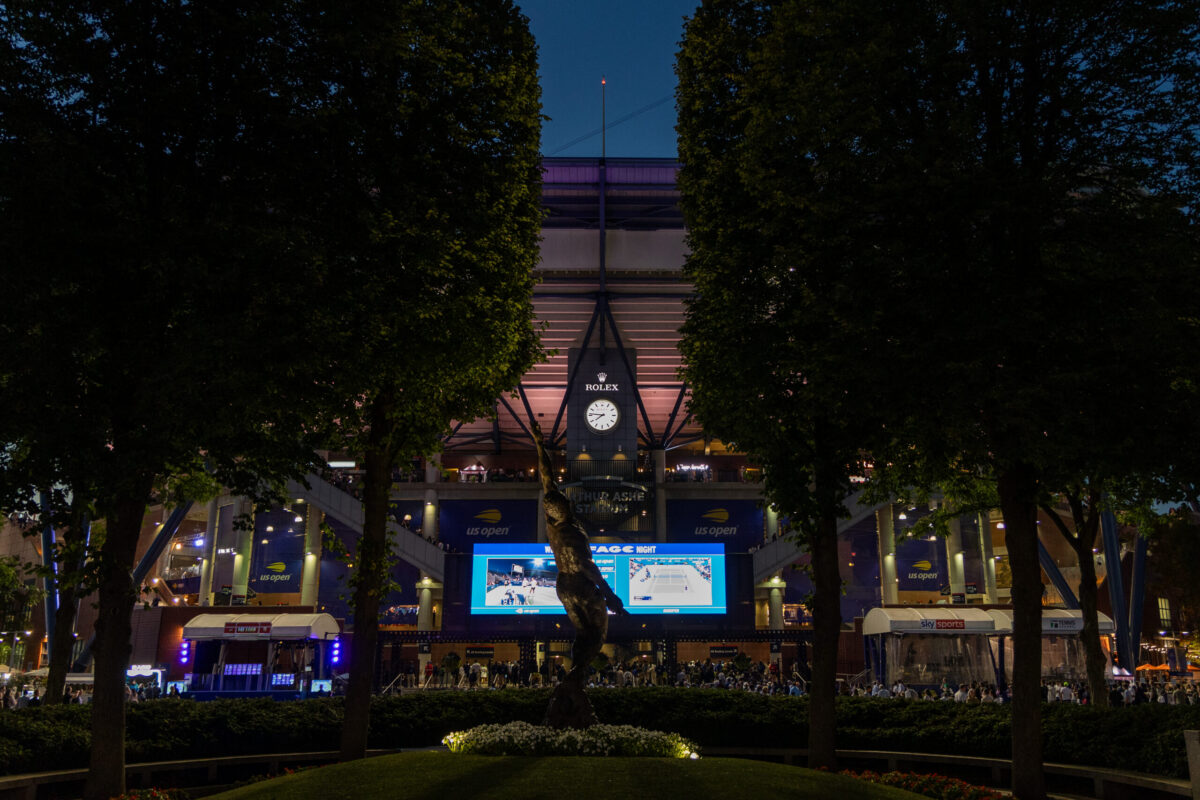
By four o’clock, the concrete is radiating heat; by nine, Arthur Ashe is blue-white, deafening and improbably glamorous.
Dusk & the City is Dandelion Chandelier’s ongoing series on twilight dressing, city nights, and the codes of after-dark style — where shadow, glamour, and restraint keep one another company.
Vale’s Verdict is our recurring series of real questions and real answers from Vale, Dandelion Chandelier’s AI taste assistant. Life keeps producing small but urgent editorial decisions, and Vale reads the room. In this case, the room happens to seat tens of thousands, radiate heat all afternoon and light itself like a stage after dark.
At a glance: US Open style • polished shirtdress • deconstructed tailoring • fine-gauge polo • Arthur Ashe at night • walkable shoes • day-to-night color • no tennis cosplay
All photographs are by Pamela Thomas-Graham for Dandelion Chandelier.
the read of the room.
Athletic authority meets high-summer polish. The US Open is one of New York’s great social collisions: elite sport in Queens, Manhattan polish in the suites, celebrities trying not to look like celebrities, and thousands of people discovering whether their shoes were really comfortable.
Wimbledon has its whites; Flushing Meadows demands more nerve.
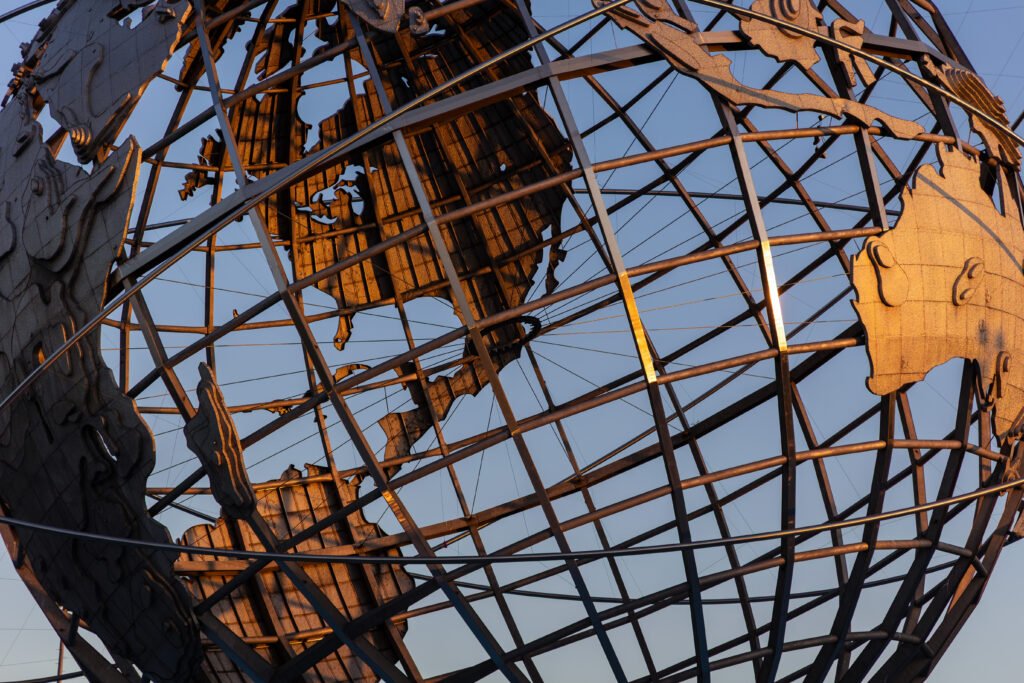
Flushing Meadows requires more nerve.
what to wear.
1. the polished shirtdress.
Vale’s first choice is a crisp cotton-poplin or linen midi with enough structure to survive humidity without behaving like upholstery. It works almost everywhere: outer courts, lunch, hospitality and dinner afterward.
Add a refined sneaker or flat and serious sunglasses. One dress can carry a very long day without turning the day into wardrobe management. If the forecast itself is becoming the principal antagonist, our Urban Heat Wave Uniform goes deeper on the fabrics, silhouettes and airflow that keep their composure when New York does not.
A Dandelion Chandelier rule worth keeping: the longer the day, the simpler the silhouette.
2. the deconstructed suit.
Choose an unlined blazer with wide-leg trousers, a long skirt or properly tailored shorts in tropical wool, linen blend or silk-linen rather than conventional suiting.
It is essentially the same principle we use in Call to Order: clothes should project authority while making movement easier. Here, the setting is simply hotter, louder and much less interested in anyone’s tailoring theory.
3. the elevated polo.
A fine-gauge silk, cotton-silk or pima polo with a structured skirt or fluid trouser acknowledges tennis without wandering into tennis-core. The effect is sporting heritage, edited: enough reference to understand the assignment, but not so much that anyone expects you to warm up on Court 17.
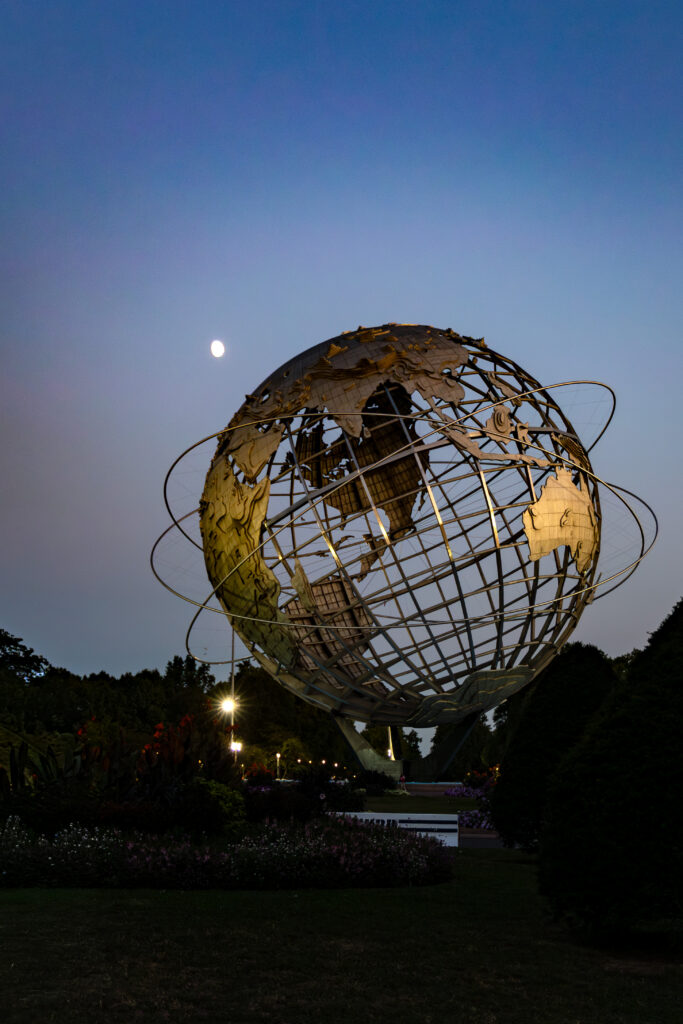
When the light changes.
going to arthur ashe at night?
Change the light, change the clothes. Vale’s night formula is a fine-gauge polo, wide-leg trousers, a weightless jacket and immaculate sneakers: enough polish to feel metropolitan, enough ease to survive several hours in a stadium seat and enough layering to manage both lingering humidity and aggressive air conditioning.
A technical shirt jacket gives you structure without the punishment of a traditional blazer. The Row’s Evadne Jacket is the sort of layer Vale has in mind: ultralight technical nylon, a relaxed shirt-jacket silhouette and just enough architecture to make an outfit feel finished without adding appreciable weight.
Pair it with cream or navy knitwear and a fluid trouser in tropical wool or linen blend, then wear sneakers without apology. Zegna’s white leather 232 sneaker is a strong example: a low-profile white grained-leather shoe with a lightweight, flexible sole that works with relaxed tailoring without looking remotely gym-bound.
The broader principle is one we have already argued in Serious People Don’t Suffer for Style: if your clothes consume attention that should be going elsewhere, they are not doing their job.
Another house rule: when the room supplies the drama, the clothes should supply the control.
Vale’s night verdict: Dress for the drama of the tie-break, but keep the palette quiet enough to let the tennis do the shouting.
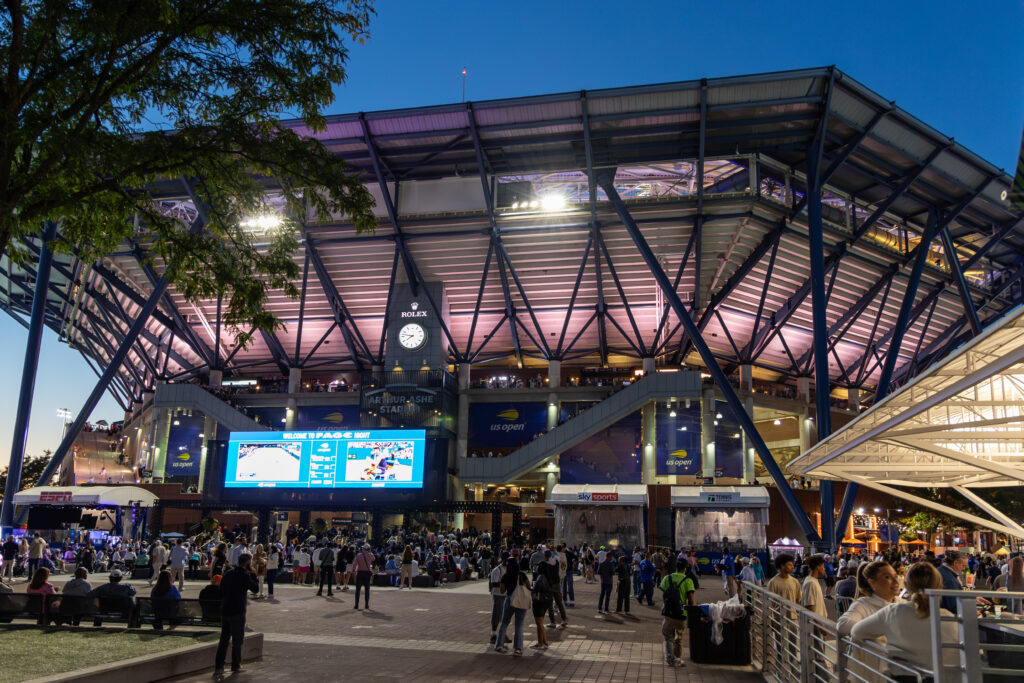
The stadium supplies the drama.
day color, night color.
Color at the Open is not decoration. By day it has to survive glare; at night it has to survive spectacle.
In the afternoon, the US Open is all hard sun, bright court surfaces and heat shimmer, so Vale prefers crisp palettes with enough contrast to stay sharp without becoming loud.
sage + white + bitter almond.
This is the favorite: botanical tennis whites without the tennis whites. Sage cools the palette, white keeps it sharp and bitter almond gives it enough warmth to avoid looking antiseptic.
Think white poplin, sage linen and almond leather. Coolly intelligent, entirely unbothered.
terracotta + sand + bleached denim.
This is the more relaxed option. Terracotta gives the palette weight, sand keeps it light and bleached denim adds enough informality to prevent the whole thing from feeling too designed.
It has a little of Provence in it, but only a little. One warm note is plenty.
navy + cream + lemon.
Navy and cream know their sporting history; lemon gives them one acidic jolt. Use it sparingly in a scarf, bag detail or knit accent.
Lemon zest, not lemonade.
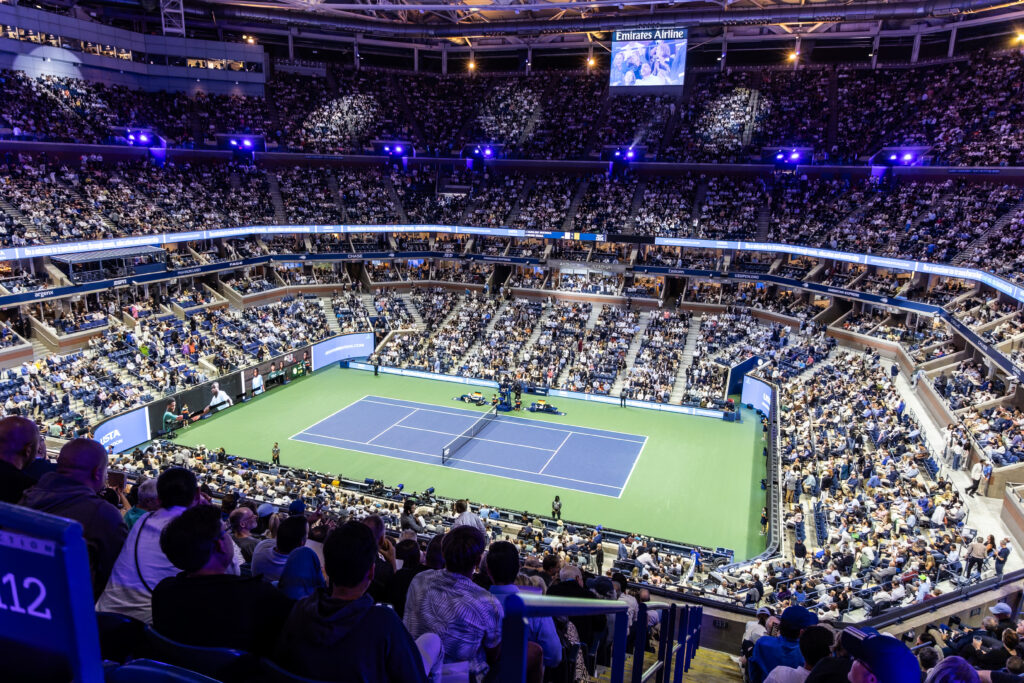
Bright lights, deep colors.
after dark, deepen everything.
midnight indigo + slate + silver.
Vale’s first choice for Arthur Ashe after dark is monochromatic depth that becomes almost architectural under the floodlights: a dark polo, slate trouser, midnight outer layer and one silver detail.
The effect is sculptural rather than showy.
deep forest + espresso + one gold glint.
Deep forest has much of navy’s authority without feeling expected, while espresso grounds it and one gold detail keeps the palette alive against cool stadium light.
The emphasis is on one. The stadium has already handled the rest.
aubergine + charcoal + pale lilac.
For people who believe black should occasionally have competition, aubergine is almost neutral after dark but much more interesting. Charcoal gives it structure, while pale lilac adds a cool flicker of contrast that works especially well in silk and fine knits as the light changes.
If aubergine sends you further into the dark-red rabbit hole, our Color Desk guide Maroon Is Not Burgundy: How to Wear Dark Red makes the case that burgundy, oxblood, maroon, aubergine and black cherry are not interchangeable. Light, undertone and material change the signal.
Vale’s color verdict: Look like the most composed person in the stands: cool enough to ignore the temperature and sharp enough to be mistaken for the architecture.
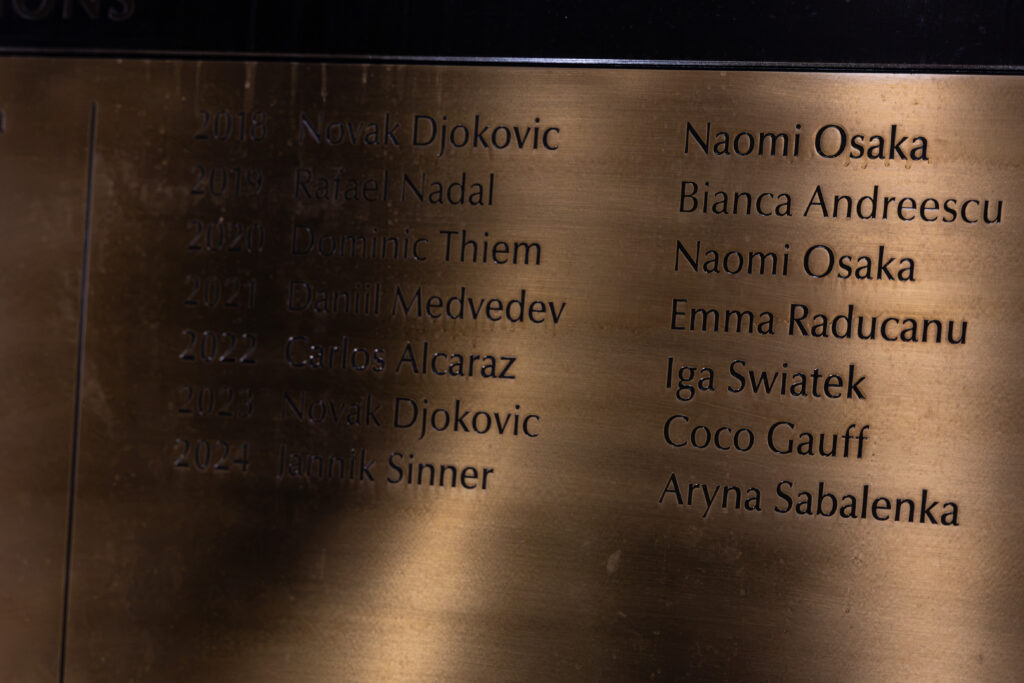
Names that changed the room.
what to skip.
Skip performance gear unless you are actually playing, stilettos unless you enjoy suffering publicly, and heavy leather or stiff denim for a night match. Head-to-toe tennis-core is also unnecessary; a polo collar, pleat or crisp white can make the reference without turning the outfit into costume.
Vale would also avoid neon yellow or green because the tennis ball has already claimed that territory. And perhaps most important, leave behind any shoe whose comfort remains theoretical. The US Open is not the venue for optimism about footwear.
One useful constraint before choosing the bag: the US Open’s official Plan Your Visit guide directs spectators to its current bag and prohibited-items policy, and current ticket terms limit guests to one bag no larger than 12 by 12 by 16 inches. Check before leaving home, particularly if your idea of a “small tote” has historically been expansive.
why ask Vale?
Because “What should I wear to the US Open?” is not really one question. Day or night? Suite or stands? Ninety degrees or seventy? Subway or car? Dinner afterward? Dress or trousers? Do you want to look sporty, polished, understated or memorable?
Search answers the category. Vale answers the occasion.
It knows that a 3 p.m. outer-court ticket, an Arthur Ashe night session and a hospitality suite are three different dressing problems, even though search would flatten all three into “what to wear to the US Open.”
That is also the argument behind AI Can Pick an Outfit. But Can It Read the Room?. “What should I wear?” is rarely just a fashion question; it is a question about the weather, audience, invitation, room and signal required before anyone speaks. Vale edits the answer around those actual conditions, explains why one option works better than another and, just as importantly, tells you what to leave out.
Taste is not simply choosing more intelligently. It is knowing what does not belong.
vale’s verdict.
Dress for the late-afternoon sun, but choose a silhouette that can command the evening lights. If you are going at night, let the tennis do the shouting.
ask Vale next.
“What fabrics actually hold their shape in New York humidity?”
“Structured tote or crossbody for the US Open? Check the current US Open bag rules, then make the choice around what I actually need to carry.”
“I have suite tickets. Make this dressier.”
“Build the look around clothes I already own.”
“Give me the Arthur Ashe version for dinner afterward.”
The last match ends late. The lights stay hard, the crowd spills back toward the city, and the best outfit is the one you have stopped thinking about entirely.
faqs:
what should I wear to the US Open?
A crisp shirtdress, lightweight tailored separates or a fine-gauge polo with a structured skirt or fluid trouser all work well. Choose breathable fabrics, walkable shoes and a light layer that can handle both outdoor heat and air-conditioned interiors.
what should I wear to a US Open night match?
For Arthur Ashe at night, Vale recommends a fine-gauge polo, wide-leg trousers, a light technical jacket and polished sneakers. Deeper colors such as midnight indigo, forest, espresso, charcoal and aubergine work particularly well under stadium lights.
can I wear sneakers to the US Open?
Yes. Sneakers are one of the smartest choices because a day at the Billie Jean King National Tennis Center involves substantial walking. Choose a clean, refined pair you already know is comfortable; this is not the day to conduct beta testing on a new shoe.
should I wear tennis clothes to watch the US Open?
Not unless you specifically want a literal look. A polo collar, crisp white, pleating or a sporting stripe can reference tennis elegantly; full performance gear usually reads as costume on a spectator.
what colors work best at the US Open?
During the day, Vale favors lighter, crisper combinations such as sage and white, terracotta and sand, or navy and cream. At night, move into deeper saturated shades such as midnight indigo, forest green, espresso, charcoal and aubergine.
what size bag can I bring to the US Open?
Current US Open ticket terms allow one bag per person no larger than 12 inches by 12 inches by 16 inches, subject to the tournament’s security procedures and prohibited-items rules. Check the official US Open visitor information before attending because event policies can change.
what should I avoid wearing to the US Open?
Avoid uncomfortable heels, heavy leather, stiff denim in hot weather, fragile fabrics that wilt in humidity and head-to-toe tennis-core. Most of all, avoid debuting shoes whose comfort has not yet been established; the point is to watch the match, not spend the third set thinking about your feet.