

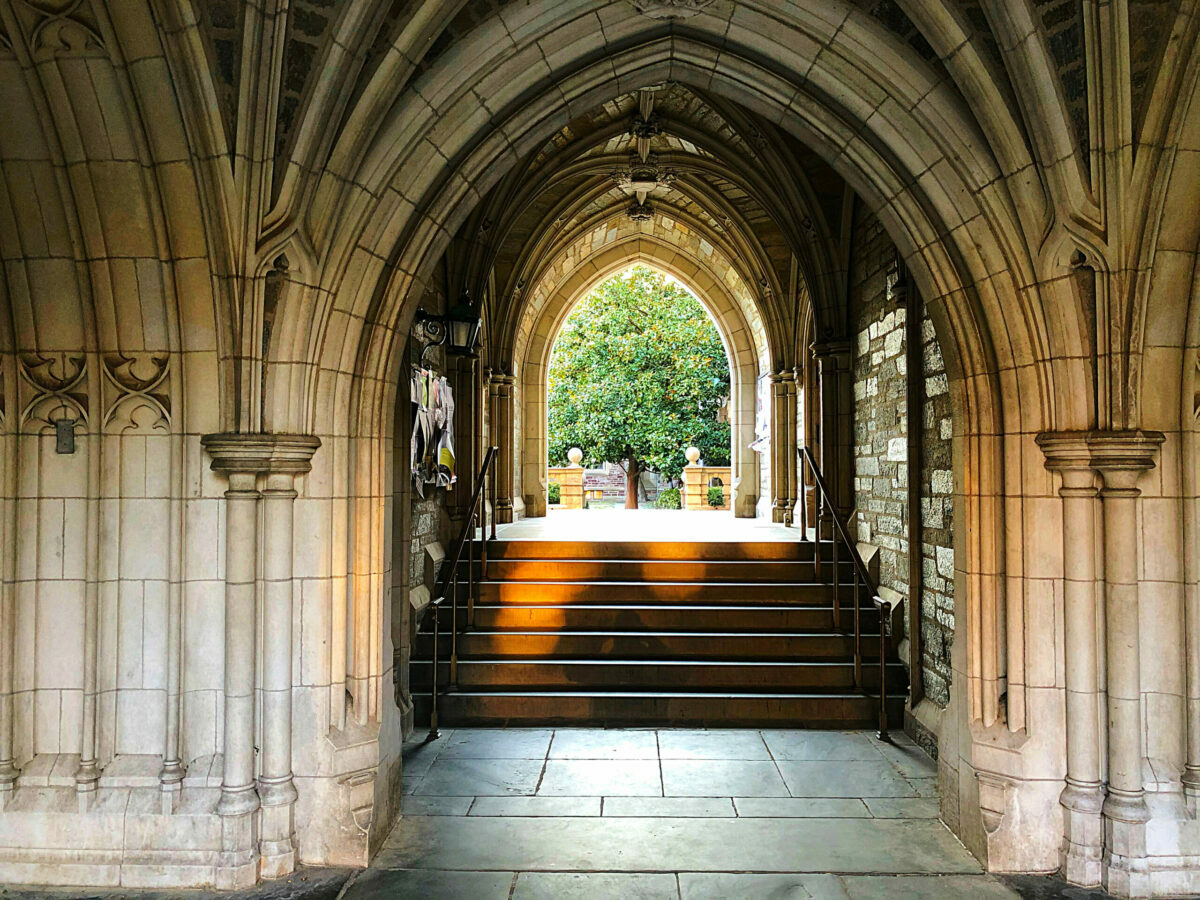
Autumn and back to school season are upon us, and that always makes us want to curl up with a great book that’s set in the groves of academe. ‘Cause who doesn’t love a great mystery, romance or literary fiction set on a boarding school or college campus right about now? If you’re similarly inclined, we’ve curated a list of some of the best novels set on a college or boarding school campus for those who love books with a back to school vibe. We all got in on the fun here, so we’re pretty sure that no matter what kind of read you love best, you’ll find some new ideas here. Boojah!
back to school season means its time for a great novel set on campus
It hardly seems possible, but autumn is here and it’s back to school season. And even if you yourself are not a student, you may be feeling that pre-term buzz that is as much a state of mind as it is a state of reality.

The best novels set on a college or boarding school campus for those in search of a new book to read now that back to school season is here.
We get it. There’s something irresistible about three-ring binders and yellow highlighters (and, of course, everything that goes along with them).
Though we can’t give you a time machine, we can give you the next best thing – some stories about people who are heading back to school. In this case, novels.
Of course, there are more books set at high schools and colleges than we could ever possibly name – a wonderful and expansive genre that includes both young adult and adult, realism and fantasy, and classic and contemporary fiction.
But if you’re looking for some suggestions, these are ten of our favorites. Books set at colleges and boarding schools that make us feel like we’re sleeping in dorms, staying up late with friends, and making memories.

Campus chronicles: best novels set at college or boarding school to read, now that back to school season is here.
What are the best novels set on a college campus or boarding school?
We posed this query to the members of our team here at Dandelion Chandelier, and we got so many excellent and varied answers that this list ended up being a lot longer than we expected! After all, our founder and CEO has penned three mystery novels set on Ivy League college campuses – so the literature of college and boarding school campuses is practically embedded in our DNA!
Here’s our collective list of 30 of the best novels set on a college or boarding school campus for those in search of a new book to read now that back to school season is upon us.
1. The Idiot by Elif Batuman.
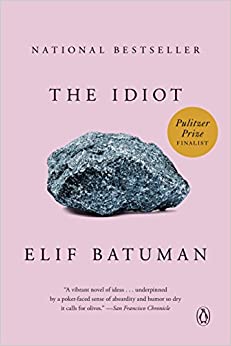
The Idiot is a sincere, frank and deeply-felt tale of a Harvard freshman having a bewildering flirtation with a senior classmate. And her misadventures trying to win his heart and to understand her own. This is the perfect back-to-school read that will remind you – perhaps all too well – what it felt like to be 18 and facing the world on your own for the very first time.
2. Either/Or by Elif Batuman.
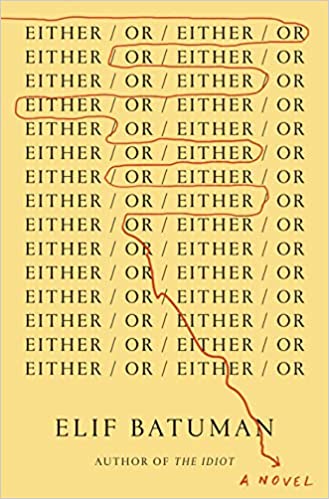
As Either/Or begins, Selin – the protagonist of The Idiot – is back on campus at Harvard for her sophomore year. She’s surrounded by an eclectic group of friends and roommates – but she can’t stop thinking about Ivan, her freshman year crush. What follows is a year of confusing interactions, frustrations, depression and renewed resolve. Plus sex, alcohol and a couple of cute outfits. By the time the summer after her sophomore year ends, though, Selin emerges stronger and more confident. It’s a tender and genuine portrait of a brilliant young woman learning how to make her way in the world. And yes, it made us cry.
3. On Beauty by Zadie Smith.
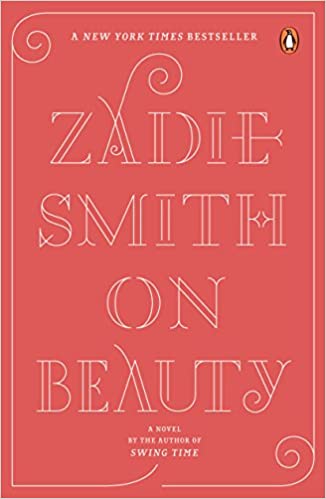
As universities awaken from their summer doldrums and come sparkling back to life in September, it’s the perfect moment to read On Beauty, a witty and sharp novel set in the world of academia. The story of an interracial family living in the university town of Wellington, Massachusetts, the plot is filled with misadventures in the culture wars on both sides of the Atlantic. Underneath the breezy tone is a serious meditation about who gets to be called “beautiful,” and why. Smith won the Orange Prize for fiction for this novel in 2006, and it remains eerily relevant, funny and provocative today.
4. The Starboard Sea by Amber Dermont.
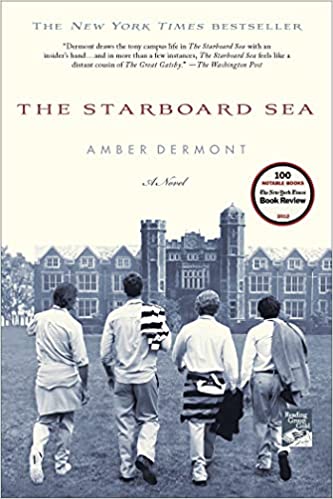
Set against the backdrop of the 1987 stock market collapse, The Starboard Sea is a bildungsroman that traces a young man’s journey through two different East Coast boarding schools. Jason is the athletic scion of a wealthy Manhattan family, and a junior at Kensington Prep. Despite his privileged upbringing, he’s disdainful of his fellow affluent students, preferring the company of his working-class roommate Cal. But after Cal commits suicide, Jason transfers to Bellingham Academy. There, he begins an emotional relationship with Aidan, a fellow student with her own troubled past. When a major hurricane hits New England, the destruction it leaves in its wake triggers further upheaval in Jason’s life, forcing a reckoning with the costs of the recklessness and carelessness of his privileged class.
5. Three Daughters of Eve by Elif Shafak.
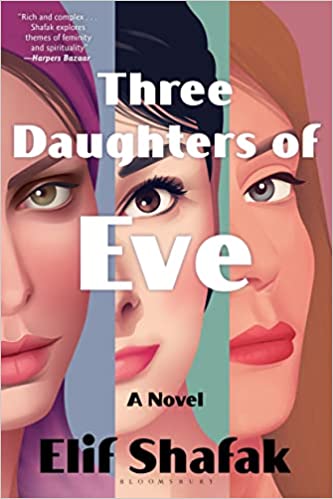
Set in the rarified air of Oxford, Three Daughters of Eve explores the role of faith and culture in the lives of three young women living and studying abroad for the first time. Peri is a studious daughter of Turkey. Shirin is a fully assimilated Iranian woman. And Mona is a devout Egyptian American. Their arguments about Islam and feminism reach their zenith in their interactions with a charismatic and controversial professor whose life is changed forever because of his relationship with Peri.
6. Moo by Jane Smiley.
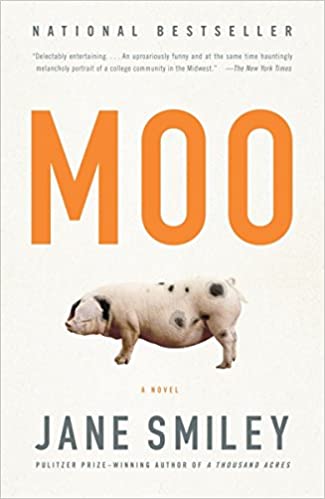
A satirical send-up of academia and the Midwest, Moo is set at the fictional Moo University. Moo U is an institution devoted to the study of agriculture. However, amid the placid cow pastures, Moo U’s campus churns with devious plots, mischievous intrigue, lusty liaisons, and academic one-upmanship.
7. Vladimir by Julia May Jonas.
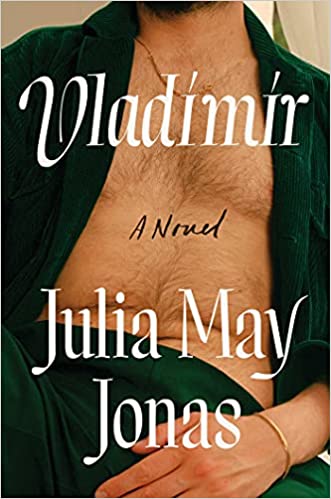
Vladimir is a biting satire narrated in the voice of a popular English professor whose charismatic husband is on the faculty at the same small liberal arts college. He’s under fire and under investigation for his inappropriate relationships with his former students. And she has become infatuated with Vladimir, a celebrated, married young novelist who’s just arrived on campus. With twisty references to Vladimir Nabokov and Lolita, this is a darkly funny view of university faculty life today.
8. The Campus Trilogy: Changing Places; Small World; Nice Work by David Lodge.
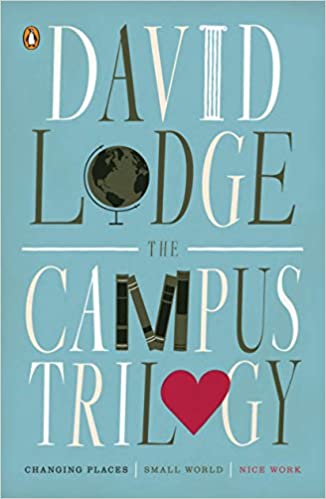
The Campus Trilogy is in many ways the O.G. of the modern campus novel. Changing Places, set in the late 1960’s, introduces Philip Swallow, British lecturer in English at the University of Rummidge. He agrees to participate in a professorial exchange with the American Morris Zapp of Euphoric State University. Chaos ensues. Ten years later in Small World, the two return for a world tour of international conferences. Additional chaos ensues. Finally, in Nice Work, feminist scholar Dr. Robyn Penrose from Rummidge U. is assigned to shadow the director of a local engineering firm, sparking a collision of ideologies and lifestyles. Some issues in campus life are remarkably unchanged no matter how much time passes. Which is probably part of the appeal of the genre.
9. Chemistry by Weike Wang.
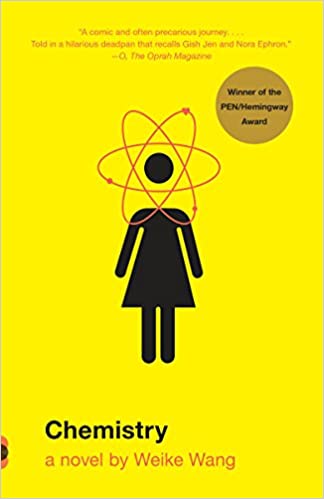
The young female protagonist of Chemistry is studying for a PhD in chemistry that she hopes will finally make her Chinese parents proud. Her Anglo boyfriend has just proposed. It appears that she’s living the dream. But instead of feeling euphoric, she is wracked with ambivalence. When the pressure to decide her life’s course causes her to derail in spectacular fashion, however, she forges a new path that leads to surprising discoveries about everything she thought she knew.
10. Lovers and Writers by Lily King.
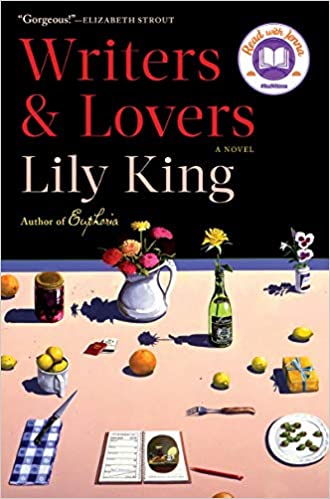
Lovers and Writers is set in Harvard Square in Cambridge, Mass, and revolves around a young woman who works in a bookstore and toils in the early hours of the morning as a novice writer. She’s grieving the loss of her mother and trying to avoid the judgmental gaze of her father and his new wife. It’s a post-graduate existence that lays bare the struggle to live a creative life, and things become even more complicated when she falls for not one, but two, male writers in town.
11. Real Life by Brandon Taylor.
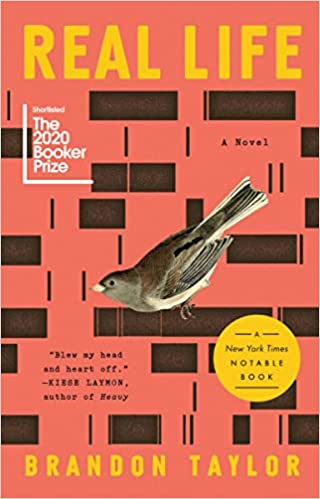
Almost everything about Wallace, the protagonist of Real Life, is at odds with the culture and demographics of the Midwestern university town where he is working to earn a biochemistry degree. Introverted, Southern, black and queer, he fits no known mold in this milieu. But over the course of a late-summer weekend, a series of confrontations and an unexpected encounter shatter his carefully constructed defenses – and expose the hostility and desire roiling underneath the surface of this placid college community.
12. Disorientation by Elaine Hsieh Chou.
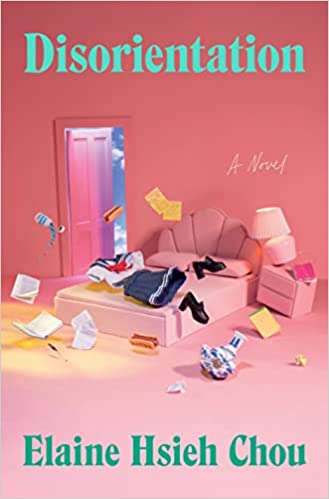
In Disorientation, PhD student Ingrid Yang is desperate to finish her dissertation on the late Chinese canonical poet Xiao-Wen Chou. But after years of research, all she has to show for her efforts are junk food addiction and stomach pains of unknown origin. Then she stumbles across a note in her university’s archive that seems to provide an explosive revelation that will make her career. But as things do, the situation quickly spirals out of control. And she begins to question her commitment to her white fiancé, her relationships with white men and white institutions in general — and, most of all, to question her own motives for sharing the secrets she’s uncovered.
13. Mislaid by Nell Zink.
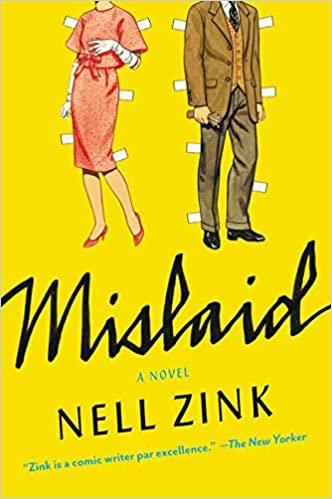
Fans of the novelist Nell Zink know that wacky plots and quirky characters are part of the reason to open one of her novels in the first place. And Mislaid is no exception. At Stillwater College in Virginia in 1966, freshman student Peggy falls under the spell of Lee, a poet and professor. They begin an affair that results in an unplanned pregnancy and marriage. A decade later, Peggy disappears with their three-year-old daughter, leaving their nine-year-old son behind. Eventually the long lost siblings will meet as students at the University of Virginia – unleashing a series of unlikely and ultimately life-affirming revelations.
14. Groundskeeping by Lee Cole.
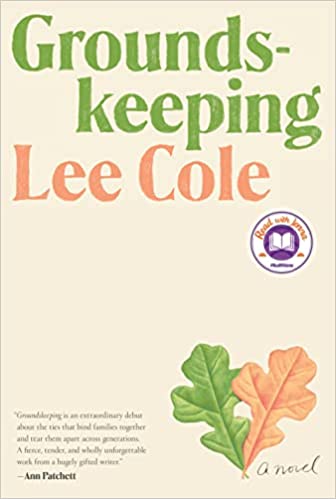
Groundskeeping, set in on a college campus in Kentucky, is a timely meditation on class and political difference in America today, seen through the lens of a romance between two very different students, each of whom is working to become successful writers. She’s a precocious published author doing a short-term residency at the university. He’s a recovering drug addict living with this grandfather in a run-down shack and working with the campus grounds crew. The job allows him to take one course for free, so he embarks on the study of creative writing. The profound issues of who owns whose story, and whether the distance between the red and blue communities in America can ever be bridged are brought to poignant life in this splendid debut.
15. Prep by Curtis Sittenfeld.
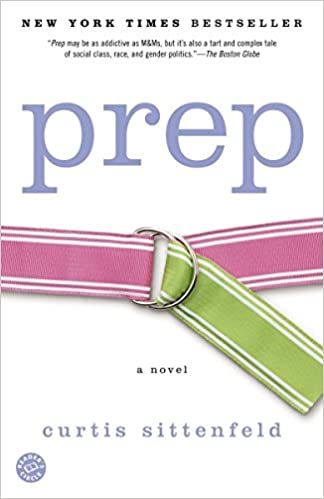
Prep is a classic story about a Midwestern student of modest means who enrolls in a prestigious New England prep school and finds that the institution’s glossy brochures aren’t the full story of campus life. By senior year, our protagonist has lived through experiences that may sound familiar to us all. Including complicated relationships with teachers; intense friendships; an all-consuming preoccupation with a male classmate; and conflicts with her parents, from whom she feels increasingly distant. Prep school turns out to be preparation for . . . what, exactly?
16. Confessions of the Fox by Jordy Rosenberg.
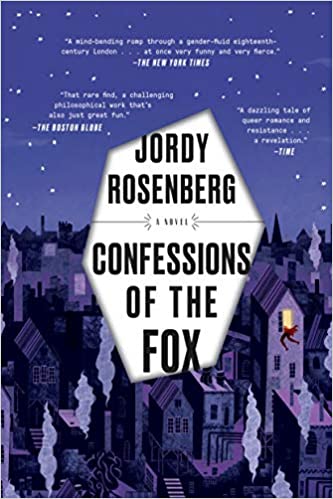
In one of the most widely-acclaimed campus novels we’ve come across, the academic puzzle Confessions of the Fox, a heartbroken scholar of 18th-century English history discovers a lost manuscript with an exposé of the notorious thieves, fugitives and lovers Jack Sheppard and Edgeworth Bess. Is it an authentic autobiography or a hoax? As he goes deeper into the underworld resistance and gender transformation the pair seemed to have pulled off, it becomes clear that despite the passage of time, their fates are intertwined. One reviewer describes it as “an action-adventure tale with postmodern flourishes; an academic comedy spliced with period erotica; and an intimate meditation on belonging.”
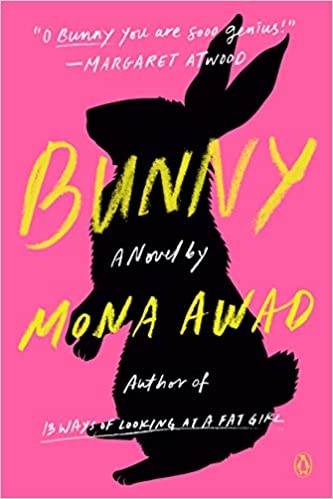
17. Bunny by Mona Awad.
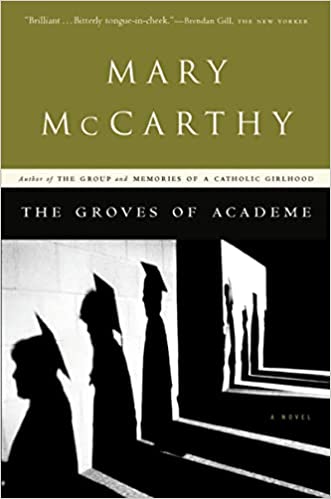
18. The Groves of Academe by Mary McCarthy.
19. Dear Committee Members by Julie Schumacher.
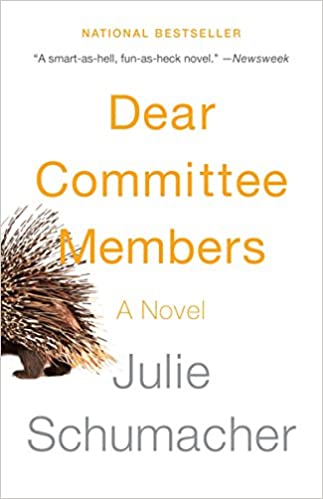
If satire is at the top of your criteria for the test novels set on a college or boarding school campus for those in search of a new book to read now that back to school season is upon us, Dear Committee Members is for you.
20. The Secret History by Donna Tartt.
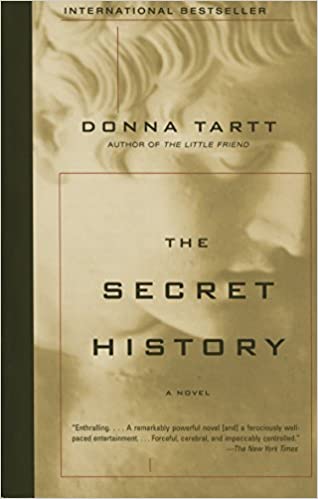
For a certain group of readers, The Secret History is legendary – a book that really defines the campus novel genre. And if you haven’t read it, we promise you: it lives up to the hype. After all, very few stories open with the murder of one of the main characters… and then travels back in time to show you how and why it happened.
There are bacchanalias, betrayals, and better (or at least, more memorable) college drama than you ever experienced. Trust us. If you like dark academia, Greek mythology, or stories about intense, eccentric groups of friends, then this is the book of your dreams.
21. Invincible Summer by Alice Adams.
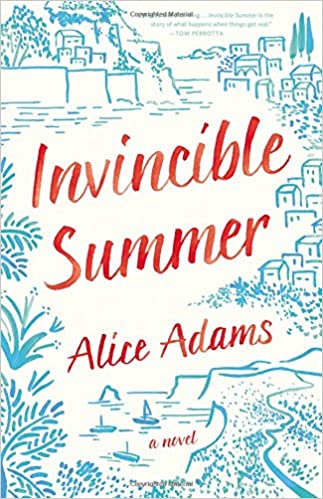
Invincible Summer is the story of four friends in England who graduate in 1997. The world is on the cusp of the new millennium, and everything seems possible. Of course, reality is far more harsh. As the four enter their thirties, they’re scattered and each is struggling. Thwarted dreams, lost jobs and broken hearts abound. Yet somehow their friendship remains and for some, at least, in it lies salvation.
22. The Incendiaries by R.O. Kwon.
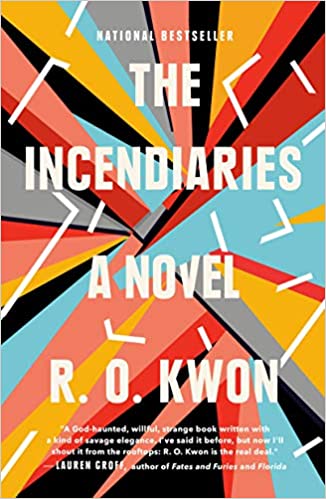
If you now have cult-like college experiences on the brain, we have another suggestion. The Incendiaries is ethereal in the best kind of way, telling the story of a guy whose college romance leads him to some dark and dangerous places. Come for the mystery, stay for the stunning prose.
23. Catherine House by Elisabeth Thomas.
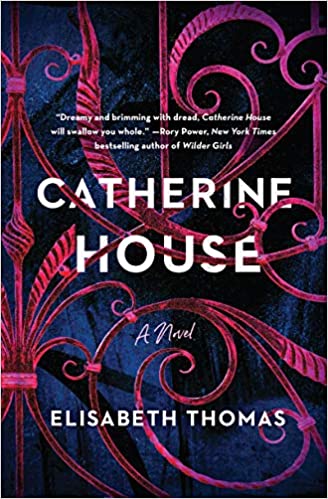
What is it that appeals so much about stories of school-gone-wrong? We don’t know, but Catherine House is yet another excellent tale about the chilling side of academia. Because Catherine House is not just a school – it’s an experience, and one that requires its students to cut off all contact with the outside world. And soon enough, new student Ines Murillo begins to suspect that Catherine House is not all it seems… and is perhaps deadlier than she ever could have imagined. One of our favorite debuts from 2021.
24. American Panda by Gloria Chao.
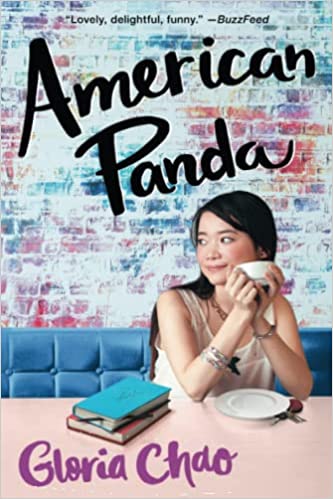
Of course, college isn’t always crazy cults and threats of murder – sometimes (even most of the time), it’s a place where you go to find yourself. A place where you come of age. And that’s the kind of place it is for Mei in American Panda. She starts her freshman year at MIT when she is only seventeen. She is all set to fulfill her parents’ dreams for her – first up, becoming a doctor – but once college begins, she has to ask herself: is this really what she wants? If you ever asked yourself a similar question, this sweet, funny book is the one for you.
25. Tiny Pretty Things by Sona Charaipotra and Dhonielle Clayton.
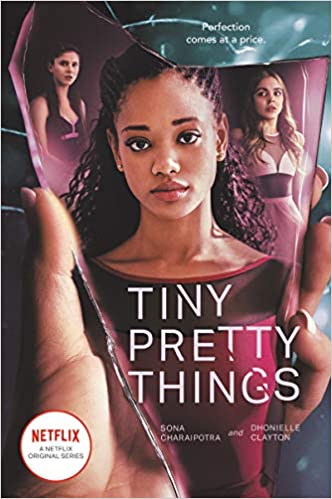
Boarding schools are even more fun to read about when they’re specialized boarding schools – for instance, ballet school. Tiny Pretty Things takes place at an elite Manhattan dance school. It follows three students as they endure a year of unspeakable drama. Fans of the movie Fame will fall all over this irresistible novel, and there’s a sequel for those who want to read more – and a Netflix series.
26. The Secret Place by Tana French.
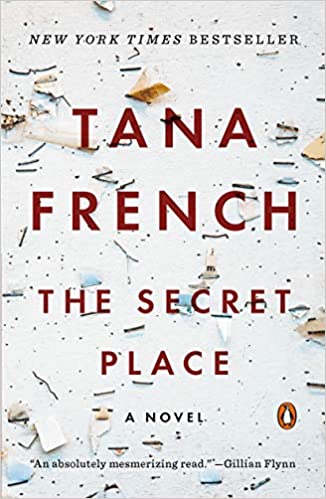
In The Secret Place, when the body of a boy is discovered at a girls’ boarding school, it’s up to Stephen Moran to crack the case… even though one of the girls involved is the daughter of his old boss. And even if you haven’t read the other books in the Dublin Murder Squad series, not to worry – you don’t need them in order to understand this page-turner of a school story. If you’ve never anything by Tana French before, you’re in for a treat.
27. Magic for Liars by Sarah Gailey.
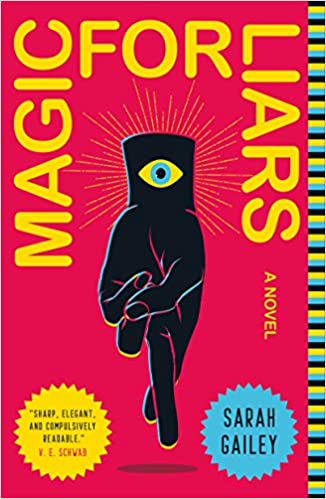
What’s even better than a book set at a school? A book set at a magic school, of course. But in the magic world of Magic for Liars, not everyone has magical abilities. One of the people who doesn’t is detective Ivy Gamble, who is summoned to investigate Osthorne Academy for Young Mages after a mysterious murder. However, the situation is more than a little complicated – one of the faculty members is Ivy’s estranged sister Tabitha. If you’re looking for a book that has murder, magic, and academia, all rolled into one, Magic for Liars is your back-to-school read.
28. Legendborn by Tracy Deonn.
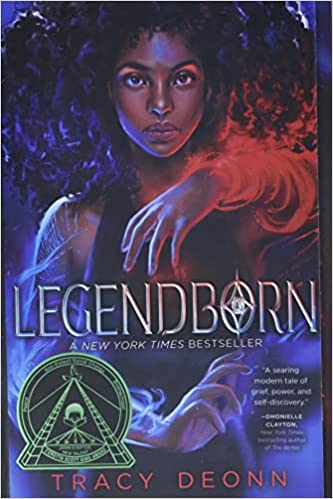
Legendborn is another magic school book, except this time the magic school is The University of North Carolina at Chapel Hill. Bree Matthews is sixteen when she gets admitted to the college’s early acceptance program for gifted students, but all is not as it seems. Soon Bree discovers that she has magic powers, that someone is trying to erase her memories, and that the school has a secret society made up of the descendants of King Arthur’s Round Table. We know – it’s a lot, even for college. Legendborn is one of the best fantasy books in the last ten years. We eagerly await the sequel this fall.
BUY NOW
29. Emergency Contact by Mary H.K. Choi.
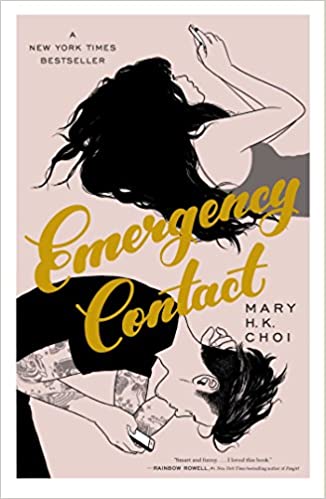
Oftentimes, young romance is one of the most exciting parts of the college experience. And that’s how it is for Penny in Emergency Contact. Her life is forever changed by her relationship with Sam – the cute barista at the nearby coffee shop. There’s one problem: their relationship is conducted almost entirely over text. For anyone who has ever struggled with the divide between real life and an online persona, this heartfelt college book is sure to resonate.
30. We Wish You Luck by Caroline Zancan.
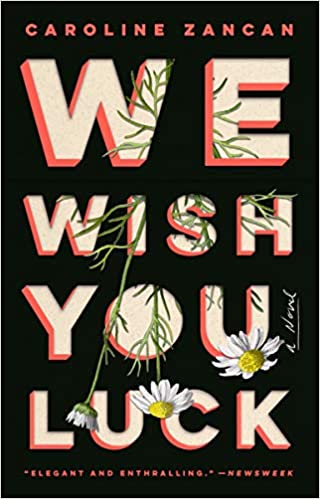
We finish our list of the best back to school novels for those who love books set on a college or boarding school campus with a cautionary tale. If you’ve fantasized about going back to school, We Wish You Luck may be a dangerous read. Set at a low-residency MFA program, the book is full of drama, feuds, and complicated group dynamics. It seems to suggest that it’s never too late to return to the dorms. For a back-to-school book that feels like it could be for you, this is an inspired choice.
What are the best novels set on a college campus or boarding school?
That’s our take on the best novels set on a college or boarding school campus for those in search of a new book to read now that back to school season is upon us. What else would you add to this list, dear reader?