
Lunar New Year Gift Etiquette
Giving Beautifully is Dandelion Chandelier’s collection of essays on the etiquette and philosophy of luxury gifting — how to give, receive, host, and acknowledge with grace and intelligence.
A guide to Lunar New Year gifting in professional life, including when a red envelope is right, when it isn’t, and what else can carry the gesture beautifully.
This guide explains Lunar New Year (LNY) gifting etiquette for modern life: what to give, what to avoid, and how to present gifts with cultural respect when you’re honoring clients, colleagues, or friends. It draws primarily on widely observed Chinese New Year (CNY) traditions, while acknowledging the broader Lunar New Year season celebrated across many Asian communities and throughout the diaspora.
At a glance: red envelopes • what to give instead • lucky numbers • taboo gifts • wrapping and presentation
why CNY gifts are different
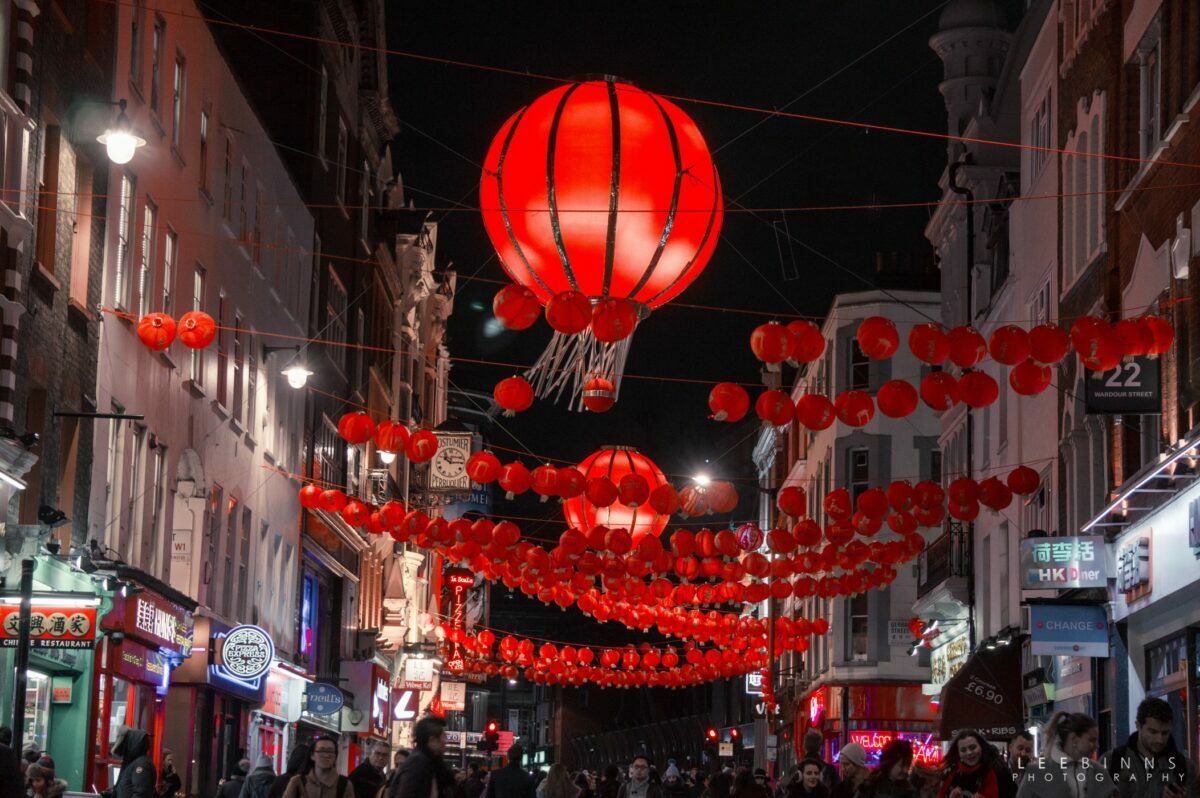
There are moments in the year when a gesture carries more meaning than usual. Chinese New Year – or Lunar New Year – is one of them.
It arrives not quietly, but deliberately — a ceremonial pause between what has been and what is about to begin. In professional life, especially now, that pause matters. It offers a chance to signal something deeper than efficiency or success: attentiveness, respect, and a willingness to meet someone where they are rather than where it’s easiest for you to stand. We share our thoughts on the best business gifts in our seasonal roundup Objects of Influence: Luxury Holiday Gifts for the Power Connector.
Lunar New Year gifting is not about luxury as we usually define it. It is not about scale, rarity, or price. It is about intention — and, more specifically, about ease.
The gift is meant to carry good wishes forward: prosperity, health, harmony, continuity, a clean slate. In business settings, the most successful Lunar New Year gifts are the ones that are easy to receive. They do not create awkwardness, obligation, or imbalance. Nor do they ask to be explained.
They simply say: I see this moment. And I respect it. I wish you well.
Of course, I didn’t grow up knowing these rules. I learned them the way many professionals do — gradually, through colleagues and friends who corrected gently, explained generously, and showed me that what looks like formality is often emotional intelligence in disguise. Gifting etiquette may feel analog and out of date; however it can make all the difference, as we explore in our essay Give Beautifully: The Art of Thoughtful Gift Giving.
This is not a culture of excess. It is a culture of care.
why luxury pays such close attention to lunar new year
If Lunar New Year feels louder than it used to — more windows, more capsules, more zodiac-coded everything — you’re not imagining it.
At this point, Lunar New Year is one of the most visible moments in the global luxury retail calendar. Each January and February, a wave of limited editions appears across fashion, beauty, watches, jewelry, and home, often with auspicious palette cues and zodiac references — and even the maisons that prize “timelessness” suddenly become very seasonal.
The obvious reason is economic. Lunar New Year sits inside a real, global gifting rhythm, and luxury has always followed moments where giving is culturally meaningful.
The more interesting reason is symbolic.
Lunar New Year is a holiday that makes meaning legible. It has a clear visual language, specific wishes, and a shared understanding that objects can carry intention. That aligns naturally with luxury’s deeper vocabulary: craft as devotion, beauty as respect, longevity as love.
There’s also something unusually elegant about the social mechanics of the holiday.
In many Lunar New Year traditions, the gift is not meant to be a performance. It’s meant to be received easily — with dignity, warmth, and no obligation. Presentation matters. Timing matters. The message matters. This is generosity without theatre, which happens to be what tasteful people tend to prefer anyway.
Luxury houses aren’t discovering Lunar New Year so much as acknowledging what has long been true: Asian consumers and the Asian diaspora are central to global luxury culture — as collectors, travelers, executives, patrons, and tastemakers. When brands participate well, it reads as recognition. When they participate clumsily, it reads as costume.
For individuals, the same principle applies.
This is a season when people notice meaning. A gesture can feel fluent or generic, thoughtful or slightly off. Which is why etiquette matters — not as a rulebook, but as a way of getting the meaning right.
CNY gifting: the red envelope
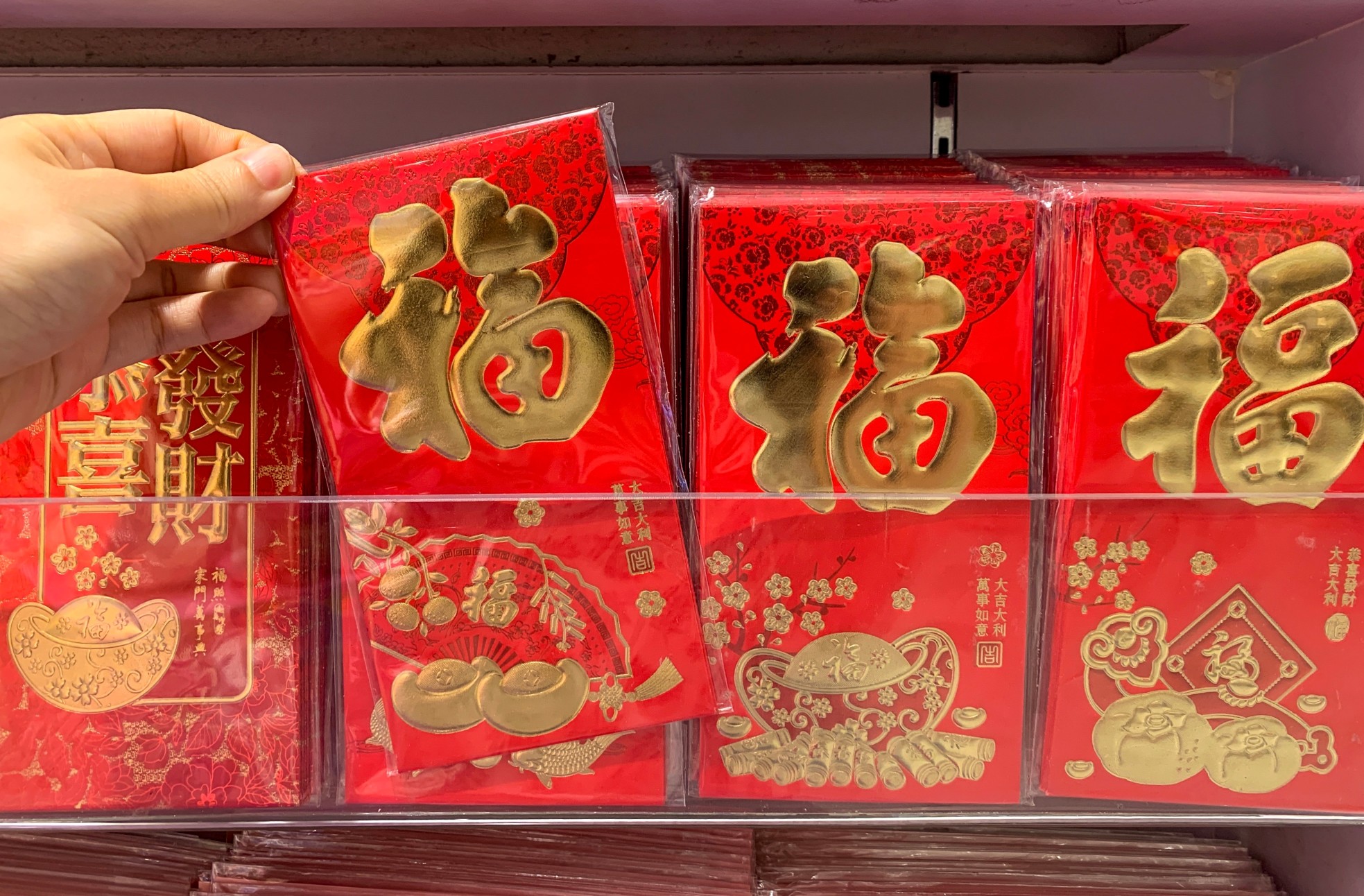
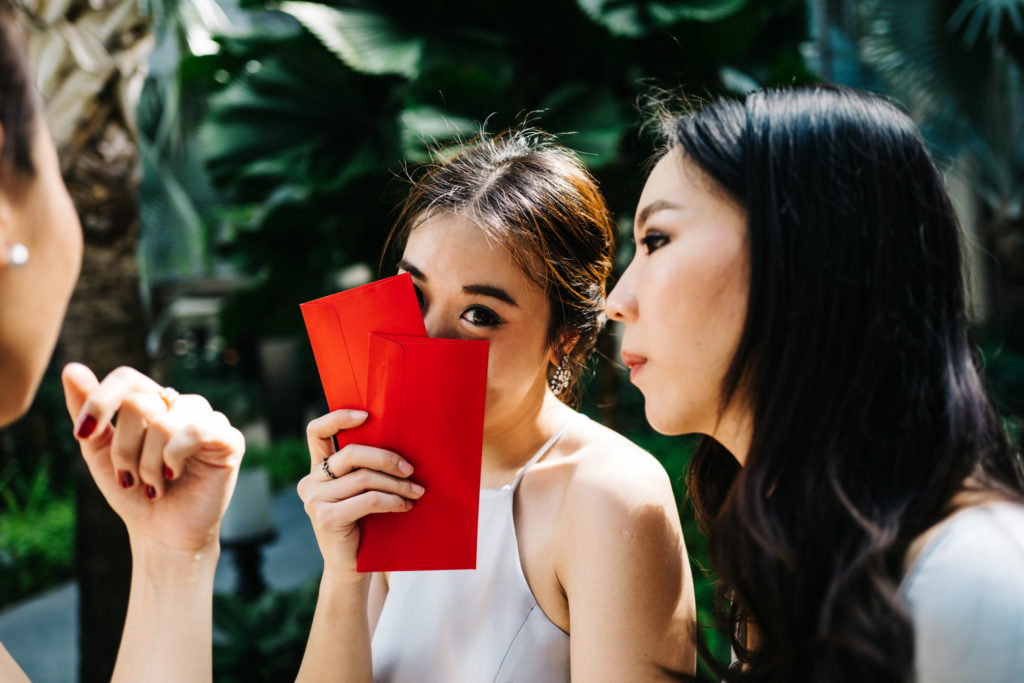
In many Chinese communities, the red envelope — known as hongbao in Mandarin and lai see in Cantonese — is one of the most traditional Lunar New Year gifts. It contains money, yes, but that is only part of the story. Red itself is the message. Long associated with celebration and good fortune, the envelope signals that what’s being offered is a wish, not a transaction.
If a red envelope is appropriate for your relationship and workplace policies, the details matter — because details are how respect shows up.
- Use crisp, new bills whenever possible. This signals preparation and care.
- Avoid amounts containing the number 4, which is widely considered inauspicious in Chinese contexts because of its association with death through pronunciation.
- Amounts containing 8 are often favored, as the number is associated with prosperity and forward momentum.
A practical note for client gifting: if you work in a regulated industry or your firm has strict gift policies, skip cash entirely. Choosing a non-cash gift when it preserves dignity and avoids complications is not a compromise; it’s discernment.
what to give instead of a red envelope
When a red envelope isn’t appropriate, the most graceful alternative is a gift that is hospitality-coded.
This is the insider principle at the heart of Lunar New Year gifting: choose something shareable, placeable, and socially fluid — a gift that can move from office to home, from desk to family table, without becoming a performance. It shouldn’t imply intimacy. Nor create obligation.
A perfect gift for CNY should feel easy to receive — and unmistakably well chosen.
premium sweets in impeccable packaging.
This is where restraint matters most. You want “adult celebration,” not cute. The sweet should feel festive without wandering into romantic or novelty territory — something that belongs on a beautiful tray at dusk, not something that announces itself from across the room.
In New York, this might mean beautifully boxed chocolates from Li-Lac Chocolates. Or the quietly luxurious pastries at Lady M, whose mille crêpes have become a Lunar New Year staple in certain circles.
In Paris, think refined confections from Pierre Hermé — not novelty flavors, but the classics done with discipline.
tea or a non-alcoholic luxury beverage.
Tea is one of the most universally elegant Lunar New Year gifts because it signals respect, hospitality, and discernment — and it gracefully avoids alcohol preferences, religious considerations, and workplace policies.
Look for whole-leaf teas with provenance and restraint. In New York, Té Company is a favorite for precisely this reason: beautifully sourced Taiwanese teas, minimalist packaging, nothing performative. London’s Postcard Teas offers an almost scholarly level of care that reads as deeply thoughtful to the right recipient. In Paris, the insider move is Mariage Frères — not only because the selection is deep, but because the whole experience understands ceremony.
The goal is clarity, not abundance. One excellent tea is better than a crowded assortment.
fruit, especially citrus, chosen with real care.
Fruit is one of the most traditional Lunar New Year gift categories — and also one of the most legible. Done well, it reads as abundance, light, and renewal. Done poorly, it reads as an afterthought. The difference between a graceful fruit gift and an awkward one is quality. Think perfect citrus, glossy skins, careful arrangement, and absolutely no bruising or bargain-bin energy.
If you want the modern, unmistakably insider version of this gesture, it’s Oishii’s Omakase Berry — a strawberry engineered to taste like perfume and arrive like jewelry. It has become shorthand for “this person notices.”
Otherwise, think flawless citrus: glossy skins, careful arrangement, zero bruising, and absolutely no bargain-bin energy. This should look like intention, not effort.
a timeless desk object that isn’t personal.
For clients and senior colleagues, the sweet spot is useful, elegant, and non-revealing.
In London, the cult address is Choosing Keeping in Covent Garden — a stationery store that makes paper feel like an art form, and somehow sends you out the door believing your next meeting will be better because your notebook is.
The rule is simple: the gift should feel like appreciation, not familiarity.
what to avoid
The “avoid” list isn’t about fragility or fear. It’s about not accidentally sending the wrong message in a season meant to feel forward-looking and intact.
For example, if you’re giving items in sets — a boxed assortment, paired objects, or a small collection — choose quantities intentionally. When in doubt, 2, 6, or 8 are broadly safe choices. Avoid sets of 4. This isn’t superstition so much as attentiveness. Numbers, here, are part of the language.
Many taboos come from wordplay. In Chinese languages, a sound can carry more than one meaning, and gifts can become little sentences you didn’t intend to write. In professional settings, where there’s no room to explain yourself, it’s best not to gamble.
pears.
Fruit is usually a safe Lunar New Year category — pears are the exception. In Mandarin, the word for pear (梨, lí) is a homophone for “to leave” or “separate” (离, lí), and “sharing a pear” (分梨, fēn lí) can sound like “separation” (分离, fēn lí). The point is not to overthink it; the point is to avoid gifting an accidental metaphor for parting ways.
umbrellas and fans.
Umbrellas and fans can be avoided in many contexts because the words (伞 / 傘 and 扇) can sound like 散 (sàn), meaning to scatter or separate — again, the wrong subtext for a holiday focused on continuity.
shoes.
As much as it pains me to say it, footwear is forbidden in this gifting context (although it’s unlikely that you’d be giving a colleague or a client footwear, no matter how chic). Shoes are commonly cited as an unlucky gift because 鞋 (xié) is a homophone for 邪 (xié), associated with “evil” or bad fortune in Mandarin.
clocks and, in some contexts, watches.
Giving a clock (送钟, sòng zhōng) is widely known as taboo because it is a homophone for 送终 (sòng zhōng), associated with seeing someone off at the end of life or attending funeral rites — a classic example of how a gift can accidentally carry the wrong message.
sharp objects.
Knives and scissors can symbolically suggest cutting ties. Elegant objects, wrong season.
Some recipients won’t notice any of this. Others will notice immediately. In business gifting, you plan for the most attentive person in the room.
wrapping and color
Like every other gift, a CNY gift for a colleague or a client should be properly and beautifully wrapped (for ideas on world-class wrapping paper, have a look at our post, Wrapped in Style, The Best Luxury Wrapping Paper, here).
Red is a culturally legible festive signal in many Chinese contexts and a clean choice for Lunar New Year accents. Avoid presentation that could read as mourning, particularly white-heavy wrapping in Chinese cultural contexts.
For minimalist recipients, warm neutrals paired with a single red accent strike the right balance — restraint, with one unmistakable seasonal cue.
presentation
In professional settings, presentation often is the message.
Offer the gift with both hands. Do not insist that it be opened in front of you. In many Chinese gift-giving contexts, opening later is a politeness move, not a slight.
Keep your words simple. “Wishing you a prosperous New Year,” or “Wishing you health and good fortune in the year ahead,” is enough. The gesture will do the rest.
closing thoughts
Lunar New Year gifting is not about mastering a set of rules.
It is about slowing down long enough to offer a gesture that is culturally considerate, symbolically clean, and easy to receive. In a world that often feels sharp-edged and transactional, that choice lands more deeply than we sometimes realize.
This is what giving beautifully looks like: not excess, not display, but attention — offered at exactly the right moment.
sources + further reading
- Smithsonian Asian Pacific American Center: Lunar New Year overview and shared traditions across Chinese and Vietnamese communities.
- Smithsonian National Museum of Asian Art: red as a cultural color of celebration and good fortune.
- Timothy S. Y. Lam Museum of Anthropology (Wake Forest University): red envelope etiquette including number symbolism and crisp bills.
- British Museum collection record: documentation referencing lucky red envelopes and hongbao.
- Cheng & Tsui: Chinese gift-giving taboos and homophones.
faqs: gifting etiquette for CNY gifts at work
is it okay to give a lunar new year gift if i’m not part of the culture?
Yes, when it’s done with respect and restraint. A small, shareable gift paired with a sincere New Year wish usually reads as thoughtfulness, not appropriation.
should i give a red envelope to a client?
Only if it fits the relationship and your workplace policies. If there’s any compliance concern, a non-cash gift such as tea or sweets is the safer and more elegant choice.
what amount of money should i put in a red envelope?
Avoid amounts containing 4, and many people prefer amounts containing 8. Beyond that, the right amount is contextual and should be calibrated to the relationship.
do i have to use red and gold wrapping?
No. Red is traditional, but not mandatory. What matters most is avoiding presentation that could read as mourning. Warm neutrals with a red accent are a refined alternative.
is it rude if the recipient doesn’t open my gift in front of me?
No. In many Chinese gift-giving contexts, opening a gift later is a sign of politeness and respect.
what are the most common gifts to avoid?
Commonly avoided gifts include pears, umbrellas or fans, shoes, clocks (and in some contexts watches), and sharp objects, largely because of homophones or symbolism that can suggest separation or endings rather than renewal.