
The best game night ideas for adults include beautifully designed board games, art-inspired jigsaw puzzles, playing cards, mahjong, chess, dominoes, murder mysteries and storytelling games. For long winter evenings, particularly appealing choices range from Alexandra Llewellyn’s collectible backgammon and Isamu Noguchi’s sculptural chess set to an Archibald Motley art puzzle, Eames playing cards, celestial dominoes and the bird-themed strategy game Wingspan. These 15 beautiful games and puzzles offer opportunities for competition, collaboration, cultural discovery and the simple pleasure of being together. Several can also be enjoyed alone, making them equally suited to a quiet winter afternoon.
Winter has its own way of rearranging our priorities. The light disappears early, the weather makes decisions on our behalf, and an evening that might have begun with dinner out becomes an unexpectedly appealing night at home. There is a particular pleasure in this change of plans, especially when the company is good and nobody feels compelled to document the occasion. The question is what to do with all that suddenly available time, preferably something more interesting than watching other people have adventures on a screen.
We propose making a game of it. Not an evening of compulsory fun, with an elaborate schedule and someone appointed to explain the rules, but a return to the pleasures of objects that invite participation: a beautiful deck of cards, an intriguing puzzle, a backgammon board with a story to tell. The best analog entertainment does more than fill time. It changes the way we look at things, gives our competitive instincts somewhere harmless to go, and occasionally reveals an unexpected side of someone we thought we knew.
And if you want some ideas on the food and drink to accompany your game night, have a look at our curated list of gourmet goods to have on hand for overnight guests and long lazy evenings at home.
The Gathering Hour is Dandelion Chandelier’s series on the art of bringing people together, with intelligence, imagination and a generous sense of occasion.
At a glance: 15 beautiful games and puzzles for adults • luxury backgammon and sculptural chess • fine-art and wooden puzzles • design-led playing cards • mahjong and dominoes • natural history and strategy games • movie trivia • murder mysteries • storytelling.
All photographs are by Pamela Thomas-Graham for Dandelion Chandelier.
The evening is still young.
15 beautiful games and puzzles for adults: our favorites
| Game or activity | Maker / retailer | Best for |
|---|---|---|
| The Chase: Winter Backgammon | Alexandra Llewellyn | Two players with competitive instincts and exquisite taste |
| Isamu Noguchi Chess Set | Isamu Noguchi / Whitney Museum Shop | Modernists who appreciate a little strategy with their sculpture |
| Nightlife Jigsaw Puzzle | Archibald Motley / Art Institute of Chicago | Art lovers who appreciate a night out without leaving home |
| Verbier Vacation Puzzle | Slim Aarons / Piecework | The après-ski crowd, whether or not anyone actually skis |
| Eames Kite Playing Cards | Art of Play × Eames Office / MoMA Design Store | Design aficionados who know when to hold ’em |
| OuiSi x Getty: Games of Visual Connection | OuiSi / Getty Museum Store | Curious minds of every generation |
| Winterlands Wooden Jigsaw Puzzle | David Newton / Liberty Puzzles | Puzzle lovers who appreciate the pieces as much as the picture |
| Moon Dominoes | Fredericks & Mae | Stargazers who enjoy a little earthly competition |
| Dartboard | Fredericks & Mae | Guests who need to get out of their chairs |
| Admiral Blue Mahjong Tiles | The Mahjong Line | Friends ready to make game night a standing appointment |
| Wingspan | Elizabeth Hargrave / Stonemaier Games | Bird lovers who enjoy good company—or their own |
| Modern Art | Reiner Knizia / CMON | Art collectors who enjoy winning more than bidding |
| Cinephile: A Card Game | Cory Everett / Academy Museum Store | Film buffs with encyclopedic memories and strong opinions |
| Murdle: Mystery Mansion Jigsaw Puzzle | Murdle / Uncommon Goods | Amateur detectives convinced they can outwit Agatha Christie |
| The Moth Presents: A Game of Storytelling | The Moth | Old friends with stories they’ve somehow never told |
when art becomes a game
1. alexandra llewellyn: the chase, winter backgammon.
There are beautiful backgammon boards, and then there are Alexandra Llewellyn’s backgammon boards, which occupy a category somewhere between decorative art and an invitation to behave competitively. Her The Chase: Winter depicts a skier pursued across a snowy landscape by a polar bear, an improbable scenario that becomes increasingly amusing the longer one studies it. The playing surface is printed calf leather set into eucalyptus wood, accompanied by weighted playing pieces and a translucent resin doubling cube containing a flash of blue. Even before the first roll of the dice, the board has established a mood: elegant, slightly eccentric, and not entirely reassuring for the skier.
Llewellyn’s particular achievement is to make a traditional game into something that can become part of a room’s visual identity without sacrificing its original purpose. Her boards combine an almost theatrical imagination with the precision required of an object that will be handled, opened, played and enjoyed over many years. There is a pleasing tension between the refinement of the craftsmanship and the entirely unrefined desire to win.
Backgammon is wonderfully suited to winter because it combines strategy, chance and the opportunity for a little psychological warfare, all within the civilized confines of a table for two. A board this beautiful deserves to remain open throughout the season, ready for an impromptu match after dinner. The polar bear, meanwhile, appears to have the advantage.
2. isamu noguchi: the 1944 chess set.
Some chess sets are designed to be played; others belong in museums. Isamu Noguchi’s extraordinary 1944 design makes a persuasive case for both. Created for The Imagery of Chess, an exhibition at New York’s Julien Levy Gallery organized by Levy with Marcel Duchamp and Max Ernst, the set emerged from an unlikely convergence of modern art, ancient traditions and wartime necessity. With conventional materials in short supply, Noguchi turned to Plexiglas, a material developed for aircraft canopies and gun turrets, devising sculptural pieces from thin, interlocking planes. What began as an ingenious response to scarcity became an experiment in form that anticipated aspects of his subsequent sculpture.
The colors are every bit as compelling as the construction. Drawing on his interest in Indian and Persian chess traditions, Noguchi chose translucent red and green pieces that evoke the rubies and emeralds of Mughal jewelry, rather than the conventional black and white. The resulting forms are abstract but surprisingly expressive, with curved profiles and an architectural elegance that makes the set feel like a miniature sculpture garden. With the exception of the rook, the pieces have headlike forms and arched spines, giving each a distinctive personality despite the economy of their construction.
The edition available from the Whitney Museum Shop was developed in collaboration with The Noguchi Museum in Long Island City, Queens, and is handcrafted in Switzerland. It comes with a black folding board featuring circular inlays inspired by Noguchi’s original tabletop design. Under the warm light of a winter lamp, the translucent red and green figures glow against the black board, their abstract silhouettes casting delicate shadows across the playing surface. Noguchi transformed a familiar game into a miniature sculptural landscape, one in which the pleasure of looking begins long before anyone makes the first move.
3. archibald motley: nightlife jigsaw puzzle.
Archibald Motley’s Nightlife is a painting that practically vibrates with sound. Completed in 1943, it depicts a Chicago nightclub crowded with dancers, drinkers and people absorbed in the pleasures of an evening out, all bathed in an extraordinary burgundy glow. Motley, whose career was associated with the Harlem Renaissance and the flourishing of Black American modernism, was a keen observer of urban life. His paintings are celebrated not simply for their color and movement, but for the complexity with which they portray the social worlds of Black Americans.
The 1,000-piece Nightlife puzzle, offered by the Art Institute of Chicago Museum Shop, gives the painting a second life as a communal experience. The dense composition makes it genuinely challenging: figures overlap, colors recur, and a seemingly unremarkable patch of red may belong to a dress, a wall or the shadows surrounding a table. Yet the difficulty encourages a kind of sustained attention that even the most conscientious museum visitor rarely gives a single work. As the pieces accumulate, the painting reveals its architecture, its relationships and its small dramas.
The original work is itself about people gathering. Motley understood that a room full of people is never simply a crowd; it is an intricate arrangement of personalities, desires, conversations and private narratives. The painting’s tilted perspectives and charged atmosphere suggest a world in motion, with each figure engaged in a private story that is also part of a larger social scene. Reconstructing that world piece by piece becomes an absorbing exercise in observation, with the added pleasure of discovering details that might otherwise have escaped notice.
4. slim aarons: verbier vacation puzzle.
In 1964, Slim Aarons photographed a group of holidaymakers basking in the sunshine above the Swiss resort of Verbier, apparently having decided that the best part of skiing might be the opportunity to stop. The photograph captures an enviable version of Alpine leisure, complete with mountain views, sun loungers and the particular confidence of people who have arrived at a winter resort with no intention of being inconvenienced by the weather. It is a marvelous document of midcentury style, when the après-ski wardrobe could be every bit as important as the equipment.
Piecework has transformed the photograph into a 750-piece jigsaw puzzle, giving its distinctive color and composition an entirely new purpose. Aarons’s photographs have become enduring documents of fashion, travel, architecture and the social rituals of the international leisure class, yet their continuing appeal owes as much to his eye for the absurdities of privilege as to the beauty of the settings. His subjects often appear completely at ease in environments that have required enormous effort to create, an irony that gives the pictures their particular charm.
The puzzle is approachable enough to occupy an afternoon, while the photograph provides ample opportunity for conversation as the image emerges. Details of dress, posture and scenery gradually reveal themselves, inviting speculation about the people and the world Aarons was documenting. There is also a useful reminder here that the appeal of a winter escape has never depended entirely on athletic achievement. Sometimes the most memorable part of the holiday takes place after everyone has come inside.

The forecast favors staying in.
the art of looking, noticing and playing
5. eames kite playing cards: midcentury design in your hand.
Charles and Ray Eames understood that play was not a distraction from serious creative work but one of its essential ingredients. Their experiments with furniture, architecture, film, toys and materials were animated by curiosity and a willingness to find delight in unexpected places. The Eames Kite Playing Cards take their inspiration from a tissue-paper kite Charles Eames designed in 1950, bringing his experiments with geometric color into the familiar format of a playing-card deck.
Created by Art of Play in collaboration with the Eames Office and available through MoMA Design Store, the cards translate the kite’s vivid geometry into an elegant deck with beautifully considered packaging. The design is unmistakably midcentury without feeling like a nostalgic reproduction, and the cards are intended to be used rather than preserved in their box. A game of gin rummy, hearts or bridge acquires a little additional pleasure when the objects themselves are this thoughtfully made.
Good design is often presented as a matter of grand furniture, expensive lighting or collectible objects, but the Eameses were interested in improving everyday experience. Their work demonstrated that beauty and practicality could coexist without either becoming subordinate to the other. A beautifully designed deck of cards is a small expression of that philosophy, particularly welcome on an evening when the entertainment requires little more than a table, a willing opponent and a decent memory.
6. ouisi x getty: games of visual connection.
What does a sculptural curve have in common with the edge of a flower petal, or a piece of ancient pottery with a detail from a painting? The answer may be obvious once someone points it out, which is part of the pleasure of OuiSi x Getty: Games of Visual Connection. Developed around photographic details from the J. Paul Getty Museum’s collection, the game invites participants to discover relationships between images through color, shape, pattern, texture and composition.
The set contains 210 photographic cards and offers multiple ways to play, including collaborative activities suitable for gatherings of different generations. It rewards observation rather than specialized knowledge, so the person who has spent a lifetime visiting museums does not necessarily have an advantage over a curious child. A curved line, an unusual surface or an unexpected patch of color may create a connection that is immediately convincing once someone else has noticed it.
Museum collections are usually organized by period, geography, artist or medium, but this game allows objects from very different traditions to enter into unexpected conversations. A visual resemblance can become the beginning of an art-historical question, or simply an enjoyable discovery. Both have their pleasures. In a room where several generations are playing together, there is something particularly satisfying about a game in which the youngest person may prove to have the sharpest eye.
7. liberty puzzles: winterlands wooden jigsaw puzzle.
Most jigsaw puzzles ask us to concentrate on the image. Liberty Puzzles asks us to pay just as much attention to the pieces themselves. Founded in Boulder, Colorado, in 2005 by Jeff Eldridge and Chris Wirth, the company has revived the tradition of finely crafted wooden puzzles, using intricate cuts and unexpected shapes to create objects that feel closer to heirlooms than disposable entertainment. Its signature whimsy pieces are miniature silhouettes hidden among the more conventional shapes: animals, plants, people and other figures that turn the process of assembly into a second game of discovery.
Winterlands, featuring artwork by David Newton, is a particularly appealing example. Released in 2016, the 524-piece puzzle measures 14.75 by 15 inches and depicts a cottage in a snowy forest. The real magic, however, lies in the construction. Rather than working methodically from the corners inward, one finds oneself studying individual pieces as small works of design, looking for unexpected silhouettes and discovering how they fit into the larger composition. The puzzle includes figurative pieces shaped like skiers and a dog, while the reverse side reveals the intricacy of the cutting pattern.
Winterlands has the character of an heirloom rather than a disposable pastime. The intricacy of the wooden pieces invites the kind of close attention usually reserved for finely crafted objects, and the unexpected figurative shapes make the process of assembly as interesting as the completed picture. Even after the puzzle has been solved, there is pleasure in taking it apart, rediscovering the hidden figures and beginning again.
8. fredericks & mae: moon dominoes.
New York design studio Fredericks & Mae has a particular talent for making familiar objects feel unexpectedly fresh. Its Moon Dominoes replace the traditional dots with silkscreened phases of the moon, using Baltic birch pieces that are both tactile and graphically appealing. The game remains recognizable, but the visual language has shifted from arithmetic to astronomy, giving an ordinary pastime a pleasingly celestial character.
The choice feels especially right for winter, when darkness arrives early and the moon becomes a more conspicuous presence in the evening sky. These dominoes would be entirely at home on a coffee table beside a stack of books, ready for an impromptu game while dinner is finishing in the oven. Their appeal lies in the combination of familiarity and surprise: there is no complicated new system to master, yet the object feels entirely different from the set that may have lived in a family cupboard for decades.
Fredericks & Mae’s design practice often explores the relationship between traditional forms, unexpected colors and playful materials. The studio’s approach is imaginative without sacrificing utility, making its objects particularly enjoyable to handle and use. In Moon Dominoes, a simple graphic transformation brings a familiar game into a different visual world, one where an evening spent matching pieces becomes a small celebration of the night sky.

The evening belongs to us.
a little competition improves the evening
9. fredericks & mae: the dartboard.
Not every winter game should require everyone to remain seated. After a leisurely lunch, a few hours with a puzzle and perhaps a second glass of wine, a little movement can be welcome, provided it does not involve changing clothes or going outdoors. Fredericks & Mae’s Dartboard is a particularly attractive solution, transforming the familiar pub game into a bold graphic object through five-color silkscreen printing on cork.
The appeal of darts is partly its accessibility. A newcomer can understand the basic objective almost immediately, while an experienced player has ample opportunity to demonstrate a technique that may or may not survive public scrutiny. Rounds can be brief, spectators can participate in the commentary, and the competition rarely requires the sort of concentration that brings conversation to a halt. The board itself is striking enough to become a permanent feature of a game room or another suitably informal space.
A dartboard deserves a proper setting, with enough clearance for throwing, a protected wall and no valuable art within range. Some risks are best left to the stock market. Properly installed, however, it can become a permanent invitation to a little spontaneous competition, particularly after a leisurely lunch when everyone is ready to get out of their chairs.
10. the mahjong line: admiral blue mahjong tiles.
Mahjong has a history that becomes more interesting the longer one plays. Originating in China, the game has developed numerous regional and international variations, each with its own conventions and social traditions. In the United States, American mahjong has become a particularly enduring form of group entertainment, combining strategy, memory, chance and the pleasure of a recurring appointment with friends.
The Mahjong Line’s Admiral Blue tiles offer a contemporary interpretation of the game, with deep-blue acrylic pieces and a crisp, midcentury-inspired graphic vocabulary. The set is designed for American mahjong and includes 160 tiles; racks, mats and the current National Mah Jongg League card are purchased separately. The tiles are visually distinctive, but the greater attraction is the possibility of building a winter ritual around them.
Unlike a puzzle that can be completed over a weekend, mahjong rewards repetition. A group meets, learns the rules, develops its skills and gradually acquires its own habits, rivalries and private jokes. There is pleasure in the familiarity of the occasion, and in the unmistakable sound of tiles being mixed before a new game. A standing mahjong date can become one of the most enjoyable fixtures of the winter calendar, requiring little more than a familiar table, good lighting and four people who know how to keep a secret about their tiles.
11. wingspan: a beautiful game for bird lovers.
A winter afternoon spent watching birds outside the window can be surprisingly absorbing, particularly when the visitors include a bright red cardinal or a determined woodpecker. Wingspan, the award-winning board game designed by Elizabeth Hargrave and published by Stonemaier Games, brings that pleasure indoors, combining ornithology, strategy and beautifully illustrated birds in a game that can be enjoyed alone or with up to four other people. Its premise is that each player is a bird enthusiast developing a network of wildlife preserves, attracting species to different habitats and discovering how their individual characteristics work together.
The game includes 170 unique bird cards, miniature eggs, custom dice and a wonderfully inventive birdfeeder dice tower. The illustrations by Natalia Rojas and Ana María Martínez Jaramillo give the cards the character of a contemporary natural-history collection, while the gameplay rewards the patient accumulation of small advantages. There is genuine strategy involved, but the pleasure of discovering unfamiliar birds and learning about their habitats gives the experience a dimension beyond competition.
Building a successful wildlife preserve requires patience, strategic thinking and an appreciation for the ways different species interact within an ecosystem. A strong turn may depend on a sequence of decisions made much earlier, giving the game a satisfying sense of accumulated progress. The solo mode is particularly absorbing on a quiet winter afternoon, while a gathering of friends introduces another dynamic as competing preserves develop around the table. It is educational without feeling like homework, and sufficiently engrossing to make a few hours disappear pleasantly.
12. modern art: the auction game.
Anyone who has spent time in an auction room knows that the relationship between price and value can become complicated remarkably quickly. Reiner Knizia’s Modern Art turns that observation into an ingenious competitive game in which players buy and sell paintings, anticipate demand and attempt to profit from the decisions of their fellow collectors. There are five auction formats, each requiring a slightly different combination of judgment, nerve and tactical restraint.
Designed for three to five players, the game offers enough strategic substance to engage competitive adults without requiring an entire evening to learn the rules. Its real subject is not art appreciation but market psychology: how value is established, how expectations influence behavior, and how quickly apparent consensus can turn into a very expensive mistake. The artwork gives the game its visual identity, but the negotiations are where the entertainment lies.
Most people who buy art would insist that their decisions are guided by conviction, connoisseurship and an independent eye. An evening with Modern Art may reveal how enthusiastically those principles can be abandoned when someone else starts bidding. The game’s shifting incentives make every decision a small exercise in reading other people, anticipating demand and deciding whether confidence is justified or merely contagious. It provides much of the drama of an auction room, with considerably less financial exposure.
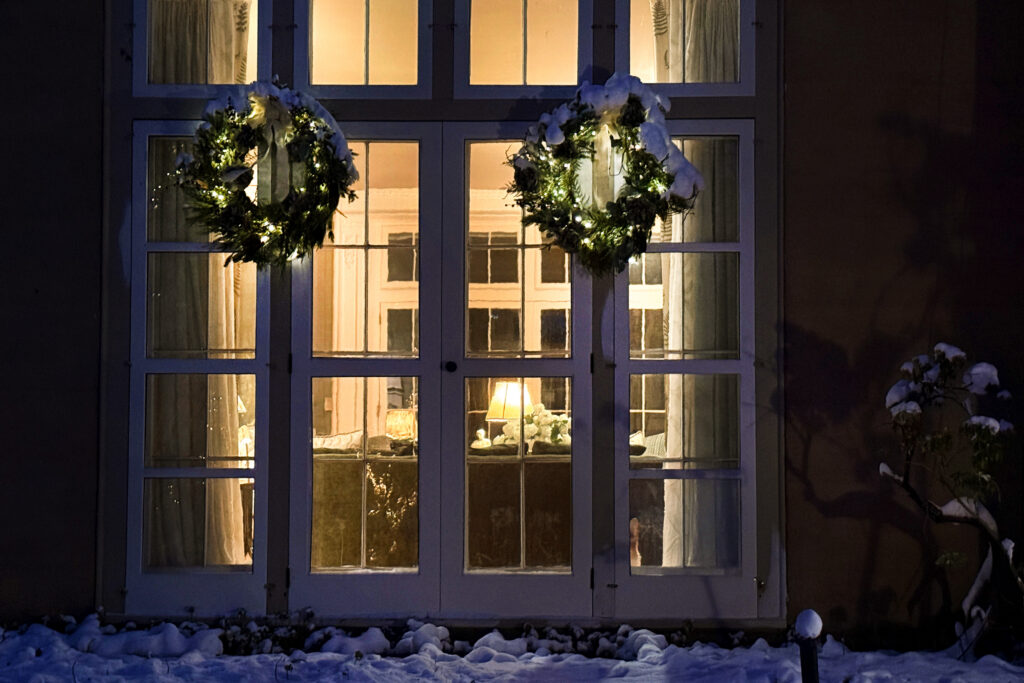
The pleasures of staying in.
a mystery, a movie and an excellent story
13. cinephile: a card game for movie lovers.
Every group of friends has someone who can identify an actor from a supporting role in a film released 30 years ago, and who has been waiting patiently for an opportunity to demonstrate this ability. Cinephile: A Card Game, created by Cory Everett and available through the Academy Museum Store, provides that opportunity. Its illustrated cards celebrate actors and their work across film, giving players a variety of ways to test their cinematic memories and discover unexpected connections between movies.
The game is particularly appealing after dinner because it encourages the kind of cultural digression that makes an evening memorable. A question about an actor becomes a debate about a director’s best film, which leads to an argument about an overlooked performance, followed by a recommendation that someone promises to remember. Whether the recommendation is ever acted upon is another matter. The point is that cinema provides an inexhaustible supply of shared references, disputed judgments and affectionate disagreements.
For a group of film enthusiasts, a card game can become an excuse to revisit decades of moviegoing without actually turning on the television. The stories behind the films, the performances that surprised us and the scenes that remain lodged in memory are often more interesting than the answers themselves. Strong opinions are welcome, provided everyone understands that taste is not a substitute for knowing the cast.
14. murdle: mystery mansion jigsaw puzzle.
A winter mystery has an appeal that is difficult to improve upon: an imposing house, an improbable collection of suspects, a questionable alibi and the growing conviction that someone has overlooked a crucial detail. The Murdle Mystery Jigsaw Puzzle comes in two versions, In the Hedge and the more challenging Mystery Mansion. For a long winter afternoon, Mystery Mansion offers the pleasure of assembling a 500-piece puzzle followed by the satisfaction of solving a fictional murder. Be sure to select that version when ordering.
The puzzle is assembled without a complete reference image, so the finished scene must be discovered rather than copied. Once the pieces have been joined, players use the accompanying story, detective notebook, logic grids and hidden clues to identify the culprit. Mystery Mansion adds unusual perspectives and optical complications that make the assembly more difficult, requiring close attention to angles and relationships between pieces. The completed image also contains a maze that forms part of the investigation.
The structure allows different talents to emerge. The patient observer may excel at assembling the scene, while the person who enjoys logic problems takes charge of the deductions. Someone else will inevitably develop a theory based almost entirely on the suspicious expression of a fictional character. The experience has the gratifying quality of a traditional country-house mystery, with the added advantage that everyone is invited to participate in the investigation. Agatha Christie would presumably approve of the atmosphere, although she might have had something to say about the evidence.
15. the moth presents: a game of storytelling.
For all the pleasures of strategy and competition, the most memorable entertainment of an evening may turn out to be a story nobody expected to hear. The Moth Presents: A Game of Storytelling translates the celebrated storytelling organization’s approach to personal narrative into a card-based game, using themes and prompts to encourage participants to share experiences from their own lives.
The attraction is not simply that people tell stories, but that they often tell different stories from the ones we would have expected. A question about childhood may reveal an unlikely ambition; a prompt about a disastrous evening can produce the funniest account anyone has heard in months. Even among old friends, there are entire chapters of one another’s lives that have never found their way into conversation. A well-chosen question can open one of them without making the gathering feel like a group therapy session.
This is a particularly appealing activity for later in the evening, when dessert has been cleared and everyone has settled into the comfortable informality that arrives after the more organized part of a gathering is over. Unlike a conventional contest, its rewards are difficult to measure and impossible to predict. Someone may make everyone laugh, someone else may surprise the room, and a story told almost in passing may become the one everyone remembers.
how to host an elegant winter game night
The most successful winter gatherings rarely require elaborate planning, and a game night is no exception. A group of serious strategists may happily spend an evening negotiating over imaginary paintings, while a multigenerational gathering will probably get more pleasure from a visual game, dominoes or a puzzle that allows people to join and leave as they wish. The distinction matters because nothing drains the atmosphere from a room faster than a game that requires 40 minutes of explanation before anyone can begin enjoying it.
The physical setting deserves some thought. Good lighting is essential when everyone is distinguishing similar puzzle pieces or reading small lettering, but that does not mean sacrificing atmosphere. A pool of warm light over the playing surface, comfortable chairs and enough room for drinks can make the evening feel inviting without turning the dining table into a brightly illuminated examination room. There is no need to provide an entire library of games at once; a single beautiful object can establish a mood and invite participation without competing for everyone’s attention.
Food and drink should support the occasion rather than interrupt it. Our guide to gourmet food and drinks for overnight guests includes the sort of thoughtful provisions that work equally well for a winter afternoon with friends: excellent cheese, interesting crackers, beautiful chocolate and other small luxuries that require little preparation. Choose things that can be served without constant attention, and avoid anything likely to leave a permanent reminder of the evening on a valuable playing surface.
There is also no reason to limit the pleasures of analog entertainment to a formal game night. A puzzle can occupy a side table for an entire weekend, allowing people to contribute a few pieces whenever they pass. A backgammon board can remain open after dinner, ready for a spontaneous challenge, while a deck of cards travels easily between a city apartment, a country house and a winter hotel. Some of the best games become part of a household’s habits rather than events that need to be organized.
This spirit is central to Lantern Weather, our Holiday 2026 guide, which celebrates beauty, pleasure and connection without adding another layer of obligation to the season. An analog evening asks relatively little of the host and gives the guests something more interesting to do than admire the decorations. The most successful gathering may be one in which nobody remembers exactly when dinner ended and the games began.
why an analog winter feels different
A well-played game has a way of making time behave differently. A winter afternoon that seemed to stretch endlessly ahead becomes absorbed in the small decisions of a chess match, the discovery of an unexpected puzzle piece or the complicated negotiations of an art auction. An hour passes unnoticed, not because anyone has been distracted, but because everyone has been paying attention.
There is pleasure in the physical rhythms of play: the rattle of dice across a backgammon board, the click of mahjong tiles, the quiet concentration of someone turning a wooden puzzle piece in search of its place. A game can bring out talents that rarely have much opportunity to announce themselves. The quietest person in the room may be a ruthless strategist, while the friend who claims to have no patience for puzzles proves astonishingly good at finding the missing details.
These experiences have their own tempo, shaped by the people participating rather than by an external schedule. A competition becomes a conversation; a difficult puzzle becomes an excuse to linger; an unexpected story changes the atmosphere around the table. The pleasures are wonderfully uncomplicated, although the strategies may not be, and the experience belongs entirely to the people present, complete with their questionable tactics, private jokes and occasional moments of brilliance.
By the time someone suggests another round, the weather outside may have become completely irrelevant.
Winter is long. We might as well make a game of it.
faqs:
what are the best games and puzzles for adults?
The best games and puzzles for adults combine engaging gameplay with thoughtful design and an activity suited to the group. Distinctive examples include Alexandra Llewellyn’s The Chase: Winter Backgammon, Isamu Noguchi’s sculptural chess set, Archibald Motley’s Nightlife puzzle, Eames Kite Playing Cards, OuiSi x Getty, Wingspan and The Moth storytelling game. Strategy games are best for competitive gatherings, while art puzzles, visual matching games and storytelling can encourage collaboration and conversation.
what are some unique game night ideas for adults?
Unique game night ideas for adults include playing Modern Art, an auction game that explores art-market psychology; hosting a film-themed evening with Cinephile; solving the Murdle: Mystery Mansion puzzle; or discovering visual connections between artworks with OuiSi x Getty. Traditional games such as chess, backgammon, mahjong and dominoes also become memorable when played with beautifully designed equipment. Choose a game that suits the interests and experience of the group rather than requiring everyone to learn complicated rules.
what are the best board games for adults who love art and design?
Alexandra Llewellyn’s The Chase: Winter Backgammon and Isamu Noguchi’s chess set combine functional games with collectible design. Reiner Knizia’s Modern Art explores auction strategy and the psychology of the art market. Art lovers who prefer collaborative activities may enjoy the Archibald Motley Nightlife jigsaw puzzle, while OuiSi x Getty uses photographic details from the Getty collection to encourage close observation and visual connections.
what are the best indoor winter activities for adults?
Indoor winter activities for adults include art-inspired jigsaw puzzles, chess, backgammon, mahjong, bird-themed strategy games, murder mysteries and storytelling. Wingspan is especially versatile because it can be played alone or with up to four other people. Liberty Puzzles’ Winterlands is a handcrafted wooden puzzle featuring unusual figurative pieces, while Murdle: Mystery Mansion combines puzzle assembly with a more challenging logic mystery. Activities requiring little setup, such as cards and dominoes, work well for informal gatherings.
what are the best games for two adults to play at home?
Backgammon, chess, gin rummy, dominoes and cooperative puzzles are excellent games for two adults. The Chase: Winter Backgammon by Alexandra Llewellyn and the Isamu Noguchi Chess Set offer particularly beautiful options. Eames Kite Playing Cards can be used for familiar two-player card games, while Wingspan supports two players as well as solo play. A jigsaw puzzle or the Murdle: Mystery Mansion game is a good choice for two people who prefer solving something together rather than competing.
what games are good for a family game night?
OuiSi x Getty is particularly suited to a family game night because players of different ages can identify visual connections without needing specialized knowledge. Fredericks & Mae’s Moon Dominoes offer an approachable traditional game with distinctive design, while jigsaw puzzles allow family members to participate at their own pace. Wingspan can be an engaging option for older children and adults interested in birds, nature and strategy. Consider the ages, attention spans and interests of the group when choosing the activity.
how do you host an elegant game night at home?
An elegant game night begins with one or two thoughtfully chosen activities, comfortable seating and adequate lighting over the playing surface. Serve excellent refreshments that require little attention once guests arrive, and choose games whose rules are appropriate for the group. Beautifully designed cards, puzzles or tabletop games can contribute to the atmosphere, while a collaborative activity provides a natural focus for conversation. Leave enough time for the gathering to develop at its own pace, particularly when the most enjoyable part of the evening turns out to be the conversation between rounds.