

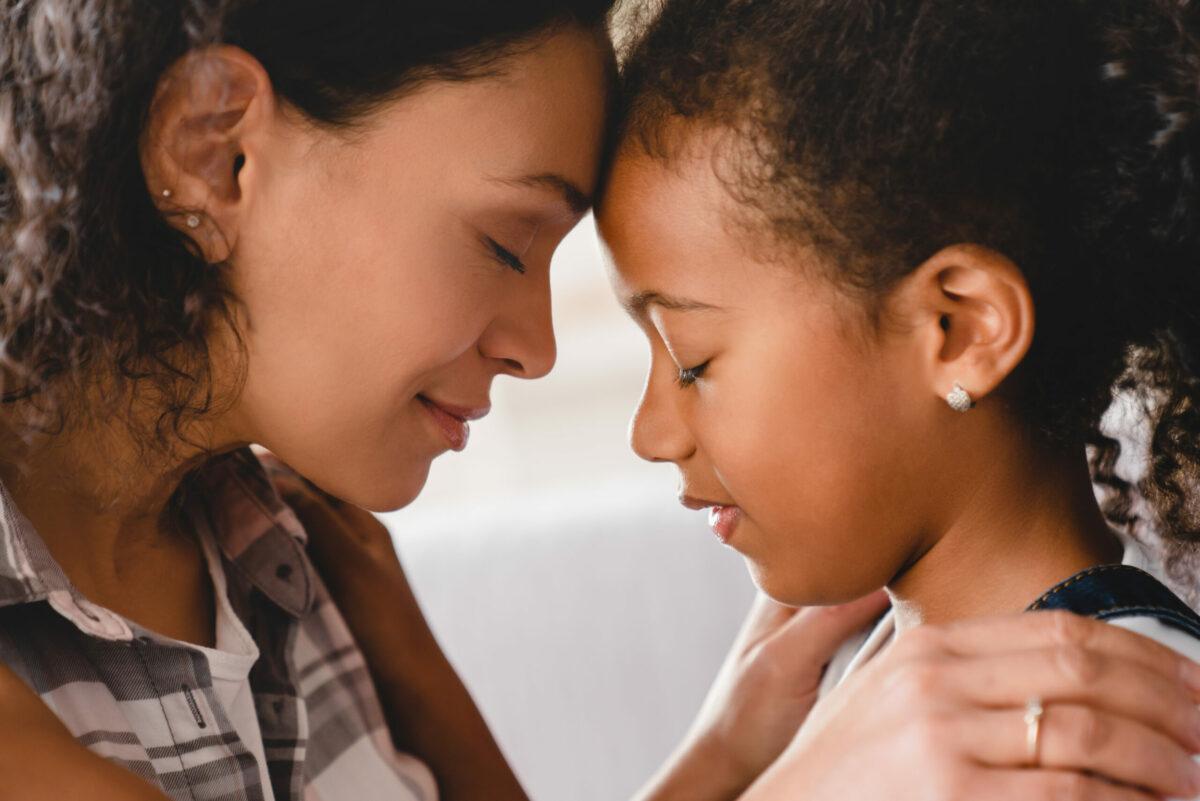
What are the best novels and other fiction to read as Mother’s Day approaches? At this time of year, our thoughts naturally turn to some of the most poignant and affecting books we’ve read through the years about relationships between mothers and daughters. What about mothers and sons, you say? That’s an entirely different matter, and a topic for another post. For now, though, we’ve scanned our bookshelves and come up with a list of some of the best novels (books of fiction, not fact) that we’ve read that illuminate the impact and legacy of relationships between mothers and daughters, just in time for Mother’s Day this year.
what are the best novels to read as Mother’s Day approaches this year?
If you yourself are a mother, or a daughter, or both, then you know what we mean. The relationships between mothers and daughters are vital, and fraught, eternal and sadly sometimes extremely painful.
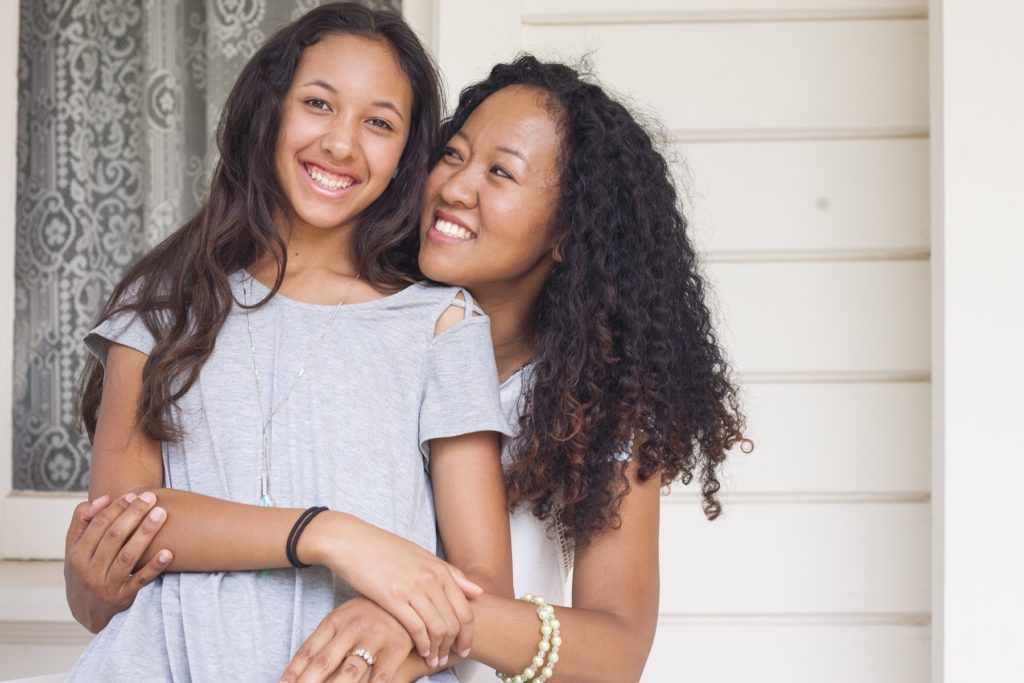
The best novels and other fiction books to read about relationships between mothers and daughters in honor of Mother’s Day this year.
Small wonder that so many brilliant novels penned by women have been narratives about being a mother to a daughter – or vice versa. The weight of expectations, the need to separate, the fierce love, the unspoken rivalries, the lost mothers, the missing daughters – grief, devotion, disappointment and joy are all entangled in a way that only the best writers can illuminate.
18 Best Novels to Read Now about Mothers, Daughters and their relationships
Here are our picks of 18 of the very best novels and books of fiction about the impact and legacy of relationships between mothers and daughters.

The best novels and other fiction books to read about relationships between mothers and daughters in honor of Mother’s Day this year.
Some are serious, others are sweet and a bit silly – but all provide moments of recognition, grace and insight for anyone who is a mother, or a daughter. Or for anyone who would like to understand what this most elemental of ties is really all about.
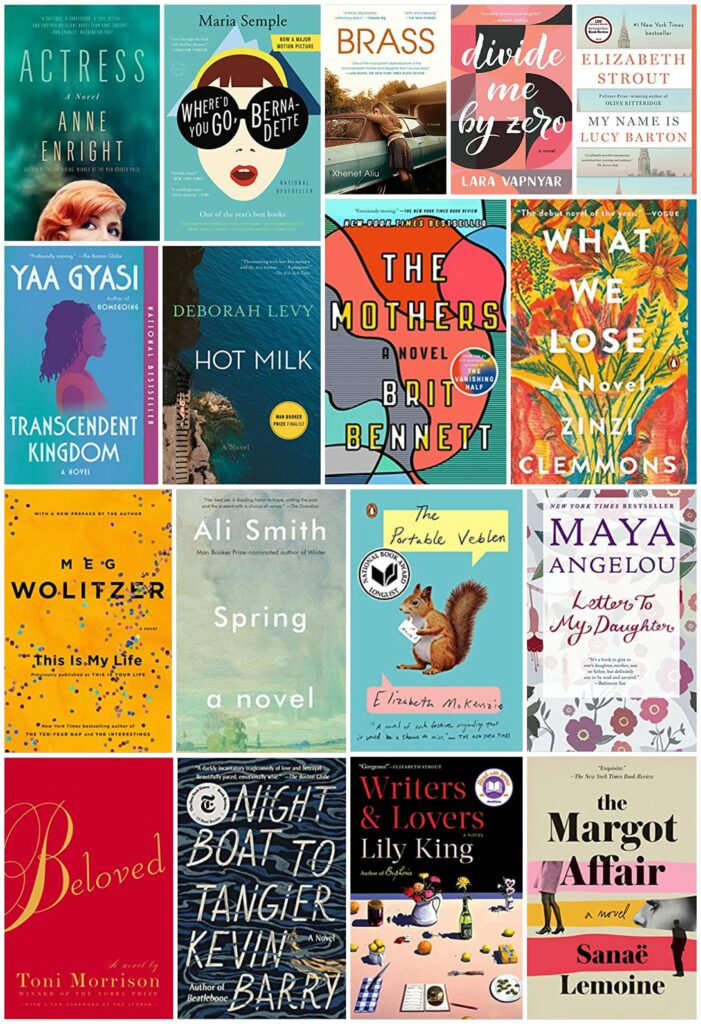
The best novels and other fiction books to read about relationships between mothers and daughters in honor of Mother’s Day this year.
1. The Mothers by Brit Bennett.
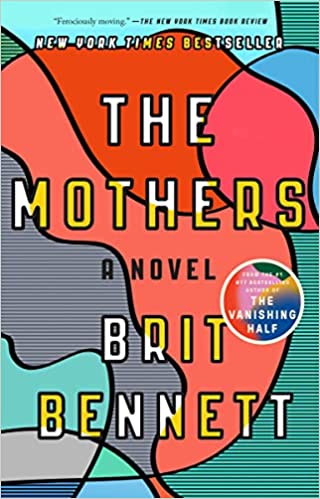
The Mothers, the acclaimed author’s debut novel, is stunning in its ability to evoke the realities of a young woman’s life when she is just on the cusp of becoming an independent woman. And it tops the list of our take on the best fiction about mothers and daughters.
The protagonist has lost her mother to suicide and is engulfed in grief. At the heart of the story is her female friend, another motherless daughter (although for a different reason). Of course there are men in the mix – but the fundamental issue that drives the story is this: what does it mean to be a mother? And how does one survive without one?
BUY NOW – $9.34.
2. Divide Me by Zero by Lara Vapnyar.
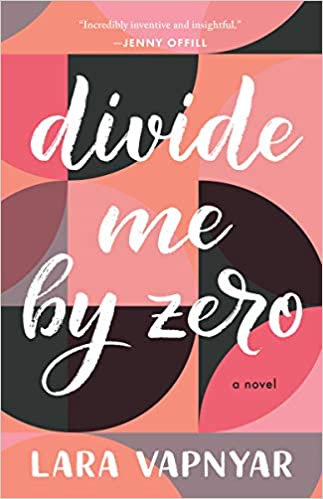
Divide Me By Zero is one of the best evocations of the experience of losing a mother to illness that we’ve read in quite a long time. The protagonist is frequently told that she behaves like a child, despite being a middle-aged mother of her own daughter. There are many twists and turns that take us from Russia to Queens and then to the suburbs of New York City. But the beating heart is the devotion that this mother-daughter pair share – and the duty of such a daughter when her mother’s time has come.
BUY NOW – $12.76.
3. Actress by Anne Enright.
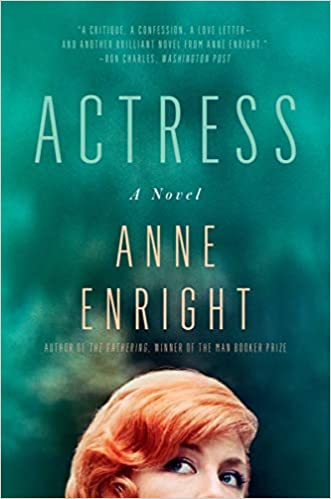
The phrase “stage mom” is never a compliment. And as glamorous as it may appear to be, being the daughter of an actress is no walk in the park, either. Actress makes this perfectly and poignantly clear.
BUY NOW – $11.47.
4. Night Boat to Tangier by Kevin Barry.
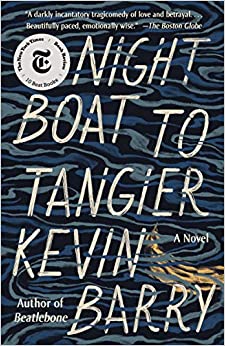
Night Boat to Tangier has quite a lot to say about a relationship between a father and his daughter. On its face, you might even think that’s all that about. But in its beating heart, it’s about a mother’s determination to protect her daughter from her father’s weaknesses and bad decisions. And in the end, it’s a mother’s wisdom – and a daughter’s trust in it – that saves her life.
BUY NOW – $13.99.
5. Spring by Ali Smith.
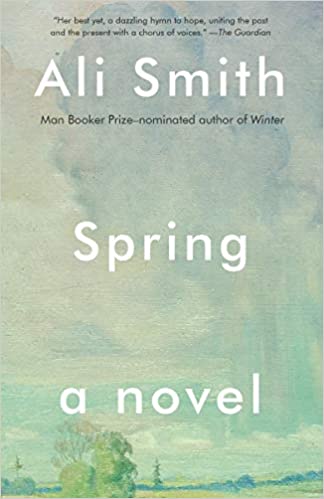
Spring is the third installment of the author’s marvelous Seasonal Quartet. This entry finds us deep in the heart of immigration in England and the turmoil that results when refugees flee north toward freedom. But it’s not really about politics. At its heart, this novel is about the fierce, protective and undying love that’s shared between a precocious young daughter and her immigrant mother. And also a stark reminder of the toll that being badly parented can have on the soul.
BUY NOW – $14.15.
6. My Name is Lucy Barton by Elizabeth Strout.
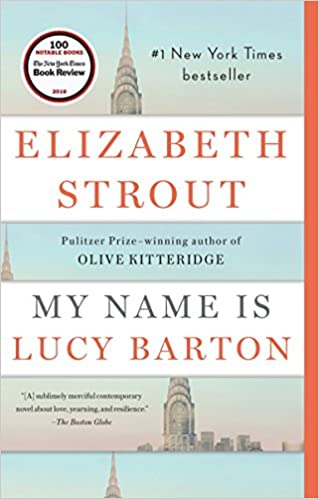
In the fine novel My Name is Lucy Barton, a young woman awakens from undergoing surgery in the hospital to see her mother – someone she hasn’t spoken to in years – by her bedside. In the five days that follow, they don’t say much. But they manage to cover everything.
BUY NOW – $9.69.
7. Where’d You Go, Bernadette? by Maria Semple.
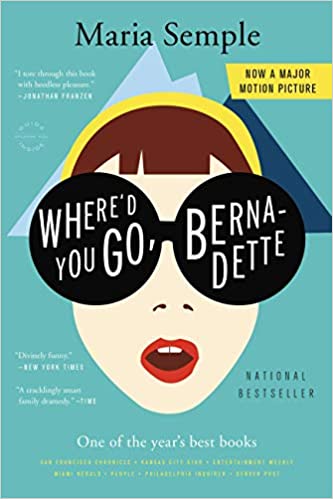
The comic novel Where’d You Go, Bernadette? is an absolute delight. When her mother Bernadette – a prickly and brilliant artist – goes missing from their upscale Seattle home, it’s up to her precocious daughter to piece together the puzzle of where she’s gone. Using a trail of emails, scribbled notes and more, she proves to be adept at finding missing persons. Would you go to the ends of the earth to find your mother? And if so, could you make the tale of your journey this much fun?
BUY NOW – $10.95.
8. Brass by Xhenet Aliu.
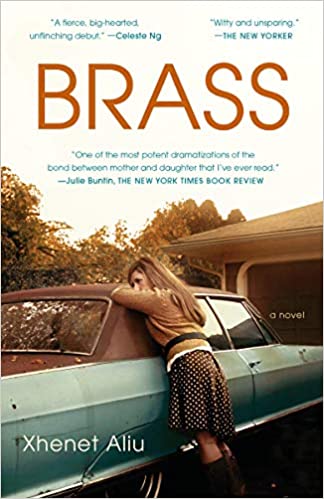
In the novel Brass, Elsie is a waitress at the local diner in her hometown. She feels stuck, but when she meets Bashkim, she falls in love, gets pregnant, and wonders what the future will hold. Jumping ahead 17 years, Elsie’s daughter Lulu feels the same sense of stagnation in the same hometown. So Lulu sets out to learn the truth about her father — which Elsie has been hiding all these years.
BUY NOW – $15.63.
9. What We Lose by Zinzi Clemmons.
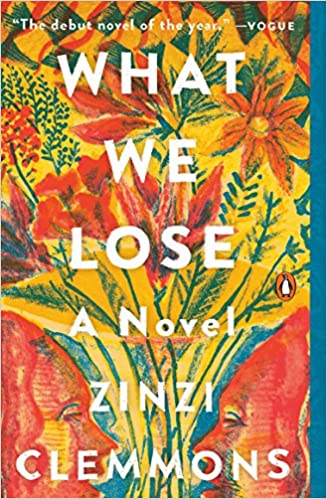
Raised in Pennsylvania, the protagonist of What We Lose, Thandi, views the world of her mother’s childhood in Johannesburg as both impossibly distant and ever present. She tries to connect these dislocated pieces of her life, and as her mother succumbs to cancer, Thandi searches for an anchor—someone, or something, to love. We watch Thandi’s life unfold, from losing her mother and learning to live without the person who has most profoundly shaped her existence, to her own encounters with romance and unexpected motherhood.
BUY NOW – $17.00.
10. Beloved by Toni Morrison.
The iconic novel Beloved follows Sethe, a slave who kills her young daughter rather than have her face a life in slavery. Years later, when Sethe is free, a mysterious woman comes to live with her and her community is convinced she’s the ghost of the murdered child.
BUY NOW – $10.01
11. Writer and Lovers by Lily King.
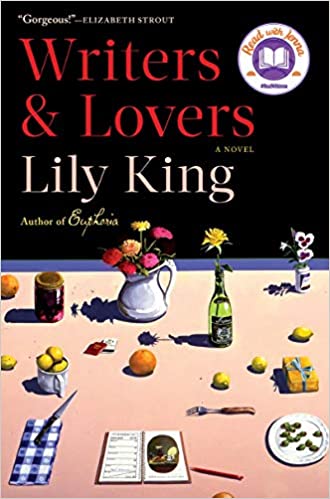
In another great read about mothers and daughters in literary fiction, we travel to Harvard. Blindsided by her mother’s sudden death, and wrecked by a recent love affair, in Writers and Lovers, Casey Peabody has arrived in Massachusetts in the summer of 1997.
This is the story of how one young woman faces the world without a mother who was absent too much even when she was alive. And how a writer perseveres and finds her voice despite the weight of student loans, no health insurance, narcissistic lovers and daily toil as a restaurant waitress in a wealthy town. The imagery is beautiful, and the details have the raw clank of truth.
At its beating heart, it’s a story about the impact of a mother’s life on her daughter’s art. And how a daughter’s fear-ridden and ferocious desire to someday be a mother herself can fuel potentially permanent mistakes.
BUY NOW – $11.99.
12. This is My Life by Meg Wolitzer.
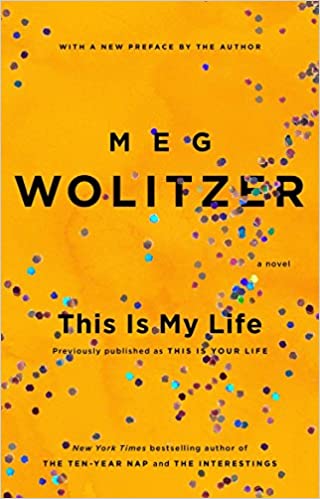
This is My Life (originally published as This is Your Life) by Meg Wolitzer is a wonderful novel about being a mother and being a daughter. Dottie Engels, comedienne extraordinaire, performs her act in Vegas and on late-night TV. Her two daughters, Opal and Erica, live on the periphery of her glittering life, seeing her on the television screen more often than they do at home. She struggles to balance her career with the needs of her children, and when Dottie’s ratings begin to slide, it takes both of her daughters to save Dottie from herself.
BUY NOW – $22.00.
13. The Portable Veblen by Elizabeth McKenzie.
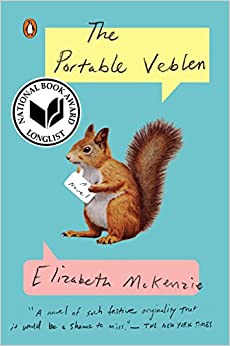
In The Portable Veblen, thirty-year old Veblen is a resident of Palo Alto and a good-humored daughter to both her mother – a hypochondriac – and her father, who is living in a mental health institution. She’s engaged to be married to the equally amiable Paul – but there’s the small problem of the squirrel nesting in her attic, to which she becomes closely attached.
There are also sinister doings at the medical lab where Paul works. And the vexing problem of why our heroine is named after the economist who coined the phrase “conspicuous consumption.” It all goes reasonably haywire, but as an exploration of the weight of the past on our hopes for the future, it’s provocative and sobering. We promise that you’ll never see squirrels in quite the same way again.
BUY NOW – $13.99.
14. Hot Milk by Deborah Levy.
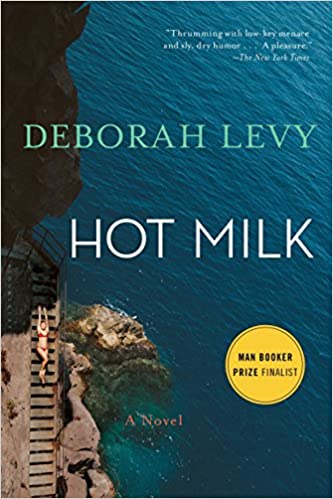
In Hot Milk, Sofia’s mother Rose suffers from unpredictable limb paralysis. As a last-ditch effort to cure her, they travel to a fancy medical clinic in Spain to meet with the famous Dr. Gomez. As Rose’s treatment begins, all they can do is wait to see if it works. And Hot Milk offers us a glimpse into the waiting period.
BUY NOW – $11.69.
15. Fight Night by Miriam Toews.
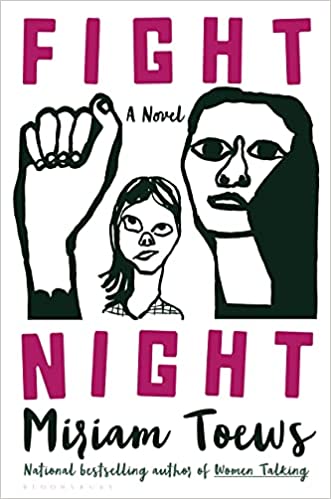
Fight Night is set in Toronto, where a preternaturally wise and precocious 9-year old girl, Swiv, is parenting her pregnant mother and her loveably outgoing and outspoken grandmother. The novel is written in the form of an extended letter to Swiv’s father, who has gone missing with no word of goodbye. The three women, and “Gord,” the unborn child, are left to fend for themselves. Which they do with wit, anger, good humor and plain old stubbornness.
While this is an unsparing look at the tolls of age, sexism, religious repression and life on the economic edge, it’s also a clarion call for women of all ages to “learn to fight.” Despite having lost her other daughter and her husband, the family matriarch remains resolute and engaged. She repeatedly advises her daughter and granddaughter that there is a flame in each of us. And it’s our duty to feed it and keep it from going out – no matter what the world may throw our way.
BUY NOW – $13.79.
16. The Margot Affair by sanaë lemoine.
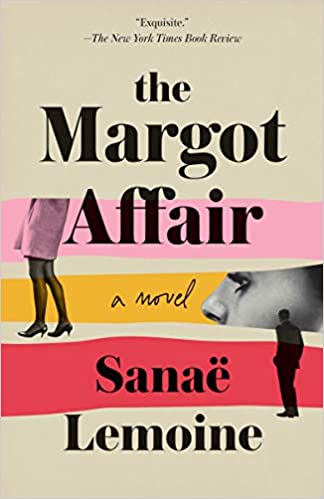
In the debut novel The Margot Affair, we spend a year in the lives of a single mother and her teenage daughter in the swanky precincts of the Left Bank of Paris. Near the Luxembourg Gardens, Margot and her mother (a famous actress in the mold of Catherine Deneuve) spot the wife of Margot’s father – a politician on the rise with a spouse and children known to the public. They are his second, secret family – living in an apartment paid for by Margot’s father that they could never otherwise afford. That day, something in Margot snaps as she contemplates what life would be like if her father would only publicly claim her as his own.
As she and her best friend study for the Baccalaureate exams that will determine their futures, Margot is seduced by a journalist and her husband into sharing the secrets of her family life. When the story goes public, a string of events that no one could have expected unfolds. And it becomes essential to understand exactly what family, parenthood, loyalty and devotion really mean.
It’s frank and funny and ultimately deeply moving, and in many ways is a perfect companion read with The Mothers by Brit Bennett. Who stays, and who goes, when life gets really, truly hard? This brilliant novel will leave you thankful for those rare people in your life who will literally do anything for you. And remind you that sometimes that person is your mother.
BUY NOW – $14.89.
17. Transcendent Kingdom by Yaa Gyasi.
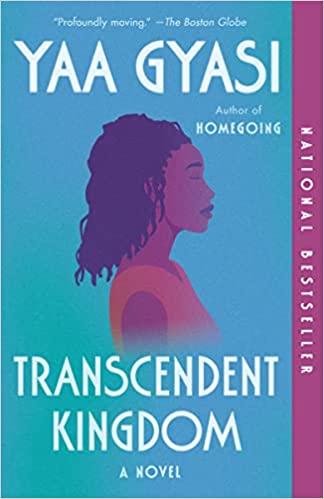
Gyasi is best known for her bestselling debut novel, Homegoing. In this sophomore novel, she brings the same precision and lyricism to a different kind of family and a different definition of home. Gifty is . . . well, gifted. A young black woman working in a graduate student lab at Stanford, Gifty has become consumed with research into the nature of addiction. That’s the direct result of the tragic death of her adored older brother (and only sibling) from a drug overdose after he becomes addicted to opioids after a sports injury. In the aftermath, her stern mother struggles with debilitating depression, despite being deeply devoted to her evangelical local church. They are an immigrant family, originally from Ghana, transplanted to a small city in Alabama and battered by the race and class barriers that await them in America.
The author grew up in Alabama in the same town in which this novel is set. So perhaps it is “auto-fiction” – autobiography disguised as fiction. It matters not. This is a remarkable and earnest exploration of childhood faith and the cold harsh realities of adulthood. In wrestling with suffering and fighting quite hard to hold onto hope, in Gifty we have a heroine who embodies what it means to want to believe in a world that seems determined to extinguish the small flame of hope lit inside her as a child. And her triumph becomes ours.
BUY NOW – $10.75.
18. Letter to My Daughter by Maya Angelou.
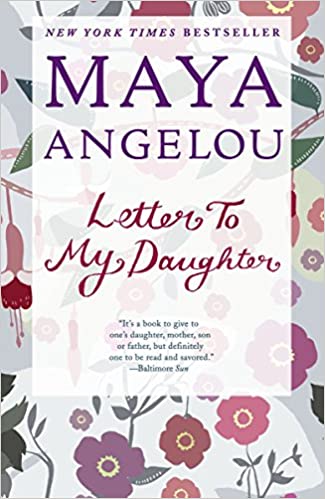
We end this list of some of the best novels and books of fiction about the relationships between mothers and daughters with a brilliant letter from a real (and magnificent) woman to a fictional daughter. In her introduction to Letter to my Daughter, Angelou explains: “I gave birth to one child, a son, but I have thousands of daughters. You are Black and White, Jewish and Muslim, Asian, Spanish speaking, Native Americans and Aleut. You are fat and thin and pretty and plain, gay and straight, educated and unlettered, and I am speaking to you all. Here is my offering to you.” If you have lost your mother, or perhaps have not had the nurturing mother that every person deserves, this may be a gift that you can give yourself this Mother’s Day.
BUY NOW – $14.99.
Best Novels and Books to Read Now about Mothers, Daughters and their relationships
Those are our thoughts about some of the best novels and other fiction books to read right now about relationships between mothers and daughters just in time for Mother’s Day this year. How about you, dear reader? What’s your favorite book of fiction about mothers and daughters?