

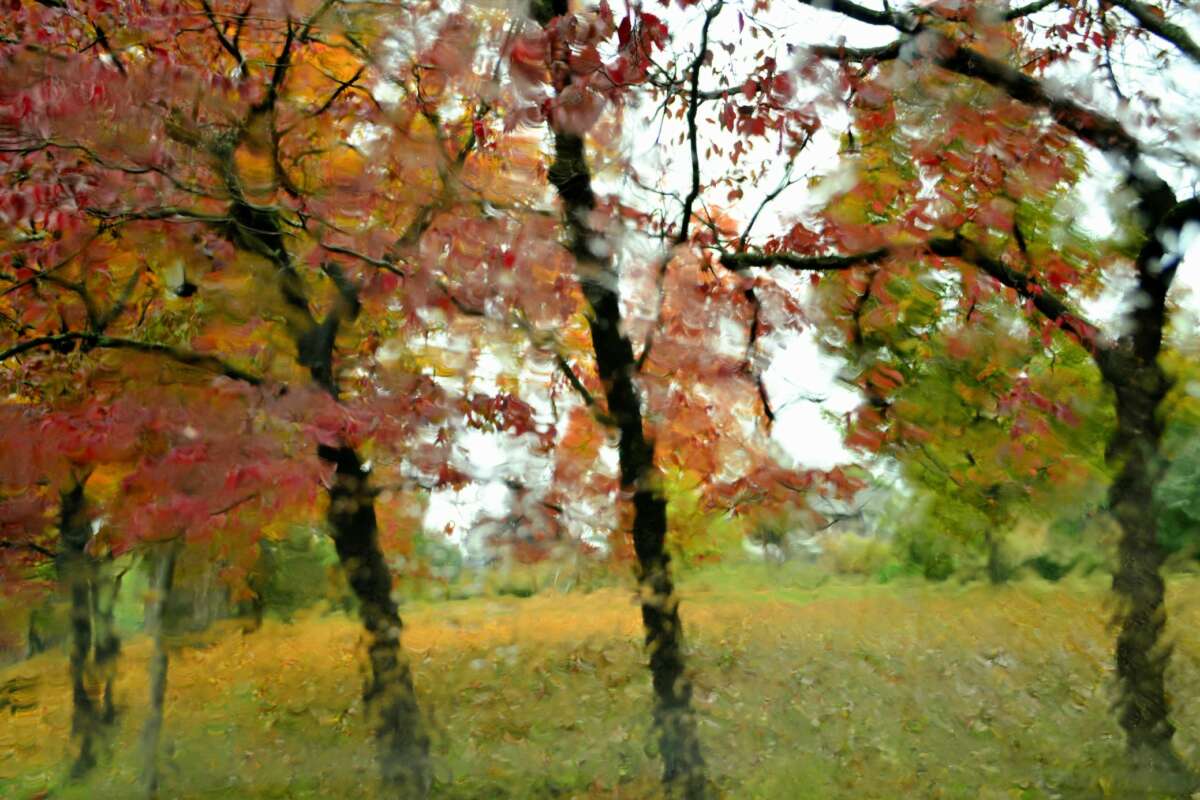
OK, we have to admit it. As much as we enjoy the summer, we absolutely adore the fall. So we decided to take a journey to find the most influential, beautiful, famous and evocative masterpiece paintings and collages – both historical and contemporary – about the season of autumn and the joys of fall. Across time and culture, city or countryside, abstract or representational, there are universal elements of fall that are expressed in stunning ways. Here’s our roundup of some of the most beautiful paintings about the fall season; they evoke the best feelings of the autumn, no matter when or where you view them.
how have painters portrayed the fall season and the feeling of autumn over time?
It’s hard to believe that we are already a third of the way through autumn. Depending on where you live, you may be able to enjoy a little bit of that seasonal glow right outside your window.
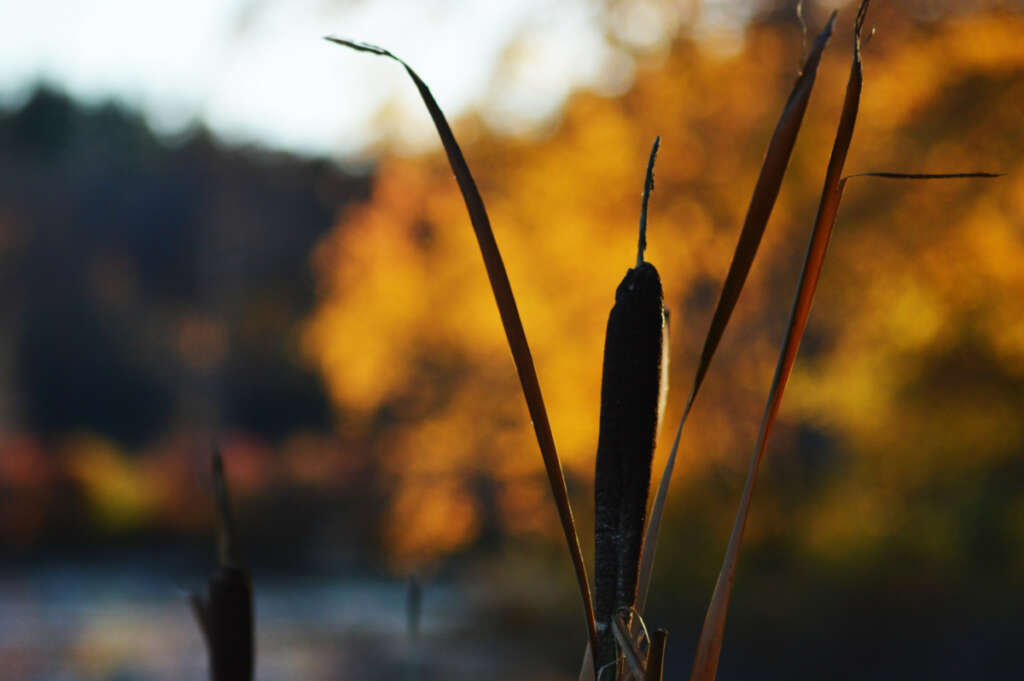
The most famous and beautiful paintings about autumn to welcome the fall season this year.
But no matter what, there’s one place you can always find those signature golden hues: in art.
Art of all kinds can enhance our experience of the current moment. And what better moment to try to suspend in time than a perfect fall day?
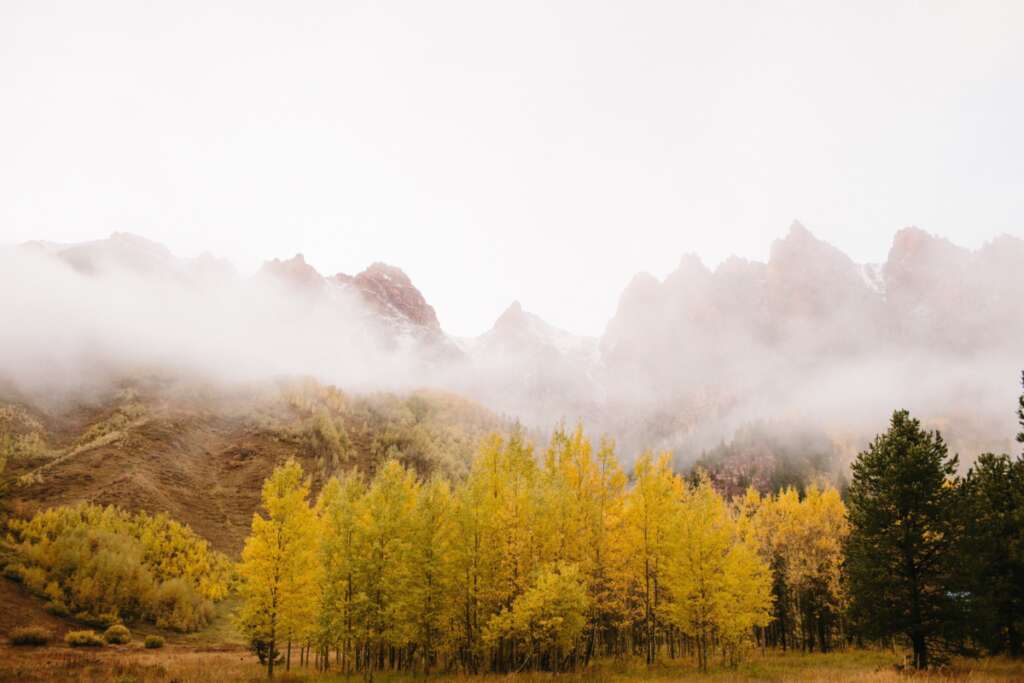
The most famous and beautiful paintings about autumn.
These fifteen paintings, a mix of classic and contemporary, all contain a sliver of that magical moment when the world seems to hold its breath. You can expect robust reds and oranges, plenty of majestic treetops, and even a cozy interior or two.
15 Famous and Beautiful Paintings about the fall season
1. Autumn Oaks by George Inness (1878).
The American painter completed this work shortly after returning from a four-year voyage across Europe. The influence of his time abroad is evident here, where his style visibly shifts away from his previous, more naturalistic way of painting. This work was donated by George I. Seney to the Metropolitan Museum of Art’s collection in 1887, where it remains today.
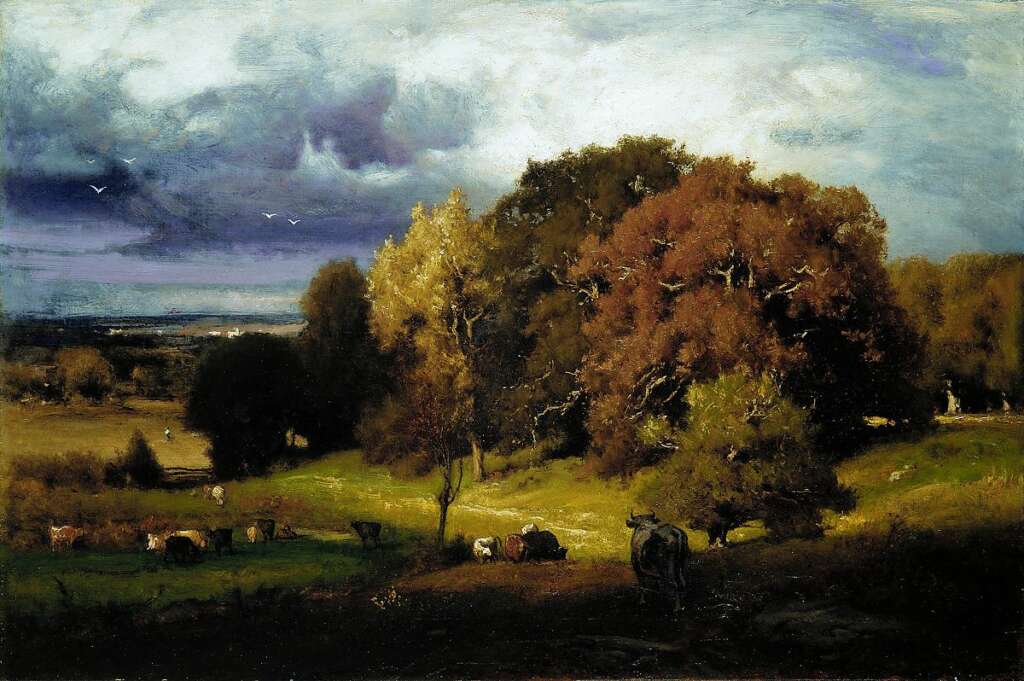
The most famous and beautiful paintings about autumn and the fall season. Autumn Oaks by George Inness (1878). Photo Courtesy Metropolitan Museum of Art.
2. Shawanagunk Mountains by Jervis McEntee (1863).
McEntee was an American painter of the Hudson River School, the art movement known for its landscapes of the Hudson River Valley in New York. McEntee’s autumn paintings are often dark and brooding, depicting the colorful season at its melancholy best.
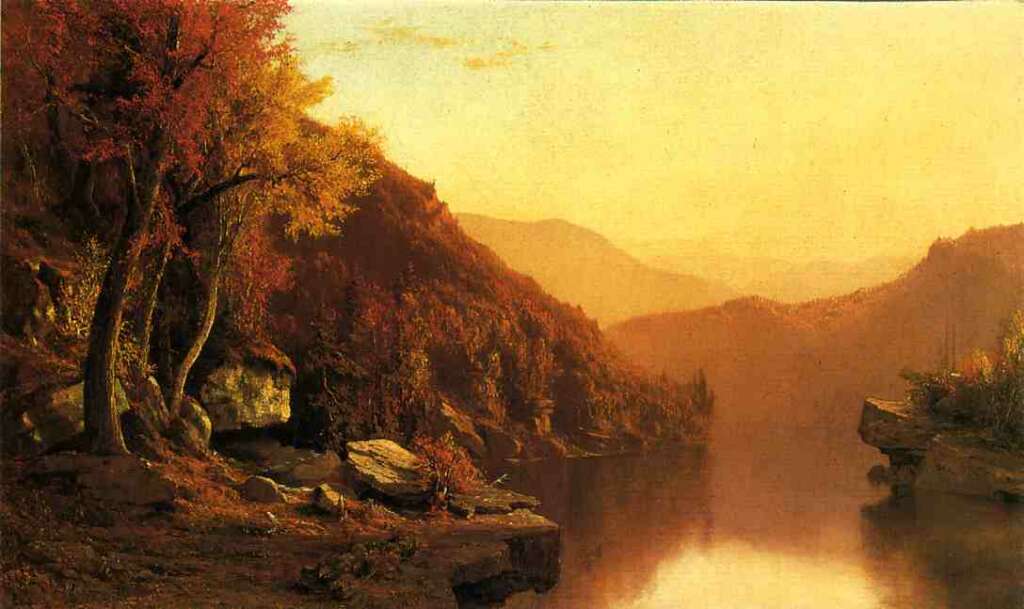
The most famous and beautiful paintings about autumn and the fall season. Shawanagunk Mountains by Jervis McEntee (1863).
3. Autumn Effect at Argenteuil by Claude Monet (1873).
In this work, Monet depicted the small town of Argenteuil seen from a branch of the river Seine. But the artist’s focus is less on the village than on the effects of the autumn season: the reflections on the water and the array of colors in the trees. The overall mood is one of careful observation and appreciation for a fleeting moment of beauty.
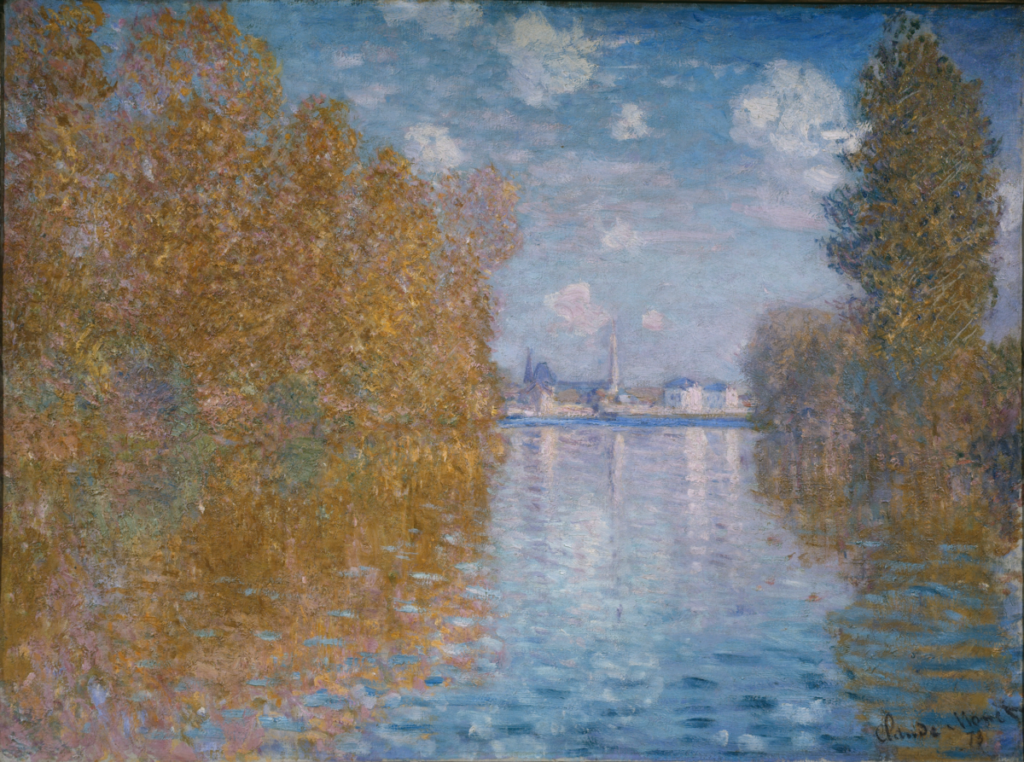
The most famous and beautiful paintings about autumn and the fall season. Autumn Effect at Argenteuil by Claude Monet (1873).
4. Autumn on the River (or Miss Violet Sargent) by John Singer Sargent (1889).
Italian-born American painter Sargent was renowned for his full-body portraiture, many of which featured female subjects. People would travel from all over the world for a chance to sit for one of his paintings.
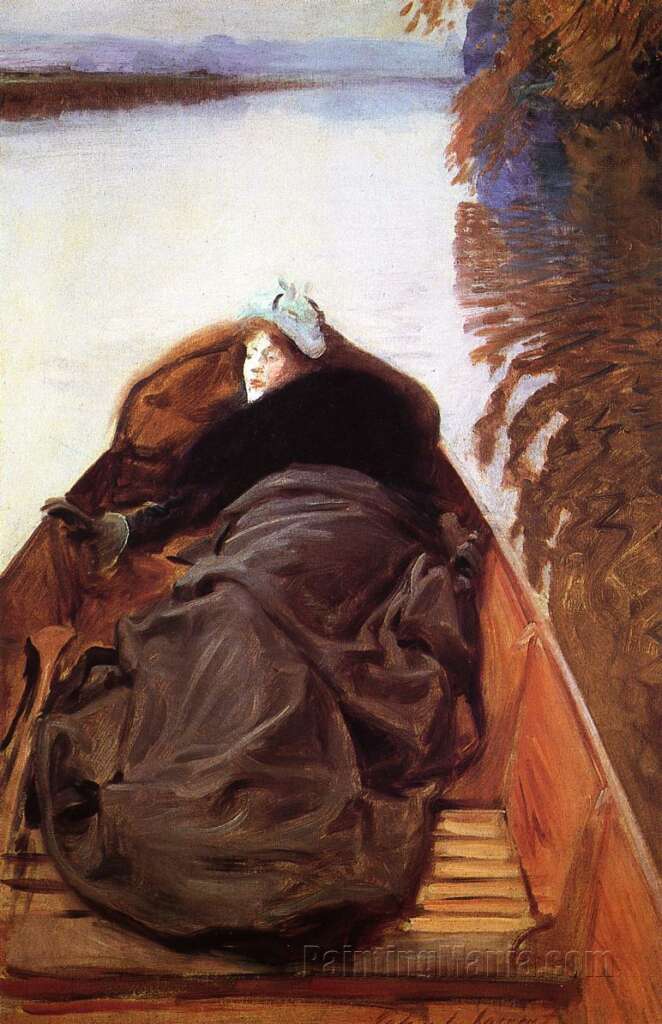
The most famous and beautiful paintings about autumn and the fall season. Autumn on the River (or Miss Violet Sargent) by John Singer Sargent (1889). Photo Credit: Painting Mania.com.
5. Birch Forest by Gustav Klimt (1903).
The Austrian painter uses color and size to a dynamic effect, creating the look of a forest that appears almost three dimensional. This work was held for many years in the Osterreichische Galerie, before being returned to the heirs of its original owner in 2006.
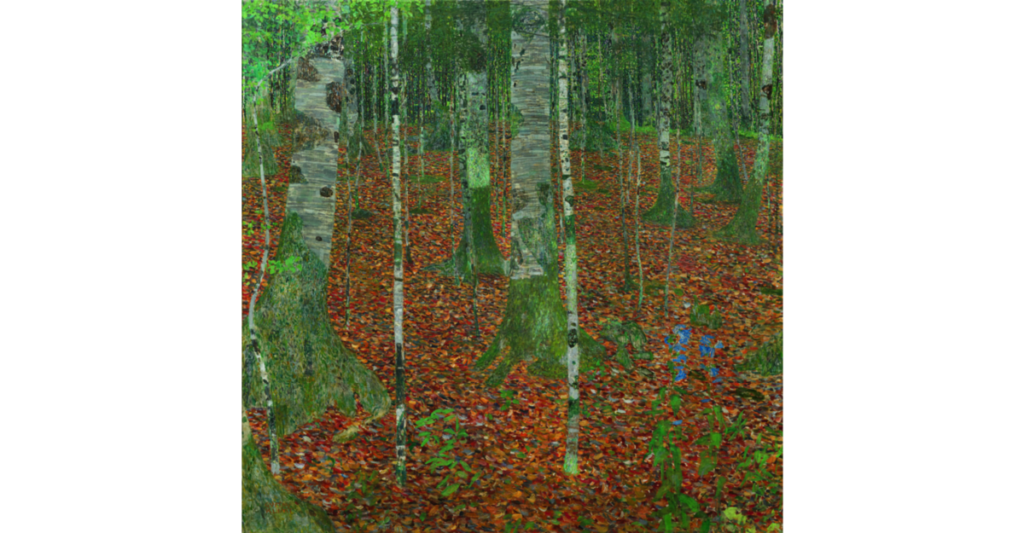
Famous and influential paintings about the fall season. Birch Forest by Gustav Klimt (1903).
6. Autumn Festival by Willard Metcalf (1915).
Metcalf was an Impressionist painter born in Lowell, Massachusetts in 1858. He went on to become a renowned landscapist, depicting the joys of all four seasons in many of his paintings.
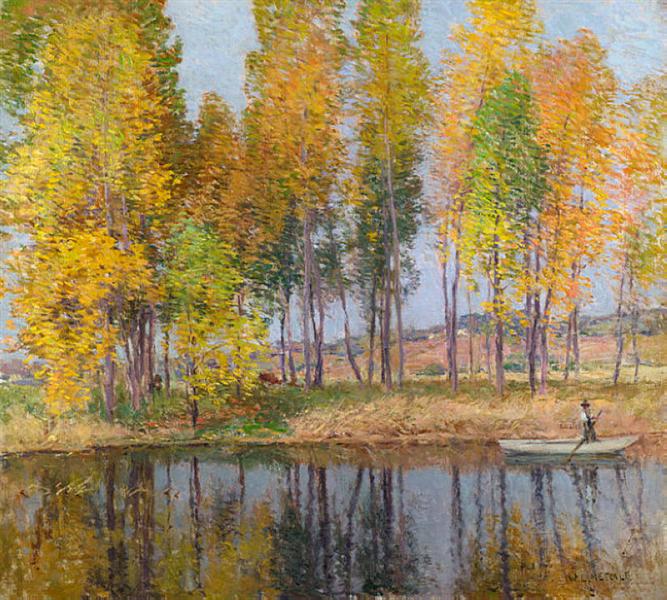
Famous and influential paintings about the fall season. Autumn Festival by Willard Metcalf (1915).
7. Autumn Foliage by Tom Thomson (1915).
Though the Canadian artist lived to only thirty-nine years old, he produced more than four hundred works over the course of his career. This painting is currently in the collection of the Art Gallery of Ontario.
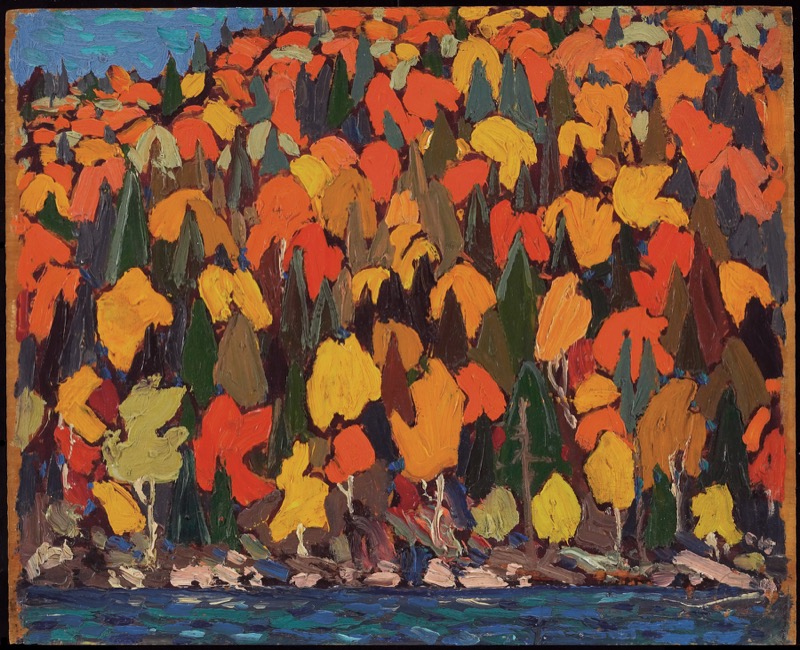
Autumn Foliage by Tom Thomson (1915). Photo Courtesy Art Gallery of Ontario.
8. Autumn at Lake Towada by Yasui Sōtarō (1935).
Sōtarō was born in 1888 in Kyoto, Japan, and moved to Paris at nineteen to study at the Académie Julian. This particular woodblock print is currently in the permanent collection of the Art Institute of Chicago.
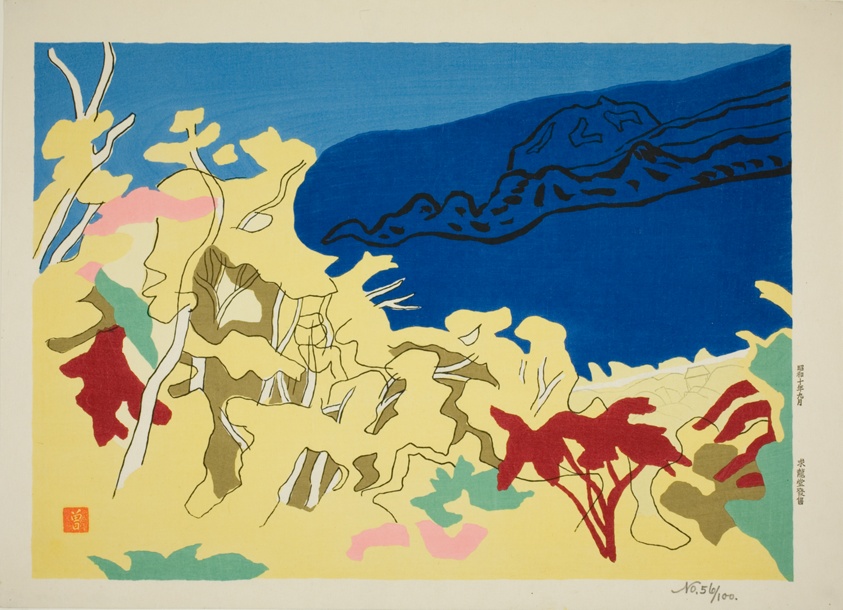
Autumn at Lake Towada by Yasui Sōtarō (1935).
9. Autumn at Saruiwa, Shiobara by Hasui Kawase (1949).
The rich colors of the fall in Japan inspired many notable artists. Kawase was one of the most prominent artists of Japan’s new print movement, and known for the way he often depicted landscapes. This one captures the beauty and crisp feeling of adventure of a winding road along the side of a mountain in the Shiobara prefect.
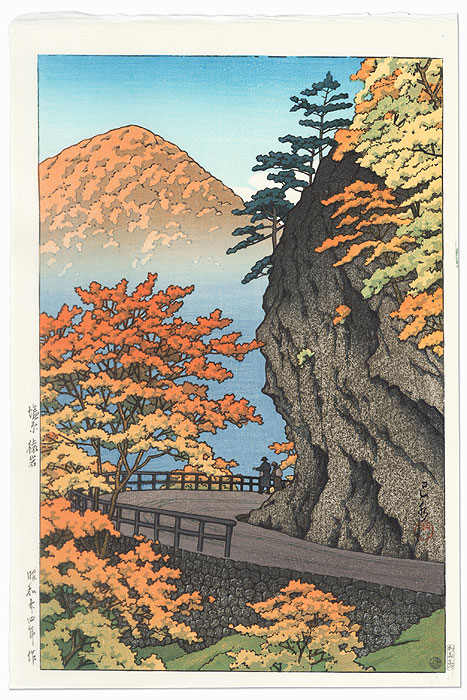
Autumn at Saruiwa, Shiobara by Hasui Kawase (1949). Photo Credit: Fuji Arts.
10. Autumn Rhythm (Number 30) by Jackson Pollock (1950).
One of Pollock’s best-known works, this was made in the artist’s signature style, with paint poured, dripped, and splattered on the canvas using every imaginable method. It was first shown at the Betty Parsons Gallery, and you can find it today at the Metropolitan Museum of Art. The chaos of the piece somehow evokes autumn’s quiet intensity, as does the color scheme.
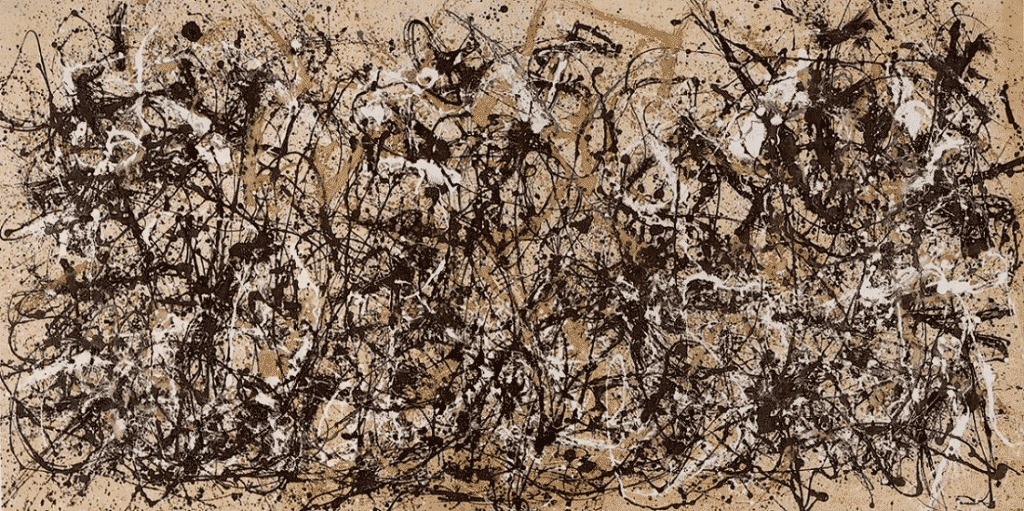
Famous and influential paintings about the fall season. Autumn Rhythm (Number 30) by Jackson Pollock (1950). Photo Courtesy The Metropolitan Museum of Art.
11. Cover of the New Yorker, October 20, 1980 by Jean-Jacques Sempé (1980)
The French artist is best known for his career as a cartoonist, as well as for his series of children’s books, Le petit Nicolas. His art regularly appeared as the cover image of The New Yorker, as seen here in this lovely celebration of autumn in New York.
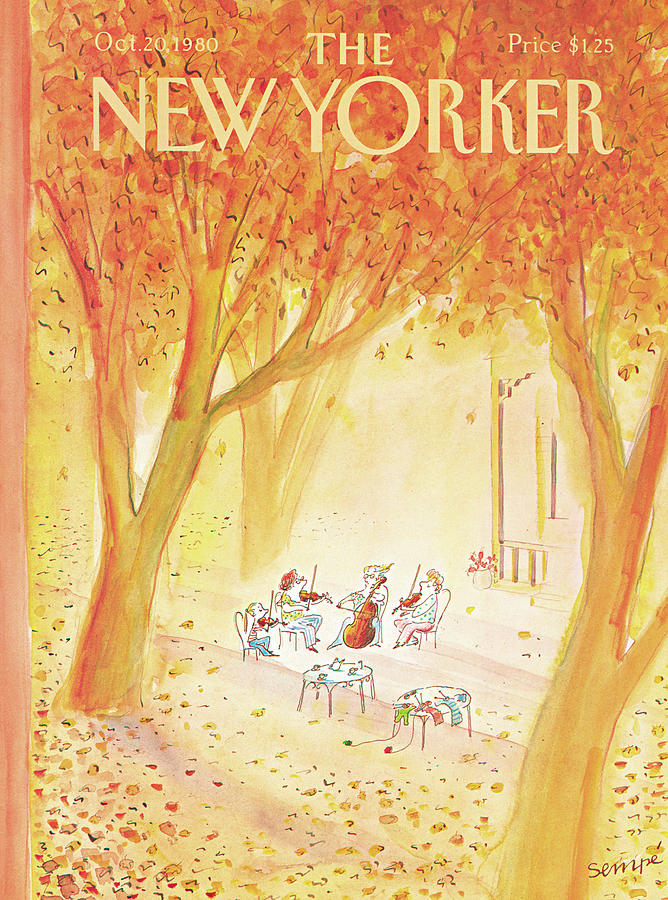
Cover of the New Yorker, October 20, 1980 by Jean-Jacques Sempé (1980). Photo Courtesy Conde Nast.
12. Autumn Colors by Higashiyama Kaii (1986).
Created in Ichikawa, Japan, this was no doubt inspired by the contemporary painter’s deep love of nature.
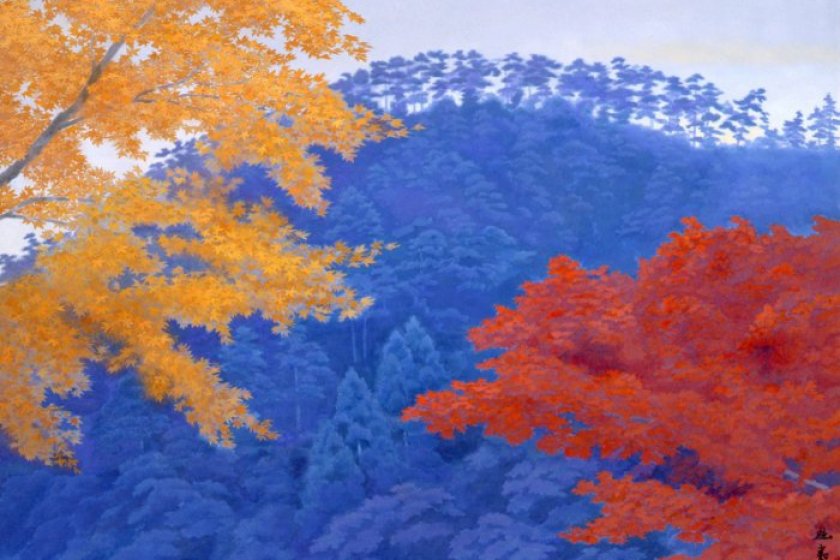
Autumn Colors by Higashiyama Kaii (1986). Photo Courtesy Japan Travel.
13. Four Seasons, The Fall by Kara Walker (2008).
This piece was made using the artist’s trademark layering of different papers.
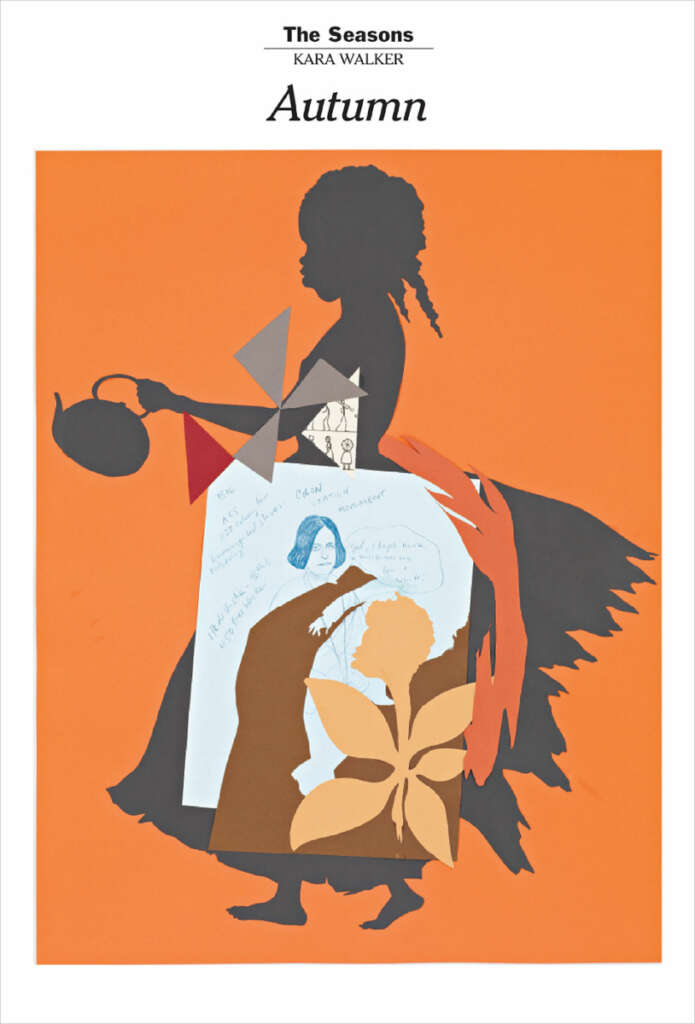
Kara Walker, “Four Seasons, The Fall.” Paper and graphite, courtesy of Sikkema Jenkins & Co., 2008.
14. Portrait of Mnonja by Mickalene Thomas (2010).
So much of the joy of autumn can come from our collective retreat to cozy, warm interiors. This work, incorporating Thomas’s signature rhinestones, enamel and acrylic, can be found at the Smithsonian American Art Museum in Washington, DC.
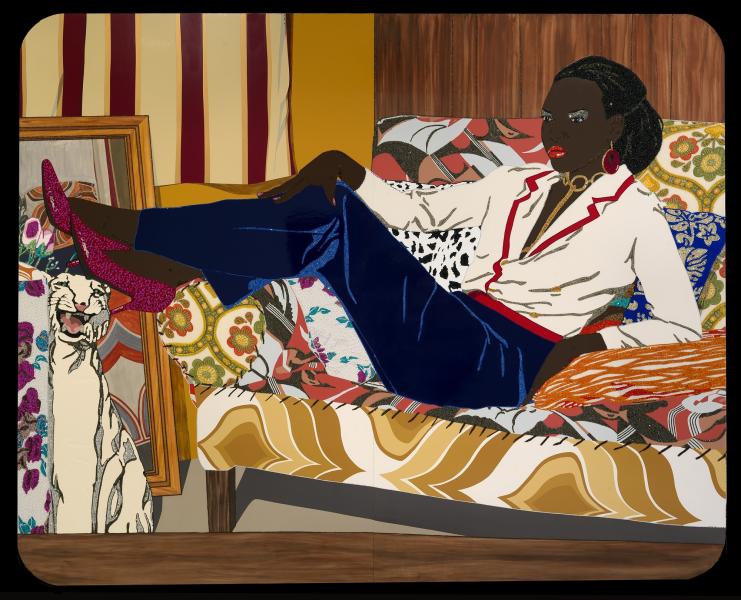
Portrait of Mnonja by Mickalene Thomas (2010). Photo Courtesy the Smithsonian American Art Museum.
15. September Morning by Sophie Treppendahl (2021).
Treppendahl is known for her ability to capture the enchantment of ordinary, quiet scenes. Her paintings of interiors rarely include figures, yet she somehow imbues each work with a sense of life alongside stillness—as though someone has just walked out of the room. In this case, on a sunny autumn day.
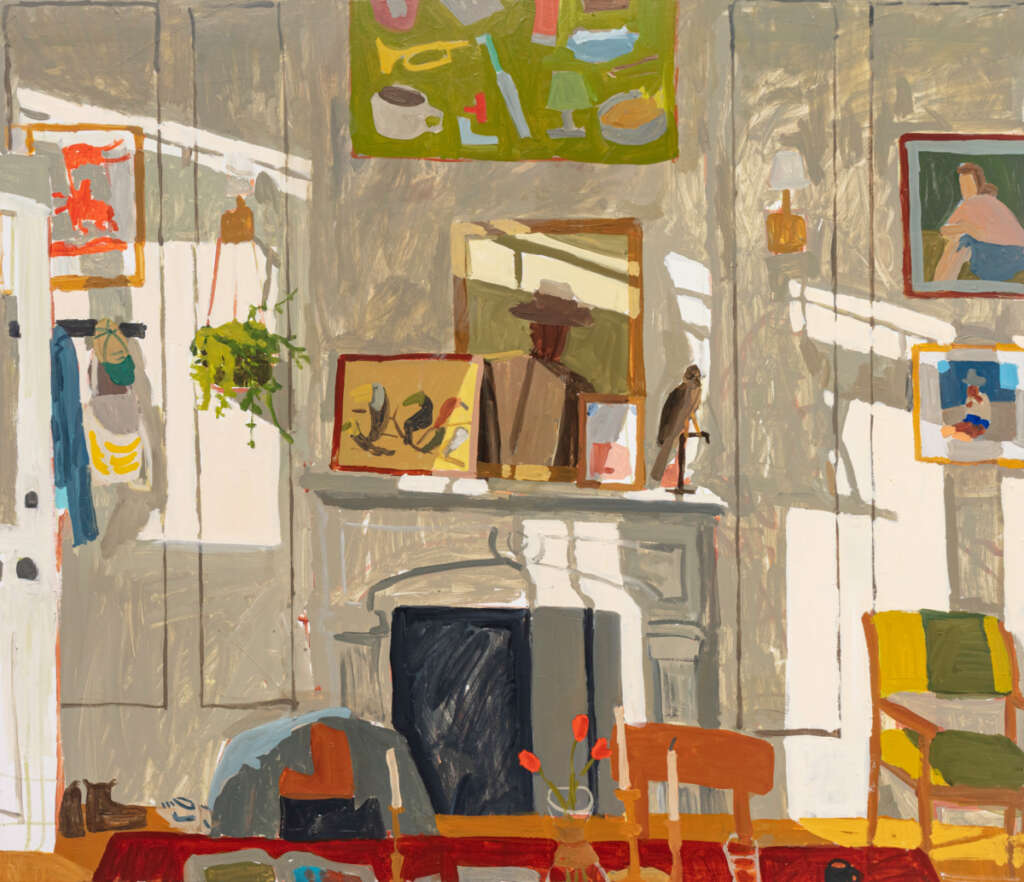
September Morning by Sophie Treppendahl (2021). Photo Courtesy PLATFORM.
Paintings about the Fall season and the mood of autumn
That’s it – our picks for some of the most beautiful and moving paintings about the glorious season of autumn and the joys of the fall season. What’s your favorite painting of the mood and feel of autumn and the colors of the fall season?