


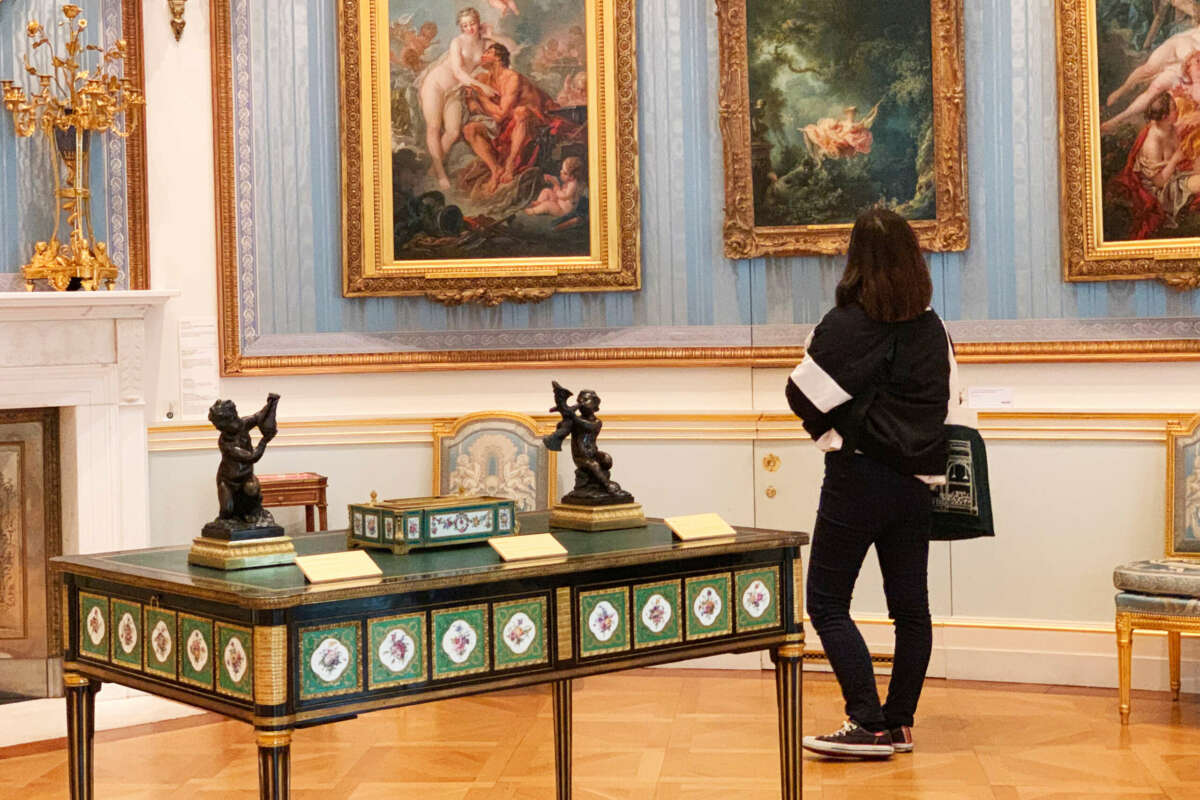
As Rihanna once sang, we’ve got love on the brain. So it seems to be the perfect moment to take a journey through the world of famous portraits in search of the most beautiful, moving, tender, sexy, subversive, evocative and influential works on paper about love and romance in all of its many guises and forms. Have a look at our curated list of some of the most influential and evocative paintings throughout history on the subject of love and romance.
Beautiful and Evocative Portraits of Love and Romance
It’s no surprise that throughout history, love has been one of the most frequently and most beautifully depicted subjects by painters. After all, what could be more romantic than the act of trying to capture on canvas a feeling that is at once so elusive and so universal?
Here are some of the most beautiful, evocative and influential portrayals of love and romance in paintings from throughout history. Right up to the current day, brilliant artists have found new ways to express the power and mystery of desire, commitment and love.
1. The Honeysuckle Bower, 1609, Peter Paul Rubens
This iconic painting is a self-portrait of the painter and his wife, Isabella Brant. The honeysuckle in the image serves as a symbol of marriage and love, as does the clasp of their hands.
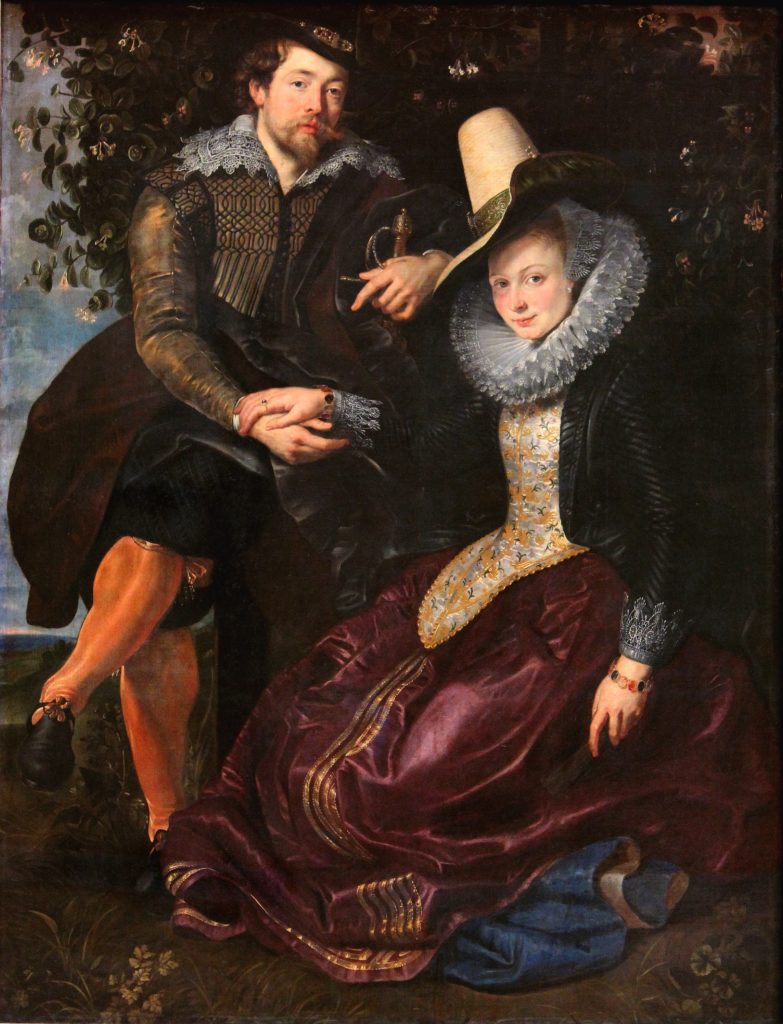
Beautiful and influential paintings about love and romance: The Honeysuckle Bower, 1609, Peter Paul Rubens. Photo Courtesy of the Alte Pinakothek, Munich.
You can visit the painting today at the Alte Pinakothek art museum in Munich, Germany.
2. Still Life with Wedding Portrait, 2015, Kerry James Marshall
Another powerful painting of the enduring love between a married couple, Still Life with Wedding Portrait (2015) depicts the abolitionist Harriet Tubman posing with her first husband, John Tubman. We had the joy of seeing this work in person when it was part of the Kerry James Marshall Mastry exhibit at the Met Breuer in 2017. The tenderness and love between the two subjects is almost palpable, and this painting has remained in our memories since we first saw it.
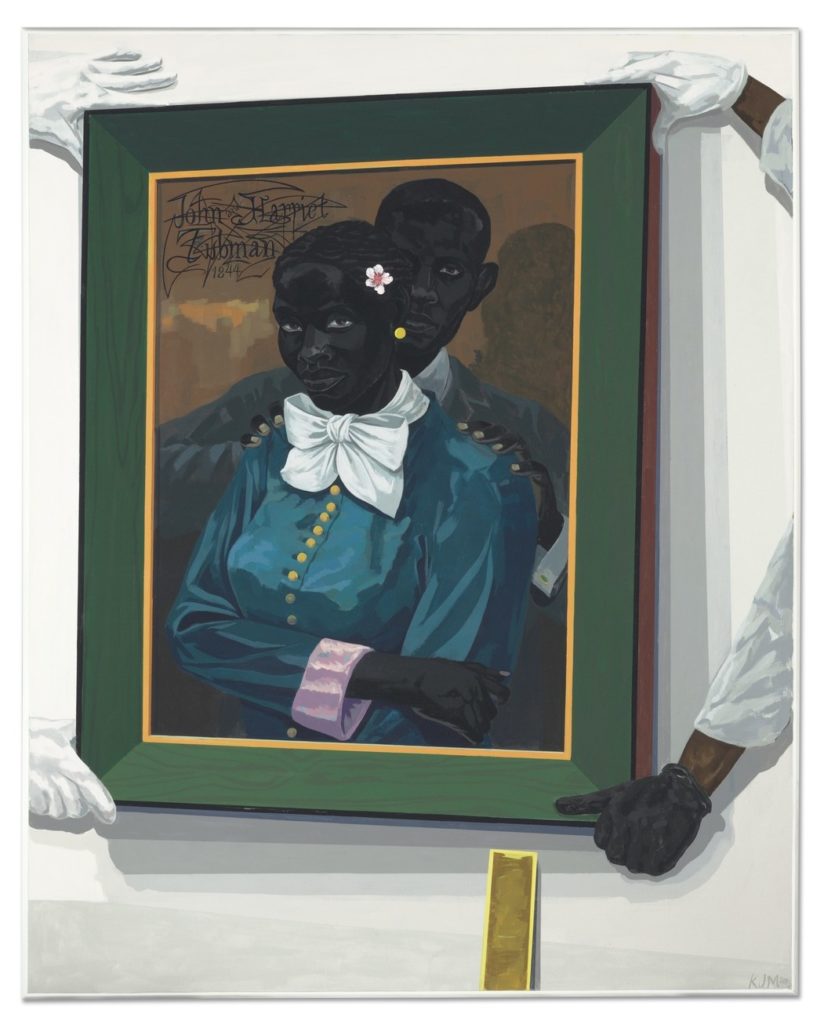
Beautiful and influential paintings about love and romance: Still Life with Wedding Portrait, Kerry James Marshall.
We think of Harriet Tubman as a scrappy fighter and indomitable heroine. Here, the artist chooses to focus on other elements of her humanity. As one reviewer wrote: “The bow on Tubman’s crisp white blouse is tied just so and the pink of her cuff complements the pink flower accenting her hair. Meanwhile, her husband rests his hands tenderly on her shoulders. She is feminine and loved, yet her wisdom and strength remains evident in her confident gaze.”
3. The Jewish Bride, 1665-69, Rembrandt
The relationship of the people in the painting have been the subject of much debate over the years. Spectators wondered whether the duo portrayed was indeed a couple in love, or a father and daughter on the daughter’s wedding day.
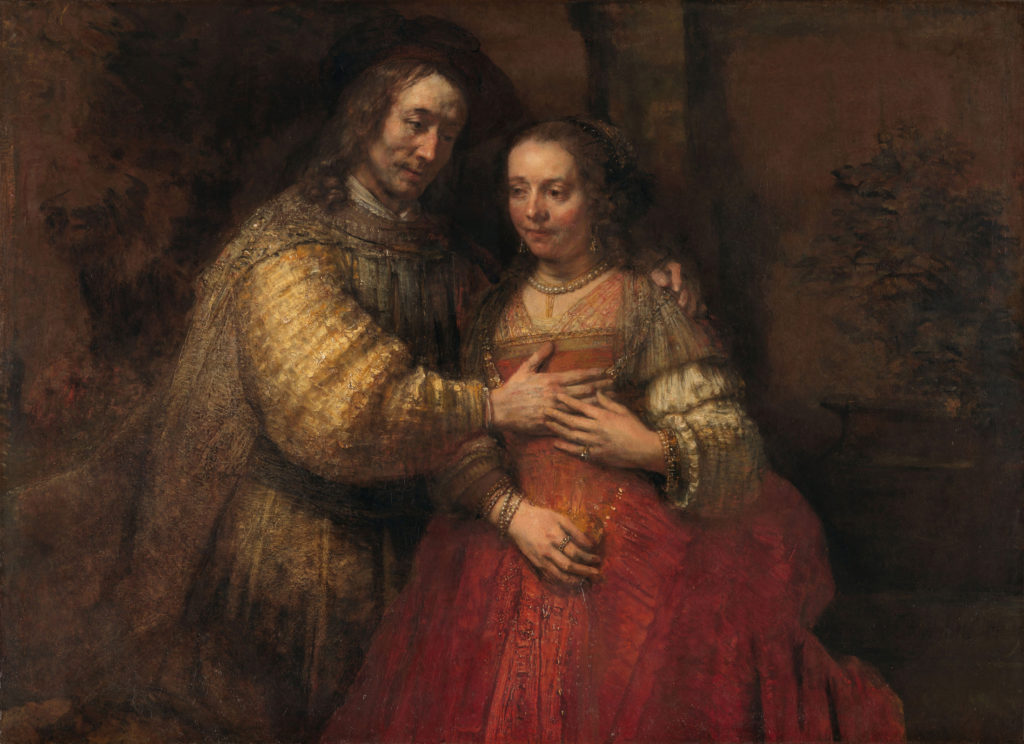
Beautiful and influential paintings about love and romance: The Jewish Bride, Rembrandt.
Today, the joining of the hands has led people to suspect that it is indeed a couple, though the pair’s exact identities remain unknown. In any case, the protectiveness and care that the man displays is evident. This work is on permanent display at the Rijkmuseum in Amsterdam.
4. Cicely and Miles Visit the Obamas, 2017, Henry Taylor
Flash forward to another couple in which one is protective of the other. In one of his many stunning portraits, Henry Taylor illuminates the subtle nuances of a love affair while also celebrating social progress. In this painting, the central image is of the actress Cicely Tyson and her lover Miles Davis at the 1968 première of the film “The Heart Is a Lonely Hunter.” The original image is superimposed onto the front lawn of the White House during the first term of the Obama Administration.
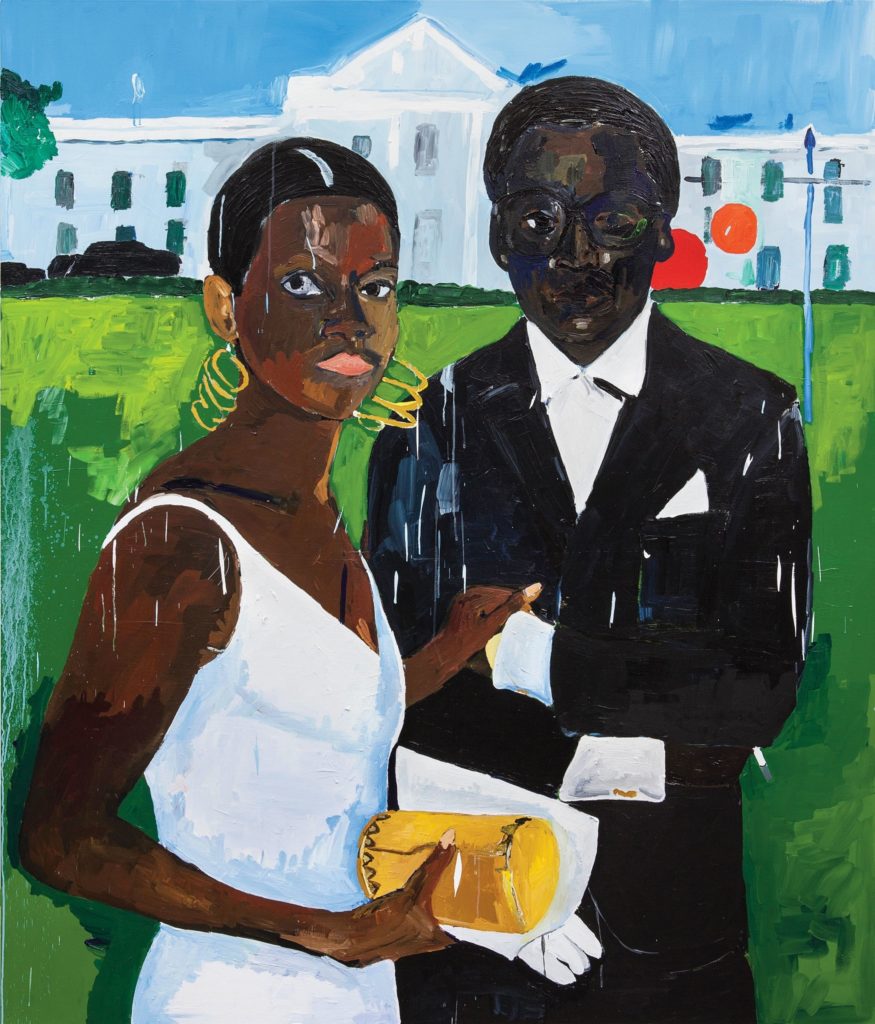
Beautiful and influential paintings about love and romance: Cicely and Miles Visit the Obamas, Henry Taylor.
Look closely, and you’ll see all kinds of clues about the nature of the relationship between these two lovers. The New Yorker notes: “Her hand is on Davis’s sleeve, a gesture somewhere between solidarity and protection. On the one hand, her lover is that unimpeachable thing: an American genius. On the other hand, he is a black man in America.” Tyson’s expression conveys both pride and protectiveness toward her partner – an essential element of any great love affair.
5. In Bed, the Kiss, 1892, Henri de Toulouse-Lautrec
Some of the most affecting portraits of lovers are the ones that capture them in the simple day-to-day routines and moments that make up a life.
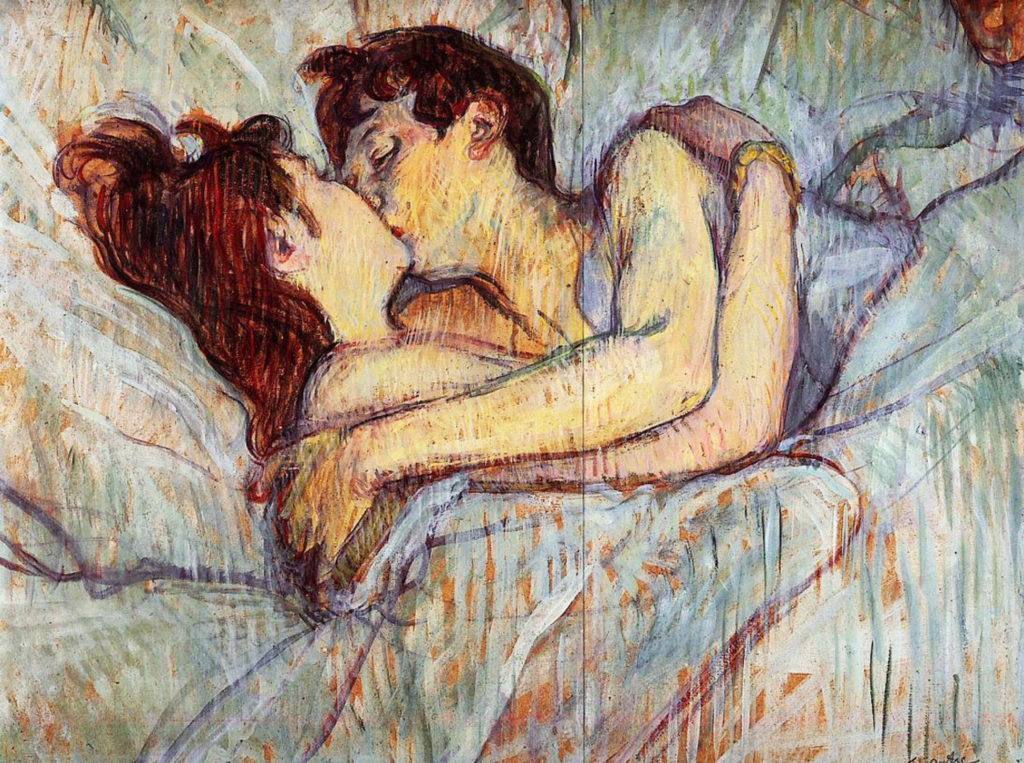
Beautiful and influential paintings about love and romance: In Bed The Kiss, 1892, Henri de Toulouse-Lautrec.
For example, Toulouse-Lautrec’s image of two women tangled in a passionate embrace is perhaps the painting that comes close to capturing love at it really appears. Here the kiss is stripped bare of all glitz and glamour, and that allows the intimacy of the connection to simply speak for itself.
6. Yvonne and James, 2017, Jordan Casteel
Similarly, the companionable affection between the two subjects is evident in the portrait Yvonne and James by Jordan Casteel.
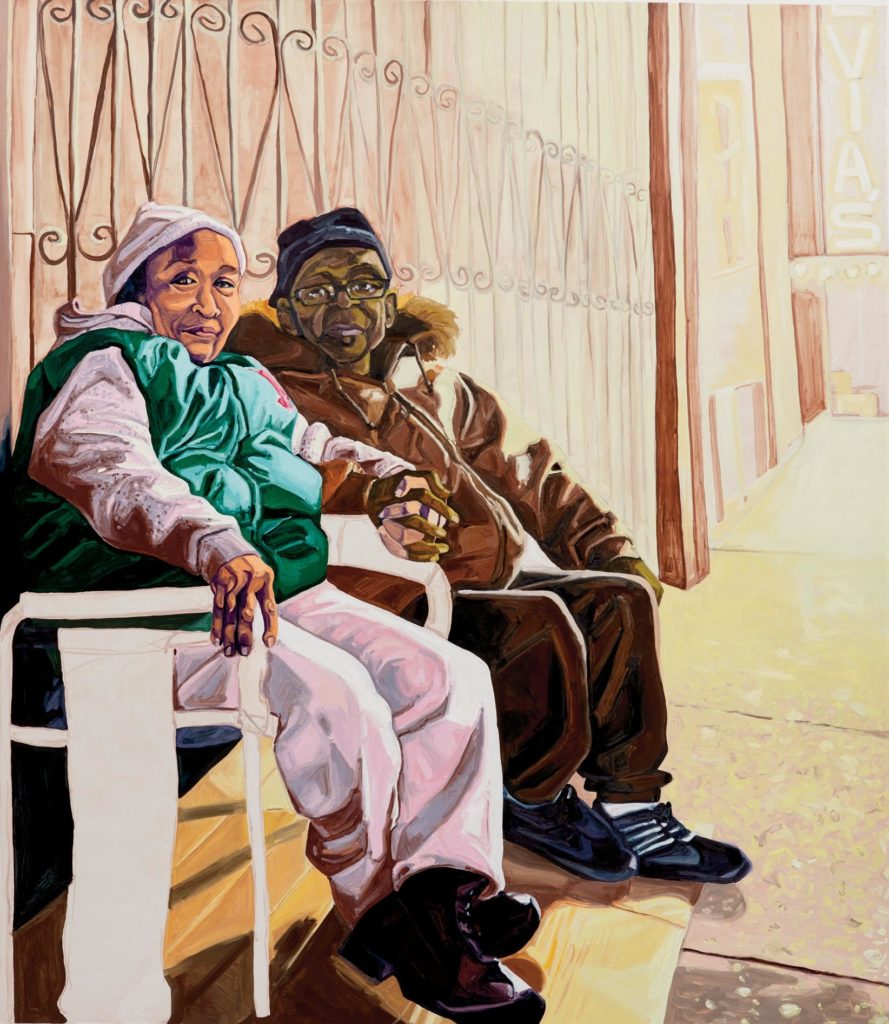
Beautiful and influential paintings about love and romance: Yvonne and James, 2017, Jordan Casteel.
7. Skin, or Surface, Njideka Akunyili Crosby
Nigerian-born, Los Angeles-based painter Njideka Akunyili Crosby frequently takes as her subject the scenes of private life: for example, gatherings at home, or the after-leavings of parties.
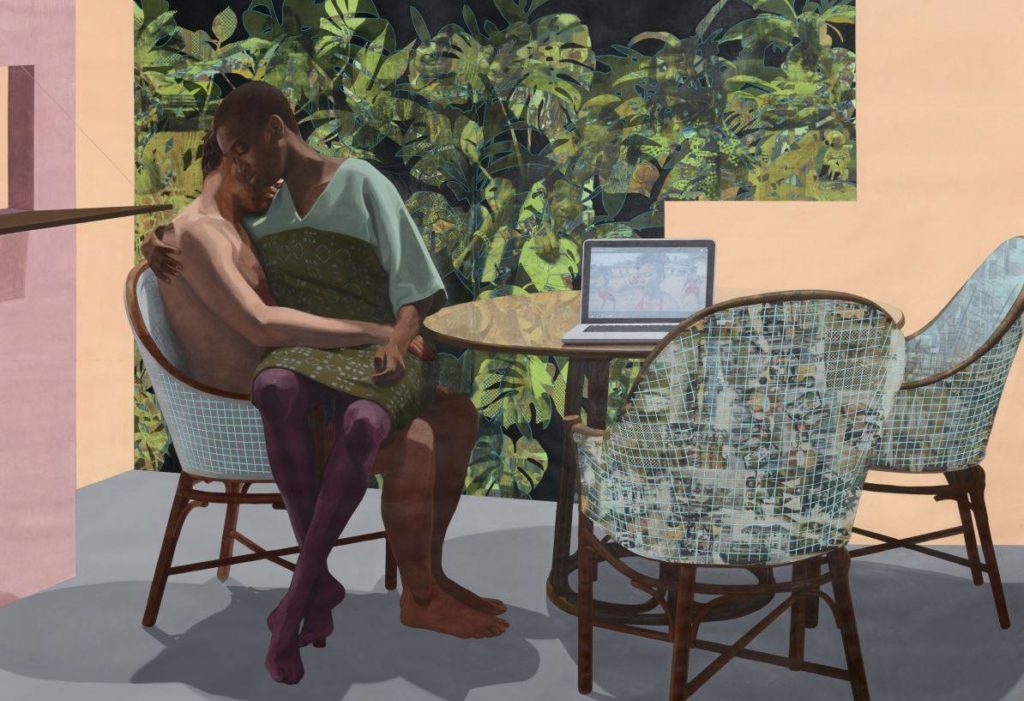
Beautiful and influential paintings about love and romance: Skin, or Surface, Njideka Akunyili Crosby.
Sometimes the subject is the artist herself, at home with husband. We love the intimacy and grace of this quiet domestic portrait of two lovers, at home, laptop open on the table.
8. Figures on a Beach, 1931, Pablo Picasso
Of course, love is not always contained in marriage and in the domestic sphere. Figures on a Beach by Pablo Picasso is a remarkable abstract portrayal of passion run wild.
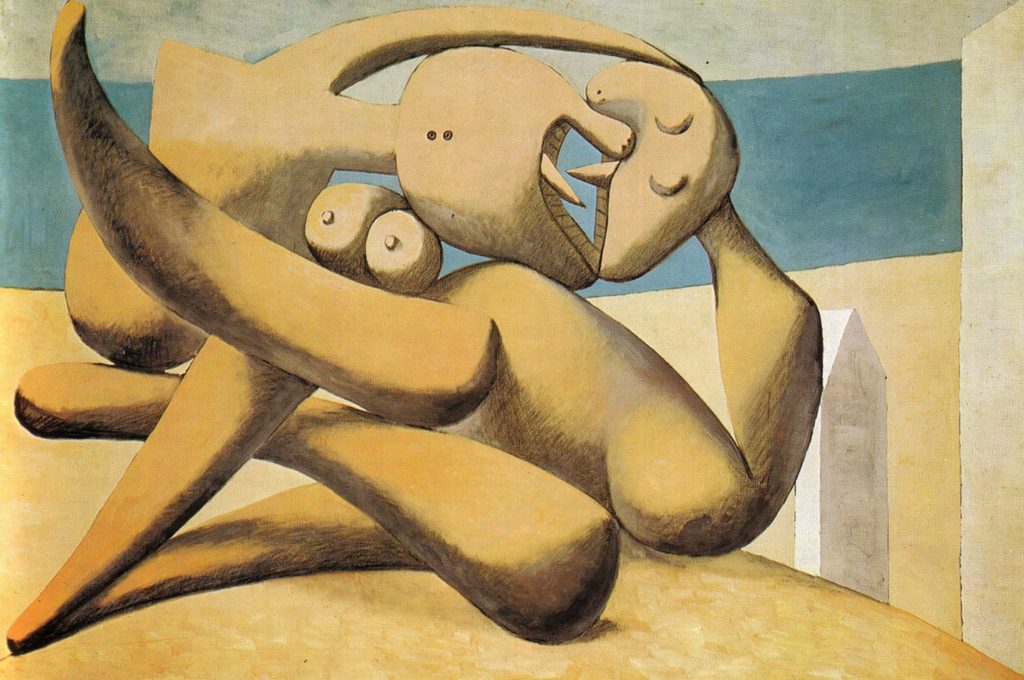
Famous portraits about love: Figures on a Beach, Pablo Picasso.
As one commentator noted, “it’s all arms and legs.” You can practically feel the ocean breeze blowing.
9. The Kiss, 1897, Edvard Munch
When most of us think of the painter Edvard Munch, we think of “The Scream.” And of a very dark view of life and humanity. So it may be a surprise to know that he also created a lovely and tender portrait of a couple in love.
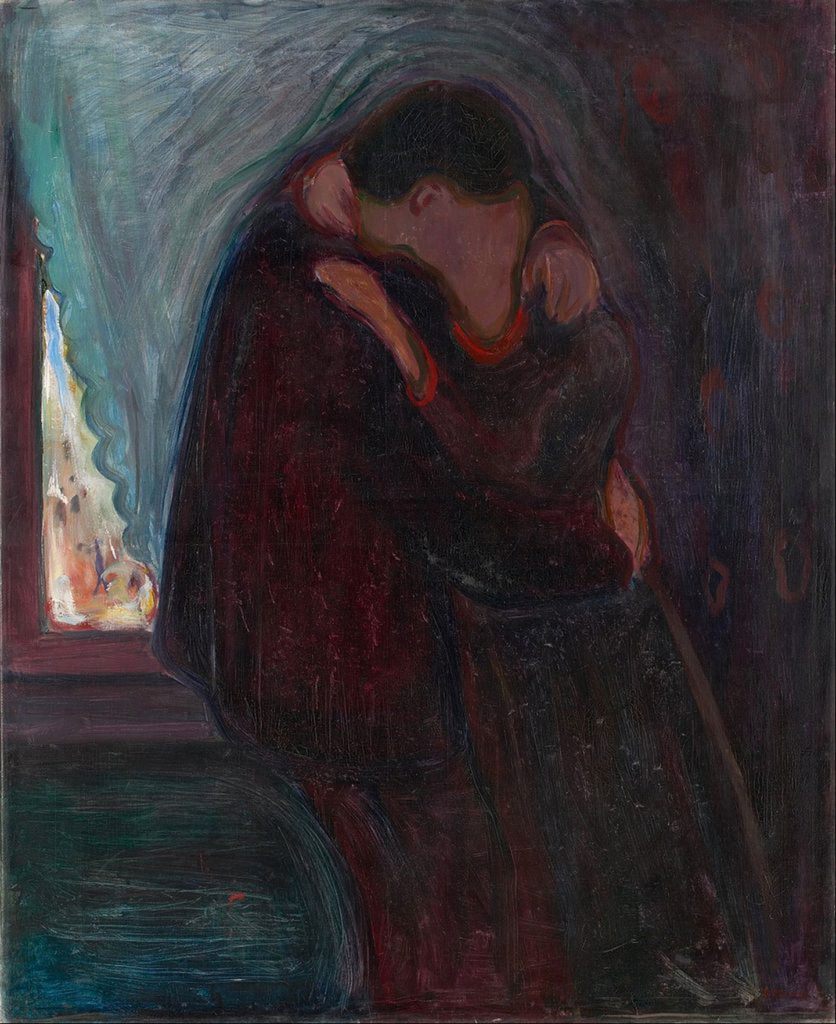
Famous portraits about love: The Kiss, Edvard Munch.
From part of his Frieze of Life series that captures the stages of a relationship, Munch fuses the faces of the embracing couple, alluding to their solidarity.
10. Kissing Coppers, Banksy
Similarly, Banksy’s mural of two kissing policemen captures lovers caught up in the moment.
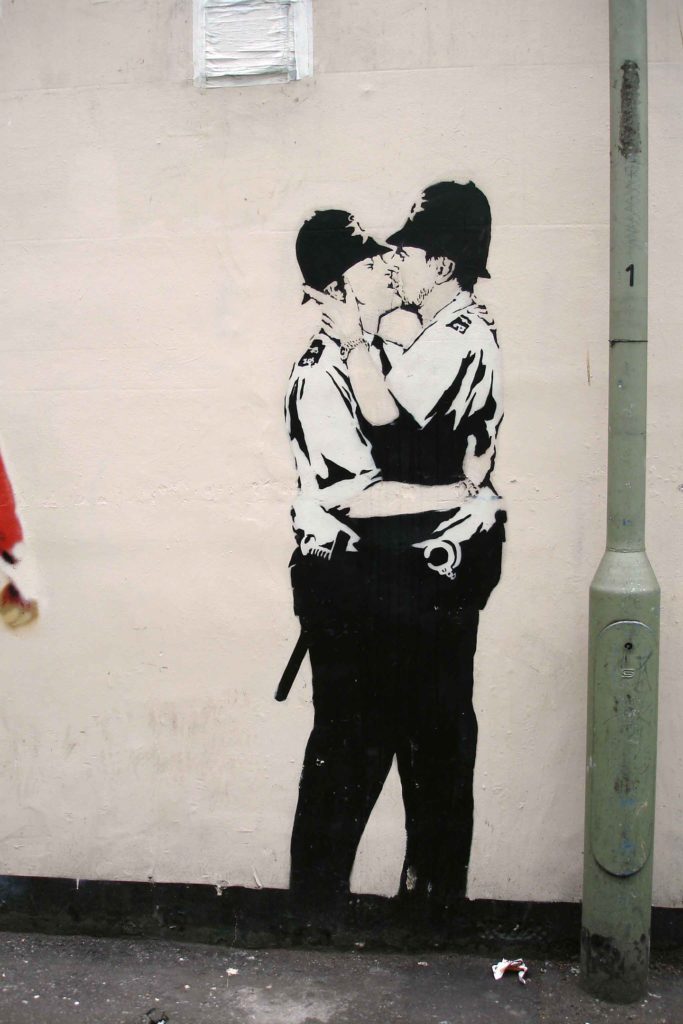
Famous portraits and works of art about love: Kissing Coppers, Banksy.
Despite its celebration of the universal feeling of passionate love, the street painting was deemed offensive by many at the time it was created. The work was famously removed from the wall of a Brighton pub and sold to a private collector.
11. Untitled (Vignette), 2012, Kerry James Marshall
One of Kerry James Marshall’s enduring contributions will be his unequivocal celebration of love and romance in the black community in so many of his works. Untitled (Vignette) is pure and sweet in its evocation of an urban romance.
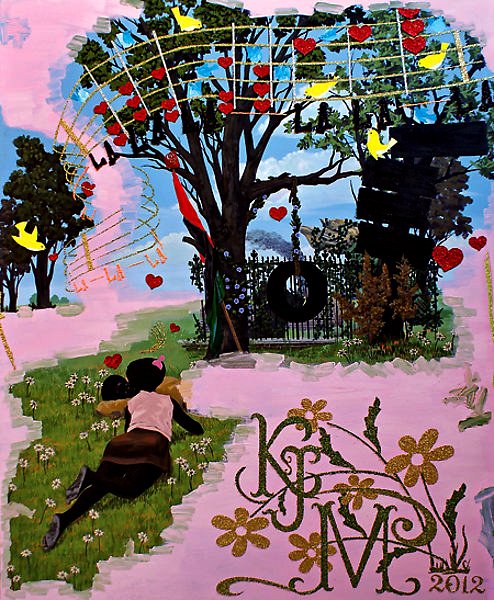
Famous portraits and works of art about love: Untitled (Vignette), 2012, Kerry James Marshall.
The idyllic setting for the painting is a city park – but its really a timeless tribute to that perfect moment, when music and love are literally in the air.
12. The Kiss, 1907-08, Gustav Klimt
A painting of a love so beautiful it shines – Klimt incorporated precious metals such as gold leaf into his paints to make this image glow.
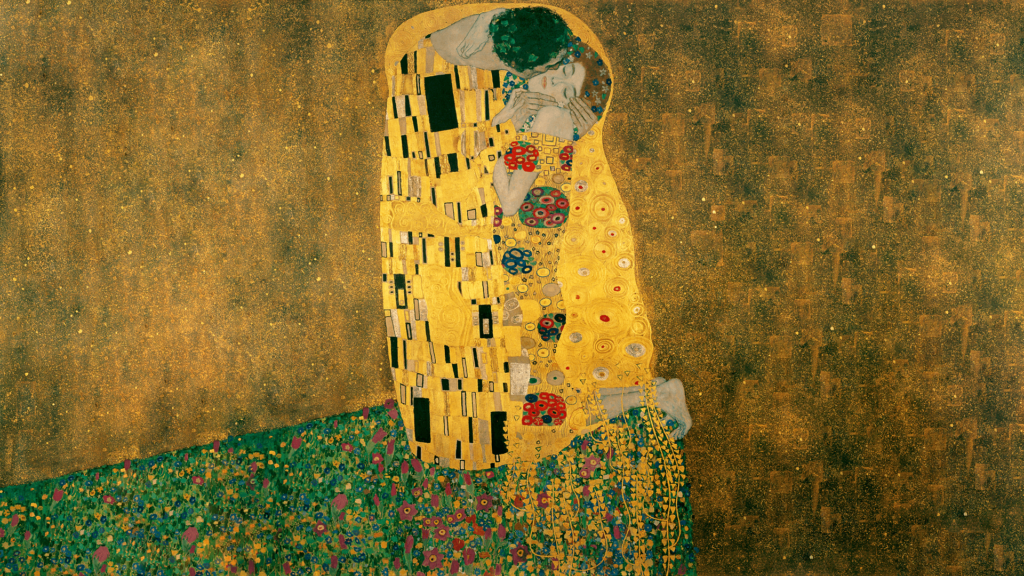
Famous portraits and works of art about love: The Kiss, Gustav Klimt.
That should come as no surprise, as this work is part of what is referred to as the artist’s “Golden Period,” inspired by the artist’s trip to Italy. It is currently on display in the Belvedere Museum in Vienna, Austria.
13. The Kiss, 1859, Francisco Hayez
Despite what you may have heard in the soundtrack of Casablanca, sometimes a kiss is more than just a kiss. For example, this painting – commissioned by Count Alfonso Maria Visconti of Saliceto – of a couple’s passionate kiss is perhaps Hayez’s best-known work.
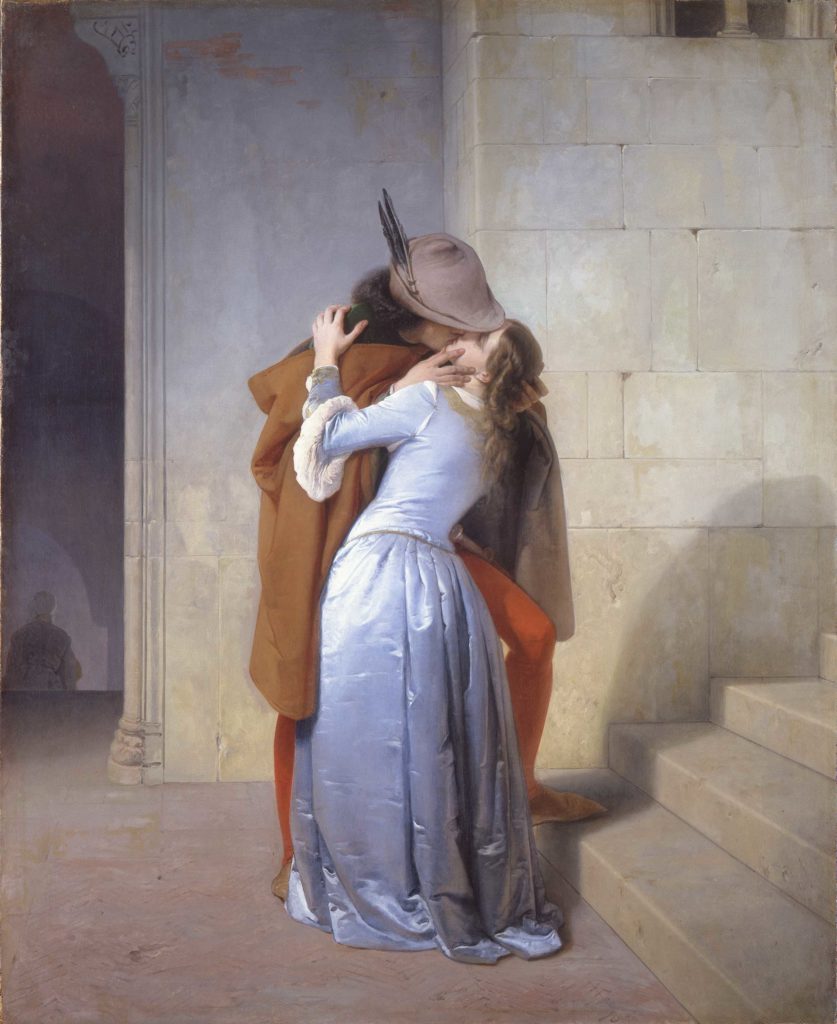
Famous portraits and works of art about love: The Kiss, 1859, Francisco Hayez.
And there is more to it than meets the eye. The painting was commissioned at a time of political discord in Europe. The kiss is meant to symbolize the hope for an alliance between France and Sardinia. It is still on display today in the Pinacoteca di Brera in Milan.
14. Lovers Beneath an Umbrella in the Snow, 1764-77, Suzuki Harunobo
The portrait of a great love can often be tinged with a sense of melancholy, sadness and loss. In this woodblock print of the Ukiyo-e style, the expressions of Suzuki Harunobo’s lovers are tinged with sorrow. There is some question as to whether the image depicts a planned suicide pact.
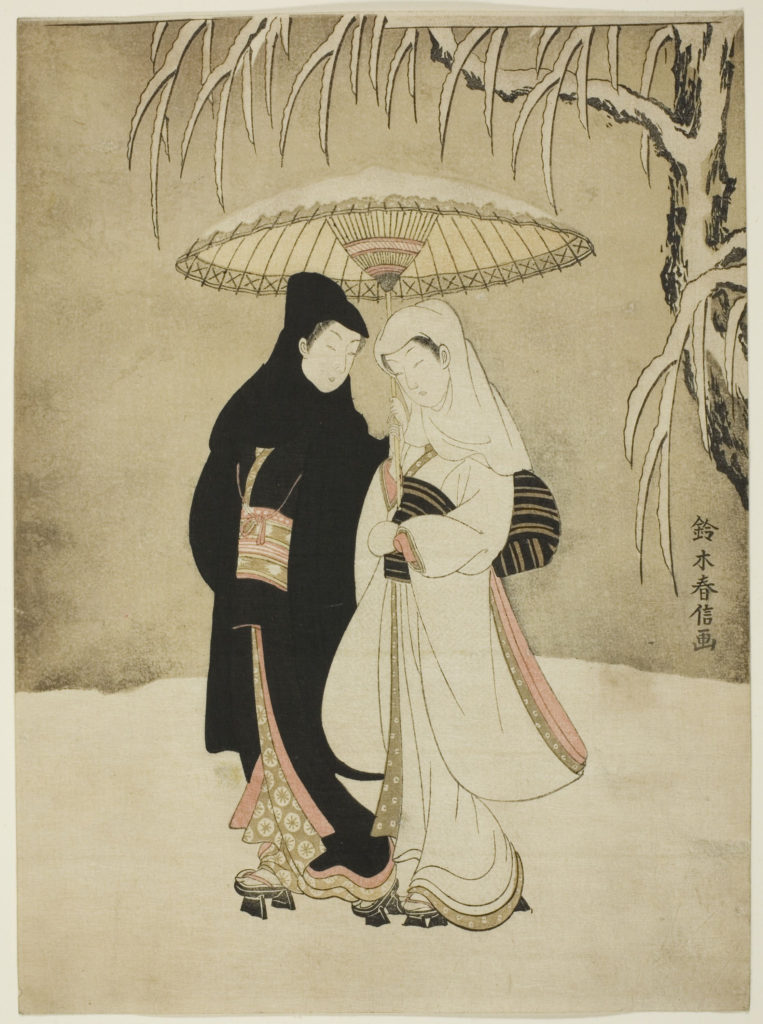
Famous portraits and works of art about love: Lovers in the Snow, Suzuki Harunobo.
The presence of the umbrella creates the feeling of intimacy, as if the viewer has intruded upon a couple at a private and secret moment of grief.
15. The Lovers, 1928, René Magritte
Painted as part of Magritte’s series “Les Amants,” the image in The Lovers has many layers of meaning. The couple in question appears to be mid-kiss. But both are shrouded, separate and perhaps enveloped in secrets they’re keeping from each other – or from the outside world.
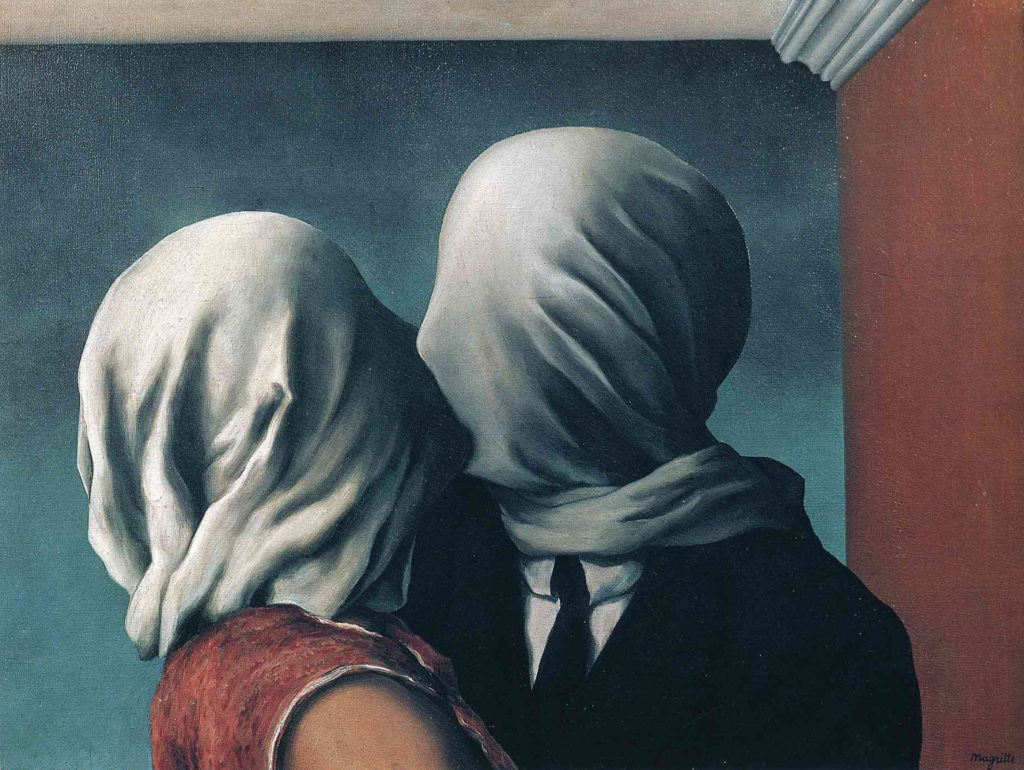
Famous portraits and works of art about love: The Lovers, 1928, Rene Magritte.
In a love affair, do we want to be fully seen and understood? Or should we always preserve an essential core of mystery and self-hood? Magritte has chosen to capture this couple in perpetual separation from one another. And yet, they seem to persistent in trying to connect. It’s an arresting portrayal of romantic love that will give you plenty to think about. You can see the painting for yourself at the Museum of Modern Art in New York.
16. Self Portrait as a Tehuana, 1940-43, Frida Kahlo
With passionate love affairs, there is often a need at some point for forgiveness and redemption on the part of the partners, and Frida Kahlo captures that element in a deeply moving way.
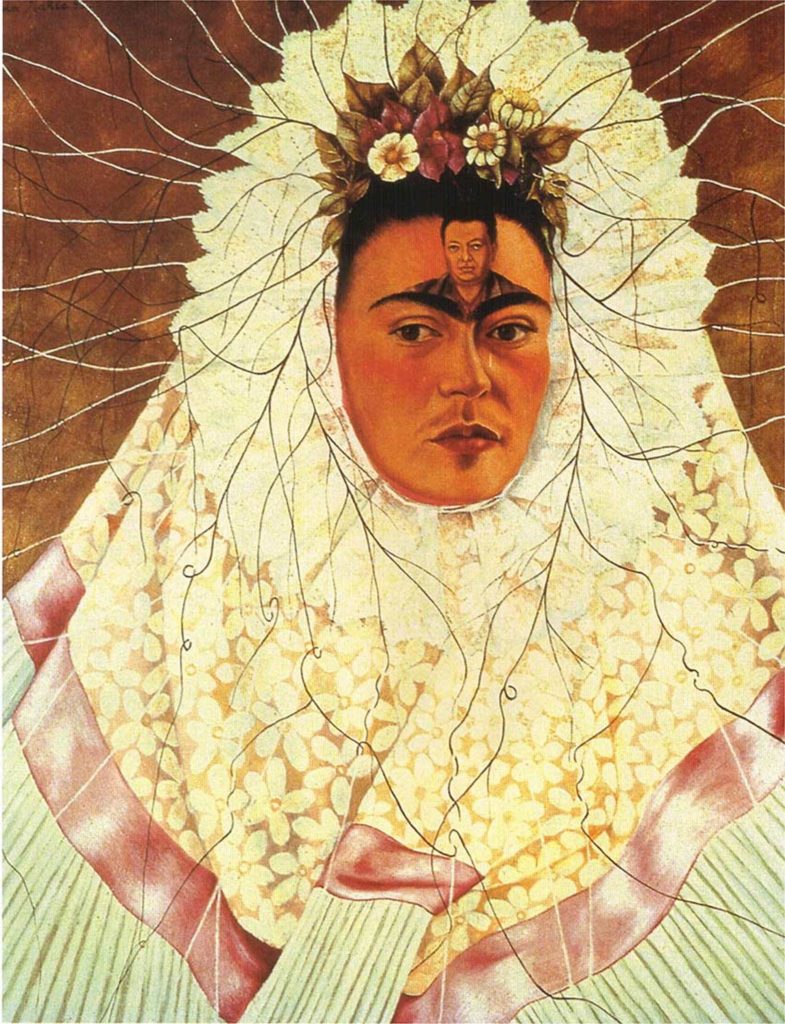
Evocative and influential paintings about love and romance: Self Portrait as a Tehuana, Frida Khalo.
Displayed in Mexico City, this beautiful self-portrait was created by Kahlo to convey her love for Diego Rivera, who had been unfaithful to her in their relationship (as she had been to him). Their love lives on in this painting, preserved permanently in the center of Kahlo’s forehead, as well as in her art.
17. Garden with Courting Couples: Square Saint-Pierre, 1887, Vincent van Gogh
Often referred to by the artist as “the garden with lovers,” this romantic springtime painting resides at the Van Gogh Museum in Amsterdam.
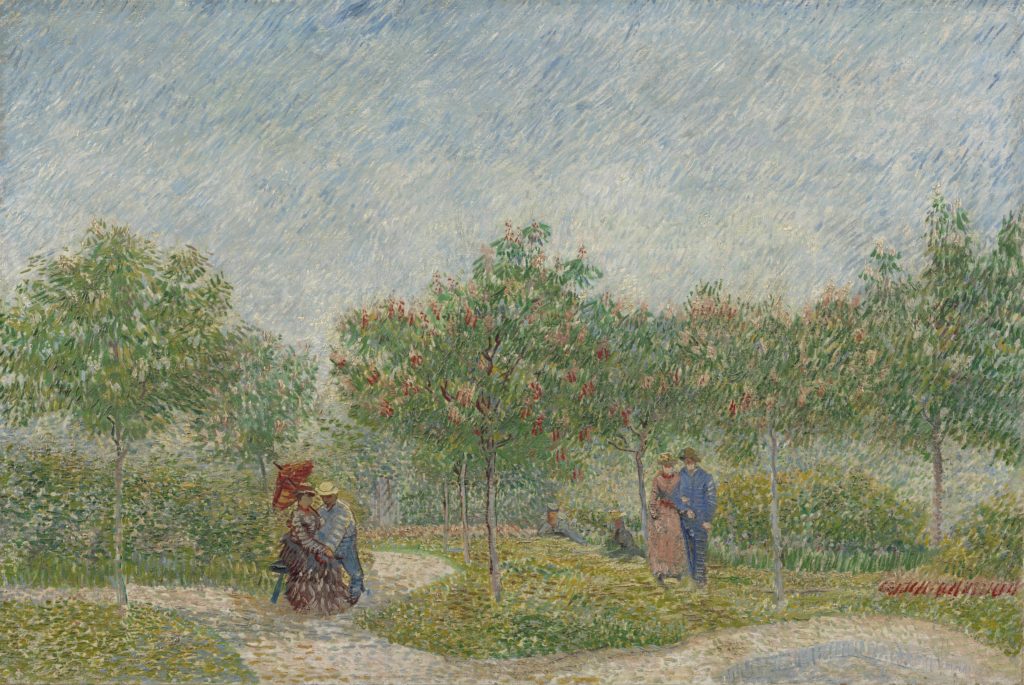
Evocative and influential paintings about love and romance: Garden with Courting Couples, Vincent van Gogh.
The style of pointillism evokes the budding verdant atmosphere of the season, perfect for the liberating, buoyant feeling of romantic love.
18. Les Hasards Heureux de L’Escarpolette (“The Swing”), 1767, Jean-Honoré Fragonard
Another famous painting of lovers in the spring, The Swing is considered to be one of the naughtiest and most over-the-top romantic. Currently on display at The Wallace Collection in London, the painting portrays a woman in a billowing pink dress on a crimson swing. She’s playfully tossing her shoe to her paramour, who lies beneath her wearing an adoring expression.
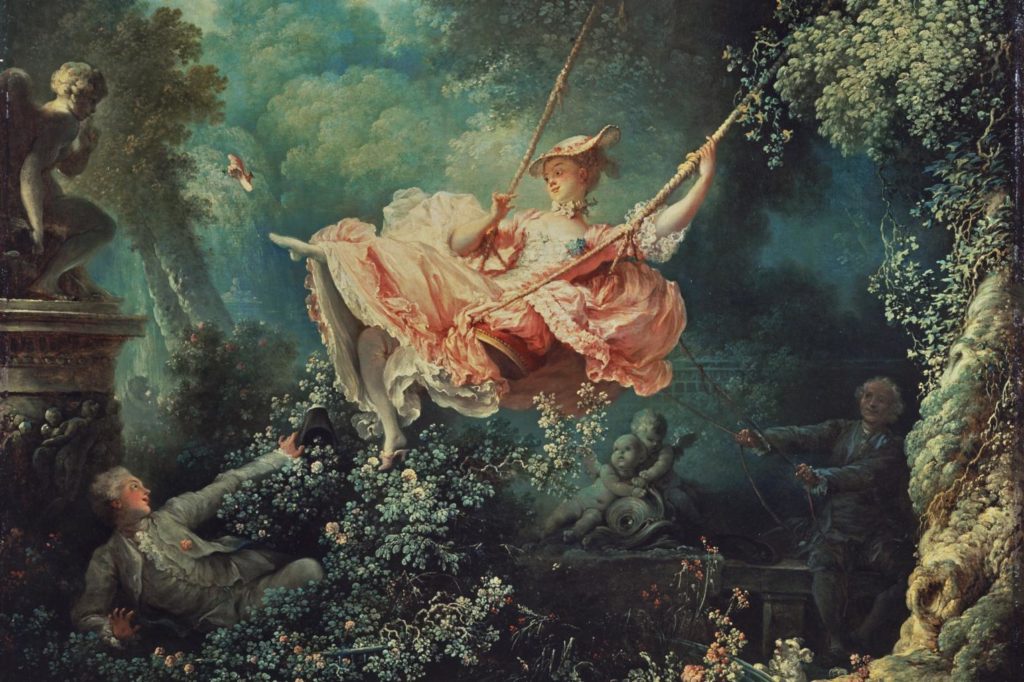
Influential paintings of love and romance: Les Hasards Heureux de L’Escarpolette (“The Swing”), 1767, Jean-Honoré Fragonard. Photo Courtesy of the Wallace Collection.
Behind the swing, an older gentleman is relegated to pulling the strings that propel her skyward. What’s going on here? Scholars say the woman is the mistress, the man below her is her lover, and the man with the strings is her husband. Hmm . . . The garden setting is one of the first to highlight the natural world as a place of romantic escape. The statue of Cupid just seems amused by the fun and fantasy of it all.
19. The Birthday, 1887, Marc Chagall
Chagall’s painting is in fact a depiction of his own birthday, and his embrace with his own soon-to-be-wife of the time, Bella, who was his childhood sweetheart and the love of his life.
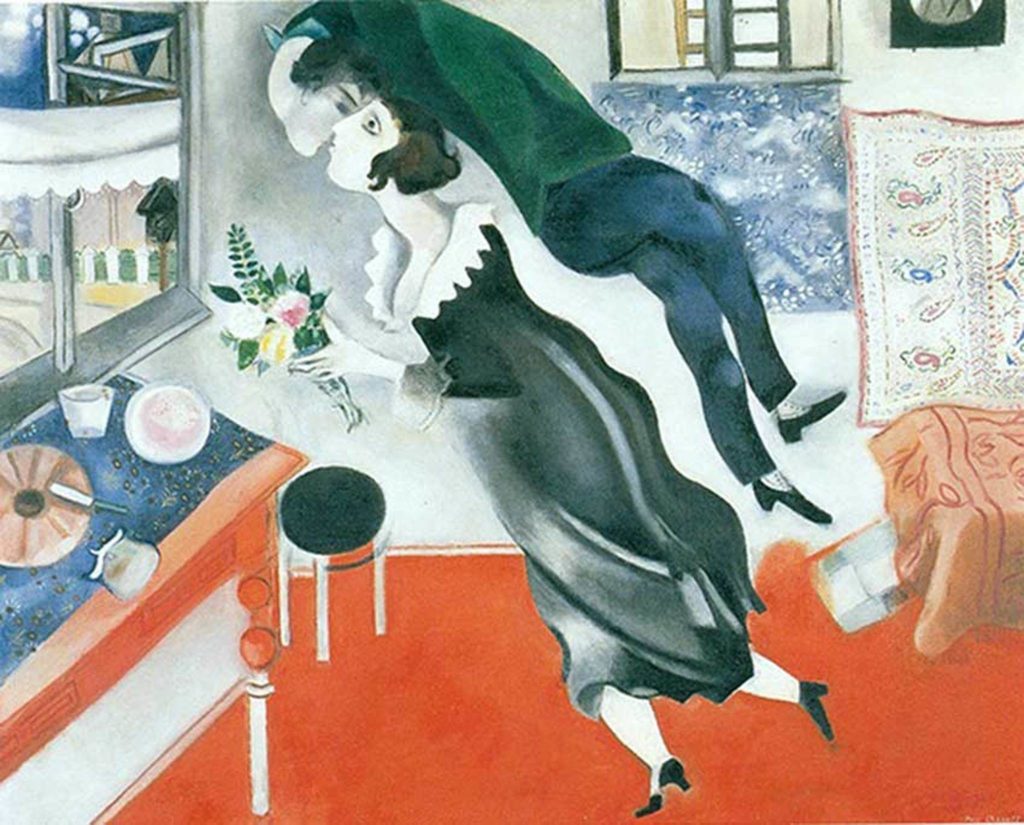
Evocative and influential paintings about love and romance: The Birthday, Marc Chagall.
The fanciful nature of the expressionist style helps to infuse the painting with that magical, whimsical feeling that so often accompanies love. The work is currently on display at the Museum of Modern Art in New York.
20. Danse à la campagne (Dance in the Country), 1883, Pierre-August Renoir
It seems fitting to end with an image of pure romantic joy and delight. On view at its permanent home in the Musee D’Orsay in Paris, Renoir’s famous oil painting was commissioned by the art dealer Paul Durand-Ruel.
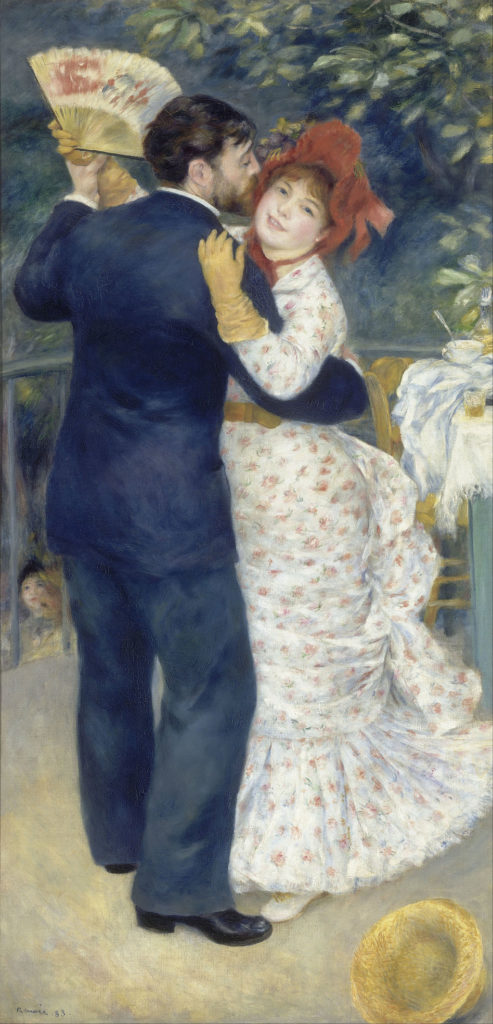
Evocative and influential paintings about love and romance: Dance in the Country, 1883, Pierre-August Renoir. Photo Credit: Google Art Works.
Ruel had requested that the artist manifest a work on the theme of a ball, and this was the first of two works Renoir created to fulfill the commission. The couple depicted here are Paul Lhôte and Aline Charigot, Renoir’s friend and his own future wife, respectively.
Whenever we see this work, and the expression on the face of the young woman, we remember the thrill and excitement of that first dance – that first moment, when everything is possible.
The Most Beautiful Paintings about Love and Romance
That’s it – our picks for some of the most beautiful and moving paintings about the essential nature of love and romance. What’s your favorite painting on this topic?