

Memorial Day weekend is fast approaching and with it the unofficial start to the summer season. So we decided to take a journey through the world of paintings to find the most influential, beautiful, famous, and evocative masterpieces – both historical and contemporary – on summer and the joys of summertime. We’ve rounded up a list of some of the most stunning paintings we could find that will help us all get in the mood for the arrival of the summer season.
Famous, Beautiful and Evocative Portraits of Summer
Summer is nearly here! Many of us are stealing walks in the great outdoors, gazing up at the sun, and looking forward to the day we can sprawl on the beach with our best friends. There’s something about the summer that lifts our spirits, no matter how we’re spending it. So if you’re looking to celebrate the arrival of the season, we’re here to help. These inspiring works of art will make you feel closer to summer than ever before.
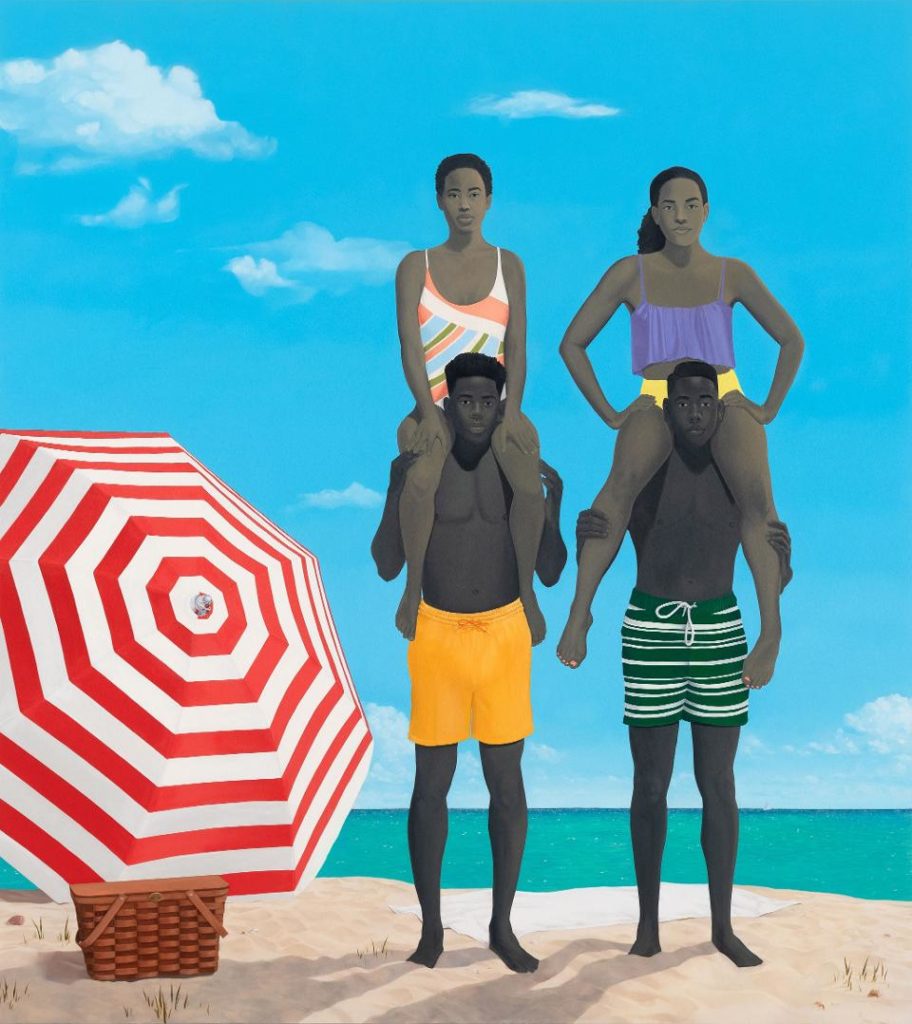
Beautiful influential and famous paintings about summer: Precious Jewels by the Sea. Photo Credit: Amy Sherald.
We’ve included works spanning four centuries, each of them paying tribute in different ways to everyone’s favorite time of the year.
It’s fascinating to see what summer has meant to so many artists: for some, it’s running on the beach with wild abandon. For others, it’s trying to sleep in the heat. For some, an electric city scene, and for others, a serene countryside. Most are awash in sunlight, but a precious few are about the mysterious summer moon.
Whatever kind of summer vibe you like the best, you’ll find it here.
The Most Evocative, Famous and Beautiful Paintings about Summer and Summertime Joys
Here are our picks for some of the most influential paintings of summertime, to help us get in the mood and happily pass the time until we can hit the pool or the beach.
1. Takata by Torii Kiyonaga (1782 – 1792).
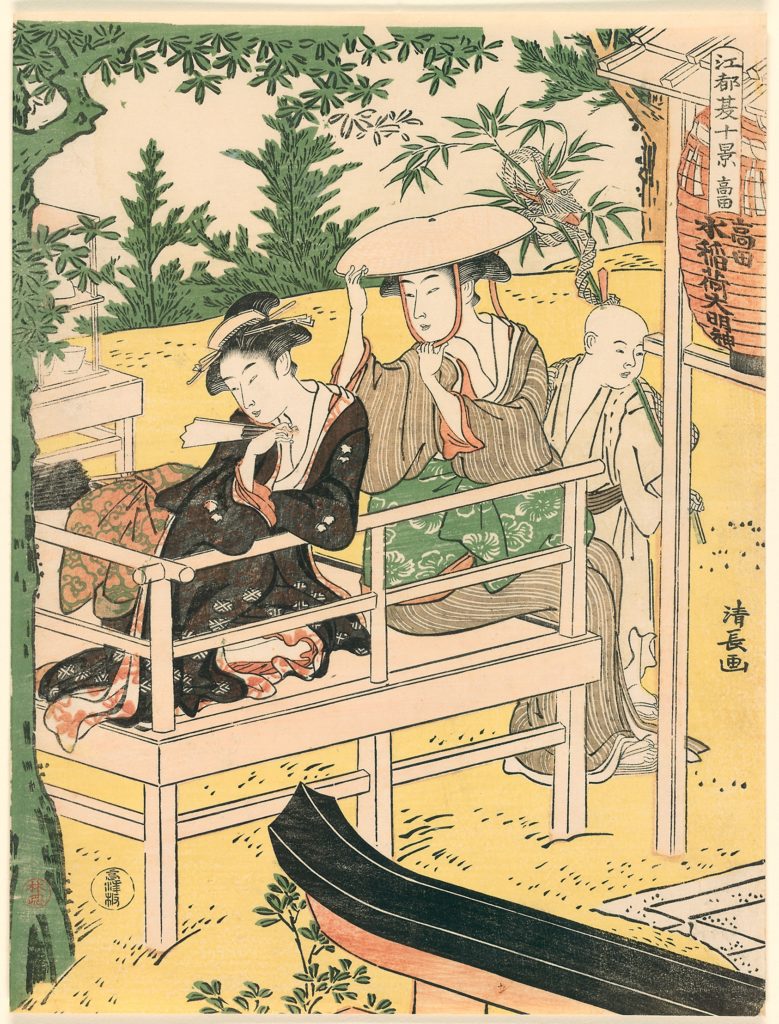
Beautiful influential and famous paintings about summer: Takata by Torii Kiyonaga (1782 – 1792).
This woodblock print from the artist’s series “Ten Summer Scenes in Edo” is held by the Art Institute of Chicago.
2. Rhyl Sands by David Cox (1854).
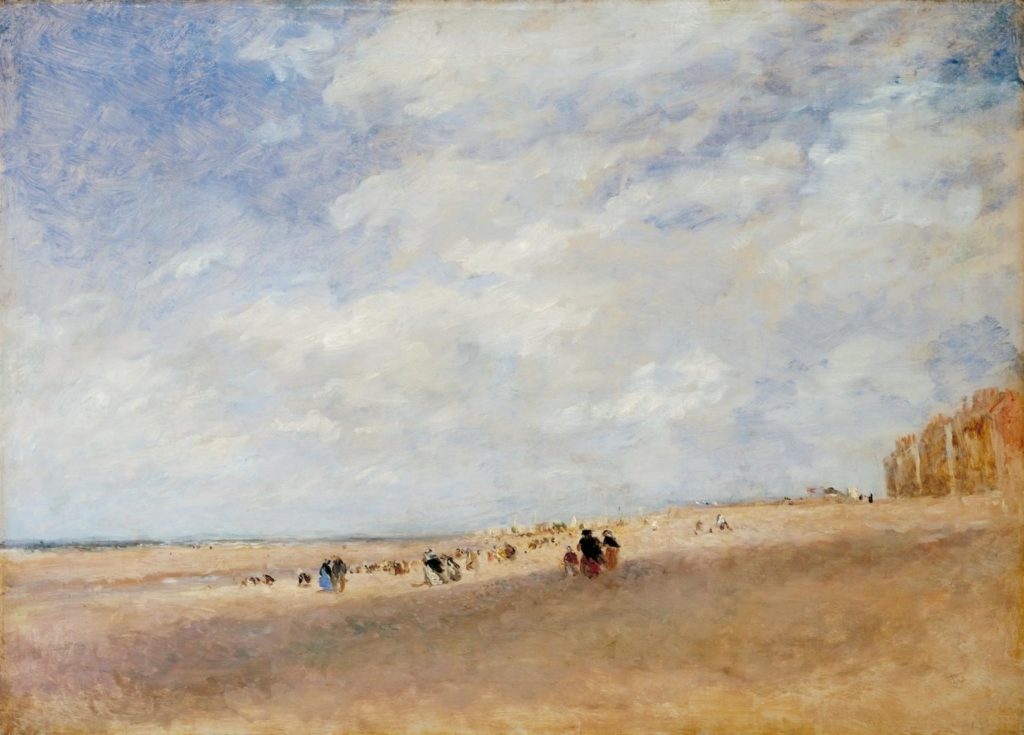
Beautiful influential and famous paintings about summer: Rhyl Sands by David Cox (1854).
Typically on display at the Tate Museum in London, this quintessential summer image is currently on loan to the Hong Kong Museum of Art. Cox painted it during an August trip to Rhyl, on his way to Bettws, his favorite place in Wales.
3. Summer in the Catskills by George Inness (1867).
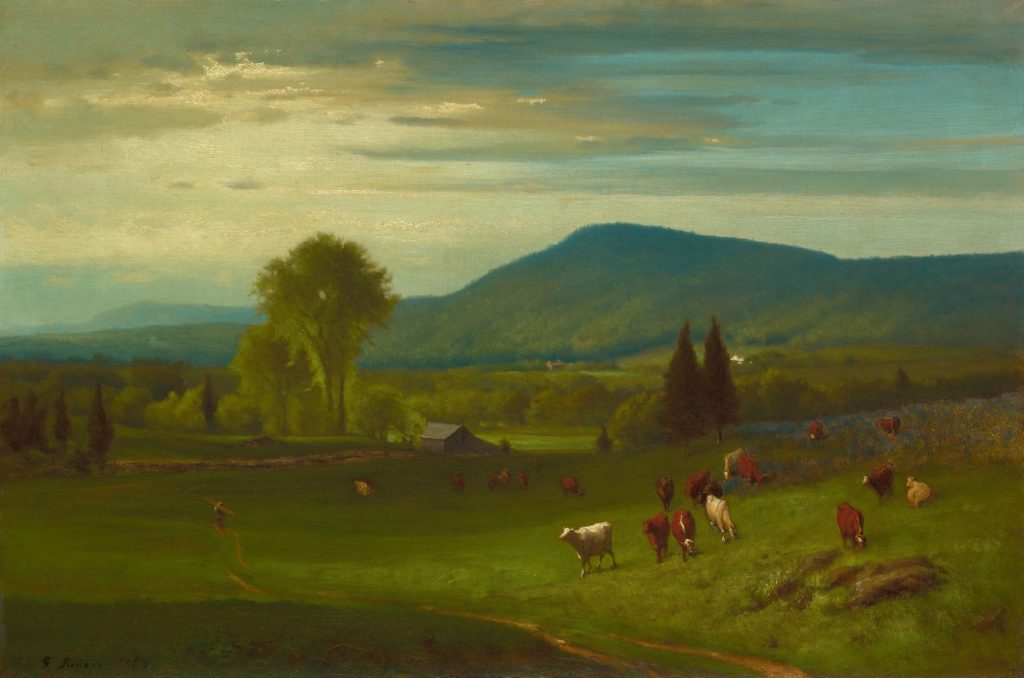
Beautiful influential famous paintings about summer: Summer in the Catskills by George Inness (1867).
This work from the American landscape painter is currently on view at the Art Institute of Chicago.
4. Beach Scene by Edgar Degas (1868 – 1877).
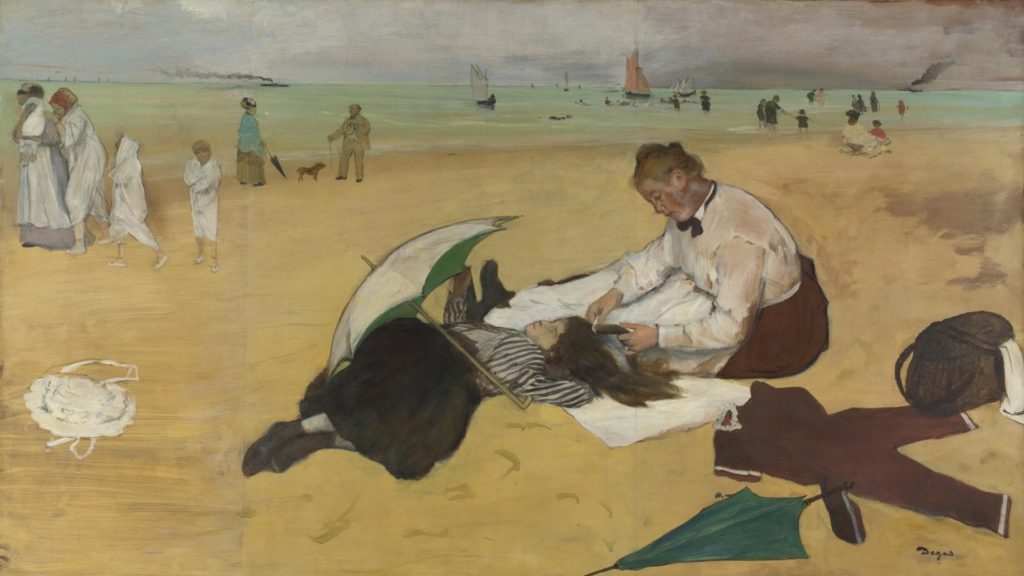
Beautiful influential famous paintings about summer: Beach Scene.
Though the scene evokes all the feelings of a day at the beach, it was painted in the artist’s studio, rather than by the water’s edge. You can find it today at the National Gallery in London.
5. Bathers at Asnièrs by Georges Seurat (1884).
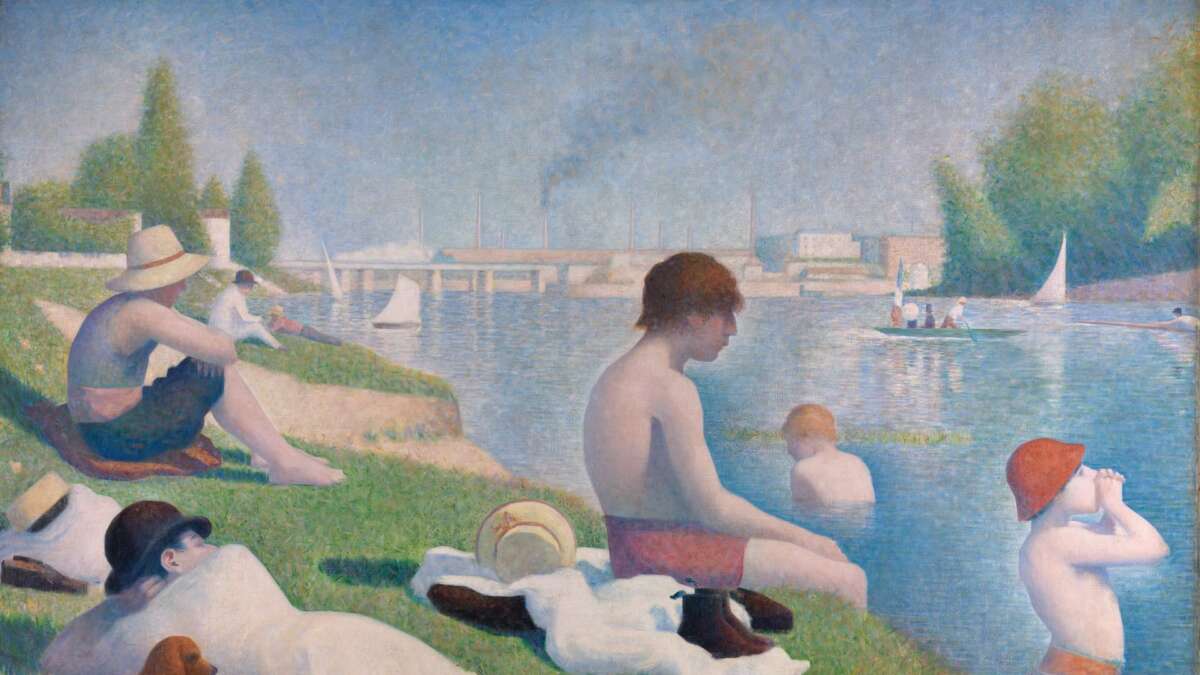
Beautiful influential and famous paintings about summer: Bathers at Asnièrs.
This work, held by the National Gallery in London, was the first of Seurat’s well-known, enormous masterpieces. The artist was only twenty-four when he completed it.
6. Haystacks, end of Summer by Claude Monet (1891).
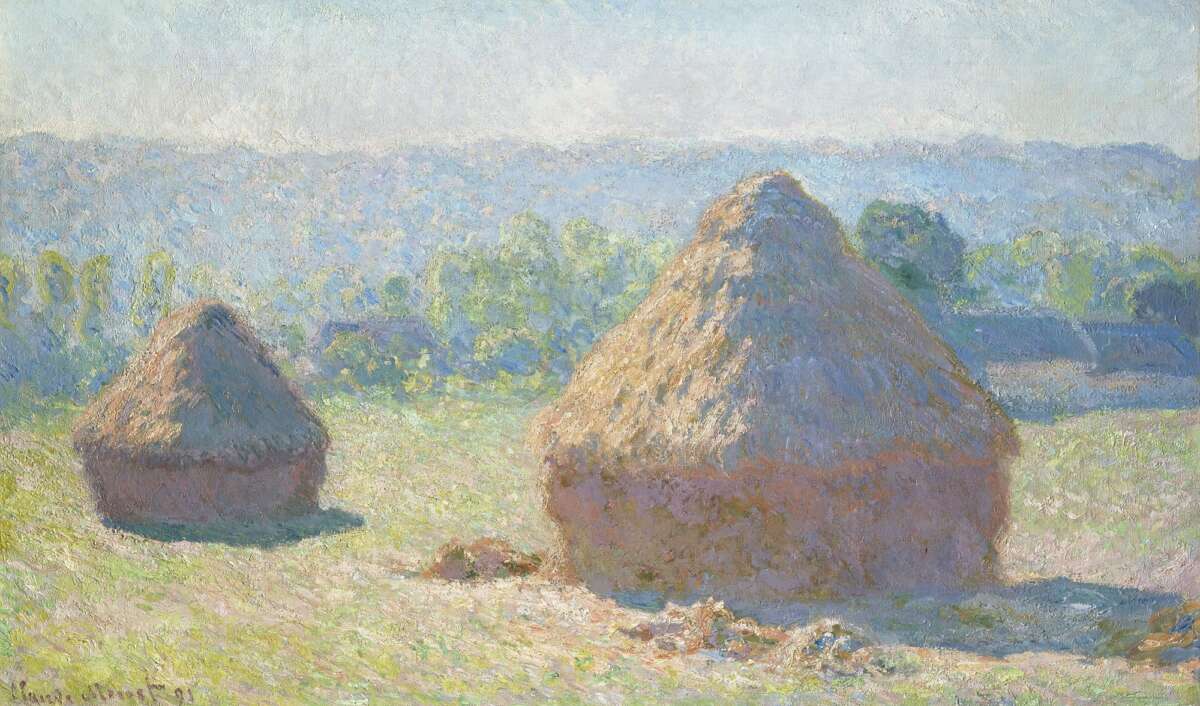
Beautiful influential and famous paintings about summer: Haystacks
A haystack is a method of keeping grain safe until it is ready to harvest. The Impressionist completed a lengthy series of these images, which have remained among his best known. Today the works are on view at the Musée D’Orsay, the Art Institute of Chicago, the Metropolitan Museum of Art, and many other collections.
7. Two Women Running on the Beach (The Race) by Pablo Picasso (1922).
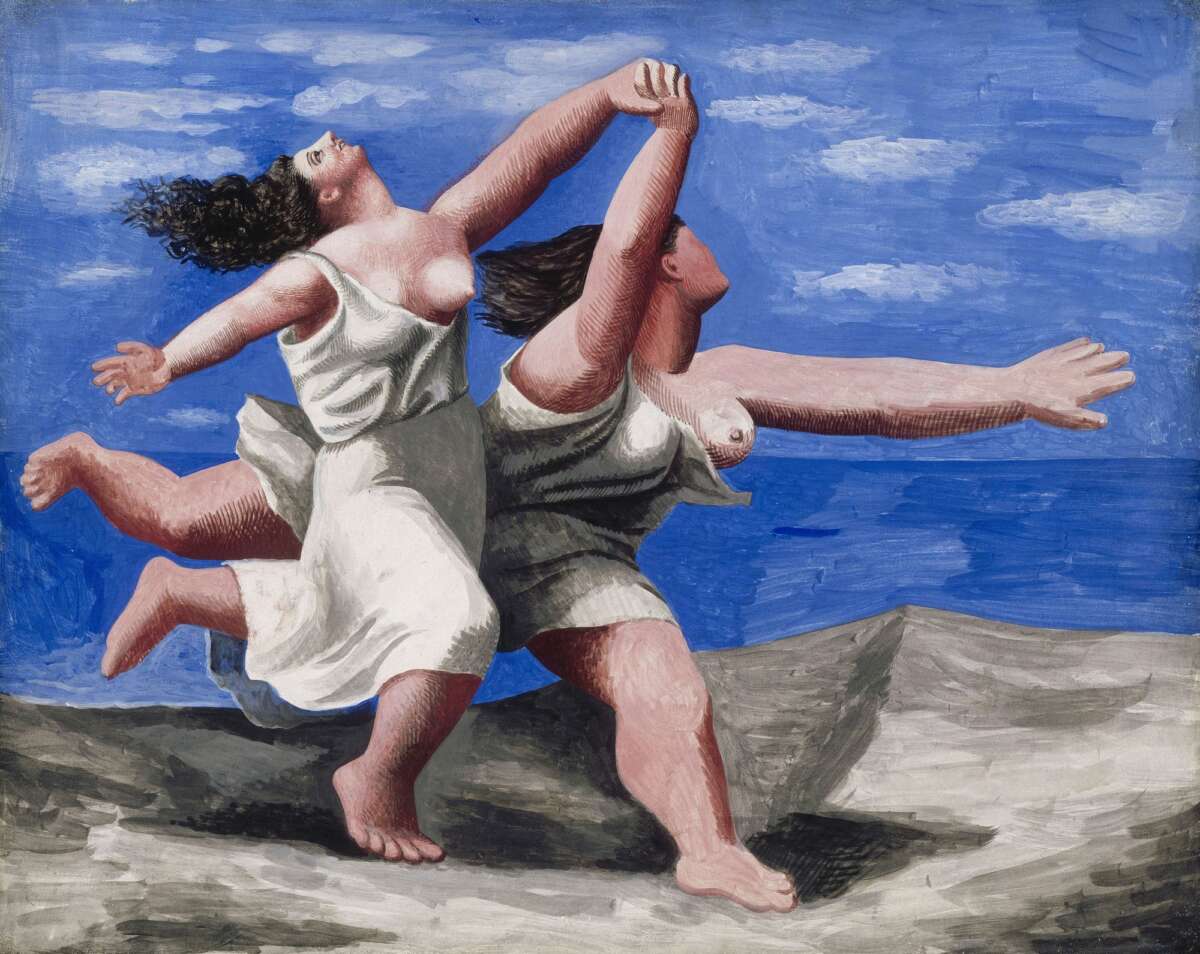
Beautiful influential and famous paintings about summer: Two Women Running on the Beach.
A part of the artist’s neo-classical period, this small plywood painting is regarded as one of Picasso’s most significant miniatures. Much has been written about the intentional distortion of the runner’s body parts, as well as the effect of joy that the image evokes. A larger version was used as a backdrop for the ballet “Le Train Bleu.”
8. Early Summer Rain, Arakawa by Kawase Hasui (1932).
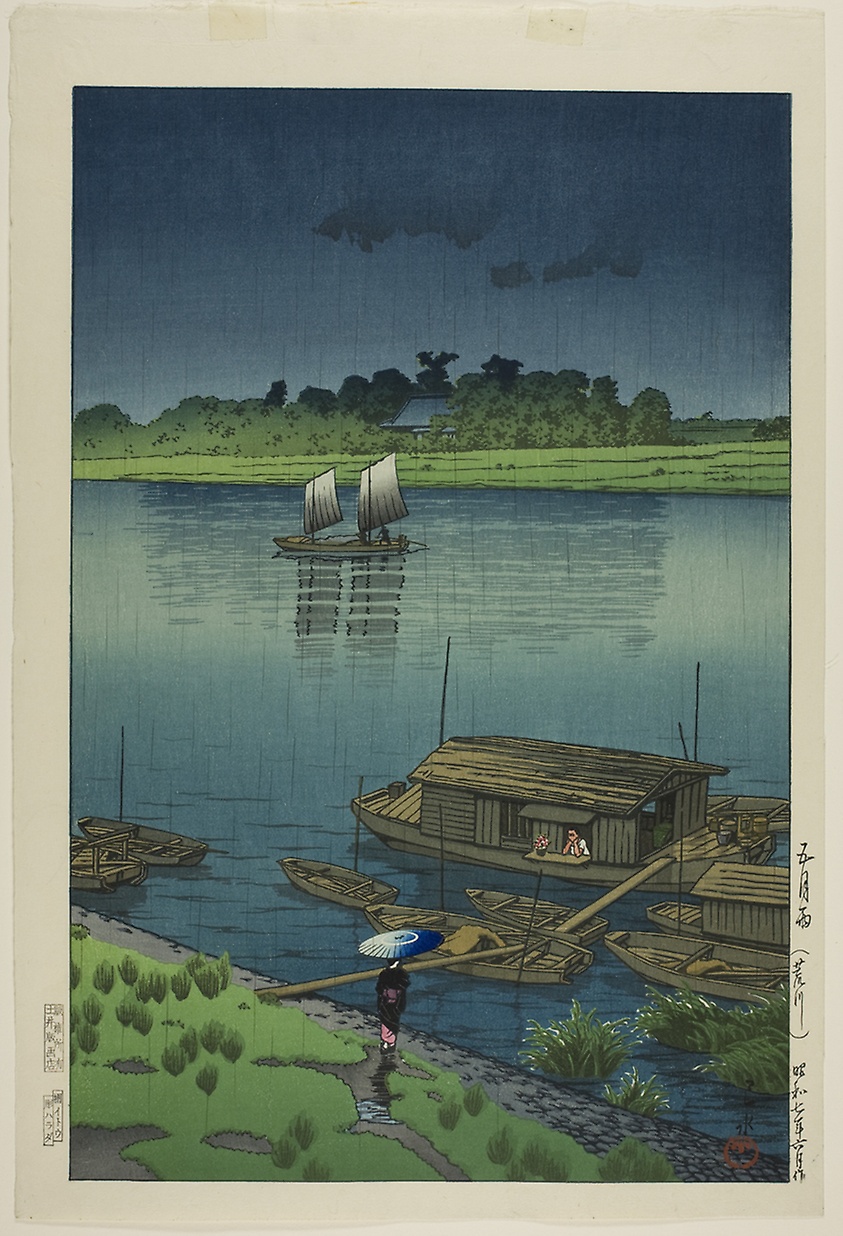
Beautiful influential and famous paintings about summer: Early Summer Rain.
This woodblock print depicts the rain in Arakawa, typical of this time of year. Hasui was one of the most acclaimed artists of the shin-hanga movement.
9. Summer Moon at Miyajima by Tsuchiya Koitsu (1936).
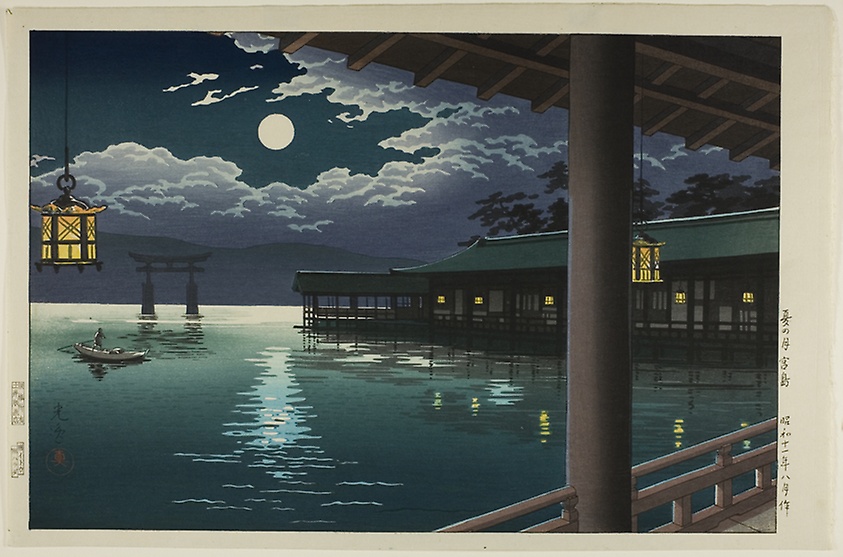
Beautiful influential and famous paintings about summer: Summer Moon at Miyajima.
This woodblock is part of a series entitled “Collection of Views of Japan.”
10. A Wheatfield on a Summer’s Afternoon by Marc Chagall (1942).
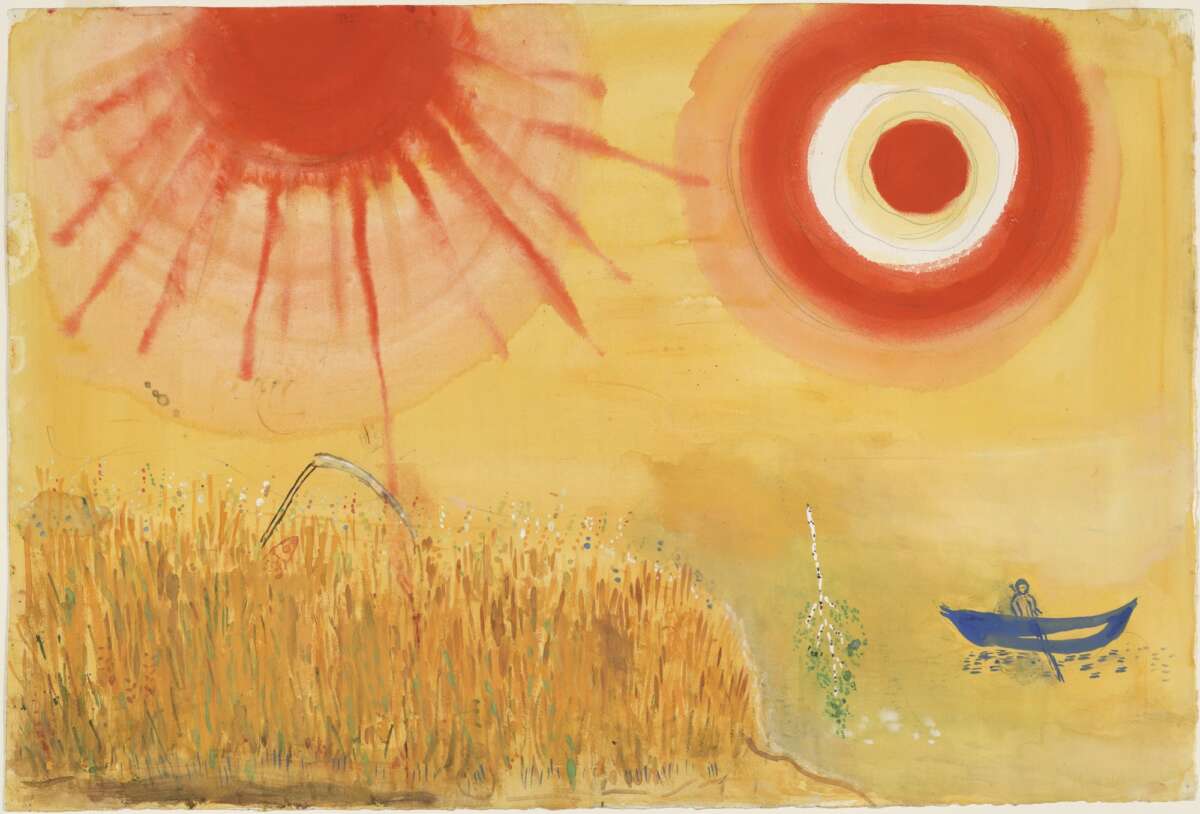
Beautiful influential and famous paintings about summer: A Wheatfield on a Summer’s Afternoon.
This image was one of several commissioned by the American Ballet Theater as a backdrop for the ballet Aleko. Based on a poem by Russian writer Pushkin, the show first opened in Mexico City, and then later transferred to the Metropolitan Opera House in New York. In 2017, the backdrops from the ballet departed the Philadelphia Museum of Art for the Aomori Museum of Art in Japan.
11. Summer Street Scene in Harlem by Jacob Lawrence (1948).
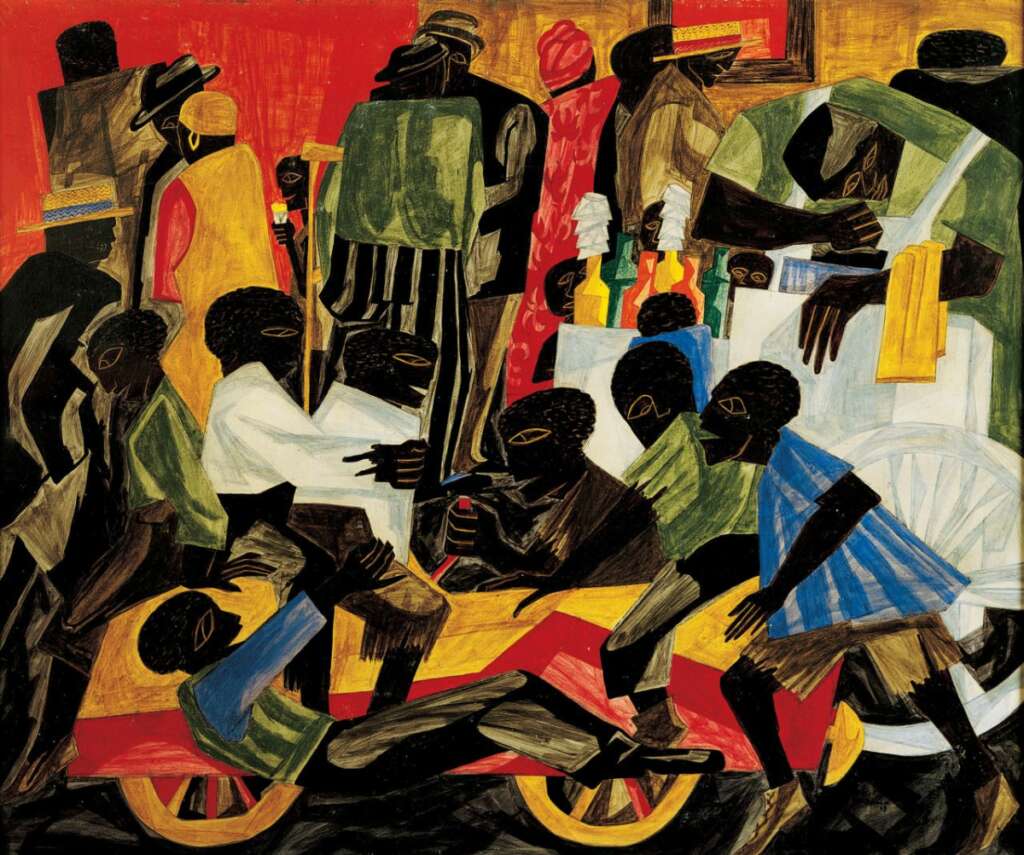
Beautiful influential and famous paintings about summer: Summer Street Scene in Harlem.
This painting, inspired by the vibrancy and creativity of the Harlem Renaissance, can be found today at the Memorial Art Gallery in Rochester, New York.
12. Summer Sleep, New York by Irving Penn (1949).

Beautiful influential and famous paintings about summer: Summer Sleep.
This is the rare indoor scene that still reminds us of summertime.
13. Second Story Sunlight by Edward Hopper (1960).
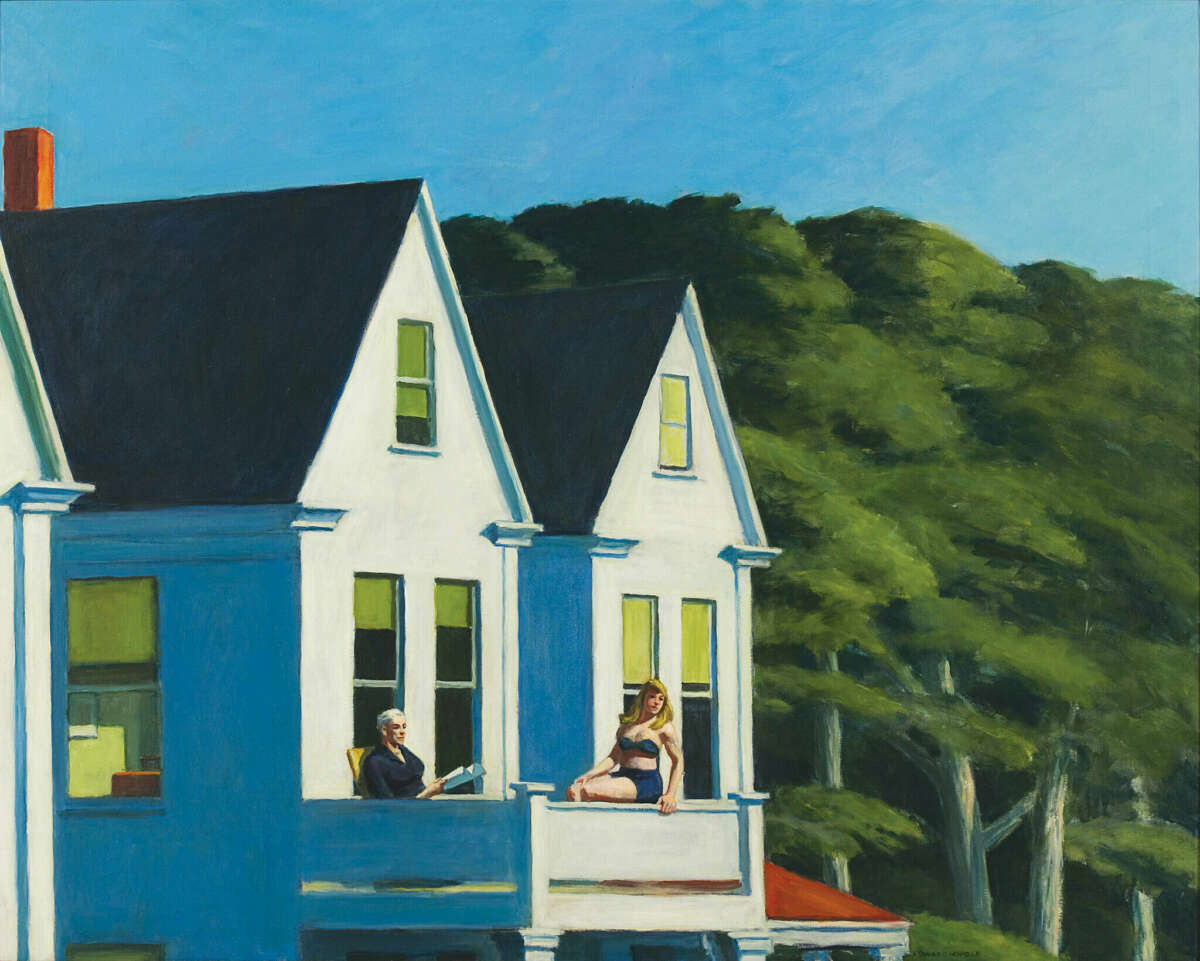
Beautiful influential and famous paintings about summer: Second Story Sunlight.
This image of two women sunbathing was an attempt by the artist to depict sunlight while using very little yellow pigment in his paints. While Hopper insisted the women portrayed were modeled on his wife, the artist’s next-door neighbors claimed they must be the ones represented here. The painting now lives at the Whitney Museum of Art in New York.
14. A Bigger Splash by David Hockney (1967).
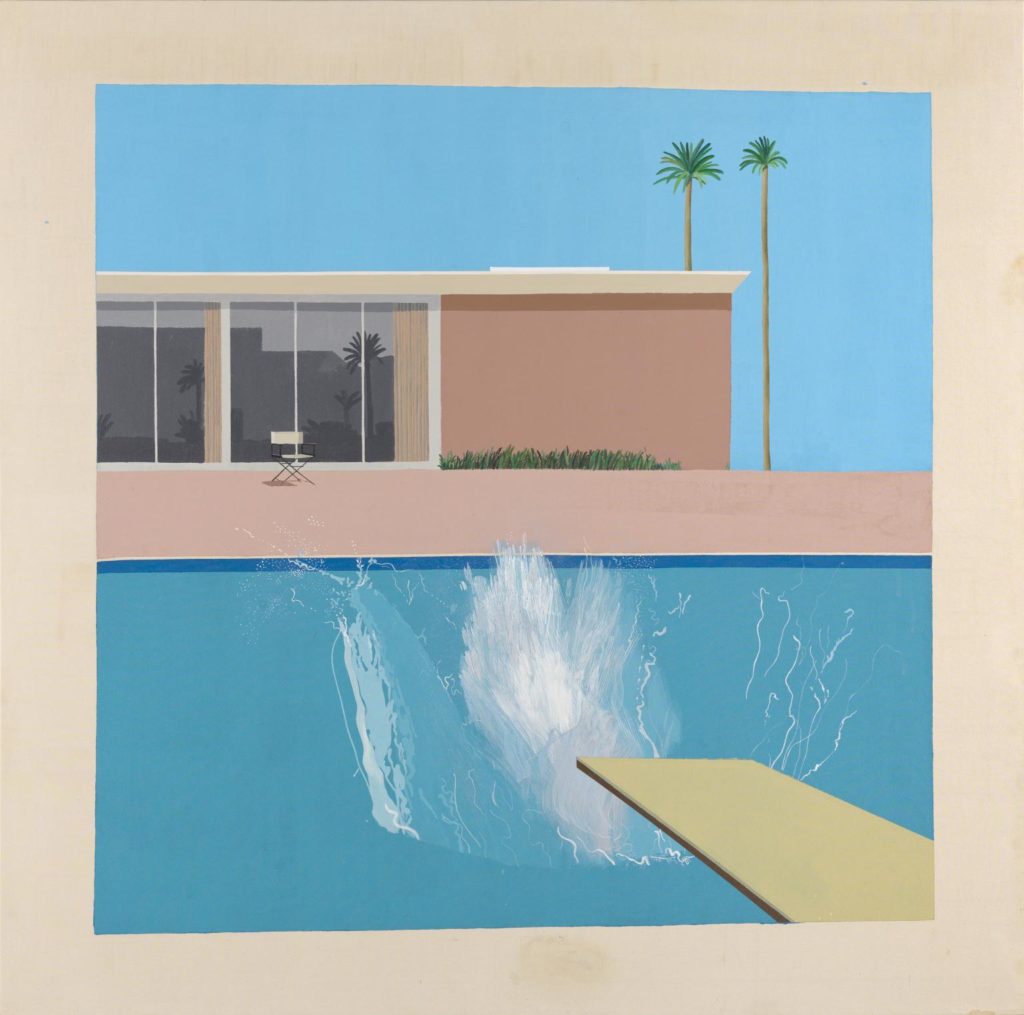
Beautiful influential and famous paintings about summer: A Bigger Splash.
This depiction of a California swimming pool was based on a photograph. It is an updated version of Hockney’s two earlier paintings, called “A Little Splash” and “The Splash.” You can visit the painting at the Tate Museum in London.
15. The Reception by Jonathan Green (1989)
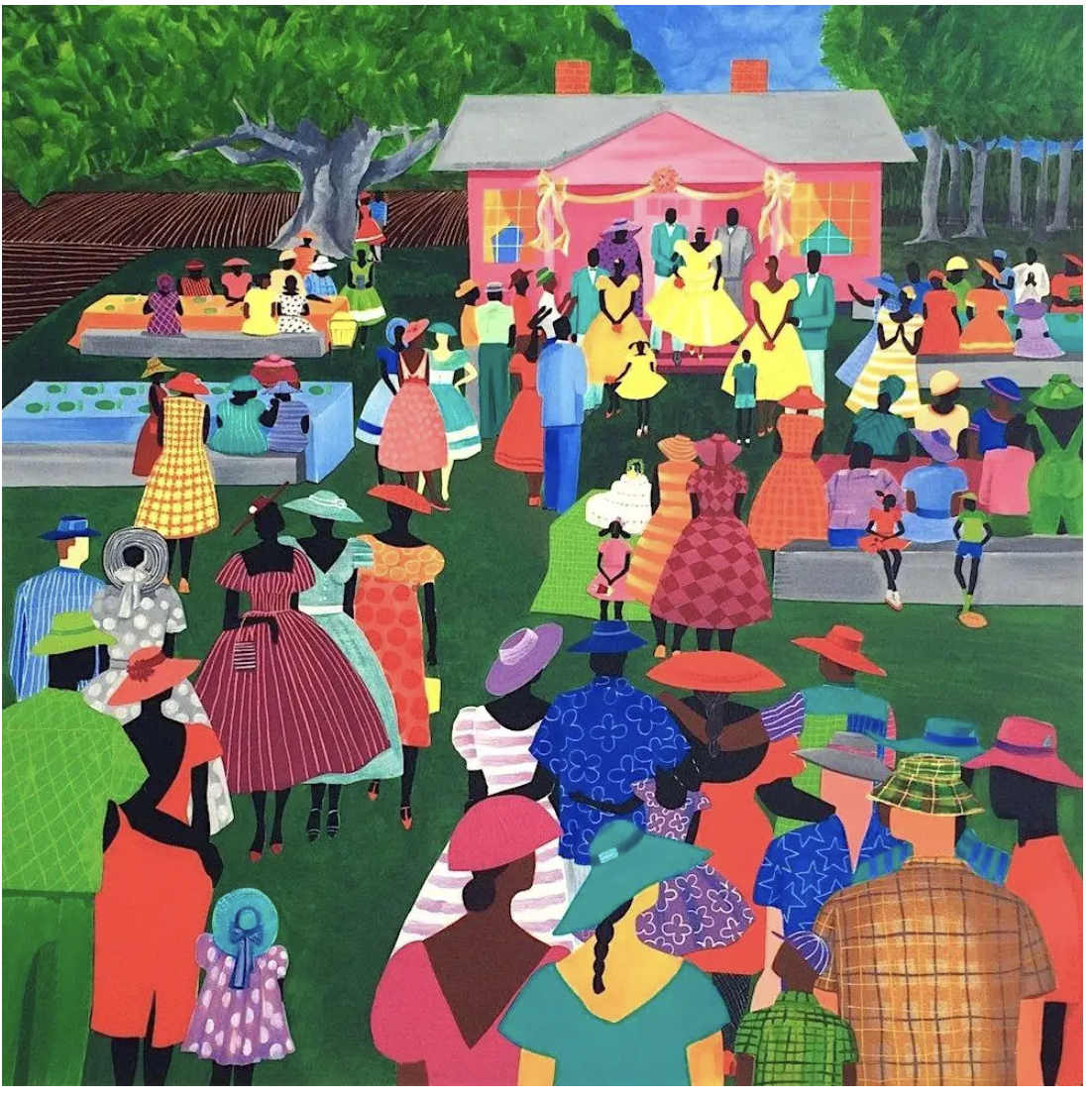
Beautiful influential and famous paintings about summer: The Reception.
Artist Jonathan Green is best known for his depictions of life in the South. In this lithograph, he shows a bright summer’s day in South Carolina, where community members gather in celebration of a wedding.
16. Enjoying a Summer Swim by Damary (Maria Zoila Pineda) (2009).
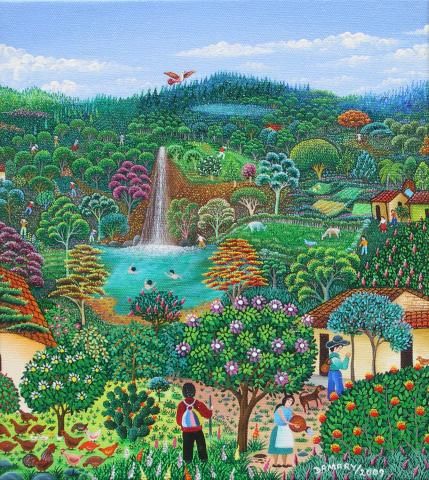
Beautiful influential and famous paintings about summer: Enjoying a Summer Swim.
The artist was born in El Salvador in 1962 and began her art career in 1990. Some art critics place this work in the school of ‘naïve art,’ which is painted in a bright, joyful style and intended to inspire happiness.
17. Carolina Beach Swimmer by Lynne Finlay (2014).
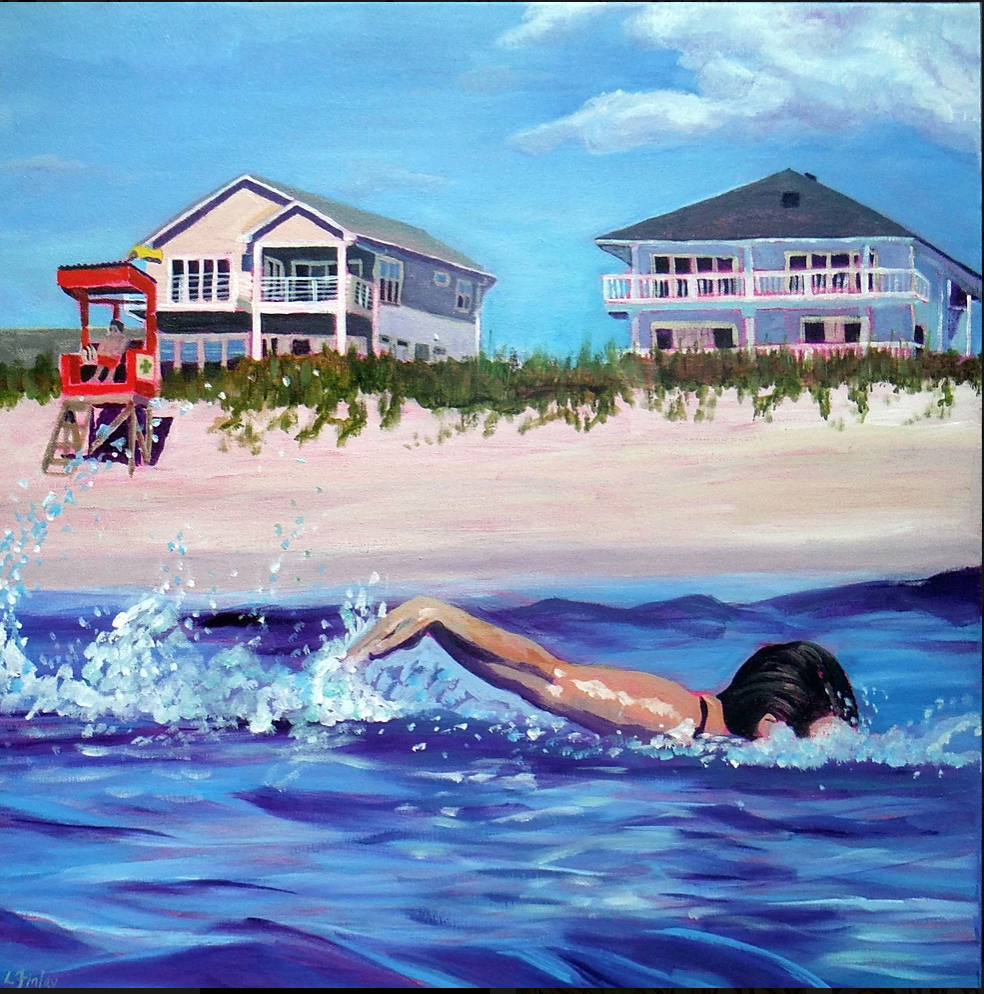
Beautiful influential and famous paintings about summer: Carolina Beach Swimmer.
The California-based artist has an entire series of summer works, all of which are bursting with summer colors and fully convey the feeling of the season.
18. Together Swimmingly by Angela Sinclair (2017).
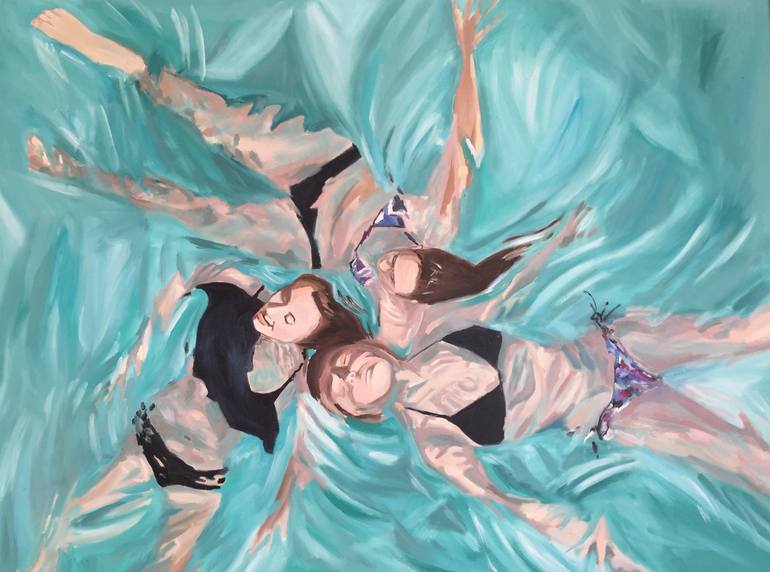
Beautiful influential famous paintings about summer: Together Swimmingly.
The artist specializes in images of people underwater, and her work appeared in a show entitled “Sea Dreams” in 2019, along with work by artist Janet Triplett.
19. Summertime City by Kadir Nelson (2018)
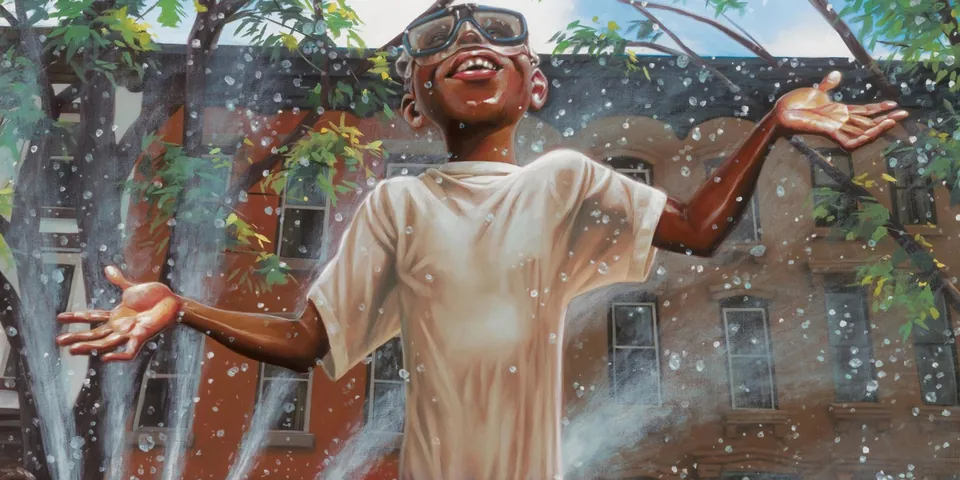
Beautiful influential famous paintings about summer: Summertime City.
This work from the prominent Los Angeles-based artist first appeared as the cover of The New Yorker magazine on July 23rd, 2018.
20. The Inkwell by Marcus Brutus (2019)
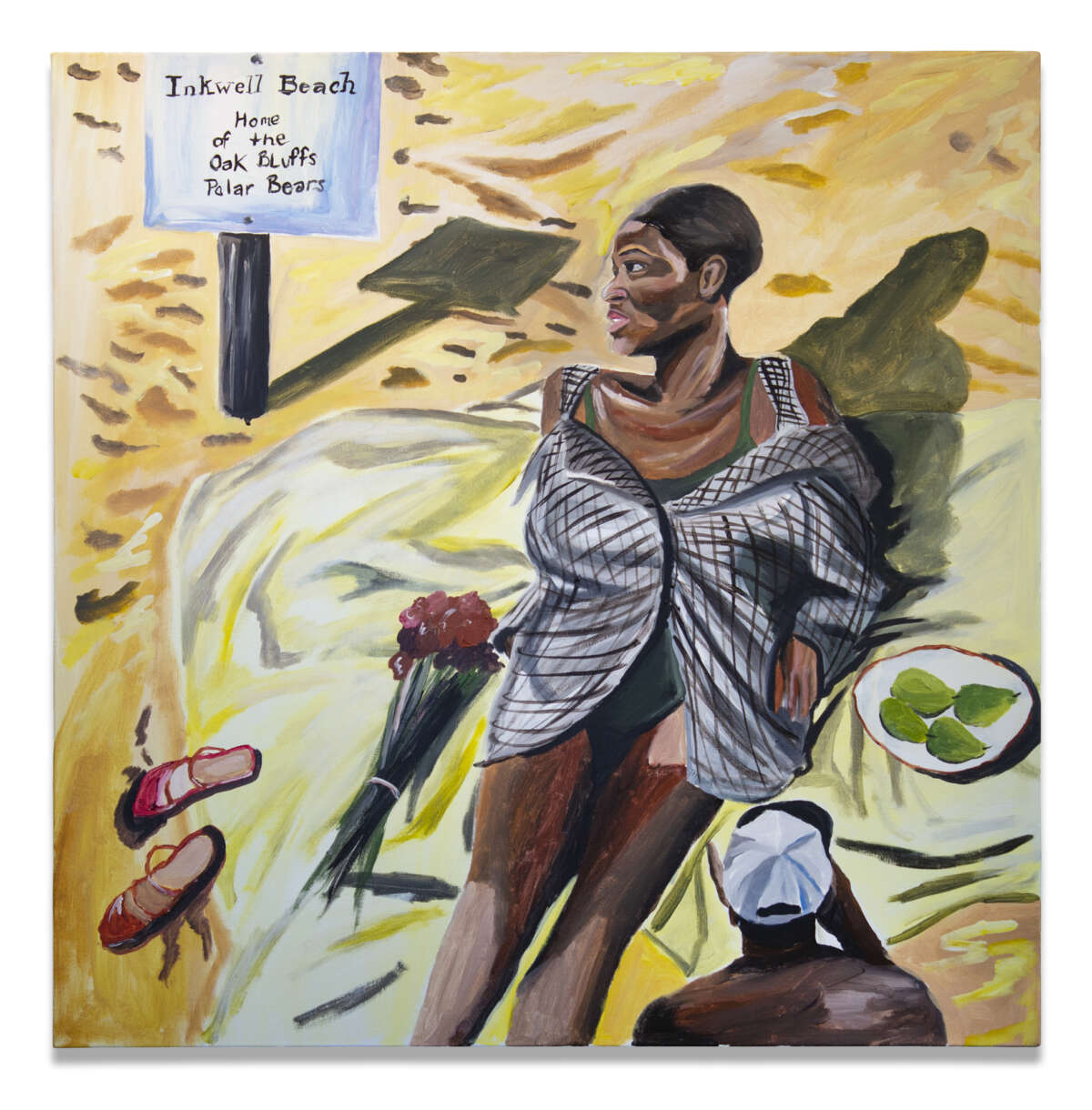
This painting was part of an exhibition by the New York-based artist’s second show at Harper’s Books in East Hampton, New York. The show was entitled “Go to Work. Get Your Money and Come Home. You Don’t Live There,” after the 2017 Toni Morrison essay.
21. The Lemon Bathing Suit by Amoako Boafo (2019).
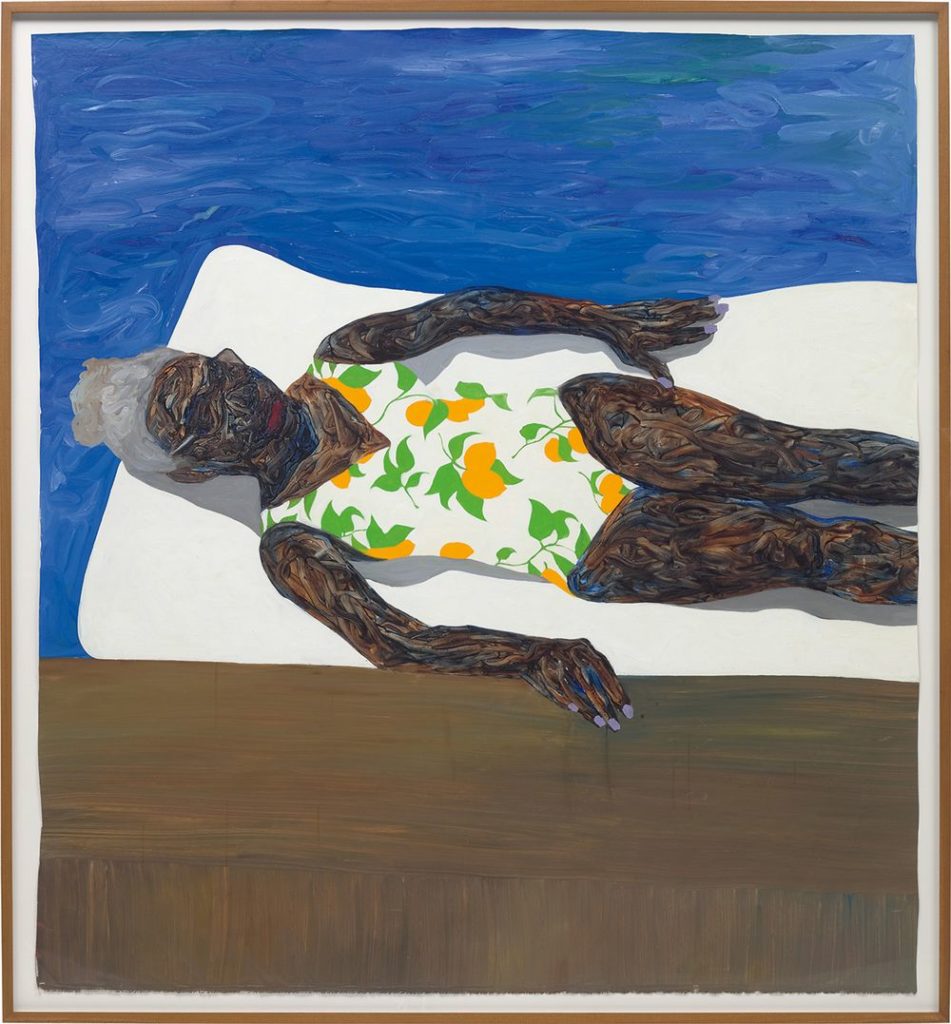
Beautiful influential and famous paintings about summer: The Lemon Bathing Suit.
This portrait opened the 20th Century & Contemporary Art Evening Sale at Phillips London in February 2020. Born in Ghana, the artist currently lives and paints in Vienna, Austria.
22. Summer of Love by Fariha Fatima
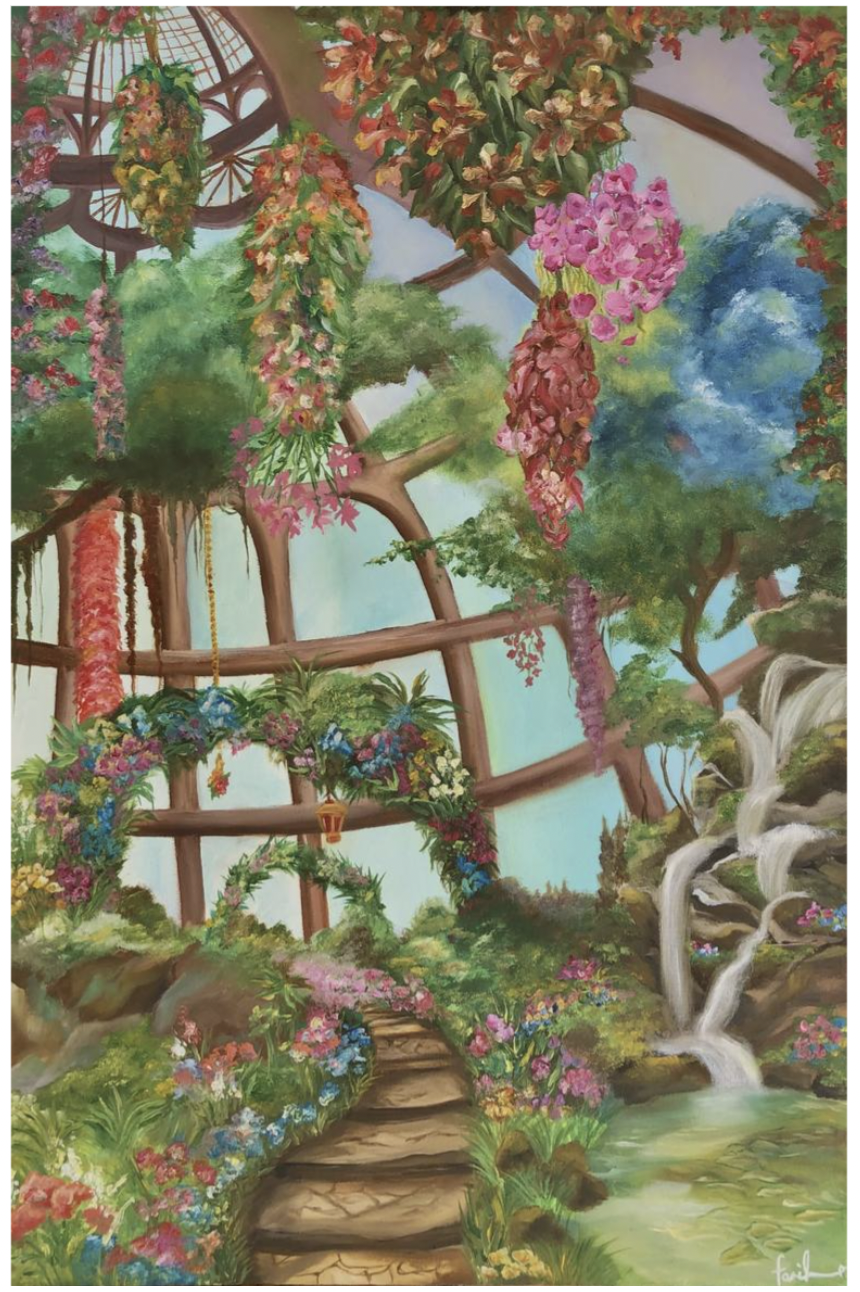
Beautiful influential and famous paintings about summer: Summer of Love.
Fariha Fatima is a self-taught artist from Pakistan, who creates “art that she wants to exist in the world.”
The Most Beautiful Paintings about Summer
That’s it – our picks for some of the most beautiful and moving paintings about the glorious season of summer and the joys of summertime. What’s your favorite painting about the summer season, dear reader?