Modern power dressing for women should project authority without requiring pain, stiffness or a day spent managing the clothes. The most effective professional wardrobe creates structure, line and presence while allowing you to move, sit, walk, travel and think without distraction. That is not the same as dressing for comfort. Cozy is not command, and softness alone does not confer credibility. The goal is more exacting: clothes that make you look composed and authoritative, then get out of the way so you can do the work you came to do.
After decades in corporate life, I have come to think of this as a question of attention as much as appearance. Serious rooms already ask enough of us. Shoes, waistbands, collars and jackets should not be allowed to submit additional agenda items. Authority does not require martyrdom; it requires coherence between the body, the clothes, the role and the room.
Call to Order is Dandelion Chandelier’s ongoing series on strategic dressing for people who mean business — a study in authority, polish, and the quiet power of getting it exactly right.
At a glance: modern power dressing • women in leadership • authority without pain • structure without stiffness • cognitive bandwidth • personal uniforms • capable shoes • stamina with standards
All photographs are by Pamela Thomas-Graham for Dandelion Chandelier.
performative power is a tax (and we’ve paid enough)
There is always a moment—usually at the curb, usually in the cold—when you remember that power dressing was never meant to be comfortable.
It was meant to be convincing.
For decades, painful shoes, cinched waists, rigid tailoring and starched collars were the price of admission for professional women. The silent bargain was clear: you can enter the room, but you must prove you belong there. You prove it by looking controlled. By looking disciplined. By looking as if you can tolerate whatever the day demands. For women in leadership, this has rarely been about fashion—it has been about credibility.
We were taught—explicitly or not—that authority required sacrifice. That if something hurt, pinched, restricted or demanded stamina, it must therefore be important. Serious. Worthy. Pain became a proxy for commitment, especially in professional spaces where women were already fighting to be read as credible.
Pain wasn’t incidental. It was part of the signal.
This legacy logic still shapes how many professional women dress for authority. We inherit it without questioning the invoice. If it looks severe, it must be serious. If it hurts, it must matter. What once read as discipline can now read as distraction, and distraction is expensive in rooms where decisions are made quickly and remembered for a long time.
The strange thing is that the bargain became less necessary long before many of us stopped paying it. Women now run companies, chair boards, control capital, lead institutions and enter rooms our mothers and grandmothers were not expected to occupy. Yet some of the wardrobe mythology survives as if nobody updated the operating manual. The woman shifting her weight because her shoes hurt is not more authoritative than the woman standing comfortably beside her, and a rigid jacket has never improved the quality of a decision.
cozy is not command
Then came the correction: comfort everywhere. Stretch, softness, sneakers with technology, trousers that feel like pajamas, knit blazers, miracle fabrics, “workleisure.” In theory, liberation.
In practice, a new trap.
Many of the truly comfortable options do not look serious. They do not photograph as authority or register as leadership presence; they read as informal, relaxed, optional—perfectly fine for a casual lunch, but subtly wrong for a room where power is negotiated in real time. Comfort is useful, but it is not itself a professional signal.
So women are offered a false choice: discomfort that looks credible, or comfort that looks unserious. This is not really comfort versus style. It is authority versus interruption—either the clothes interrupt your body because they hurt, or they interrupt the signal because they do not quite carry enough weight.
This is where performative power survives even after the dress code has loosened. The stiff shoe. The tortured heel. The waistband that announces suffering as seriousness. These small acts of endurance tell the world, “I’m not playing.” They also make the body spend energy managing discomfort at precisely the moment when you would rather have all of that attention available for the negotiation, the presentation, the decision or the room itself.
The modern middle ground is the territory of Casual, With Authority: how to keep authority intact after the old uniform disappears. Its argument is that power casual is not dressing down; it is dressing with resolve. This manifesto begins one step earlier. Whatever you decide to wear, the clothes should not exact a tax for the privilege.
stamina with standards
There is a difference between bearing weight and carrying unnecessary burden, and the next level of authority is refusing the false trade-off. Not by dressing down, and not by choosing comfort as your headline value. Comfort alone is not acceptable for serious people. Elastic waistbands and apologetic silhouettes do not confer authority; ease without structure reads as disengagement, not confidence.
Modern power dressing is not about relief. It is about alignment. Authority comes from coherence—the sense that your body, your clothes, your posture and your presence are working together rather than negotiating against one another. When something hurts, distracts, destabilizes or requires constant adjustment, it fractures attention. And fractured attention is the enemy of power.
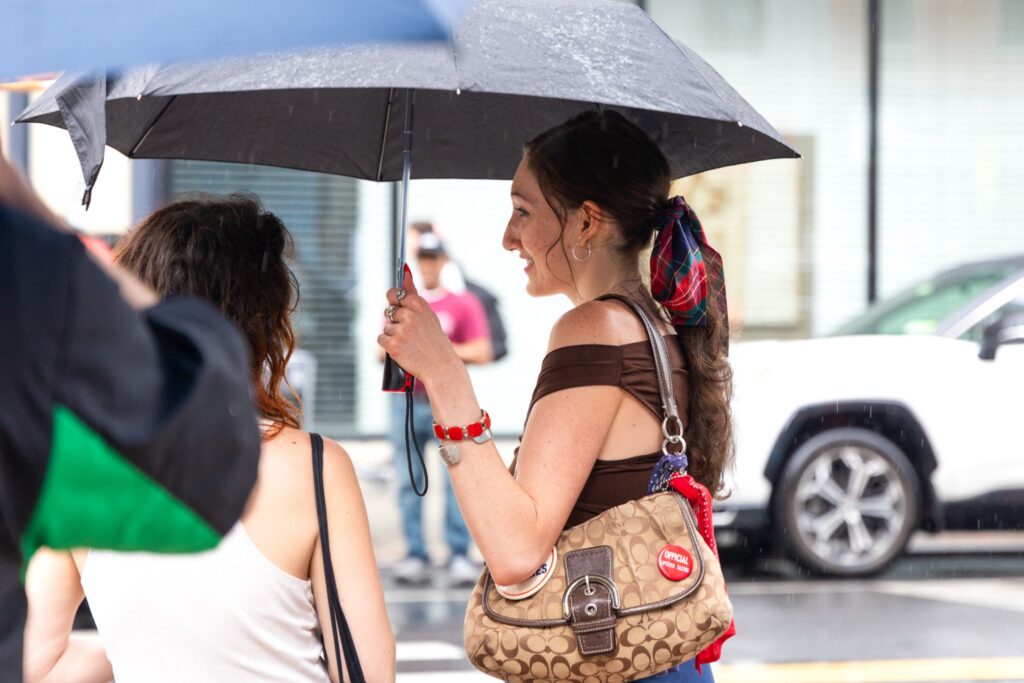
Polish meets the forecast.
You can see the practical version of this most clearly when the circumstances become demanding. In my guide to how to pack for Davos, the clothes have to project authority while surviving altitude, snow, security, walking, meetings, hotel lobbies and a very long day. Davos merely makes visible what ordinary professional life tends to conceal: if the wardrobe only works while you are standing still in controlled conditions, it does not really work.
The question is no longer “can you endure this?” The more useful question is “does this support how you lead?” That is a higher standard than comfort because it requires the clothes to solve more than one problem at once: presence, mobility, credibility, stamina and ease.
the shoe shouldn’t be a hostage situation
Shoes are where the lie gets exposed. A shoe that looks “powerful” but cannot survive your real day is not a power shoe; it is a prop, and props have consequences. You move differently, avoid walking, arrive slightly irritated and begin making small decisions based on pain management rather than purpose. You are not fully present because some part of your attention is already being budgeted elsewhere.
The test is not how the shoe feels in the mirror. The test is brutally practical: can you walk twenty minutes, stand ninety and move quickly without thinking about your feet once? The shoe should disappear into the day. If you are planning inserts, backup flats, blister bandages or recovery rituals before leaving the house, the shoe has already failed the brief.
This is not an argument against heels; it is an argument against fiction. A heel that works for your body and itinerary is useful. A flat with no support that leaves you equally miserable is not somehow virtuous because it is closer to the ground. The issue is capability, which is why the same logic appears in What to Wear to Art Basel: concrete floors and hours of looking expose fantasy footwear with admirable efficiency.
If you need a pep talk to get through the day, it is not authority; it is endurance cosplay. The joke wears thin quickly when the person paying for it is you.
the real luxury is cognitive bandwidth
Clothes occupy attention twice. The first time is obvious: deciding what to wear. The second is more expensive and much less discussed: continuing to manage what you are wearing after you leave home. A sleeve that will not stay put, a blouse that gaps or a skirt that twists is a tiny administrative task, and the fact that each task is small is precisely why we tolerate too many of them.
Senior work is already an exercise in allocating attention. What needs intervention? What can wait? Who needs listening to? Which question has not been asked? What is the room not saying? The idea that clothing should compete for any of that bandwidth strikes me as an extremely poor use of resources.
This is also why the argument extends beyond comfort. The right clothes establish enough information that the room understands you quickly, then they recede. The Glasses That Read the Room explores the same idea at eye level: proportion, line and signal can sharpen the reading of a face without creating more noise. Professional style is at its best when it clarifies rather than clamors.
The goal is not to think less carefully about getting dressed. It is to make the important decisions in advance so you do not have to keep making them all day.
effortless authority is engineered
Effortless and authoritative is not a vibe. It’s an engineering problem, and fortunately it has a solution. The women who make serious dressing look easy have usually done the work in advance: they know their proportions, their authority silhouette, the shoes they can trust, the fabrics that behave, the colors that carry the right amount of weight and the pieces that can survive an actual day rather than merely a good mirror.
Here’s how serious women build authority without suffering for it: stop doing performative power and build a personal uniform that holds authority without punishing you. You want pieces that create structure, line and presence while allowing full mobility and almost no fuss. The jacket should let you reach, the trouser should let you sit, the shoe should let you move at your normal speed and the dress should survive lunch. None of this is lowering the standard; it is making the standard more exact.
The “effortless” part happens because the decisions have already been made. You know which silhouettes work, which alterations are worth doing, which materials become irritating by noon and which shoes can handle the day you actually have. Repetition becomes an advantage rather than a failure of imagination. A personal uniform is not surrender to sameness; it is infrastructure for a life in which getting dressed is important, but almost never the most important thing you will do that day.
six principles for evoking authority without enduring pain
Once you separate authority from discomfort, the practical question becomes much easier: which choices actually make a woman look more credible, composed and in command—and which merely make her day harder?
1. choose one authority silhouette and repeat it.
Authority is repetition with intention. When your silhouette is consistent, people stop processing the outfit and start processing you. A long line, clean shoulder, defined waist without cinching, trouser with a real hem, skirt with architecture or coat that reads like a decision can become a visual signature without becoming a uniform in the dreary sense.
The advantage is operational as well as aesthetic. Once you know the shape that works, fabric, color and accessories can change inside it without forcing you to reinvent your professional identity every morning.
2. choose footwear for capability, not fantasy.
The shoe has to support the day you are actually having. That may mean a low heel, loafer, boot, sculptural flat or refined sneaker; the category matters less than whether the shoe lets you walk, stand, move quickly and remain in a decent mood.
Capability is part of executive presence because the body is part of executive presence. A woman who can move through the day at her normal pace has more authority than one whose footwear has quietly rewritten the itinerary.
3. replace stiffness with structure.
A starched collar is not the only way to look serious. Structure can come from tailoring, fabric weight, proportion and restraint: clean shoulder lines, fabrics that hold shape, closures that stay closed, sleeves that do not slide and trousers that do not cling or collapse.
The principle becomes especially obvious in warm weather, when heavy tailoring disappears and the clothes have nowhere to hide. Cool and Collected: What to Wear to Work in Summer is the seasonal test case: linen, lightweight wool, shirts and dresses can carry authority beautifully, but only when ease has architecture.
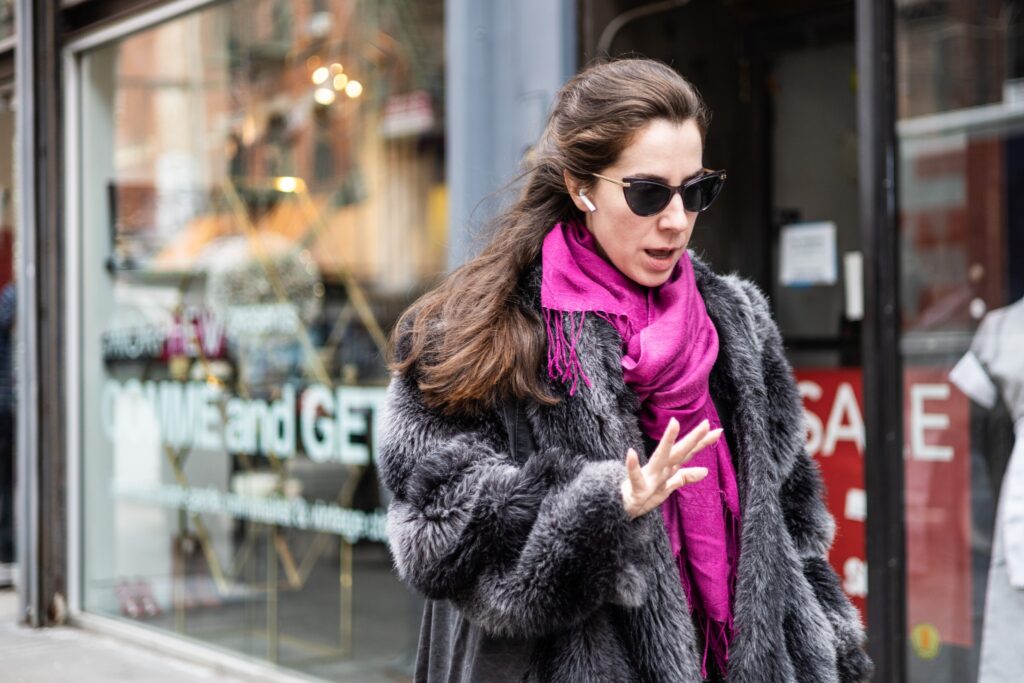
Color, with authority intact.
4. keep the palette disciplined and let color earn its place.
Deep neutrals remain useful because they create coherence quickly, but authority is not monochrome by definition. Color works when it has a job rather than a supporting cast. A complex dark red, for example, can carry much of black’s gravity while adding warmth and individuality; Maroon Is Not Burgundy: How to Wear Dark Red is our guide to the differences among burgundy, oxblood, maroon, aubergine and black cherry.
Texture can do the rest of the work. Cashmere, brushed wool, leather, silk and matte crepe register as intentional without needing to shout, which is often exactly the point in serious rooms.
5. build one competence layer for weather and travel.
The coat is often the first impression and, on difficult days, the piece that determines whether the rest of the wardrobe succeeds. A well-cut outer layer does more for authority than a theatrical shoe ever will because it solves real problems—weather, movement, arrival—while giving the whole silhouette a clear line.
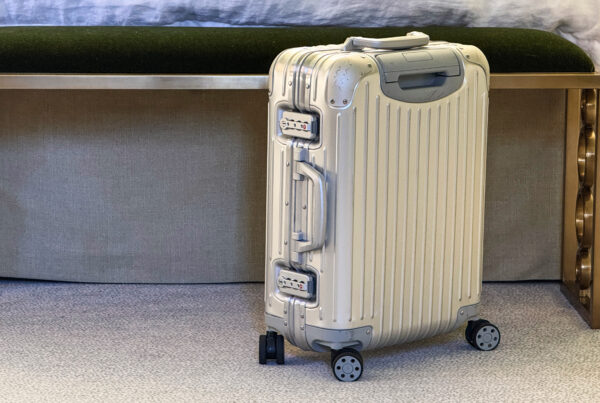
This is where professional dressing becomes logistics rather than fantasy. Rain, cold, heat, luggage, walking distance, security lines and over-air-conditioned rooms are not interruptions to the style problem; they are the style problem.
6. eliminate fussy pieces that require maintenance in public.
If it wrinkles into surrender, slides, gaps, scratches, needs tugging or demands checking, it is not for serious rooms. Clothes have to behave because authority has a tempo: calm, available, capable of turning attention outward rather than continually pulling it back toward the body.
This principle sounds almost too practical until you experience the alternative. A garment that behaves becomes invisible in the best possible way, leaving the line, the color and the woman intact while removing the fuss.
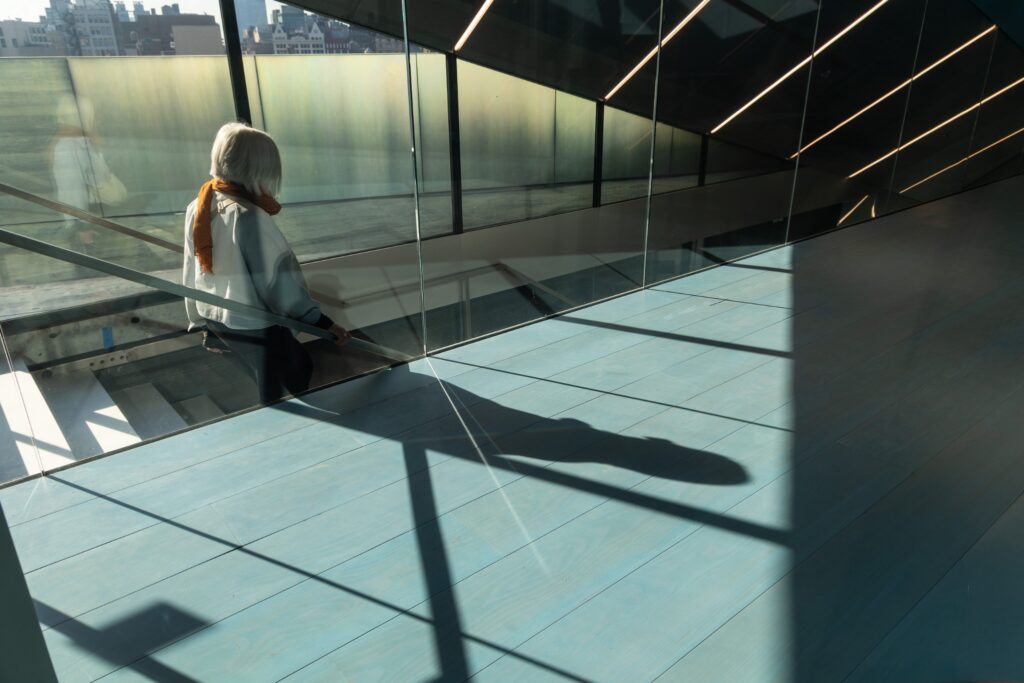
Authority, without the armor.
power is supposed to feel good
The point of all of this is not to look comfortable. It’s to look inevitable—to look like you belong in the room without asking the room for permission. Pain became a legacy signal in women’s power dressing because women were not allowed the luxury of ease. Ease looked like entitlement, and entitlement was reserved for other people. Now we know better. Not because we’ve become casual, but because we’ve become exacting.
You can be rigorous without being punished, polished without being pinned in place. You can show up looking authoritative without sacrificing the very thing you came to use: your attention. Effortless authority is not laziness; it is preparation at its highest level.
Authority is no longer proven through endurance. It is expressed through clarity, stamina and clothes that allow women to show up fully present in the rooms where power is exercised. Serious people don’t suffer for style; they choose style that works for them, with standards intact and unnecessary friction removed.
And there is a particular kind of quiet authority in no longer tolerating what does not serve you. You stop dressing to prove you can endure. You dress to make sure nothing interrupts your ability to lead.
faqs:
what is modern power dressing for women?
Modern power dressing uses clothing to project authority, competence and presence without relying on painful shoes, rigid tailoring or an overtly formal uniform. The strongest wardrobe combines structure with ease so the clothes support movement, stamina and concentration rather than competing with them.
can comfortable clothes really look authoritative?
Yes, but comfort alone is not the standard. Softness without structure can read casual or disengaged; the goal is ease with architecture through proportion, tailoring, fabric weight, disciplined color and a silhouette that remains clear throughout the day.
how can i look powerful without wearing high heels?
Choose shoes for capability and proportion rather than height. Loafers, boots, sculptural flats, refined sneakers and low heels can all look authoritative when they support good posture, work with the silhouette and allow you to move through the real demands of the day without distraction.
what is the difference between power dressing and business casual?
Business casual is primarily a dress-code category, while power dressing is about the signal an outfit sends. Modern power dressing asks whether the clothes communicate authority, coherence and situational judgment; Casual, With Authority addresses the related question of how to preserve those signals when the formal uniform disappears.
how do i build a personal professional uniform without looking repetitive?
Start with one or two silhouettes that consistently make you feel composed and credible, then vary fabric, color, texture and accessories within that framework. Repetition creates recognition and reduces decision fatigue; it becomes personal style when the choices are deliberate rather than automatic.
what colors work best for professional authority?
Black, navy, charcoal, camel and winter white remain useful because they create coherence quickly, but they are not the only options. Deep reds, greens, aubergines and other complex shades can carry equal authority when the silhouette is disciplined and the color is given a clear role rather than surrounded by competing statements.
why does comfort matter for executive presence?
Discomfort consumes attention and can alter posture, pace, patience and stamina. Executive presence depends partly on being fully available to the room, so clothes that hurt, shift or require constant adjustment create friction precisely when your attention should be directed toward the conversation, decision or work at hand.