The best jams and preserves in the world to buy are Christine Ferber, Maison Francis Miot, and Confitures de Raphaël from France; Wilkin & Sons Tiptree and London Borough of Jam from the UK; Girl Meets Dirt, American Spoon, and Sqirl from the United States; Caffè Sicilia, La Strega di Triora, and Elasun from the Mediterranean; and, farther afield, Yakami Orchard in Japan, Bateel in Saudi Arabia, Mymouné in Lebanon, and Hafi in Sweden. Every one is the work of a small grower, forager, or artisan — real fruit, cooked with care, a short and honest ingredient list — and every one earns its place in the larder. A few are famous names; a few I found by happy accident. The best of them do not just sweeten your morning toast; they make it an occasion.
And I learned something else. The best jam is not automatically the one with the fewest ingredients, the least sugar or no added pectin. It is the one where the fruit is the star. Hold out for excellent fruit, clear provenance, balance, texture, an ingredient list that makes sense for what the maker is trying to achieve, and enough craft to let the fruit taste emphatically like itself. Don’t get hung up on the pectin issue. Fruit pectin, used intelligently, is simply a tool; it can shorten cooking time and help preserve fresh fruit flavor.
Extra Fine is where I hunt down the small luxuries worth the splurge — the single jar, bottle, or bar that makes an ordinary day better. I don’t cook much. I just have very strong opinions about the good stuff.
At a glance: artisanal jam & preserves • fifteen makers, nine countries • copper-pot craft, real fruit, restrained use of sugar • from Alsace to the Arctic • a Breton quince that steals the show • little luxuries for the larder
Jam belongs to The Breakfast Table, the Extra Fine shelf for honey, butter, jam, maple syrup, tea, and the civilized pleasure of beginning the day with one thing, done exceptionally well.
All photographs by Pamela Thomas-Graham for Dandelion Chandelier. I bought and tasted every jar included here.
the everyday luxury of a very good jar of jam
I’ll just put it out there: I’m a creature of habit. When it comes to the everyday things in my pantry, I have been loyal to the same handful of brands for years, happily, unthinkingly, without ever really pressing myself to level up.
Our Extra Fine franchise work has changed that. I have set out to discover which upgrades actually add a little joy to an ordinary day. Whether it is a brand I met while traveling or one I turned up in research, I want to know the same thing about each: does it earn a place in my pantry as a small luxury that makes me smile?
I am no gourmand (I am barely a cook), and I am skeptical of anything that requires a lecture before I am allowed to enjoy it. What I do have is a very clear idea of pleasure and food joy. So I’ve been tasting my way around the world of jam and preserves. Some jars were revelations. A couple puzzled me. Several were delicious in ways I did not expect. One contained a berry I had never eaten before. And one humble Breton quince preserve beat some of the most celebrated names in France.
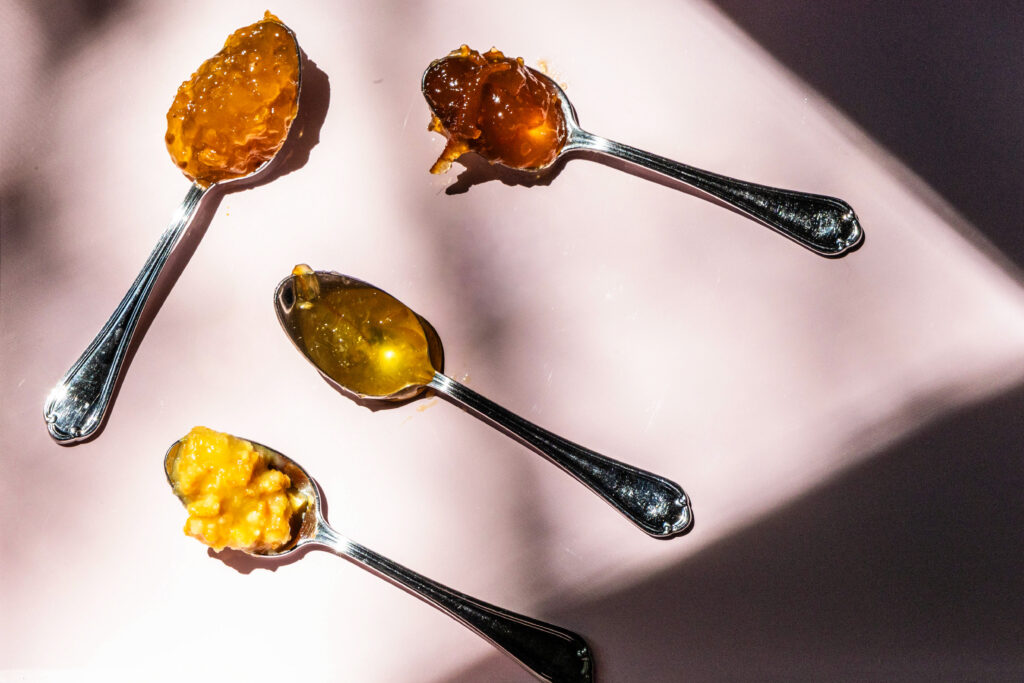
Four jars, four arguments.
if you buy only three
My three standouts are Confitures de Raphaël’s Quince, Maison Francis Miot’s Cœur d’Amour, and Girl Meets Dirt’s Rhubarb Lavender. The Raphaël is lush and pear-like; the Miot turns familiar apricot jam into something far more interesting; and the Girl Meets Dirt converted a committed rhubarb skeptic on the spot.
- Confitures de Raphaël Quince. My personal favorite. Deep amber, satin-smooth and almost uncannily reminiscent of the sweetest ripe pear. It is marvelous on toast, perhaps even better with cheese, and dangerously easy to eat straight from the jar.
- Maison Francis Miot Cœur d’Amour. Apricot, mango, peach and passion fruit with a touch of Champagne and vanilla: plush, fragrant and complex without becoming fussy. Apricot jam after an excellent education.
- Girl Meets Dirt Rhubarb Lavender. The upset. I do not like rhubarb. I approached this jar as a duty. Instead I found something sweet, tangy, citrusy and faintly floral, with enough texture to make buttered bread feel like a complete breakfast. It is still made in small batches in six copper pots on Orcas Island.
the fifteen best jams in the world at a glance
| Brand | Origin | Jar I tasted | Why it made the cut |
|---|---|---|---|
| Christine Ferber | Alsace, France | Wild Bilberry | Wild-foraged Alsatian fruit · tiny copper batches |
| Maison Francis Miot | Uzos, France | Cœur d’Amour | Ripe southern-French fruit · cooked in copper, cane sugar |
| Confitures de Raphaël | Brittany, France | Quince | Just quince, sugar and orange · small copper batches |
| Wilkin & Sons Tiptree | Essex, England | Little Scarlet Strawberry | Brand grows its own rare strawberries · traditional copper pans |
| London Borough of Jam | London, England | Chuckleberry | Intensely fruity · small batch production |
| Girl Meets Dirt | Orcas Island, Washington | Rhubarb Lavender | Century-old orchard fruit · made in copper pots |
| American Spoon | Petoskey, Michigan | Sour Cherry | Whole Michigan Montmorency cherries · small copper-kettle batches |
| Sqirl | Los Angeles, California | Blueberry & Tarragon | Organic single-farm fruit · small-batch |
| Caffè Sicilia | Noto, Sicily | Orange Marmalade | Only two ingredients: ripe fruit and sugar |
| La Strega di Triora | Liguria, Italy | Strawberry & Thyme | Intensely fruity · made in copper pots |
| Elasun | Somontano, Spain | Seville Bitter Orange | Seasonal Spanish fruit · handmade, no additives |
| Yakami Orchard | Japan | Yuzu Marmalade | Fruit from its own grove · just three ingredients |
| Bateel | Saudi Arabia | Date Jam | Its own estate-grown organic dates · made in-house |
| Mymouné | Lebanon | Strawberry & Rose Petal | Hand-picked mountain fruit · small batches, no preservatives |
| Hafi | Sweden | Wild Cloudberry | Wild-picked Arctic cloudberries · heritage family recipe |
france: restraint, romance and one perfect quince
France made confiture into an art form, so it is where the tour properly begins: with the benchmark, the charmer and the quiet Breton jar that walked away with the evening.
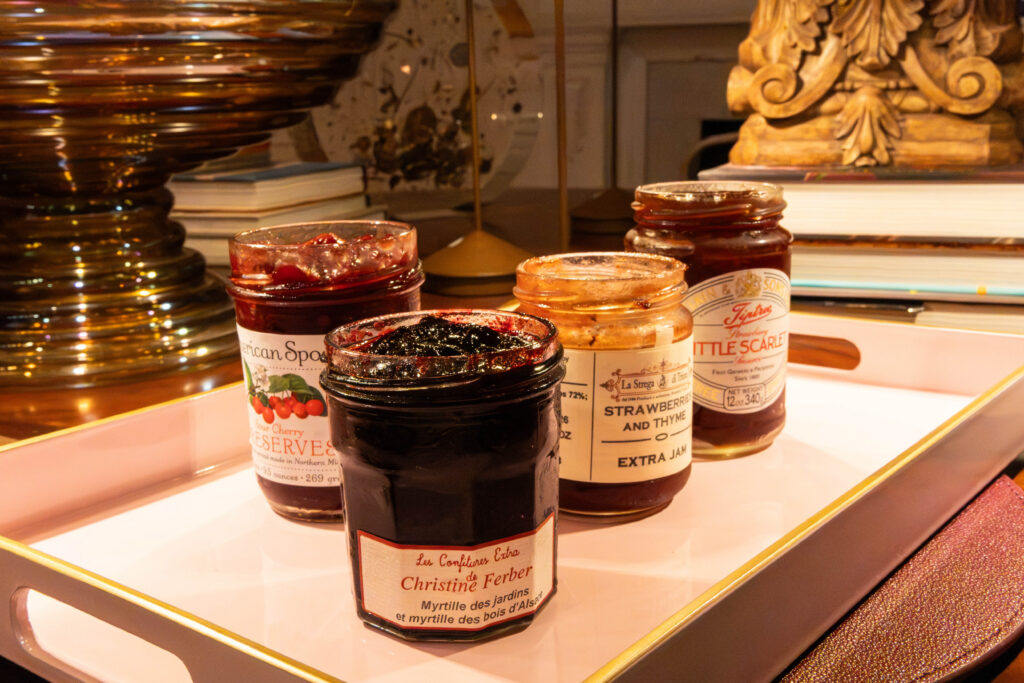
1. christine ferber — wild bilberry.
In a village of three hundred people near Colmar, Christine Ferber cooks fruit in copper in batches small enough to stir by hand, and the results sit on the tables of Pierre Hermé and the grandest hotels in Paris. She is, by common consent, the reference point — the maker every other maker is measured against.
However, I tasted two of her jars, the wild bilberry and the white cherry. And I was puzzled. Both jams are beautiful to look at, glossy and jewel-like, whole fruit suspended in syrup. Neither has a discernable fragrance, and neither is remotely sweet. I admired the restraint and the craft enormously. I did not crave a second spoonful of either one.
Ferber is a purist’s benchmark: cerebral, austere, and, to my palate, more to respect than to devour. Have some, and decide for yourself; it is a conversation worth having.
Peruse the current Christine Ferber selection at Kermit Lynch; flavors are seasonal, with limited availability.
2. maison francis miot — cœur d’amour.
Miot calls itself a triple world champion of jam. That’s the kind of claim that invites an eye-roll, until you taste the Sweetheart. Apricot, mango, peach, and passionfruit, cooked slowly in copper: it smells of ripe apricot and spreads like a dream. And it tastes like apricot jam that went to finishing school: deeper, rounder, more complex, without a hint of the cloying.
This is the jar I would keep in the house for a special morning, and the one I would give as a gift without a second thought — a lovely thing in a lovely jar, easy to eat and easy to understand. If Ferber is the jam you contemplate, this is the jam you actually want on your toast.
Find Cœur d’Amour at The French Farm.
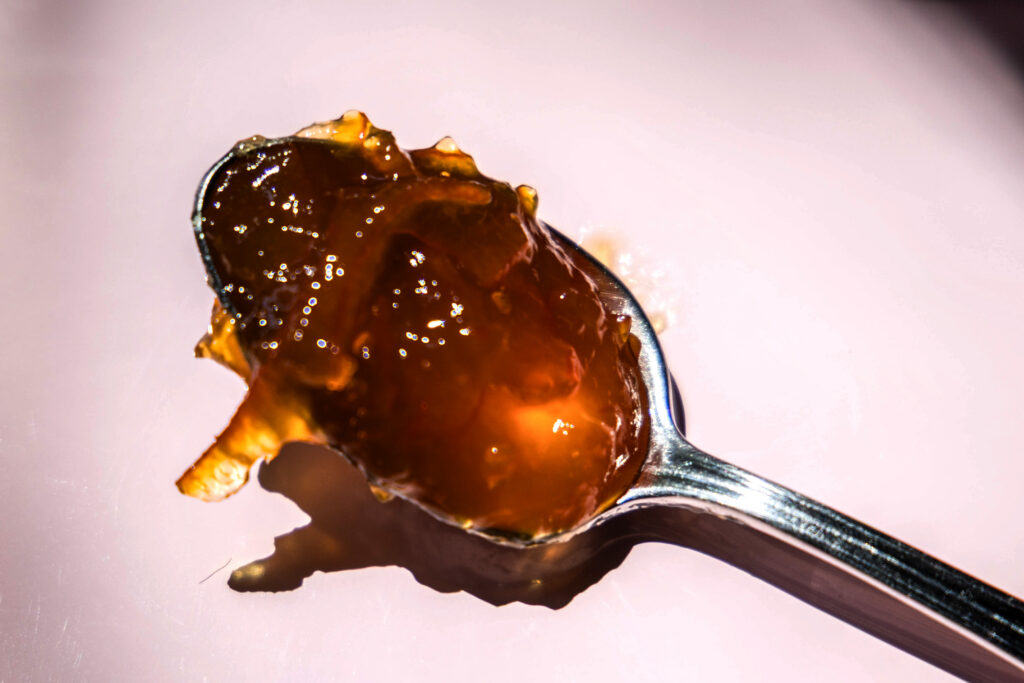
Fruit, almost abstract.
3. confitures de raphaël — quince.
This was the happiest surprise of the tasting. Raphaël is a Breton confiturier who is deaf, and who learned to preserve fruit in his grandmother’s kitchen; his brother Cédric joined him years later, and together they cook in copper basins near Saint-Malo. Their quince jam has just three ingredients: quince, sugar, and orange. It was the brightest star of the entire tasting.
It is a deep amber color, lush and smooth, with no seeds and no bits of fruit, and it smells of apples and plums and pears all at once. It tastes like the sweetest, juiciest pear you can imagine. It’s delicious on bread, delicious on a cheese board, and delicious straight from the jar with a spoon. If someone gave me this, I would be genuinely happy.
Formaggio Kitchen currently carries it in the United States.
england: tradition, then mischief
Cross the Channel and the story splits in two: a 140-year-old estate with a Royal Warrant, and a Hackney upstart making jam like a chef. Both are the real thing.
4. wilkin & sons tiptree — little scarlet strawberry.
Tiptree is the grande dame of this list: a single Essex estate that has grown its own fruit for well over a century and holds a Royal Warrant to prove it. It is also the only place on earth that still commercially grows the Little Scarlet strawberry: a tiny, intense wild berry that, Ian Fleming fans will know, was James Bond’s breakfast jam in From Russia With Love.
The conserve is so thick with whole berries I could barely get a spoon into the brimming jar, and it is deeply, gorgeously fragrant: the smell of fresh strawberries, concentrated. It is not too sweet; the balance of fruit to sugar is exactly right. On a warm scone with clotted cream, this would be paradise.
Shop Little Scarlet through Tiptree; availability can fluctuate because the fruit itself is unusually rare.
5. london borough of jam — chuckleberry.
Lillie O’Brien trained as a pastry chef at St. John before opening her tiny Hackney operation, and she makes jam the way a chef does: flavors like chuckleberry; damson and black pepper; greengage and fennel pollen, made with real fruit, a little sugar, and no pectin. Based on the lack of aroma upon the opening the jars, and the thickness of the jams, I was skeptical. And then I tasted them.
The chuckleberry is extraordinary: so intensely fruity it almost explodes on the tongue. There’s a lot of quiet drama going on there. The damson and black pepper flavor also won me over: it’s fruity first, with the pepper humming in the background. These are thick, dark, grown-up jams for the adventurous and the curious.
Order from London Borough of Jam.
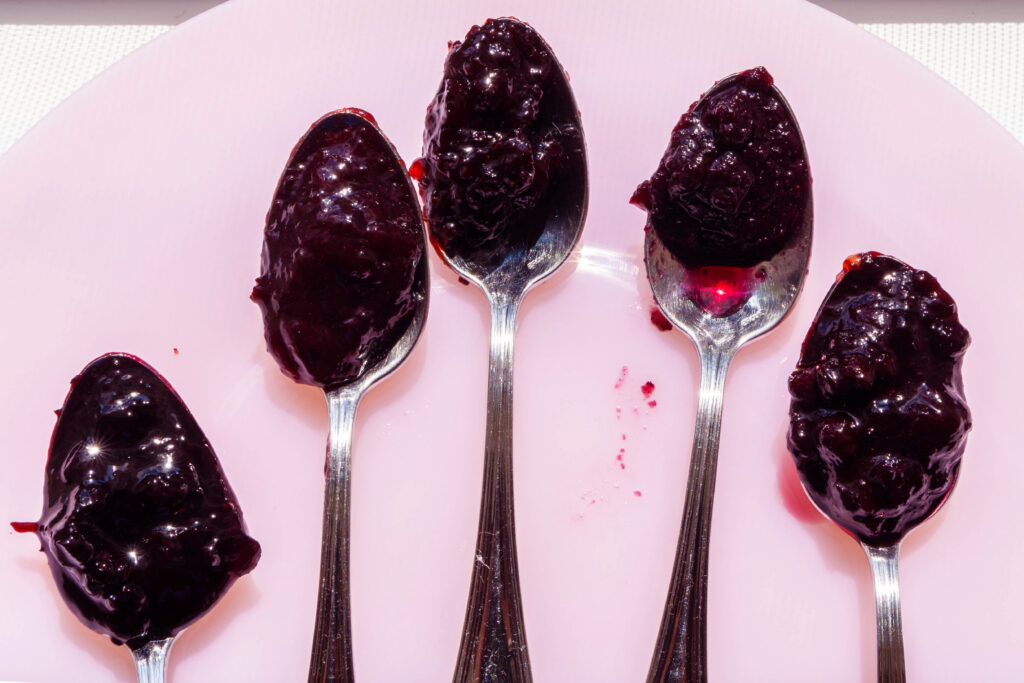
Dark fruit, fine distinctions.
america: old orchards, new ideas
America’s best preserves tell a heritage-to-vanguard story in three jars: an orchard revived, a wilderness foraged, and a restaurant that began with jam.
6. girl meets dirt — rhubarb lavender.
Audra Lawlor left Wall Street for Orcas Island, noticed the forgotten century-old orchards all around her, and started turning their fruit into preserves cooked by hand in copper — no commercial pectin, just time and concentration. Her Rhubarb Lavender is the jar that converted me, and I want to be clear: I do not like rhubarb. I dreaded tasting this. And I loved it.
This jam is thick and chunky, a gorgeous honey-amber color, and it tastes sweet and tangy and citrusy all at once. You taste the fruit, not just the sugar. The label suggests pairing it with buttered bread and soft cheese, and in this matter I see no reason to improvise.
Buy it direct at Girl Meets Dirt.
7. american spoon — sour cherry.
For forty years, American Spoon has built its jams with Michigan heirloom fruit too fragile to survive national distribution — wild thimbleberries picked a few pounds at a time, hand-peeled peaches. The Sour Cherry demonstrates why the brand is aptly named: this is the traditional, all-American experience of preserves in a single spoonful.
Thick and dense with whole cherries, it is essentially the finest cherry pie filling you will ever eat straight from a jar. And I mean that as high praise. It is frankly sweet, and makes no apology for it. Not every luxury needs to be cerebral. Some should understand nostalgia, generosity and the fact that warm toast occasionally wants the breakfast equivalent of a marching band.
Order at American Spoon.
8. sqirl — blueberry & tarragon.
Jessica Koslow’s Los Angeles café began, before the lines out the door, with jam. And the jam is still the point. She uses certified-organic California fruit and no commercial pectin, and her flavor combinations are the work of a genuine chef.
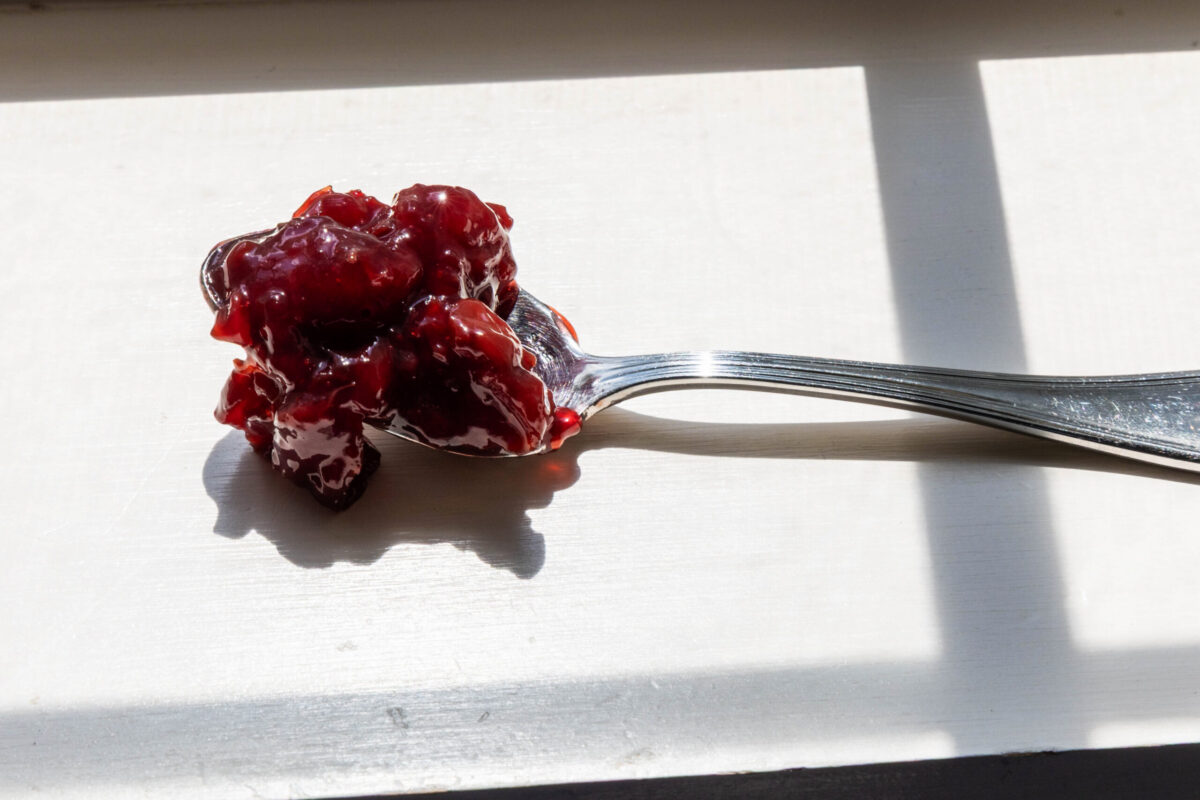
The Blueberry and Tarragon is a very sophisticated take on a familiar jar: a deep, dark, jammy purple, with a milder scent than other berry jams, and a fruit-forward flavor that comes about as close to fresh fruit in a jar as anything I tasted.
The label says that the brand set out to make jam that tastes like blueberry cobbler. Mission accomplished.
Buy it at Sqirl.
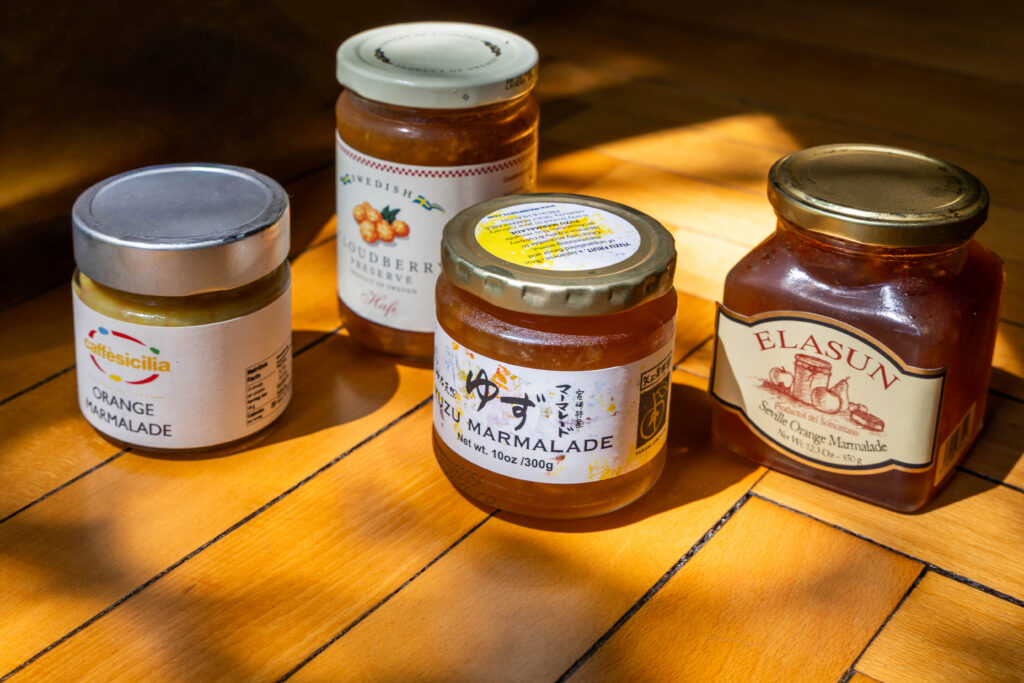
Sunlight, in a jar.
the mediterranean: sweetness with an edge
In the Mediterranean region, preserves begin behaving less like a breakfast condiment and more like something a chef might deploy at cocktail hour or dinnertime. Orange beside cheese or fish; strawberries with thyme; bitter citrus that refuses to charm anyone. We’re talking sun-soaked citrus and berries from Sicily, Liguria, and Spain, each with a very different idea of what a marmalade or jam should be.
9. caffè sicilia — orange marmalade.
Corrado Assenza, the Noto pastry genius made famous by Chef’s Table, makes an orange marmalade of just two things: oranges and sugar. No pectin, no acid. It looks unlike any marmalade you know: barely cooked, light in color, thick and chunky with peel, the fruit looking as though it left the tree an hour ago.
My first thought was that it belonged beside a piece of fish, not on toast. Then I tasted it, and it surprised me: sweet, fresh, alive, far more versatile than its looks suggest. It might need a word of explanation from the host, but it would be equally at home at breakfast, at dinner, or on a cheese board. This is a chef’s marmalade, better than it looks; a rare and lovely thing that most clearly proves how far preserves can travel from the toast rack.
Order from Gustiamo.
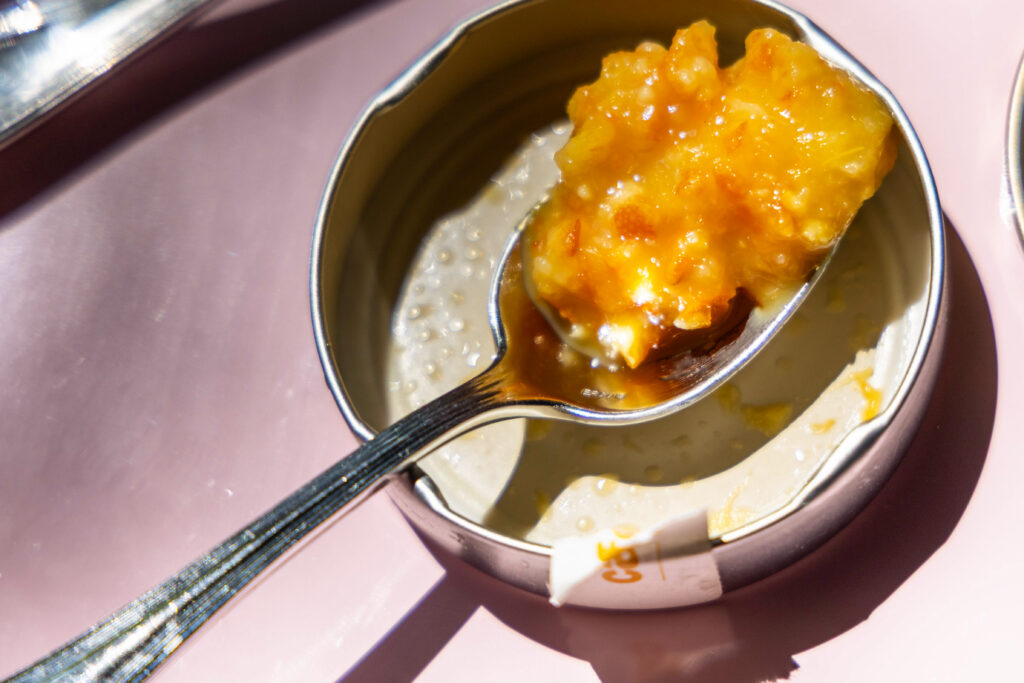
The peel is the point.
10. la strega di triora — strawberry & thyme.
Triora is a mountain village in Liguria famous for a sixteenth-century witch trial. That kind of backstory sells itself, but the jam earns its place on its own. Two sisters, Luana and Leila, with Luana’s husband Augusto, have made preserves here by hand in copper pots since 1986.
Their Strawberries and Thyme is a different, more sophisticated take on strawberry jam: quite liquid, more sauce than set, glossy and shining, with real depth of flavor and a savory whisper of herb. It is delicious, and it is versatile: as good with cheese as with something sweet. This is a jar for the more adventurous palate.
Find it at Formaggio Kitchen.
11. elasun — seville bitter-orange marmalade.
Two sisters in the Somontano region of Spain make this Seville bitter-orange marmalade, and it arrives wrapped like a gift from a family kitchen: a little paper cover, a flower, a length of white ribbon.
The scent alone is transporting: sunny, citrusy, sweet, the smell of high summer. The color is a pretty amber, the texture a proper traditional marmalade thick with peel.
And then you taste it, and it is bracingly bitter. Sharp, uncompromising, exactly what a Seville marmalade is meant to be. The aroma promises sweetness; the palate hands you something much sterner. I would give it to the person who truly loves bitter marmalade. For them, the severity is the luxury.
For everyone else, the beautiful ribbon and sweet scent may constitute false advertising.
Order from La Tienda.
farther afield: the jars worth crossing borders for
Now the map widens: Japanese yuzu, Saudi dates, Lebanese strawberries with rose petals and a Swedish berry that grows wild in the far north. These are the four jars many “best jam” lists never seem to reach, which is reason enough to keep going.
12. yakami orchard — yuzu marmalade.
In Miyazaki, on the southern coast of Japan, a family grows its own yuzu and turns it into a marmalade with three ingredients: yuzu, sugar, and honey. A purist’s dream.
It pours a pretty, light orange, thick with peel and fruit in the proper marmalade way, and it smells gently floral. Eating it is a genuine pleasure — chewy with fruit and peel, fruity and sweet without ever being overpowering, the balance of flavor and texture just right. If a classic orange marmalade is familiar, this is its more interesting, more aromatic cousin: a step up in novelty and origin, and a lovely gift idea.
Buy it at igourmet.
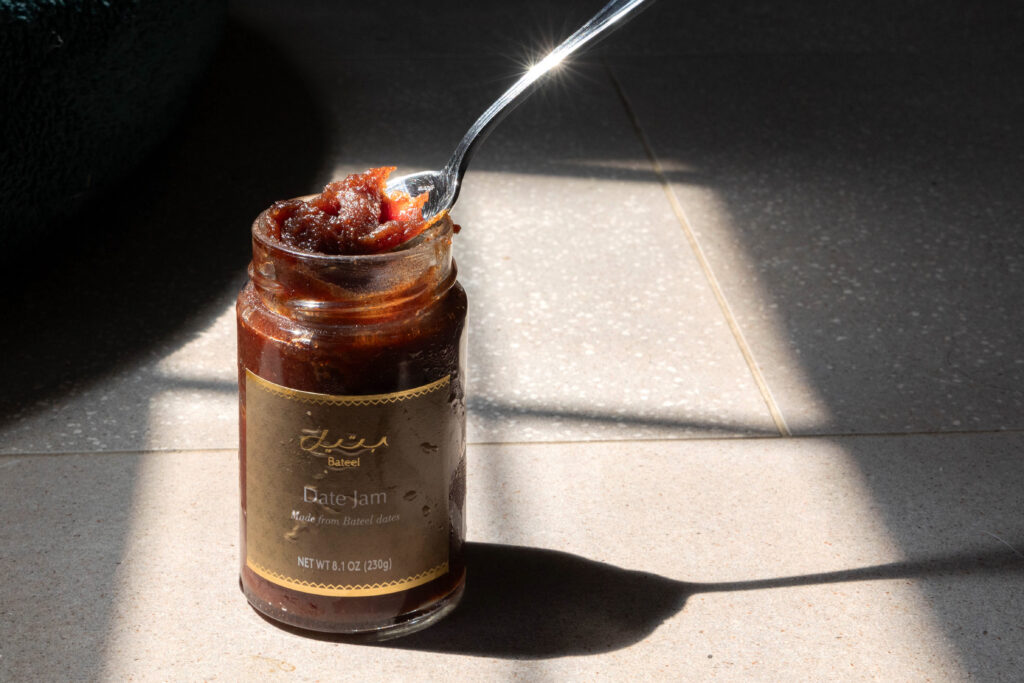
A different kind of preserve.
13. bateel — date jam.
Bateel grows its own organic dates on a farm in Al Ghat, Saudi Arabia, and turns them into a date jam that comes in one of the most beautiful jars on this list: elegant, restrained, quietly luxurious.
The jam is thick, closer to a paste than a spread, with a mild, pleasant scent of fruit and spice and a flavor that sits halfway between sweet and savory. Candidly, I’m not a devotee of dates, so I am not this jar’s ideal audience. But I can see exactly where it belongs: on a cheese and charcuterie board, where its depth and its Gulf provenance make it a genuine conversation piece. If you love dates, this is a special item.
Order from Bateel.
14. mymouné — strawberry with rose petal.
On a mountainside below Mount Sannine in Lebanon, a family has made preserves by hand since 1989 — rose-petal jams, strawberry and rose, figs with walnuts — cooked in small open batches, uncovered, with no preservatives. They have won a shelf of awards, and they carry a Levantine tradition almost no other maker on an American list can offer.
As I write, Mymouné is very hard to find in the United States. So think of this as the one to seek out — set an alert, ask your grocer, be patient. Some jars are worth waiting for, and this is one.
Add your name to the “notify” list at Kalustyan’s.
15. hafi — wild cloudberry.
And finally, cloudberry. Hafi is a Swedish family house that has made cloudberry preserve since 1938 from a berry that cannot be farmed — wild cloudberries, golden and tart, hand-picked in a short Arctic summer from the bogs of northern Sweden, and virtually unknown on this side of the world.
This is the jar where curiosity outran appetite for me.
It is intensely textured: grainy and seedy, thick with fruit and peel, with a mild citrusy tartness underneath. I found myself wishing for less work between spoon and pleasure. But dismissing it on those grounds would miss what makes it worth tasting.
Almost everyone knows strawberry. Most of us have opinions about marmalade. Cloudberry is a different proposition: you open the jar because there is still something thrilling about discovering a fruit you have never met. This is a jar you buy for the wonder of it.
Find it at igourmet.
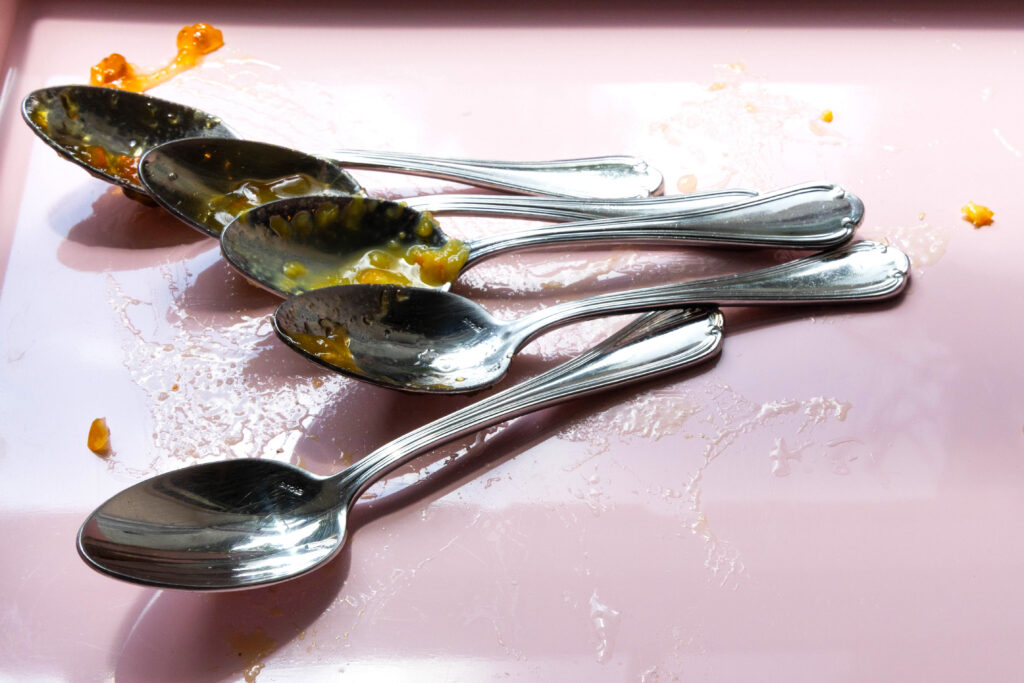
The tasting leaves evidence.
the practical pleasures: buying, giving and bringing it home
A few practical notes, because I bought and shipped these jars myself and learned that luxury food packaging can have a rather strained relationship with the word “luxury” when shipped.
If you are sending jam directly as a gift, American Spoon offers a proper gift presentation for an additional fee. Sqirl’s products also arrived gift-ready, with no additional fee. Several of the others are beautiful once liberated from their very ordinary shipping materials. Bateel in particular looks luxurious once out of the shipping box.
For a gift that is an easy yes, I would choose Raphaël Quince, Miot Cœur d’Amour or Yakami Yuzu. All three are sufficiently unusual to feel considered, and sufficiently delicious to avoid becoming the kind of gift the recipient praises politely and then stores away until moving day.
And for travelers, the jam shelf is worth inspecting wherever you go. Some of the great discoveries in this category may never have an efficient American distribution strategy, which is not the worst excuse I have heard for making room in a suitcase.
For travelers returning to the United States, USDA APHIS says commercially processed marmalades, preserves and jellies are generally admissible from all countries, although agricultural products should be declared and remain subject to inspection. TSA treats jam and jelly as liquids or gels: containers larger than 3.4 ounces should go in checked baggage rather than a carry-on.
where to go next at the breakfast table
If this tasting has you reconsidering the first meal of the day, keep going. The best gourmet craft butter may be jam’s most obvious co-conspirator; extraordinary artisanal honey makes the case for terroir before breakfast; and luxury maple syrup answers the equally pressing question of whether pancakes deserve better. They do.
Fifteen jars, nine countries, one very lucky spoon. Every one of them capable of bringing a little more joy to an ordinary meal — and a few, I suspect, will change the way you think about what a jar of fruit can be.
The Extra Fine argument remains the same: the ordinary thing, chosen better. Not more. Better. Spoons in the air! Let’s go.
faqs:
What are the best luxury jams to buy online?
After tasting fifteen jams, preserves and marmalades from nine countries, my three favorites are Confitures de Raphaël Quince from France, Maison Francis Miot Cœur d’Amour from France and Girl Meets Dirt Rhubarb Lavender from Orcas Island, Washington. Other standouts include Tiptree Little Scarlet Strawberry, London Borough of Jam Chuckleberry, Sqirl Blueberry & Tarragon and Caffè Sicilia Orange Marmalade.
What makes a jam or preserve high quality?
A high-quality jam should taste first and foremost of its fruit. Look for clear fruit character, good provenance, balanced sweetness and acidity, appealing texture and an ingredient list appropriate to the maker’s technique. Whole or identifiable fruit and a strong aroma can be useful signals, but there is no single formula: excellent preserves can be smooth or chunky, sweet or tart, made with or without added pectin.
Is pectin bad in a luxury jam?
No. Pectin is a naturally occurring substance in fruit, and added pectin is not evidence that a jam is inferior. The National Center for Home Food Preservation notes that added pectin allows shorter cooking and can result in more natural fruit flavor. Some fruits naturally contain enough pectin to set without supplementation; others benefit from it. The better question is whether the finished preserve tastes vividly of fruit rather than sugar or gel.
What is the difference between jam, preserves and marmalade?
Jam is generally made from crushed or chopped fruit cooked with sugar until thickened. Preserves often retain larger pieces or whole fruit in a softer set. Marmalade is made from citrus and characteristically includes peel. The terms vary somewhat by country and producer, so texture and ingredient list are often more informative than the name on the label.
What is the best jam to give as a luxury food gift?
Confitures de Raphaël Quince is my first choice because it is unusual, beautiful and immediately delicious. Maison Francis Miot Cœur d’Amour is another excellent gift because its apricot, mango, peach, passion fruit and Champagne blend feels special without becoming challenging. Yakami Orchard Yuzu Marmalade is particularly good for someone who enjoys Japanese food and citrus. For direct shipment, American Spoon and Sqirl offered especially good presentation in my own orders.
Are artisanal jams worth the higher price?
They can be. The point is not that every small-batch jar automatically beats the supermarket. The worthwhile ones give you something perceptibly different: a specific fruit variety, stronger aroma, more interesting texture, unusual provenance or a flavor combination you are unlikely to encounter in a mass-market preserve. Jam is also one of Extra Fine’s favorite forms of micro-luxury: the price difference is relatively modest, while a great jar can improve a surprising number of breakfasts and cheese boards.
Can you bring jam and preserves back to the United States from another country?
Generally, yes. USDA APHIS lists commercially processed marmalades, preserves and jellies as generally admissible from all countries, but travelers should declare agricultural products and present them for inspection when required. For air travel, TSA considers jam and jelly liquids or gels, so containers over 3.4 ounces belong in checked luggage rather than carry-on bags.