
The best novels about hurricanes are not really about weather. They are about pressure: what happens when fate, climate, family, class, race, infrastructure, chance, and private delusion all arrive at the same time. This Reading Room guide gathers eight literary novels about hurricanes and their aftermath, including Their Eyes Were Watching God, Salvage the Bones, The Floating World, After the Hurricane, Hurricane Girl, None of This Would Have Happened If Prince Were Alive, and The Displacements. Together, they show the hurricane not as backdrop, but as revelation.
The Reading Room is Dandelion Chandelier’s curated literary salon — monthly, seasonal, and thematic reading lists chosen for beauty, intelligence, emotional resonance, and the mood of the moment.
At a glance: novels about hurricanes • storm season reading • Hurricane Katrina fiction • Hurricane Maria fiction • climate fiction • fate and chance • literary fiction about survival
storm season: books about hurricanes and their aftermath
There are a few things late summer reliably brings: sunflowers, state fairs, corn on the cob, a little sand still hiding in the shoe, and the uneasy knowledge that the Atlantic hurricane season has entered its more serious mood. According to NOAA, Atlantic hurricane season runs from June 1 through November 30, but late August and September are when the weather begins to feel less theoretical.
Which may be why hurricane novels have such peculiar force. A storm in literature is never merely a storm. It is fate arriving with bad manners. It is climate with a plot. It is history knocking down the door, often the very door someone could not afford to reinforce in the first place.
For the broader late-summer shelf, see Sunflower Days: The Reading Room for August, where August remains golden, abundant and very much summer. And for the larger seasonal arc, The Season of Being Seen: The Reading List for Summer, our summer Reading Room roundup, traces the season from June’s ceremonies to July’s water and August’s warm nights. This storm-season Reading Room is different. It belongs to the moment when summer’s light is still high, but the barometer has started to speak.
the tempest
Hurricanes in fiction can mean many things. In Shakespeare’s The Tempest, the storm is theatrical weather: a staged rupture, a mechanism of exile, power, revenge and transformation. In modern literary fiction, the hurricane often does harsher work. It reveals who had shelter, who had warning, who had money, who had choices, who was already living in a storm before the wind arrived.
And yet our favorite hurricane novels are not only catastrophic. They point, sometimes grudgingly, toward endurance. Life may knock us sideways. The old house may not hold. The map may stop making sense. We may have done nothing to deserve the weather, and still there we are: soaked, stunned, alive, and asking the only question left.
What now?
why hurricanes make such powerful literary metaphors
The hurricane is one of literature’s most useful catastrophes because it refuses to behave like a symbol alone.
It is physical. It rips roofs, floods roads, scatters families, destroys records, reveals rot, shuts down power, and leaves people waiting for institutions that may or may not arrive. It is also metaphysical: chance, punishment, cleansing, rupture, fate, consequence, God, government, bad luck, climate, and the old human fantasy that disaster might leave behind a clean slate.
Of course, storms rarely do anything so tidy.
A hurricane novel is usually a novel about aftermath. The days before matter, because people make choices while still imagining they have time. The storm matters, because the body must survive it. But the real literature begins after: when the water recedes, the news cycle moves on, the roads are gone, the mother is missing, the house is ruined, the marriage has cracked, the family story has changed, and nobody gets to keep pretending that life was stable.
These eight novels use hurricanes as weather, plot, metaphor and moral instrument. They are about love, childhood, family, race, class, climate, home, memory, marriage, violence, comedy, infrastructure and survival. They are storm books, yes. But more than that, they are books about what remains.
storm as fate
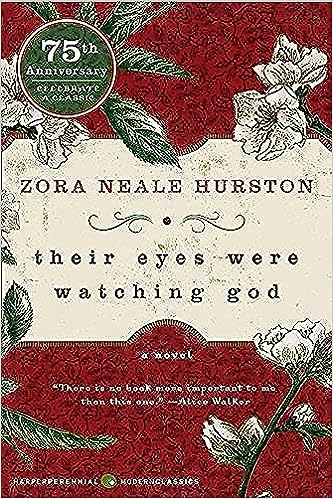
1. their eyes were watching god by zora neale hurston.
Zora Neale Hurston’s Their Eyes Were Watching God remains the canonical hurricane novel, the storm book from which so many others take their weather. Published in 1937, the novel follows Janie Crawford through marriage, love, selfhood, disappointment, speech and silence, until the hurricane arrives and makes human plans look very small indeed.
Janie and Tea Cake’s life together in the Florida Everglades has the radiance of something hard-won. Then the storm comes, and with it one of American literature’s great scenes of nature as indifference, terror and destiny. Hurston gives the hurricane cosmic scale without letting it become abstract. The water rises. The animals know first. The people wait too long. God, fate and chance all seem to be looking elsewhere.
What makes the novel so powerful is that the storm does not erase Janie. It tests the terms of her freedom, her love, her grief and her voice. By the end, she has not been spared. She has become someone who can tell the story.
Not all survival looks triumphant. Sometimes it looks like speech.
storm as childhood rupture
2. a high wind in jamaica by richard hughes.
Richard Hughes’s A High Wind in Jamaica begins with a hurricane in Jamaica and then becomes something stranger, darker and more psychologically slippery than a simple storm novel. After a hurricane damages their home, a group of English children are sent away from the island for safety. Naturally, safety has other plans. Pirates intervene. Childhood, that supposedly protected country, becomes suddenly porous.
The hurricane matters because it is the first rupture. It dislodges the children from the familiar and sends them into a world where adult categories — innocence, danger, guilt, responsibility — no longer hold still. Hughes’s great subject is not weather, exactly, but the unsettling unknowability of children and the stories adults tell themselves about innocence.
It belongs here because the storm is a door. Once opened, no one gets back to the old room.
storm as public failure
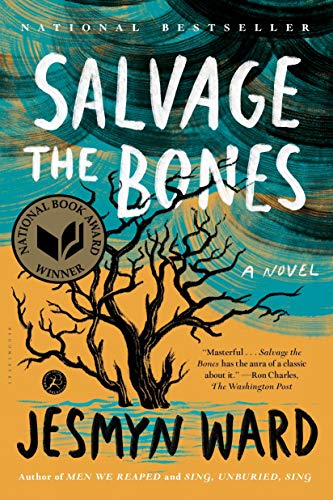
3. salvage the bones by jesmyn ward.
Jesmyn Ward’s Salvage the Bones is one of the essential American novels of Hurricane Katrina. Set in the fictional coastal town of Bois Sauvage, Mississippi, the novel unfolds over twelve days as fifteen-year-old Esch, newly pregnant, and her brothers move through poverty, loyalty, violence, hunger, care and fear while the storm gathers offshore.
The hurricane in this novel is not an isolated catastrophe. It arrives in a place already shaped by scarcity and structural neglect. Ward’s brilliance is in refusing to make the storm the only drama. The family’s life is already precarious; Katrina magnifies everything. Love, too. Esch and her brothers are often rough with one another, but the novel is full of fierce, embodied devotion.
The book’s title is exact. Salvage is not rescue. Salvage is what one does after damage, with whatever is left, because leaving everything in ruins is not an option.
4. the floating world by c. morgan babst.
C. Morgan Babst’s The Floating World is a post-Katrina New Orleans novel about family, guilt, memory, race, inheritance and the city after the water. The Boisdoré family has been scattered by Hurricane Katrina, and when the daughters return to New Orleans, they find a household and a city still suspended between before and after.
This is the novel to read for the aftermath — not the storm as spectacle, but the uncanny, ruined world that remains once the worst has happened and everyone is supposed to keep living. Houses hold secrets. Families become archives of blame. A city that has always understood water suddenly has to understand what it means to have been abandoned by systems meant to protect it.
If Salvage the Bones gives us the storm approaching, The Floating World gives us the flooded interior: rooms, minds, memories and histories still taking on water.
storm as disappearance
5. after the hurricane by leah franqui.
Leah Franqui’s After the Hurricane moves the storm story to Puerto Rico and Hurricane Maria, making the novel not only about disaster but about distance: geographic, familial, emotional and political. Elena returns to Puerto Rico after her father, Santiago, disappears in the aftermath of the hurricane. What begins as a search becomes an excavation of family history, identity and the things adult children do not know about their parents.
The hurricane here is both event and revelation. It exposes the fragility of infrastructure, but also the fragility of the stories families rely on to remain legible to one another. A father vanishes. A daughter returns. The island becomes a place not of easy homecoming, but of reckoning.
This belongs in the hurricane shelf because it understands a truth storm novels often return to: the weather may pass, but absence can keep moving through a family for years.
For a related reading path into fathers, daughters, inheritance and memory, see The Reading Room: A Father, A Daughter, a Story.
storm as domestic collapse
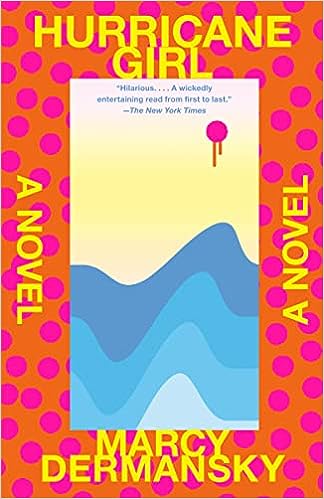
6. hurricane girl by marcy dermansky.
Marcy Dermansky’s Hurricane Girl is strange, sharp, funny, bruised and disorienting in a way that makes perfect sense for a novel about catastrophe arriving in several forms at once. Allison has fled an abusive boyfriend in Los Angeles and arrived on the East Coast looking for something like a new life. Then a hurricane destroys her North Carolina home. Then a terrible decision leads to a head injury. Then she goes home to New Jersey, where recovery looks suspiciously like another form of confusion.
The hurricane is important, but it is not the only storm. Dermansky is interested in what happens when a woman who has already been destabilized is asked to narrate her own life while concussed, grieving, desiring and trying to find a place that feels like safety. The result is comic without being light, and painful without asking to be admired for its pain.
It is a hurricane novel for anyone who has ever suspected that “starting over” is a phrase invented by people who have not tried it recently.
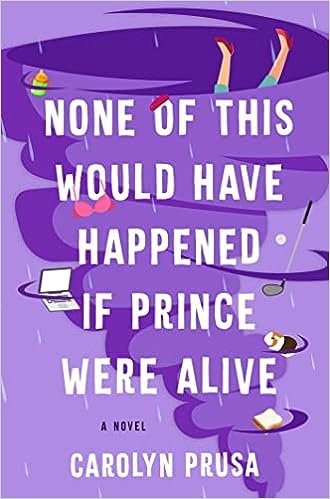
7. none of this would have happened if prince were alive by carolyn prusa.
Carolyn Prusa’s None of This Would Have Happened If Prince Were Alive is the great comic-relief entry on the list, though the relief comes with teeth. Ramona is trying to manage children, work, marriage, motherhood, evacuation logistics and an approaching hurricane when she discovers her husband has been unfaithful. A Category Four storm is coming for Savannah, and yet somehow it is only one item on the list.
The novel works because it understands the absurdity of modern domestic crisis. The literal storm is bearing down, but Ramona is already inside another one: the storm of expectation that working mothers manage everything, anticipate everything, pack everything, forgive everything and keep snacks available while doing it.
What would Prince do? Hard to say. But one suspects he would not tolerate this level of incompetence from the supporting cast.
storm as climate displacement
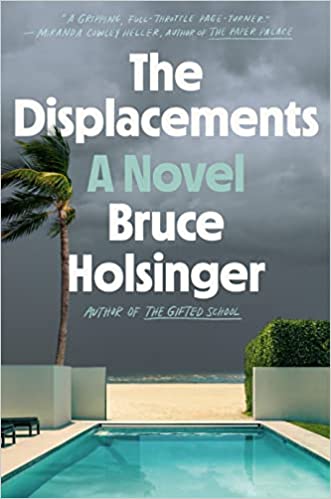
8. the displacements by bruce holsinger.
Bruce Holsinger’s The Displacements turns the hurricane novel toward climate fiction, privilege, displacement and the uncomfortable future tense of American disaster. The novel imagines a catastrophic Category 6 hurricane, Luna, destroying Miami and sending an affluent family into the machinery of emergency shelter, loss, bureaucracy, class collapse and national crisis.
Its power lies in the reversal. The characters who once imagined themselves insulated by money, geography, education and taste discover that climate does not respect the arrangements of the fortunate. But the novel is also keenly aware that displacement is not new for everyone. Disaster may democratize fear, but it does not democratize consequences.
This is the contemporary storm novel as systems test. What happens when the house is gone, the status markers fail, the government is overwhelmed, and home becomes not a place but a question?
how to build a storm-season bookshelf
A storm-season bookshelf needs more than one kind of weather.
Start with the classic: Their Eyes Were Watching God, the hurricane novel that understands fate, love, voice and survival in one magnificent sweep. Add A High Wind in Jamaica for childhood rupture and the eerie instability of innocence after disaster.
Then move into Katrina: Salvage the Bones for the days before the storm and The Floating World for the haunted, flooded aftermath. Together, they make clear that disaster is never only meteorological. It is also social, racial, economic, familial and political.
For Puerto Rico, read After the Hurricane, where Hurricane Maria becomes the catalyst for a daughter’s search for her missing father and a deeper inquiry into family, place and belonging.
Then bring the storm indoors. Hurricane Girl and None of This Would Have Happened If Prince Were Alive both use hurricane weather to expose private collapse: trauma, marriage, motherhood, comedy, injury, exhaustion and the difficult work of choosing what comes next.
Finally, add The Displacements for the climate-era shelf: a speculative but uncomfortably plausible novel about what happens when weather, class and government failure collide.
A good hurricane reading list should not be disaster tourism. It should not treat storms as atmosphere. It should ask what the storm reveals — and who was already living in the wreckage before the wind arrived.
final thoughts: what remains after the weather
The literature of hurricanes is not really about wind.
It is about the moment when the world stops pretending to be orderly. The roof lifts. The road vanishes. The phones fail. The person you trusted disappoints you. The parent disappears. The government does not arrive in time. The house becomes evidence. The family story breaks open.
And then, somehow, morning comes.
The best hurricane novels do not offer the false comfort of a clean slate. They know that storms leave mud, mold, grief, debt, memory, bureaucracy, silence and bad dreams. But they also know that aftermath is where character becomes visible. Not character in the moralizing sense. Character as contour. What remains when the surface has been stripped away.
That is why we return to these books as storm season gathers. Not because we want catastrophe. Because we want language for contingency. Because we want to know how people survive what they did not choose. Because we understand, sooner or later, that everyone lives downwind of something.
Grab a book. Check the forecast. Keep the good flashlight where you can find it.
faqs:
what are the best novels about hurricanes?
The best novels about hurricanes include Their Eyes Were Watching God by Zora Neale Hurston, Salvage the Bones by Jesmyn Ward, The Floating World by C. Morgan Babst, After the Hurricane by Leah Franqui, Hurricane Girl by Marcy Dermansky, and The Displacements by Bruce Holsinger. These books use hurricanes as plot, metaphor and revelation.
why are hurricanes powerful metaphors in literature?
Hurricanes are powerful literary metaphors because they combine physical danger with moral exposure. In fiction, a hurricane can reveal fate, chance, class inequality, family fracture, racial injustice, failed infrastructure, climate vulnerability and the illusion of control. The storm matters, but what it reveals often matters more.
what is the most famous hurricane novel?
Their Eyes Were Watching God by Zora Neale Hurston is arguably the most famous hurricane novel in American literature. Its hurricane scene in the Florida Everglades remains one of the most powerful literary depictions of nature, fate, love, fear and survival.
what novels are about Hurricane Katrina?
Important literary novels about Hurricane Katrina include Salvage the Bones by Jesmyn Ward and The Floating World by C. Morgan Babst. Salvage the Bones focuses on a Mississippi Gulf Coast family in the days before Katrina, while The Floating World explores a New Orleans family and city in the storm’s aftermath.
what novels are about Hurricane Maria?
After the Hurricane by Leah Franqui is a literary novel shaped by Hurricane Maria and its aftermath in Puerto Rico. The book follows a daughter returning to Puerto Rico to search for her missing father, turning the storm into a story about family, disappearance, identity, memory and home.
what is a good hurricane novel that is not too grim?
None of This Would Have Happened If Prince Were Alive by Carolyn Prusa is the lightest and funniest book on this hurricane reading list, though it still has emotional bite. It uses an approaching hurricane to explore marriage, motherhood, work, betrayal and the absurd logistics of modern life under pressure.
are hurricane novels a form of climate fiction?
Some hurricane novels can be read as climate fiction, especially contemporary works like The Displacements by Bruce Holsinger. Climate fiction does not have to be futuristic; it can also explore how extreme weather, displacement, government response, class, race and infrastructure shape ordinary lives right now.