

New York Spring 2026 Culture Guide
The Culture Index is Dandelion Chandelier’s ongoing series mapping the institutions, events, ideas, and cultural signals shaping the moment.
At a glance: March–May 2026 • New York City • 30 events across Manhattan, Brooklyn, Queens, the Bronx, and Governors Island • the strongest signals this season are institutional reinvention, Firebird fever, Black cultural force, culture without walls, urban whimsy, and a canon under pressure.
Spring 2026 in New York is defined by six cultural signals: institutions trying on a new look, a citywide Firebird motif, major Black cultural force, outdoor culture without walls, urban whimsy, and classic works returned under pressure. This guide maps 30 events across museums, public art, dance, theater, music, gardens, and opera that best explain what New York culture looks like now. And for more on how New York awakens in spring, bookmark our post Everyone Always Talks About Paris in Spring.
the cultural signals of spring 2026 in new york
I’m less interested in a culture calendar as a list than in what it reveals about the city’s state of mind, and spring 2026 in New York is unusually revealing. I photograph New York obsessively, and I pay closest attention to the moments when culture changes the way the city itself feels — when a plaza becomes a stage, a museum becomes a social signal, or a walk turns into an argument about art, memory, glamour, or power. That is the spirit of this guide. These are not simply things to do in New York this spring. They are the museum exhibitions, public art installations, dance performances, theater openings, and opera productions that best explain what New York culture looks like now.
If you want the global counterpart to this city-specific edit, start with The Luxury Almanac: March 2026, then come back downtown. For the new book releases and timeless reads that partner perfectly with this season, read Fresh Ink: March 2026 and The Reading Room: March. For the urban mood around the calendar, our City in Bloom archive is the natural companion, and for the rhythm behind all of it, there is always our weekly newsletter, The Blue Hour Review.
If you truly want an immersive spring experience, bookmark our essay on how artists have portrayed the illusions and reality of spring, April Makes Liars of Us All. Or stroll through the lilacs in bloom at the NYBG with our essay Inhale, and Suddenly It’s Spring.
trying on a new look

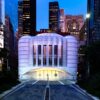
An arch, a season, an entrance.
New York’s institutions are spending spring 2026 reintroducing themselves — through expansions, restorations, major surveys, and high-stakes declarations of relevance.
1. the new museum, expanded.
The New Museum is reopening in a way that feels less like an expansion than a personality reveal. Its OMA-designed addition gives the institution dramatically more room to move, but the real point is not square footage. The point is what the museum is doing with that visibility: opening with new humans: memories of the future and wrapping the building in Sarah Lucas and Tschabalala Self. This is not the modest language of maintenance. It is the language of ambition, and New York tends to respond well when a museum is willing to be this explicit about wanting attention. If you see only one major museum opening in New York this spring, this is a very strong candidate. The expansion, new humans, venus victoria, and art lovers all open on March 21, 2026.
2. the frick, in full flirtation mode.
The Frick understands something useful about old masters: they come alive when you stop treating them as moral homework. gainsborough: the fashion of portraiture reframes the painter through dress, display, and social performance, which is exactly the right angle for a house that has always trafficked in atmosphere as much as scholarship. This is also the Frick’s first full warm-weather season back in its renovated home, and that matters. The whole institution feels as if it has put on a beautifully cut coat and stepped back into the room. A museum can be intellectually serious and still know how to flirt, and the Frick remains one of New York’s best examples. The exhibition opened on February 12, 2026, and closes on May 25, 2026.
3. the delacorte, restored.
The return of the Delacorte is one of the season’s warmest civic stories. Shakespeare in the Park is already one of New York’s most beloved cultural rituals, and a revitalized theater only heightens the sense of return. Choosing romeo and juliet is smart, because the title is so legible that the event begins working before anyone sits down. This is not just theater. It is a public reminder that one of the city’s most democratic institutions still understands scale, romance, and timing. It is also one of the best things to do in New York this spring if you want culture and atmosphere in the same evening. romeo and juliet runs from May 22, 2026, through June 28, 2026.
4. the whitney, making its case.
The Whitney Biennial is one of New York’s recurring acts of self-definition, which is why it belongs in this section even though the museum itself is not new. Every Biennial is an argument about what contemporary art feels like now, who matters, and which anxieties or fascinations are shaping the field. In spring 2026, that argument lands in a city already obsessed with reinvention, so the whole thing feels especially charged. The advantage of the Biennial is that it works at multiple levels at once: serious art people will quarrel with it, casual visitors will use it to orient themselves, and everyone else will know they should probably go. That is usually the mark of a truly important exhibition. Whitney Biennial 2026 opened on March 8, 2026, and remains on view through August 23, 2026.
5. ps1 scans the room.
If the Whitney Biennial is a public declaration, greater new york is a sharper intelligence report. MoMA PS1’s survey of artists living and working in the New York area always matters because it asks a more local and, in some ways, more revealing question: who feels newly alive in the city right now. The 2026 edition arrives during the museum’s 50th anniversary, which gives the whole thing a useful double charge of self-awareness and forward momentum. It is also one of the best reasons on this list to make a Queens pilgrimage. The show widens the geography of the season and reminds us that the best New York museum exhibitions in spring 2026 are not a Manhattan-only story. greater new york 2026 opens on April 16, 2026.
firebird fever
Across ballet and orchestral music, Stravinsky’s firebird has become the season’s unlikely recurring motif: glamorous, mythic, volatile, and impossible to miss.
6. abt goes mythic.
American Ballet Theatre’s spring programming is already inclined toward grandeur, but firebird gives that instinct a particularly vivid form. Stravinsky’s score is all danger and radiance, and in spring 2026 it reads less like a famous ballet choice than a citywide mood. That is what makes this more than repertory maintenance. ABT is one of several institutions suddenly drawn to a story about transformation, spectacle, and rebirth, and that kind of recurrence is what turns a season into a pattern. Even if you do not live in the ballet world, the symbolism is clear enough to pull you in. ABT’s firebird appears in the spring season in March 2026, with performances centered on March 21.
7. dance theatre of harlem takes wing.
Dance Theatre of Harlem’s firebird gives the season’s recurring obsession a richer and more particular cultural charge. The company’s Caribbean-inflected version is not just an adaptation; it is one of those works that changes the temperature of a classic. Geoffrey Holder’s design remains sumptuous, and the production carries both theatrical delight and historical texture. In a citywide season of Firebird sightings, this one feels especially resonant. It also belongs on any shortlist of New York dance and theater spring 2026 highlights because it is both visually ravishing and conceptually alive. Dance Theatre of Harlem performs at New York City Center from April 16 through April 19, 2026.
8. city ballet joins the fever.
Once New York City Ballet folds firebird into its spring season, the pattern stops looking accidental. At NYCB, the ballet arrives wrapped in company history, Lincoln Center polish, and the special glamour of watching a fairy tale staged with institutional confidence. That gives the work a slightly different emotional flavor than it has elsewhere on this list. It is less insurgent, more canonical, but no less revealing about the city’s taste right now. One of the pleasures of a season like this is being able to compare how different institutions solve the same myth. New York City Ballet’s spring 2026 season runs from April 21 through May 31, 2026, and includes firebird within that span.
9. the philharmonic fans the flames.
When the New York Philharmonic joins the ballet companies in embracing Stravinsky, firebird becomes a full-city signal. Gustavo Dudamel conducting the work gives the recurrence extra glamour and authority. This is also a useful reminder that the score itself has enough force to stand independently of choreography. If you want the season’s myth stripped down to orchestral voltage, this is where to go. Spring 2026 in New York has a soundtrack, and for a few nights it is all glitter and combustion. Dudamel conducts Stravinsky’s firebird from April 30 through May 2, 2026.
black cultural force
This spring, Black artistic authorship is not a secondary thread but one of the city’s main cultural engines, shaping theater, public art, jazz, photography, and public memory.
10. august wilson returns to broadway.
A revival of joe turner’s come and gone belongs on any serious New York theater list, but in spring 2026 it feels especially central. August Wilson is not decorative prestige. He is one of the playwrights through whom the country still has to understand itself, and Broadway is treating the revival accordingly. The production lands in a season already energized by Black cultural force across multiple mediums, which gives it more than ordinary importance. This is not a polite heritage event. It is one of the places where the city’s dramatic imagination is most alive this spring. Previews begin on March 30, 2026, opening night is April 25, 2026, and the limited run closes on July 12, 2026.
11. derek fordjour takes the high line.
Derek Fordjour’s new High Line sculptures do something public art often fails to do: they feel intellectually sharp without losing theatrical presence. His painted bronze figures draw on professions historically freighted with aspiration in African American life, and that tension is part of the work’s force. The fact that they join backbreaker double matters, because it turns the site into an extended Fordjour environment rather than a passing cameo. This is exactly the kind of art that rewards both a quick encounter and a second look. It also strengthens the case that Black visual authorship is helping define the public face of New York this spring. Fordjour’s commissions roll out as part of High Line Art’s spring 2026 program.
12. jazz at lincoln center looks outward.
african routes clarifies the season’s logic in a single title. Danilo Pérez, Godwin Louis, and the Jazz at Lincoln Center Orchestra with Wynton Marsalis bring Afro-Caribbean, Latin, and West African currents into the center of Lincoln Center’s spring calendar. That makes the season feel bigger, less provincial, and more rhythmically alive. It also gives this guide a music event that is neither classical formality nor background pleasure. This is where diasporic energy becomes audible, exuberant, and impossible to mistake. The concert runs from March 12 through March 14, 2026, at Rose Theater.
13. seydou keïta sharpens the gaze.
The Brooklyn Museum’s seydou keïta: a tactile lens is one of the most elegant photography exhibitions in New York this spring. Keïta’s portraits are famous for their beauty, but what makes them especially useful in 2026 is the way they reopen questions of self-fashioning, modernity, and representation. In a season preoccupied with image culture, that matters. This is not simply a handsome show to slot into a list. It is part of the argument that Black image-making is helping shape the visual intelligence of the city right now. The exhibition opened on October 10, 2025, and was extended through May 17, 2026.
14. the aids memorial goes augmented.
kinfolk: portals of remembrance is one of the most moving works on this entire list. At the New York City AIDS Memorial, augmented-reality monuments by Derek Fordjour, Egyptt LaBeija and Tourmaline, and Jacolby Satterwhite turn remembrance into a layered public encounter. The project centers Black and Brown figures within the history of HIV/AIDS activism and loss, and that emphasis feels both corrective and visionary. It also expands the vocabulary of memorial art in ways that feel genuinely contemporary rather than merely technological. This is one of the season’s strongest examples of moral seriousness meeting formal invention. The project is on view through April 30, 2026, at the memorial in the West Village.
culture without walls

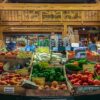
The floor show.
Some of the city’s most interesting cultural experiences this season are happening outdoors — on promenades, islands, waterfronts, plazas, and landscaped corners of the boroughs. That is one reason this new york spring 2026 culture guide feels so specifically urban: the city itself keeps behaving like a venue.
15. a buddha rises on the high line.
Tuan Andrew Nguyen’s High Line Plinth commission is one of the most arresting public works of the season. The monumental Buddha pays homage to the Bamiyan Buddhas destroyed by the Taliban, which gives the piece both spiritual gravity and political memory. Installed on one of the city’s busiest promenades, it turns an ordinary walk into an encounter with loss, endurance, and cultural afterlife. This is not just the latest High Line selfie magnet, though it will certainly be photographed. It is one of the works on this list most likely to change the emotional register of a familiar route. the light that shines through the universe debuts in spring 2026 and remains on view through fall 2027.
16. governors island doubles down.
Governors Island has become one of New York’s most persuasive arguments for serious art in the open air. a sudden gust of wind remains on view in Nolan Park and at Picnic Point, while Chakaia Booker’s brick house gives the island a permanent sculptural landmark with genuine staying power. Together they make the island feel less like a scenic outing and more like a cultural destination with its own visual logic. There is also something satisfyingly New York about taking a ferry to look at ambitious art in the harbor. This is where the city remembers that landscape can be part of the exhibition design. a sudden gust of wind remains on view through spring 2026, and brick house is permanently installed.
17. bargemusic comes back ashore.
Bargemusic has always been one of New York’s quieter glories, which makes its current reinvention especially appealing. After decades in a floating concert hall, it is now presenting chamber music at the Brooklyn Bridge Park Boathouse, a shift that changes the setting without losing the ritual. In some ways, the move makes the institution newly legible to people who somehow missed it the first time around. This is an excellent reminder that the best cultural events in New York this spring are not all loud. Some of them are exact, intimate, and improved by a little waterfront air. Bargemusic’s 2026 season at the Boathouse resumes in April 2026, with concerts resuming on April 5 and then continuing from April 11.
18. socrates stays scrappy.
Socrates Sculpture Park remains one of the city’s great free cultural pleasures, and up/rooted keeps that identity intact. The exhibition explores adaptation, regeneration, and resilience, which makes it particularly well matched to spring. It also does something important for the shape of this guide. It keeps Queens visible not as a token add-on, but as a site of real artistic experiment. The East River setting only sharpens the pleasure of seeing ambitious work without indoor formality. This is one of the best answers to the question of where to see public art in New York spring 2026 without buying a museum ticket. the socrates annual 2025: up/rooted is on view through April 6, 2026.
19. lower manhattan gets a banquet.
Gillie and Marc’s the wild table of love is unabashedly participatory, which is part of what makes it work. Installed at 140 Broadway, the bronze sculpture invites people to gather, sit, and occupy a Financial District plaza in a less transactional way. In another season this might feel a little too earnest, but spring 2026 is spacious enough to make room for sincerity. The work also gives Lower Manhattan a note of social play that it rarely earns on its own. Not every successful public artwork has to brood. Sometimes it can simply make a business district behave more like a city. The installation opened on February 27, 2026, and remains on view through August 2027.
20. the bronx refracts the landscape.
Bartow-Pell Mansion Museum is one of this list’s best hidden gems, and Graciela Cassel’s nature through kaleidoscopes gives it an especially persuasive spring reason to visit. The installation’s mirrored structures turn the grounds, the sky, and the viewer into part of the artwork. That makes the experience active rather than merely pretty. It also broadens the geography of the season in exactly the right way. Spring culture in New York should never stop at Manhattan and Brooklyn, and this is one of the entries that proves it. The installation remains on view through September 26, 2026.
For a more contemplative spring walk, Rain Falls on Green-Wood turns Green-Wood Cemetery into a rain-washed study in cherry blossoms, historic monuments, wet grass, and the solemn beauty of Brooklyn in bloom.
urban whimsy

Flower run.
Spring 2026 has also brought a lighter, stranger current to the city, with public works and garden installations that feel playful, luminous, and slightly surreal.
21. nybg leans into flower power.
The New York Botanical Garden’s flower power arrives with impeccable seasonal timing. After winter, New York rarely resists a theme this cheerful, and NYBG is wisely leaning all the way in. The exhibition promises floral exuberance, visual buoyancy, and exactly the kind of mood-lifting spectacle that helps spring feel official. It also gives the Bronx another major cultural marker on the calendar. If you want one event that feels like the season written in very large letters, this is a strong candidate. flower power opens on May 23, 2026, and runs through October 18, 2026.
22. brooklyn botanic garden makes bloom an occasion.
Brooklyn Botanic Garden’s seasonal highlights tours are a quieter pleasure, but they are exactly the kind of useful ritual that improves a culture calendar. They turn spring itself into a curated experience rather than assuming beauty can do all the work alone. That matters because BBG is at its best when it feels both cultivated and social. The tours also offer a gentle form of expertise, which is part of the appeal. This is one of the most civilized ways to spend an afternoon in Brooklyn this spring. The tours run Tuesday through Sunday from March 17 through May 24, 2026.

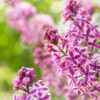
Pink, without apology.
23. central park gets a mythic insect.
Monira Al Qadiri’s first sun is exactly the kind of public sculpture that improves a corner of the city by making it slightly stranger. Installed at Doris C. Freedman Plaza, the work invokes Khepri, the scarab-faced Egyptian god of the morning sun, and turns that mythology into a glossy, iridescent urban object. The result is both ancient and futuristic, which New York usually handles very well. It is also one of the stronger examples on this list of whimsy with genuine conceptual muscle behind it. This is not background art. It is the sort of thing that can change how a threshold between Midtown and the park feels. first sun remains on view through August 2, 2026.
24. madison square park catches the light.
Larry Bell’s improvisations in the park is one of the season’s best arguments for light itself as a medium. The translucent structures change with the hour, the weather, and the viewer’s movement, which means the installation never quite repeats itself. That instability is part of the charm. It also makes Madison Square Park feel like a place for slow looking rather than just lunchtime traffic. Bell’s work can read as austere in other settings, but here it feels playful, generous, and unusually responsive to the city around it. The installation remains on view through March 29, 2026.
25. flatiron chases rainbows.
Charlotte Colbert’s Chasing Rainbows is a two-site public-art project with exactly the right level of theatricality for New York. The reflective 30-foot steel sculptures appear in Flatiron and the Meatpacking District, turning two already well-observed neighborhoods into part of the work’s performance. Their scale is commanding, but the dreamlike imagery keeps them from feeling merely monumental. What makes the project especially interesting is its connective ambition: it links two Manhattan districts rather than planting one object in one place and calling it a day. This is public art as urban gossip — shiny, oversized, and impossible not to mention. chasing rainbows opens on March 10, 2026.
the canon, under pressure

A soft-focus takeover.
This season’s revivals and repertory works are not arriving as dutiful classics, but as material being restaged, recharged, and put back into public argument.
26. abt turns to shakespeare.
ABT’s Othello belongs here because it takes one of the most loaded stories in the canon and gives it ballet’s full emotional machinery. In the context of spring 2026, it also sits beside firebird as part of the city’s appetite for grandeur, danger, and mythic feeling. Shakespeare in this register is not polite literature. It is jealousy, theatrical sweep, and doom staged at full scale. That makes it a perfect fit for a season determined to put familiar material back under pressure. It is also a reminder that dance can carry narrative violence as forcefully as theater can. othello appears in ABT’s spring season, with performances in March 2026.
27. proof gets a new pulse.
David Auburn’s Proof has always lived somewhere between intimacy and prestige, and that is exactly why a revival can work so well. In 2026, the production gains extra voltage from timing and casting, which make it feel less like a preservation exercise and more like a fresh emotional event. Ayo Edebiri and Don Cheadle star as father and daughter. The drama arrives in a spring crowded with revivals, but its scale is different — more cerebral, more domestic, more quietly dangerous. That difference helps it stand out. Not every canonical return has to thunder to be necessary. Previews begin on March 31, 2026, opening night is April 16, 2026, and the limited run closes on July 19, 2026.
28. miller returns to the pressure cooker.
Death of a Salesman is one of those plays New York cannot stop retesting against the present. The 2026 revival arrives with a cast that makes it feel less like reverence and more like risk, which is exactly what the play needs. Nathan Lane stars as Willy Loman; Laurie Metcalf is Linda Loman; Christopher Abbott is Biff Loman; and Ben Ahlers is Happy Loman. Arthur Miller’s portrait of failure, masculinity, and American delusion can easily congeal into duty. What keeps it alive is pressure, and this production appears intent on applying it. In a season full of institutions trying on new looks, it is useful to have one classic reminding us how old dreams can still collapse in public. Previews began on March 6, 2026, opening night is April 9, 2026, and the run closes on August 9, 2026.
29. cats comes back in heels.
Cats: The Jellicle Ball is exactly the kind of return that makes a culture season feel alive rather than respectable. It takes wildly familiar source material and runs it through ballroom glamour, nightlife voltage, and sheer theatrical nerve. That means the production is not simply reviving a title. It is arguing with it, dressing it up, and sending it back out to seduce a new audience. New York tends to love this kind of audacity when it lands. And when it does not land, it still gives everyone something to discuss afterward, which is often nearly as good. Previews begin on March 18, 2026, and opening night is April 7, 2026.
30. the met keeps things unstable.
The Metropolitan Opera closes this guide by refusing to let grandeur grow stale. Kaija Saariaho’s innocence and Gabriela Lena Frank’s el último sueño de frida y diego give the spring calendar two contemporary works with very different emotional temperatures and visual worlds. One is severe, haunted, and modern in its wound. The other is lush, painterly, mythic, and impossible to separate from the broader Frida conversation circulating through culture this season. Together they make the Met feel less like a mausoleum of past triumphs and more like a house still willing to gamble on new intensity. innocence runs in April 2026, and el último sueño de frida y diego runs in May and early June 2026.
If this spring has a governing mood, it is not bloom but display. Institutions are stepping back into the room as if dressed for attention. Public art is interrupting the day just enough to change it. Dance, theater, and opera are choosing heat over politeness. And the city is reminding us, once again, that culture in New York is best encountered socially — on foot, in motion, slightly overdressed, and with somewhere to go afterward.
That may be the most useful conclusion this post can offer. The best things to do in New York this spring are not simply the loudest or the newest. They are the ones that make the city feel more intelligible, more theatrical, and more fully itself.
If you’re wondering what to wear should you find yourself in NYC this spring, have a look at Carry-On Couture: The Spring 2026 City Edit. Read this piece alongside The Luxury Almanac: March 2026, keep City in Bloom close for the atmospheric side of the season, and let The Blue Hour Review handle the weekly mood shifts. For a few months, at least, New York looks magnificent in the act of seeing itself.
sources + further reading
- New Museum
- The Public Theater — Romeo and Juliet at the revitalized Delacorte
- Whitney Museum — Whitney Biennial 2026
- MoMA PS1 — Greater New York 2026
- Dance Theatre of Harlem — 2026 New York Season
- New York City Ballet — Spring 2026
- New York Philharmonic — Dudamel conducts Firebird
- Metropolitan Opera — 2025–26 Season
faqs: the culture index for spring 2026 in new york city
What are the best New York cultural events in spring 2026?
The strongest New York cultural events in spring 2026 include the New Museum expansion opening, Whitney Biennial 2026, Greater New York 2026 at MoMA PS1, the citywide run of Firebird across ABT, Dance Theatre of Harlem, New York City Ballet, and the New York Philharmonic, plus a major outdoor public-art season stretching from the High Line to Governors Island. Official listings confirm the Biennial is on view through August 23, 2026, Romeo and Juliet runs at the Delacorte from May 22 through June 28, 2026, and Greater New York 2026 is on view at MoMA PS1 in spring 2026.
Which museum exhibitions in New York are worth seeing this spring?
Start with the New Museum reopening, Whitney Biennial 2026, Greater New York 2026 at MoMA PS1, and the Frick’s Gainsborough exhibition, then add the Brooklyn Museum’s Seydou Keïta show if photography is part of your spring map. The Whitney and PS1 are especially useful because together they give you both a citywide survey and a more local reading of who feels urgent now.
Is spring 2026 a strong season for dance and music in New York?
Yes — unusually so. Dance Theatre of Harlem’s New York season runs April 16 to April 19, 2026, New York City Ballet’s spring season runs April 21 to May 31, 2026, and the New York Philharmonic’s Dudamel program featuring Stravinsky’s Firebird runs April 30 to May 2, 2026. Together, those dates make the citywide Firebird pattern especially clear.
What are the best outdoor public art installations in New York right now?
The strongest outdoor public art entries for this post are on the High Line, Governors Island, in Central Park, Madison Square Park, Flatiron, the Meatpacking District, and Socrates Sculpture Park. Those sites matter because they spread the season across multiple boroughs and make spring 2026 feel more like a citywide visual conversation than a museum-only one. Official institutional and commissioning pages remain the best sources for exact dates and locations.
Which events in this guide are outside Manhattan?
Several of the most worthwhile entries sit outside Manhattan, including Greater New York 2026 at MoMA PS1 in Queens, Socrates Sculpture Park in Queens, the Brooklyn Museum, Brooklyn Botanic Garden, Bargemusic at Brooklyn Bridge Park, the New York Botanical Garden and Bartow-Pell in the Bronx, plus Governors Island in the harbor. That wider geography is part of what makes the season feel distinctly New York rather than narrowly Midtown.