
Paris, Before You Go: The Books That Teach You How to See Paris
The Reading Room is Dandelion Chandelier’s monthly reading list of books worth reading now, curated across literature, poetry, history, culture.
At a glance: Paris • 26 essential books • novels, memoirs, style and culinary histories • the best books to read before visiting Paris.
Paris is a city that rewards preparation—not the logistical kind, but the intellectual kind. The right books recalibrate your eye before you ever step onto the pavement. They teach you what to notice: why a certain street feels theatrical, why Parisians linger over lunch, why the light inside a museum gallery feels different from the light outside. Reading about Paris doesn’t replace the trip; it sharpens it.
In three weeks, I’m going to Paris with three girlfriends. Which means this list of books to read before visiting Paris doubles as my own pre-departure ritual—the stack of books that helps the city come into focus before the plane lands. If this week’s Carry on Couture post is about what goes into the suitcase, consider this the cultural packing list: the novels, memoirs, and histories that prepare you to see Paris properly.
the best books to read before visiting paris
Some of these books explain the city. Some wander its streets. Others simply capture its atmosphere so perfectly that you arrive already half-acquainted. Together they form a reader’s map of Paris—one that leads through boulevards, apartments, museums, kitchens, and quiet little rooms where the city quietly reveals itself.
The best books to read before a trip to Paris include The Only Street in Paris by Elaine Sciolino, Impossible City by Simon Kuper, Paris to the Moon by Adam Gopnik, Giovanni’s Room by James Baldwin, and Let’s Eat Paris! by François-Régis Gaudry. Together they explain the streets, culture, museums, and food that define the city.
All photographs in this post are original images by Pamela Thomas-Graham.
Below: the books that make Paris legible before you go.
paris, on foot: streets, walks, and the city’s daily choreography

The best Paris plans begin with a long walk.
Some cities reward planning. Paris rewards walking—with just enough context to turn a stroll into a small private education.
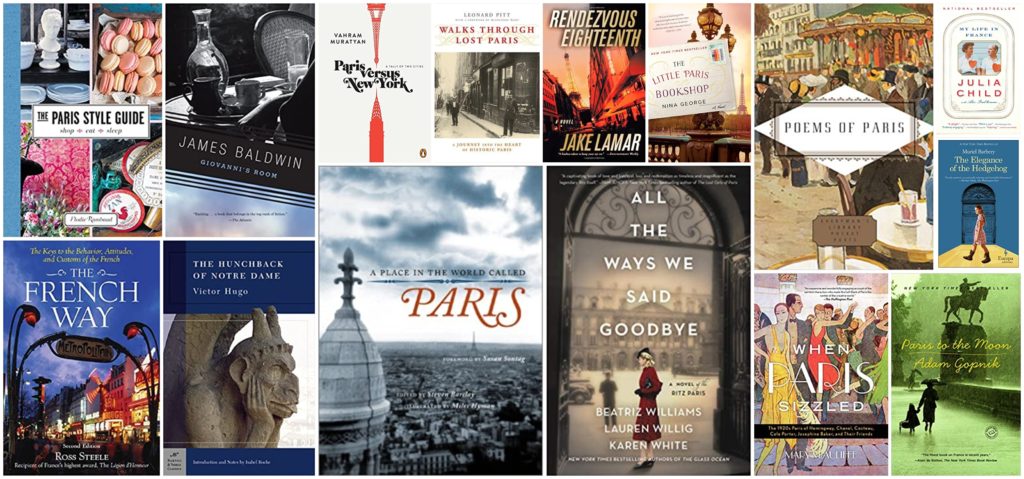
1. the only street in paris: life on the rue des martyrs — elaine sciolino.
This is the rare Paris book that actually smells like Paris—warm bread, wet stone, espresso, and a little rain on wool. Sciolino makes Rue des Martyrs feel like a living organism: a street with a pulse, a mood, and people who belong to it the way New Yorkers belong to their corner deli.
You’ll pick up neighborhood literacy—what to notice, how to linger, how to buy one perfect thing instead of six mediocre ones. It’s also a gentle argument for why street life is a kind of civic luxury. Read it before you go and you’ll arrive with the confidence of someone who already has a favorite boulangerie. Then, when you’re there, you’ll start building a Paris of your own—one address at a time.
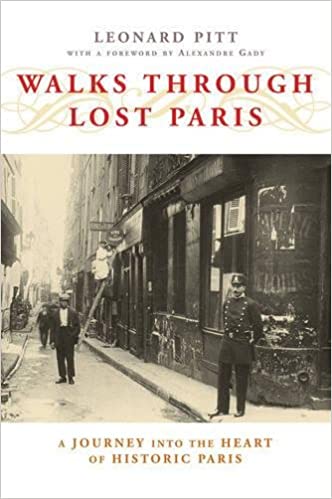
2. walks through lost paris: a journey into the heart of historic paris — leonard pitt.
If you love Paris partly because it feels composed—like a city with cheekbones—this is the backstage tour. Pitt shows you what was destroyed, what was rebuilt, and why the city looks the way it does (and why it still photographs like a film set). The structure is wonderfully practical: walking routes you can actually follow, with history folded in like a secret lining.
It makes Haussmann’s Paris legible, which changes how you see everything from boulevards to balconies. You’ll start to notice how power, beauty, and infrastructure were braided together. It’s for travelers who don’t just want “pretty,” they want “why.” And once you’ve read it, every stroll becomes a smarter stroll.
3. paris in stride: an insider’s walking guide — jessie kanelos weiner and sarah moroz.
This is Paris as a series of impeccably planned days—walking routes with taste, pacing, and a sense of romance that never turns corny. The maps are charming, yes, but the real pleasure is the curation: it nudges you toward markets, small galleries, and the kinds of streets where you suddenly feel like you’ve slipped into a better version of your own life.
It’s not trying to make you a tourist; it’s trying to make you a flâneur with standards. You can follow it strictly or use it like a mood board. Either way, it will upgrade your itinerary from “sights” to “sensibility.” This is the book you tuck into your tote and actually use.
paris, explained: how the city works now, and who it’s for

A city layered in centuries.
Paris is gorgeous, yes—but it’s also a system: culture, class, migration, money, mythmaking, and power. These books make the city legible.
4. impossible city: paris in the twenty-first century — simon kuper.
Kuper writes the Paris you feel but can’t always articulate: the city as a machine of real estate, ambition, politics, nostalgia, and reinvention. This is not the “Paris is always perfect” story; it’s the “Paris is complicated, therefore irresistible” story. It sharpens your understanding of neighborhoods, not as postcards, but as lived realities with winners and losers.
You’ll come away with better context for everything from what’s being renovated to who is being priced out. It’s the best kind of travel preparation: a brain upgrade, not a checklist. Read it and you’ll stop confusing charm with simplicity. And then, paradoxically, you’ll enjoy the charm even more.
5. paris noir: african americans in the city of light — tyler stovall.
This is essential Paris reading because it corrects the record—elegantly and with force. Stovall traces how Black American artists, writers, musicians, and intellectuals moved through Paris, sometimes finding room to breathe, sometimes finding new forms of constraint, always reshaping the city’s cultural life. It gives you a Paris that is not merely white, not merely French, and not merely a fantasy of escape.
The payoff is practical, too: it changes what you look for—addresses, clubs, neighborhoods, the lineage of influence. It’s a book that makes museum visits smarter and nightlife history richer. If your Paris is going to have any integrity, it needs this perspective. Read it before you go and you’ll arrive with better questions.
6. standing heavy — gauz’ (translated by frank wynne).
This novel is a precision instrument: funny, sharp, and quietly devastating. It shows Paris from the vantage point of West African security guards standing in luxury retail spaces—watching everything, underestimated by everyone. The genius is that it’s observational: how people move, what they buy, what they pretend not to see, what they think is invisible.
It’s Paris as commerce, spectacle, and labor, all on the same polished floor. Gauz’ writes with satirical lightness that keeps the book buoyant even when the themes are serious. It will recalibrate your understanding of “luxury” as a social system. You’ll never walk into a boutique quite the same way again.
7. the new paris: the people, places & ideas fueling a movement — lindsey tramuta.
This is Paris as it’s actually being lived now—creative, restless, and far more diverse than the old clichés allow. Tramuta connects food, design, neighborhoods, and cultural energy in a way that feels informed and fun. It’s not “Paris for beginners”; it’s Paris for people who already love Paris and want to love it better.
You’ll get a sharper sense of where the city’s new mythology is being written—small addresses, new voices, evolving rituals. It’s also deeply useful for trip planning without feeling like a guidebook. Think of it as cultural intelligence with excellent taste. If you’re traveling soon, this is one of the highest-ROI books you can buy.
paris, recounted: memoirs and biographies set in paris

Structure first, beauty second.
Paris doesn’t just change what you see—it changes how you live. These memoirs and biographies are the best kind of pre-trip companion: intimate, specific, and contagious.
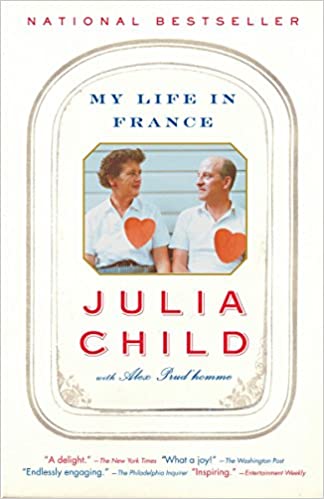
8. my life in france — julia child and alex prud’homme.
If Paris is your idea of pleasure, Julia Child is your patron saint—curious, unembarrassed, and devoted to getting it right. This memoir makes the city feel like a teacher: of taste, appetite, craft, and confidence.
You don’t have to cook to love it; you just have to love the idea of becoming more awake to life. It also offers a quietly excellent portrait of postwar France, through the lens of a woman learning her way into a culture. Julia’s voice is generous and funny, never precious. Read it and you’ll want to order better food, ask better questions, and say yes more often.
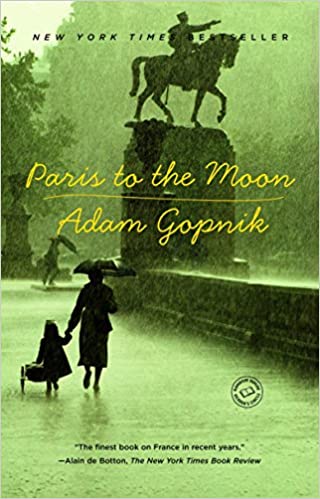
9. paris to the moon — adam gopnik.
Gopnik gives you Paris as an intellectual love affair—sharp, amused, observant, and deeply alert to beauty. The essays move between everyday scenes and big ideas the way a great walk does: one moment a stroller in the Tuileries, the next a meditation on art, taste, or modern life.
It’s also wonderfully domestic in places, which makes Paris feel inhabited rather than staged. You’ll come away with a better sense of how Parisians argue, linger, and choose. This is Paris as a mental upgrade. Read it before you go and you’ll travel less like a consumer and more like a witness.
10. fearless and free: a memoir — josephine baker.
Josephine Baker is often flattened into an icon; this book restores her as a strategist, a performer, a provocateur, and a complicated human being. The Paris here is not decorative—it’s the stage on which Baker built a life crossing art, politics, race, and resistance. You feel the discipline behind the glamour, and the intelligence behind the myth.
It’s also a reminder that Paris has long been a magnet for reinvention—sometimes triumphantly, sometimes at a cost. Reading it before a trip changes your relationship to the city’s history. You’ll walk into a cabaret or a museum with sharper eyes. And you’ll come away thinking about what “freedom” really costs—and who gets to claim it.
11. agent josephine: american beauty, french hero, british spy — damien lewis.
If you want a Paris story with velocity and nerve, this is your pre-trip page-turner. Josephine Baker’s war work is told with real narrative drive—the kind that makes you read “one more chapter” and look up and it’s midnight. It reframes the glamour of interwar Paris as something more dangerous and more consequential.
You’ll also get a vivid sense of networks—who knew whom, how information moved, how risk was managed. Paris becomes less “beautiful backdrop” and more “active terrain.” It’s a smart antidote to the idea that the city is only about pleasure. Read it on the plane and you’ll land in a different Paris.
12. i’m mostly here to enjoy myself: one woman’s pursuit of pleasure in paris — glynnis macnicol.
This is Paris as permission slip—funny, frank, self-aware, and unapologetically about pleasure as a serious pursuit. MacNicol writes about solitude, desire, and the rituals that make a city feel like a private life rather than a trip.
It’s not trying to be universally relatable; it’s trying to be honest, which is more useful. The Paris here is real—sometimes awkward, sometimes gorgeous, always instructive. If you’ve ever wanted to travel alone and not apologize for it, this book is a small revolution. It pairs beautifully with a shopping day, a long lunch, and a deliberate refusal to rush. Read it and you’ll start planning your trip around your own attention, not someone else’s expectations.
13. dinner for one: how cooking in paris saved me — sutanya dacres.
This memoir understands something essential: in Paris, food isn’t content—it’s culture, therapy, craft, and a way of belonging. Dacres writes about learning to cook and, in the process, learning how to rebuild a life with care and intention. The book is emotionally warm without being saccharine, and practical without becoming a cookbook.
It will make you want to shop for ingredients at markets, choose one beautiful knife, and treat meals like experiences instead of intervals. It’s also a lovely corrective to the “Paris is effortless” myth; the pleasures here are earned, made, practiced. Read it before you go and you’ll eat more slowly and more intelligently. You’ll come home wanting to keep one Paris ritual alive in your own kitchen.
paris, imagined: novels that give you the atmosphere
If you want to arrive in Paris already half-in-love, this is the fastest route. These novels give you the city’s emotional weather: its rooms, shadows, glances, and private dramas.
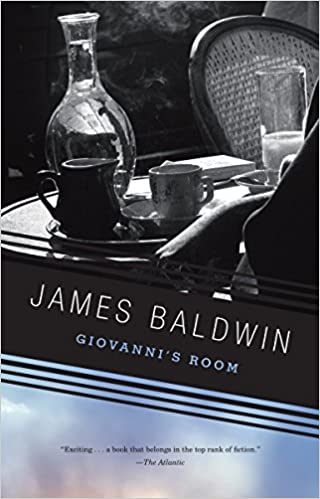
14. giovanni’s room — james baldwin.
If you only pack one novel, make it this one. Baldwin’s Paris is full of night streets, bars, rented rooms, and the particular loneliness of being far from home. The prose is so precise it feels like architecture; every sentence knows exactly what it’s doing.
It’s also a book about identity and self-deception—timeless, but never abstract. You’ll read it and then find yourself noticing Paris differently: mirrors, shadows, glances, the way a city can hold you and expose you at the same time. It’s not a comfort read, it’s a clarifying read. And it will make your trip feel more real.
15. the elegance of the hedgehog — muriel barbery (translated by alison anderson).
This novel is set almost entirely inside a very proper, very wealthy Paris apartment building at 7 rue de Grenelle, where appearances are everything and most people stop looking beneath them. Renée, the concierge, is the book’s secret engine: she performs the role expected of her—uneducated, inconspicuous—while privately devouring philosophy, art, literature, and film.
The other narrator is Paloma, a hyper-intelligent twelve-year-old from one of the building’s privileged families, who has decided she will end her life on her thirteenth birthday because she finds the adult world so absurd. Their interior lives run in parallel until a new tenant arrives—Kakuro Ozu, a refined Japanese man whose presence disrupts the building’s social choreography and makes real connection possible.
The plot is quiet, but the suspense is psychological: when will someone truly see someone else, and what happens when they do? Barbery is especially good on class performance—how Paris can be both exquisitely civilized and emotionally blinkered at the same time. Read it before Paris and you’ll start noticing the city’s invisible architecture: who is permitted to be complex in public, and who is expected to stay politely unseen.
16. the postcard — anne berest (translated by tina kover).
This book begins in 2003 when the author’s mother receives an anonymous postcard with only four names written on it—Ephraïm, Emma, Noémie, Jacques—and no message at all. Those names belong to Berest’s Jewish ancestors who were murdered in the Holocaust, and the postcard becomes a splinter the family can’t ignore.
What follows is part family memoir, part investigation: Berest reconstructs the story of the Rabinovitch family across decades, tracing their lives through Paris and the ruptures of the 20th century. The narrative moves between the present-day inquiry—archives, interviews, the emotional wreckage of partial knowledge—and the past, where the family’s choices, relationships, and misfortunes accumulate with dreadful momentum.
Paris isn’t just scenery; it’s an operating environment—addresses, schools, paperwork, police, neighbors, and the city’s capacity to hold both ordinary life and catastrophe in the same street grid. The suspense is real (who sent the postcard, and why), but the deeper question is how families metabolize trauma when the facts arrive in fragments. Read it before a trip and you’ll walk through Paris with a sharpened sense of historical layering: which buildings have always been “beautiful,” and which have also been witness.
17. the margot affair — sanaë lemoine.
Margot Louve is 17, furious, and painfully alive to the difference between the power she feels and the power she actually has. Her mother, Anouk, is a celebrated stage actress with an unsentimental approach to motherhood; her father is Bertrand Lapierre, the French culture minister—married, immaculate in public, and privately her mother’s lover for two decades, with Margot and Anouk kept in a parallel world that never intersects with his official life.
The situation turns from tolerable to intolerable when Margot and Anouk spot his wife in the Luxembourg Gardens—made suddenly, absurdly real by a pair of expensive Roger Vivier pumps—and Margot decides to “crack open” the arrangement by confiding her parentage to a friendly journalist she meets at a party. That journalist, David Perrin, and his wife, Brigitte, become the first adults who seem genuinely interested in Margot’s inner life—and the most dangerous, because their attention is intimate, consuming, and not cleanly bounded. Brigitte persuades Margot that the truth of her family should become a memoir, one she will ghostwrite from Margot’s memories, and the book’s tension tightens around what happens when a teenager mistakes disruption for control.
Paris here is all social choreography—who gets legitimacy, who is hidden, what people notice about women’s bodies, appetites, and appearance—and the damage that follows is as startling as it is inevitable. In the end, for all its talk of an absent father, this is a novel about motherhood: what a mother owes, what she withholds, and the brutal, intimate question of what she would truly do for her child.
18. french exit — patrick dewitt.
This is a dark comedy about a Manhattan mother and son—Frances Price and Malcolm—who flee to Paris after the money runs out, clinging to elegance the way some people cling to religion. They rent a friend’s apartment and immediately begin collecting a small orbit of odd, needy, and oddly tender characters: an ex-lover with money, a fortune-teller, and a few Parisians who are not impressed by their performance of sophistication.
Frances is the book’s true spectacle—imperious, funny, emotionally withholding—and Malcolm is her anxious echo, shaped by a lifetime of orbiting her moods. Paris here is not the glamorous “new beginning” city; it’s the ideal stage for decline with good lighting, where people pretend not to notice what’s falling apart.
DeWitt’s gift is tone: it’s wickedly witty, then suddenly—almost rudely—sad, as the consequences of a life lived as theater come due. The plot is brisk, but the pleasure is the exactness of the social satire: the way class travels, how charm can become a strategy, how people use Paris to launder their self-image. Read it before a trip and you’ll recognize a certain Paris type instantly—the expatriate who wants the city to be an aesthetic solution rather than a real place.
paris, in style: museums, rooms, and the paris eye

The city’s quiet luxury: symmetry and restraint.
This is where Paris becomes its most persuasive self: through objects, interiors, collections, and the way a museum visit can reorganize your taste for months.
19. the new parisienne: the women & ideas shaping paris — lindsey tramuta.
This is the Paris style book that isn’t about outfits—it’s about cultural agency. Tramuta profiles women shaping the city’s contemporary life across art, design, politics, food, and media, and the cumulative effect is invigorating. You get Paris as an ecosystem of ideas, not a museum of nostalgia.
It’s a corrective to the lazy fantasy of “the Parisian woman” as a single type; here, Paris is plural. Read it before you go and you’ll be more curious about who’s making the city now, not just who made it then. It gives you names, context, and a sense of momentum. And if your trip includes galleries, bookstores, or concept shops, this book quietly upgrades all of it.
20. adventures in the louvre: how to fall in love with the world’s greatest museum — elaine sciolino.
Sciolino makes the Louvre feel less like a “must-do” and more like a relationship you can actually develop. She tells you how the museum works, yes—but also how to move through it with pleasure rather than panic. The book is full of human detail: curators, guards, rituals, odd rules, and moments of wonder that don’t require a PhD.
It’s the antidote to the exhausting idea that you should “see everything.” You’ll come away wanting to see a few things properly, and that is the only sane way to do the Louvre. Read it before you go and you’ll waste less time and feel more awe. It’s culture as companionship.
21. the little(r) museums of paris: an illustrated guide to the city’s hidden gems — emma jacobs.
This turns a good Paris trip into a great one, because it takes you off the obvious circuit without making you feel like you’re trying hard. Jacobs leads you to small museums—artist studios, niche collections, odd little temples of curiosity—where you often have the room, the silence, and the time to actually feel something.
It’s illustrated, charming, and surprisingly strategic: perfect for afternoons when you’ve done big Paris and want private Paris. You’ll also start to understand why Paris feels so dense with culture—it’s not just the major institutions, it’s the sheer number of intimate ones. This book pairs beautifully with jet lag, rainy days, and anyone who prefers intimacy to crowds. Read it and you’ll collect stories other people won’t have. That’s real luxury.
22. let’s eat paris!: the essential guide to the world’s most famous food city — françois-régis gaudry.
If you want one food book that feels serious but still fun, this is it: obsessive, encyclopedic, and very Parisian in its conviction that eating well is a form of intelligence. Gaudry is both critic and storyteller, so you get history, lore, lists, and the kind of trivia you’ll repeat at dinner. It’s less “ten restaurants” and more “how a city becomes the capital of appetite.”
You’ll learn what matters—brasseries, bistros, pâtisseries, icons, evolutions—and you’ll start to see menus as cultural documents. It’s also an excellent pre-trip buy because it builds your palate before you arrive. Read it and you’ll order better, wander better, and waste fewer meals on mediocrity. It’s the ultimate antidote to tourist eating.
23. paris, capital of fashion — valerie steele.
This is fashion as history, power, and cultural infrastructure—not just hemlines and hype. Steele explains why Paris became fashion’s capital and how that identity was built, maintained, and mythologized. The pleasure here is that it makes fashion Paris legible: the institutions, the personalities, the aesthetics, the long arc behind what you see in shop windows today.
It’s ideal prep for anyone who plans to do the Musée des Arts Décoratifs, vintage, couture window shopping, or simply wants to understand the city’s self-image. You’ll also get a deeper appreciation for how taste is produced—by ateliers, editors, patrons, museums, and spectacle. Read it and your Paris shopping becomes less impulsive and more informed. It’s an education that feels like indulgence.
24. parisian by design: interiors by david jimenez — david jimenez; diane dorrans saeks.
If you collect beauty the way some people collect stamps, this book will make you feel understood. These interiors are Parisian in the best sense—layered, intimate, confident, and allergic to anything that looks like it was purchased in one afternoon. Jimenez’s rooms have that “lived-in elegance” that feels impossible until you see it done well.
You’ll come away noticing proportion, patina, and the power of one extraordinary object instead of fifty average ones. It’s also a reminder that Paris style is not minimalism; it’s editing. Read it before your trip and you’ll want to visit flea markets, galleries, and small antique shops with better intention. And if you’re renovating or collecting, it’s pure inspiration.
25. inside paris: an exclusive view inside the houses of parisian interior and fashion designers, artists, and influencers — ricardo labougle.
This is Paris behind closed doors—the private rooms that create the public myth. Labougle’s photography is sensual and precise, deeply attentive to light, which is what Paris does better than almost any city. The range of interiors is the point: classical, modern, eccentric, severe, romantic—Paris as a spectrum, not a stereotype.
It’s also surprisingly useful as travel preparation because it trains your eye; you’ll start noticing doorways, stair rails, hardware, and the choreography of objects on a mantel. This is aspirational without being vulgar, and luxurious without being loud. Read it before you go and you’ll want to see Paris not just at street level, but at room level. It makes the city feel richer.
26. arbiters of style: the new wave of french interior design — eugenia santiesteban soto.
This is the “French design is moving” book—the one that makes you feel early, informed, and slightly smug in the best way. It spotlights a new generation of designers and architects pushing past beige safety and maximalist noise into something more intelligent and more emotional. The photography is lush, but the real draw is sensibility: architecture with feeling, restraint with gesture, rooms that don’t look like anyone copied anyone.
It also expands beyond Paris, which is useful—Paris taste is fed by the wider French imagination. Publication date note: this title publishes in April 2026 and is available to pre-order now. If you’re traveling this year, treat it as your “future Paris” bookmark; if you’re traveling next year, it becomes perfect timing. Either way, it belongs here because it points to where taste is going, not where it’s been.
what to read before you go to paris
Together, these books form a Paris reading list that prepares you for the city as it actually feels: walked, read, eaten, argued with, and admired. If you want your trip to Paris to be more than a highlight reel, start here—the narratives, the interiors, the museums, and the meals will begin arranging themselves in your mind long before you arrive.
In passing, for the Paris canon that still throws the longest shadow—Victor Hugo, Balzac, Zola, Dumas, Proust, Hemingway, Rhys, Henry James—consider them the city’s foundational bassline. You don’t need them to have a brilliant trip. But it’s worth knowing they’re humming under the pavement.
closing thoughts
A good trip to Paris leaves you with photographs. A great trip leaves you with references—ideas, names, places, and small observations that continue unfolding long after you return home. That’s what these books provide: not just stories about Paris, but the context that makes the city deeper, stranger, and more rewarding to experience in person.
If you read even a few of them before you arrive, the city will begin to feel familiar in the best possible way. You’ll recognize streets, arguments, rituals, and histories that are normally invisible to visitors. Paris becomes less a spectacle and more a conversation.
For more Reading Room editions, see last month’s Reading Room post, and keep an eye on the monthly series as it updates your year in books. If you want the “new releases” side of your reading life, pair this Paris list with Fresh Ink (our monthly roundup of new book releases), and if you want the broader cultural calendar around travel and style, The Luxury Almanac is the companion index. And if you like your culture in a weekly, wear-it-outside format, The Blue Hour Review is where we file what’s worth seeing, reading, and saving—one atmospheric dispatch at a time. Finally, for the annual spine of what matters most, the DC120 list remains our definitive guide to the books worth reading this year.
In the meantime, Paris awaits. And the best way to begin the trip is exactly here: with a book open, the city already starting to take shape in your imagination.
Sources & Further Reading
Bookshop.org — independent bookstore marketplace
The Louvre official website
Paris Musées network of museums
Musée des Arts Décoratifs (fashion collections)
faq: what to read before a trip to paris
what are the best books to read before a trip to paris?
Start with The Only Street in Paris for street-level confidence, Impossible City for modern context, and Adventures in the Louvre for a museum plan that won’t exhaust you. Add one memoir (Paris to the Moon or I’m Mostly Here to Enjoy Myself) and one novel (Giovanni’s Room or The Postcard) to arrive with Paris already in your bloodstream.
what is the best paris walking book to bring on the trip?
Paris in Stride is the most packable and usable on the ground, because it’s designed as real routes with taste and pacing. Walks Through Lost Paris is the best “make the city make sense” companion if you want history to show up in what you’re looking at.
what should i read to understand modern paris beyond the clichés?
Impossible City is the sharpest lens on Paris now—money, migration, politics, and the cultural machinery behind the charm. Pair it with Standing Heavy for a witty, pointed look at luxury as a lived system, seen from the floor.
what are the best paris books for museums and art lovers?
Adventures in the Louvre will help you have an intelligent, unhurried Louvre day. The Little(r) Museums of Paris will give you the kind of small, quietly brilliant museum afternoons that feel like real insider Paris.
what are the best paris food books to read before going?
If you want memoir and emotion, read My Life in France and Dinner for One. If you want a comprehensive, culture-forward guide to how Paris eats, bring Let’s Eat Paris! and let it sharpen your palate before you arrive.
what are the best paris novels to read before visiting?
Giovanni’s Room is the essential Paris novel for emotional atmosphere and clarity. For a contemporary, intimate narrative with Paris as moral landscape, read The Postcard, and for social comedy with sharp teeth, add French Exit.
are these books linked to bookshop.org?
Yes—nearly all of them link to Bookshop.org to support independent bookstores. The one exception is Paris Noir, which I link to a better edition record elsewhere because the Bookshop listing is a low-quality reprint page