
Hard-to-Access Art Destinations That Are Worth the Effort
The Art Lens is Dandelion Chandelier’s ongoing series on art and visual culture, exploring how artists, exhibitions, and artworks shape perception, memory, and meaning beyond trend.
Some art asks for more than a ticket.
It asks for a reservation window, a guided visit, an overnight stay, or a long drive into a landscape where the work cannot be separated from the effort of reaching it.
This guide to private art foundations and hard-to-access art destinations is for travelers and collectors who are willing to make a pilgrimage to the remote, protected places: Chinati in Marfa, James Turrell’s museum at Bodega Colomé, Walter De Maria’s The Lightning Field, Casa Wabi on the Oaxacan coast, Donald Judd’s 101 Spring Street, Hall Art Foundation, Segera in Kenya, Desert X AlUla, and Gibbs Farm in New Zealand.
These are not impossible places to visit, but they are difficult enough that the logistics become part of the mood. That difficulty is part of their force. It sharpens attention, deepens anticipation, and makes the encounter with art feel less like a stop on a trip than the reason for the trip itself.
At a glance: private foundations • controlled entry • land art • reservation-window travel • harder to enter, harder to forget
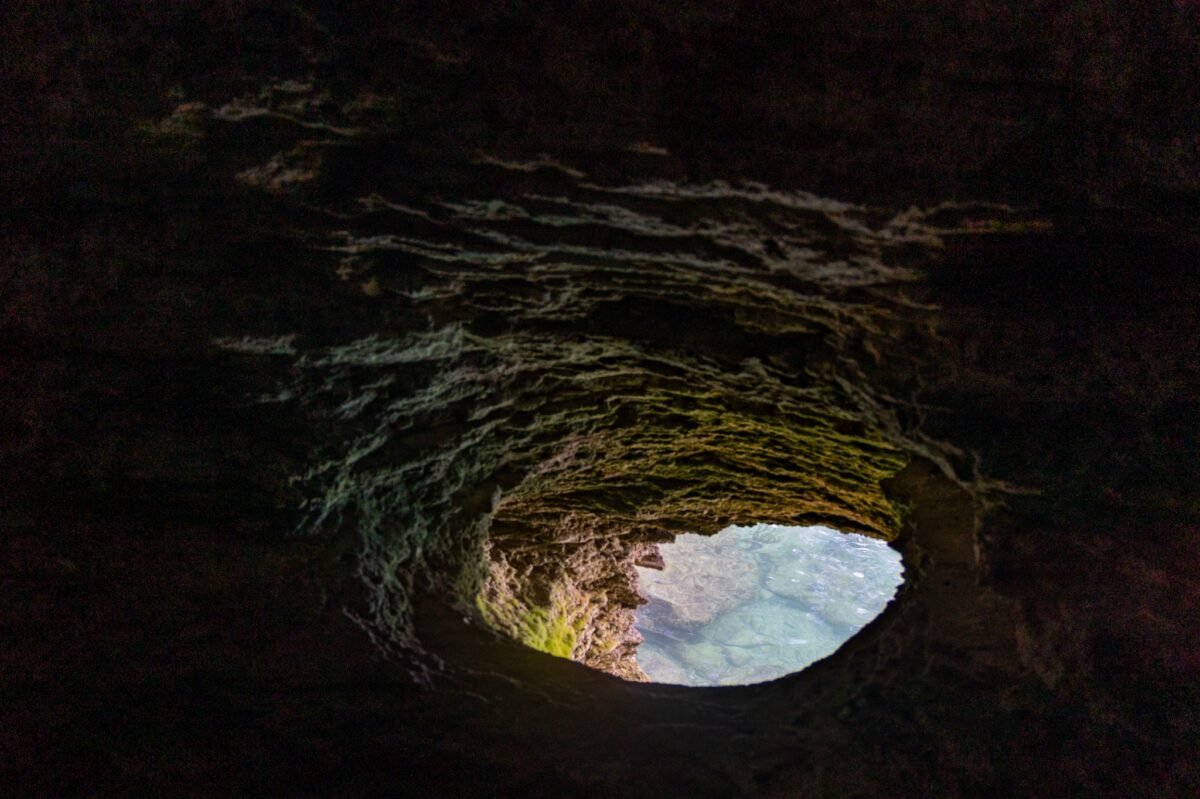
Lead image by Pamela Thomas-Graham. This is a text-led editorial guide; destination photography is not included.
why difficult access is part of the seduction
The most compelling thing about a hard-to-access art destination is not scarcity for its own sake. It is what scarcity does to attention.
A guided visit to Donald Judd’s 101 Spring Street feels different because you cannot wander in casually. The Lightning Field feels different because Dia has preserved the overnight structure of the encounter. Chinati feels different because much of the collection is still accessed by tour rather than drift.
This is not about exclusivity in the exclusionary sense. It is about pacing, intention, and the quiet authority of a site that refuses to flatten itself into convenience.
the places you do not just drop by
What links the destinations below is not a single aesthetic. Marfa severity is not Argentine light art; a castle in Lower Saxony is not a private art-and-safari ecosystem in Kenya.
What links them is the feeling that one has crossed into an experience protected from casualness. You arrive by tour, by booking window, by private road, by donor-level planning, or by a reservation system that still assumes seriousness on the visitor’s part. And because of that, these places tend to stay with you differently.
If you want the more publicly accessible companion to this idea, bookmark our essay How Far Would You Go for Art? This essay covers the addresses that art people mention a little more quietly.
the art world’s best-kept addresses
1. the chinati foundation, marfa, texas
Chinati remains one of the clearest statements ever made about art, architecture, and environment existing in deliberate relation to one another. The foundation’s visitor guidance says the majority of the collection is accessible only by guided tour, with advanced tickets strongly encouraged, and notes that the grounds are extensive, uneven, and largely unpaved.
That structure suits the place. You go for Donald Judd’s aluminum works in the former artillery sheds, for the concrete works in the landscape, and for the sensation that the museum and the town together amount to one extended argument about rigor. Chinati does not overwhelm by volume. It persuades by clarity.
If the draw here is how artists and institutions shape the meaning of a place, that is exactly the territory of The Art Lens.
2. james turrell museum at bodega colomé, salta, argentina
Bodega Colomé presents itself as a full hospitality, wine, and art destination in the Calchaquí Valleys, where visitors can stay at the estancia or visit the winery for the Colomé experience. The setting alone does some of the work: one of the highest vineyard environments in the world, hidden in a dramatic high-altitude landscape.
The reason to go this far is that Turrell’s work becomes even more persuasive in that air and that light. At altitude, perception already feels slightly recalibrated. A museum devoted entirely to light, space, and visual uncertainty gains a different authority there — less like an exhibition and more like a condition you enter.
Readers drawn to that quieter, contemplative side of travel may also like The Reading Room, which lives in a similarly slow, attentive register.
3. walter de maria’s the lightning field, western new mexico
The Lightning Field remains one of the canonical art pilgrimages because Dia has preserved exactly the access conditions the work requires. Visits are overnight only, in season, with transportation from Quemado to the cabin provided by Dia, and meals included during the stay.
That is not administrative fuss. It is the artwork’s operating system. You are there for dusk, darkness, dawn, weather, waiting, and the changing tension of the atmosphere around 400 stainless-steel poles. The work is not simply the field. It is the field plus duration.
4. casa wabi, puerto escondido, oaxaca, mexico
Casa Wabi does not behave like a conventional museum, which is part of its appeal. The foundation requires advance reservation for visits to the Puerto Escondido site and offers scheduled tours through a setting that combines exhibitions, architecture, gardens, and a larger nonprofit mission.
What makes it worth the effort is not bombast, but atmosphere. The Pacific setting, the architecture, and the institutional temperament make contemporary art feel less like an isolated luxury object and more like part of a wider conversation about place, making, and attention. Casa Wabi is memorable for its restraint. That same belief in atmosphere as structure runs through Domestic Intelligence, where design and environment are treated as forces rather than decoration.
5. judd foundation, 101 spring street, new york
Judd Foundation’s guided visits to 101 Spring Street offer direct engagement with Donald Judd’s living and working space in downtown New York. The foundation describes the building as his former residence and studio, with permanently installed spaces throughout the restored cast-iron structure.
What makes it one of the best-kept addresses in the art world is that it feels less like visiting a museum than like being admitted into a fully argued worldview. The proportions, furniture, light, installation logic, and refusal of clutter clarify Judd’s thinking in a way no white cube can. 101 Spring Street turns access into revelation. For another version of New York as a site of heightened perception, City in Bloom follows the ways urban spaces acquire atmosphere, ritual, and meaning.
6. hall art foundation, reading, vermont, and kunstmuseum schloss derneburg, germany
Hall Art Foundation makes postwar and contemporary work available across two especially appealing settings. At Schloss Derneburg, the foundation notes that the sculpture park and annex exhibitions can be visited independently, while the castle interiors are accessible by guided tour; reservations are recommended, and the site is also reachable by train with a short walk from the station.
That layered access is part of the pleasure. Vermont offers the pastoral version of seriousness. Derneburg offers the colder, grander one: sculpture park, castle, controlled entry, and the satisfying sense that the architecture still holds a little mystery.
7. segera retreat, laikipia plateau, kenya
Segera is one of the few places where a safari property and a serious contemporary art environment seem to strengthen one another. Segera describes itself as home to the Zeitz Collection across the botanical gardens, the Stables, and Paddock House, with contemporary art from Africa and its diaspora ranging from monumental sculpture to land art, projections, and site-specific work, all set within 50,000 acres of private conservation land.
What makes the trip worth it is the exactness of the juxtaposition. Art, wildlife, stewardship, and landscape are not presented as separate pleasures. They are staged as parts of the same larger idea of value. That gives Segera unusual force.
8. alula, saudi arabia — desert x alula now, wadi alfann on the horizon
AlUla is already one of the most compelling places in the world to see contemporary art in direct conversation with monumental desert landscape. Desert X AlUla’s 2026 edition presented 11 site-specific works across the terrain under the theme Space Without Measure, and the project continues to describe itself as the region’s first public art biennale.
What makes AlUla especially interesting is that it is both present and future. You can go now for the desert, the scale, and the continuing Desert X legacy. At the same time, Wadi AlFann remains the larger promise on the horizon, which gives the whole place the charged feeling of a destination still in the act of becoming. If you’re building a wider cultural itinerary around places like this, The Luxury Almanac is the natural next stop.
9. gibbs farm, makarau, new zealand
Gibbs Farm is one of the most extraordinary sculpture landscapes in the world: a private property on Kaipara Harbour where around 30 major site-specific works by artists including Richard Serra and Anish Kapoor unfold across a vast, weather-beaten terrain. The official site says visits are by appointment only and notes that some works are in private areas not open to the public.
That blend of access and inaccessibility gives the visit its charge. The artworks are staged against undulating land, tidal edges, and shifting weather, and even the institution’s own materials frame nature as the central challenge: how can art compete with this? Sometimes the answer is scale. Sometimes it is placement. Often it is both. Gibbs Farm rewards effort because the horizon itself becomes part of the encounter.
the holy grail, still out of reach
And then there is Roden Crater.
Which is not on the itinerary. Not yet. That is exactly why it exerts such force over any conversation about art pilgrimage.
James Turrell’s volcanic observatory in Arizona remains closed to the public, suspended in the category’s imagination as the great unfinished destination — often discussed, occasionally glimpsed, but not available on any normal calendar. Recent New York Times coverage is one reminder that the crater still holds unusual force in the cultural imagination. The place you cannot quite book is often the place that most powerfully organizes desire.
If your taste runs to cultural material that lives in this same atmosphere of secrecy, access, and private-world glamour, our weekly dispatch, The Blue Hour Review, is a natural fit.
the lure of the inaccessible
In a culture that has made so much immediately visible, these places still keep a little of their mystery.
You cannot just drift into them; you have to decide. You have to make a plan. Sometimes you have to wait. That is not a flaw in the experience. It is the experience. The work lands differently when it has not been made frictionless.
And so these remain some of the most rewarding addresses in art: not because they are impossible, but because they have not surrendered entirely to ease. They still ask something of the visitor. Taste, timing, patience, seriousness. It is nice, sometime, when art asks for all four.
sources + further reading
- Chinati Foundation visitor information and guided tour details.
- Dia guide to Walter De Maria’s The Lightning Field.
- Judd Foundation visits to 101 Spring Street.
- Casa Wabi official visits and exhibition information.
- Hall Art Foundation at Kunstmuseum Schloss Derneburg.
- Segera and the Zeitz Collection in Kenya.
faqs: making a pilgrimage to hard to access art destinations
what counts as a hard-to-access art destination?
Usually it means one or more of the following: guided-entry requirements, advance reservations, seasonal openings, overnight-only stays, limited-capacity tours, or private-property conditions that prevent the experience from becoming casual. Chinati, The Lightning Field, 101 Spring Street, Hall Art Foundation, and Gibbs Farm each fit that description in different ways.
are these private, invitation-only places?
Not exactly. Most are publicly visitable, but in a controlled way: through tours, timed bookings, specific seasons, or private-site protocols. Gibbs Farm is the most constrained. The Lightning Field is the most ritualized. 101 Spring Street is the most urban version of the same energy.
which one is the hardest to access while still being plausibly possible?
The Lightning Field and Gibbs Farm are probably the clearest answers. The Lightning Field requires an overnight reservation and site transport through Dia. Gibbs Farm is private property, currently directing visitors through appointment-based access, with some works not available to the public at all.
which one is best if i care most about architecture as well as art?
Casa Wabi and 101 Spring Street are especially strong if architecture is part of the point, and Bodega Colomé has the advantage of making landscape and light inseparable from the museum experience. Hall Art Foundation at Derneburg also belongs in the conversation, because the castle is not just a setting; it is one of the reasons the visit feels charged.
is alula really in the same category as the others?
Yes, but with a caveat. AlUla belongs because Desert X AlUla is already a functioning, public-facing land-art proposition in the desert. Wadi AlFann, however, remains the larger promise on the horizon rather than a finished, fully open destination. That split between what is visitable now and what is still emerging is part of what makes AlUla interesting.